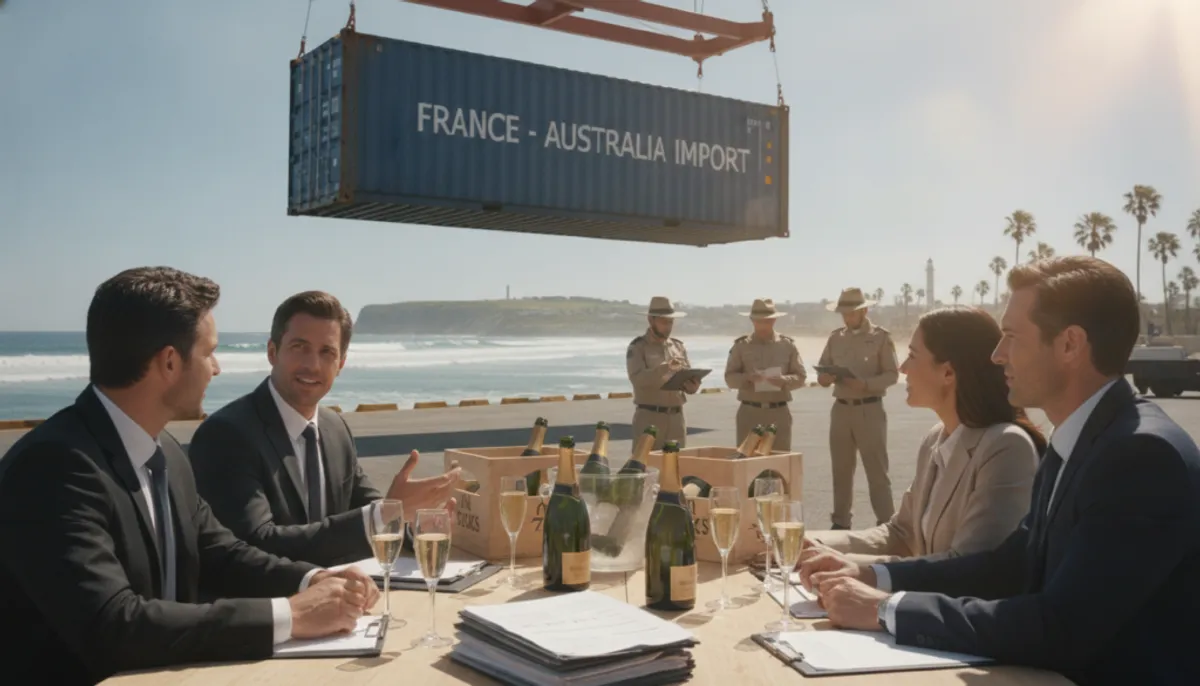
Looking for Champagne? We’ve got you covered. This guide breaks down the key steps U.S. businesses need to clear customs, meet labeling standards, and calculate duties and excise for alcohol shipments.
Australia brings in billions in beverage value each year. The Australian Border Force enforces the Customs Act 1901 and checks commercial goods closely. Businesses must hold an ABN and follow FSANZ labeling standards to sell products legally.
Understanding declarations, GST, and duty rates helps avoid seizures and fines. Our team supports supply chain planning, compliance checks, and trade paperwork so your spirits, beer, or liquor reach consumers smoothly.
Key Takeaways
- ABF enforces customs rules and the Customs Act 1901 for all commercial shipments.
- Labeling standards from FSANZ are mandatory for beverage products sold locally.
- Registering for an ABN is essential for businesses handling alcohol trade.
- Plan for excise, GST, and duty calculations to protect margins and avoid penalties.
- Request a personalized quote at https://champagne-export.com to source premium selections for export.
Understanding the Australian Alcohol Import Market
Australia’s thirst for global flavors makes it one of the most dynamic markets for imported alcoholic beverages. Companies that plan well can capture strong demand for premium labels and craft offerings, including those focused on reserve wine aging.
Market Trends and Consumer Demand
Australian shoppers favor variety and provenance. They buy fine wines from France, Italy, and Spain and look for recognizable global names.
There is growing interest in unique tasting experiences. This trend boosts sales of small-batch spirits and specialty beer styles. Businesses must meet strict customs, duty, excise, and GST rules to sell legally.
Popular Types of Imported Alcohol
- Wines: premium bottles from Europe hold steady market value and appeal.
- Spirits: whiskey, vodka, and rum from the United States and the United Kingdom are top sellers.
- Beers: German lagers and American craft beers fill niche demand across cities.
Looking for Champagne? We’ve got you covered. Discover the finest selections, ready to be exported anywhere in the world. To ensure the best champagne serving practices, request your personalized quote today on https://champagne-export.com.
Essential Business Registrations for Importing Champagne into Australia
Registering early keeps your operation compliant and saves time at customs.
The Australian Business Register (ABR) issues the Australian Business Number (ABN). An ABN is a unique identifier required for any business that trades or handles imported alcohol and other goods.
With a valid ABN your business can claim GST credits on expenses. This helps manage taxes, duties, and excise charges when you bring alcoholic beverages into the market.
Open a dedicated business bank account to track payments, customs fees, and supplier invoices. Choose a company structure to limit liability and boost credibility with distributors and customs officials.
- Obtain an ABN from the ABR — it is mandatory for commercial trade and declarations.
- Set up a business bank account to manage international transactions and tax records.
- Adopt the right legal structure to protect personal assets and meet local standards.
Looking for Champagne? We’ve got you covered. Discover the finest selections, ready to be exported anywhere in the world. Request your personalized quote today on https://champagne-export.com.
Navigating Import and Liquor Licensing Requirements
Before your first shipment clears customs, confirm both federal import permissions and local liquor approvals.
Understanding Import Licenses
The Australian Border Force issues the import license required for commercial alcohol shipments. This permit covers customs declarations, duty and excise tracking, and eligibility to clear goods at the border.
Missing this license risks seizure and fines. File early and keep records of all declarations and tax payments to speed customs clearance.
State and Territory Liquor Licensing
State and territory authorities handle liquor licenses for sale, supply, and storage. Rules vary widely by region.
Obtain the correct local license before you trade. Businesses without proper approval can lose product and face legal penalties.
- Coordinate ABF import permits with state liquor approvals for smooth trade.
- If you are looking for Champagne, we have you covered — request a quote at https://champagne-export.com.
- We guide businesses on documentation and compliance to avoid delays at customs.
| License Type | Issued By | Scope | Typical Timeframe |
|---|---|---|---|
| Import License | Australian Border Force | Border clearance, duty & excise records | 2–6 weeks |
| Liquor License | State/Territory Regulator | Sale, supply, storage of alcohol | 4–12 weeks |
| Combined Compliance | Business & Regulators | Ongoing reporting and taxes (GST, duty) | Ongoing |
Compliance with Food Standards Australia New Zealand
Food Standards Australia New Zealand (FSANZ) governs labeling and safety for all beverages sold in the region. The FSANZ Code applies to every alcohol product traded between australia new zealand markets.
Labels must show accurate trade descriptions, country of origin, and full ingredient lists. Any genetically modified ingredients require clear disclosure under food standards australia rules. These steps protect consumers and preserve brand value.
Meeting these standards also smooths customs checks and reduces the risk that goods are held or rejected. Clear declarations and compliant labeling speed border clearance and safeguard your business reputation.
All alcoholic beverages must follow the FSANZ Code for safety and labeling.
We help ensure your wine and spirits labels meet standards australia new requirements. Additionally, our expertise in champagne branding allows us to highlight the unique qualities of your champagne selections. Looking for Champagne? We’ve got you covered. Discover the finest selections, ready to be exported anywhere in the world. Request your personalized quote today on https://champagne-export.com.
Mandatory Labeling Standards for Imported Beverages
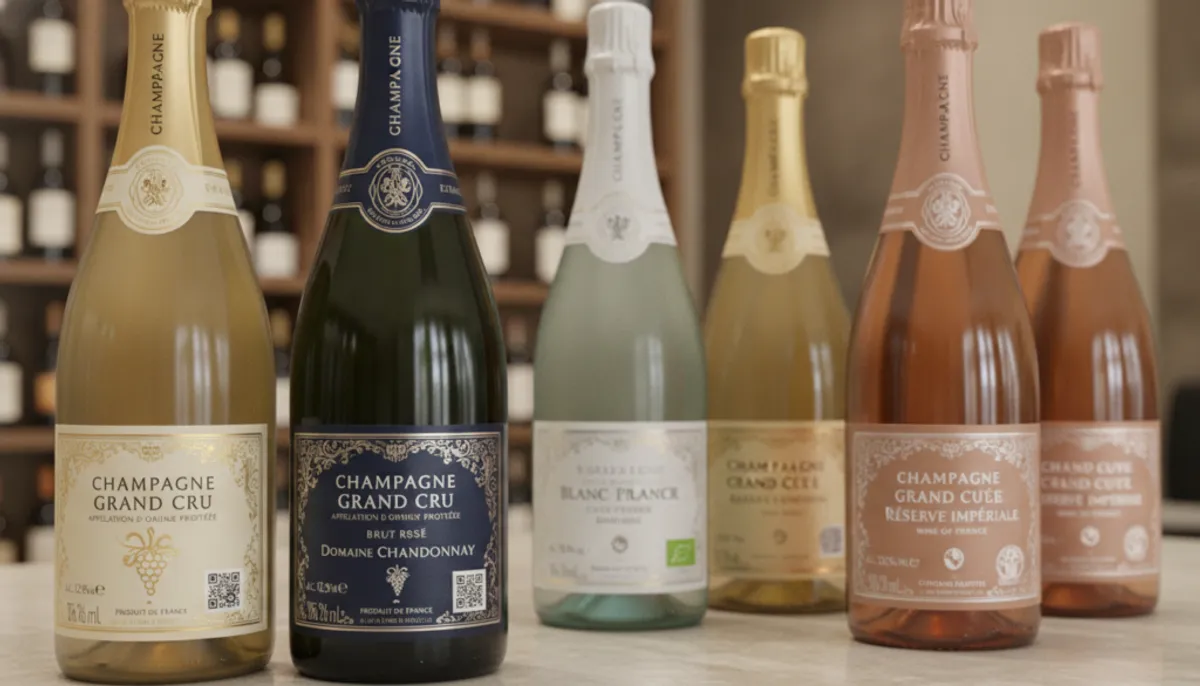
Clear labeling keeps consumers safe and helps goods clear customs quickly. Every package must show simple, accurate facts that meet national standards for alcoholic beverages.
Alcohol Content and Standard Drinks
Labels must state the alcohol by volume (ABV) as a percentage. The number of standard drinks per container must also be shown so consumers can judge intake.
Allergen Declarations
Allergen information is mandatory for all beer, wine, spirits, and other alcoholic beverages.
- Declare gluten, nuts, milk, or other allergens clearly on the label.
- Note any genetically modified ingredients when required by standards.
Mandatory Pregnancy Warnings
Every packaged product for retail sale must include a clear pregnancy warning. This is non-negotiable for compliance and public health.
| Label Element | Requirement | Why it Matters |
|---|---|---|
| ABV (%) | Required on all containers | Shows alcohol strength for consumers and customs |
| Standard Drinks | Number per package | Helps safe consumption decisions |
| Allergen Declarations | List common allergens | Protects sensitive consumers |
| Country Origin | Clear statement of country origin | Ensures retail transparency and trade compliance |
| Pregnancy Warning | Mandatory label or symbol | Meets public health requirements |
Looking for Champagne? We’ve got you covered. Discover the finest selections, ready to be exported anywhere in the world. Request your personalized quote today on https://champagne-export.com.
Preparing Your Import Declaration
A precise import declaration is the single most important document for clearing alcoholic goods.
For commercial shipments you must submit an N10 or N20 form to the Australian Border Force before the goods arrive. Provide a clear product description, quantity, declared value, and the correct HS code.
Accurate HS code classification is vital. It determines the applicable duty, excise, and tax rates. Mistakes can trigger inspections, delays, or extra charges.
Work with a licensed customs broker to verify HS codes, verify ABV where needed, and prepare all declarations on time. A broker reduces risk and speeds customs clearance.
- Prepare the N10 or N20 before arrival to meet compliance requirements.
- Include HS code, product value, quantity, and alcohol by volume (ABV).
- Use a licensed customs broker to ensure duties and excise are calculated correctly.
| Form | When to Submit | Key Fields |
|---|---|---|
| N10 / N20 | Before arrival | HS code, value, quantity, ABV |
| Broker Filing | Prior to clearance | Declarations, duties, GST |
Looking for Champagne? We’ve got you covered. Discover the finest selections, ready to be exported anywhere in the world. Request your personalized quote today on https://champagne-export.com.
Calculating Customs Duties and Excise Taxes
Accurate duty math is essential for landed cost and customs clearance. Duties combine an ad valorem charge with a specific levy based on alcohol volume. Plan these costs before goods move to avoid cash-flow shocks.
How customs treats alcohol matters: any beverage above 0.5% ABV is taxable. The ad valorem duty is 5% of the customs value (CIF).
Calculating Pure Alcohol Volume
To compute specific duty, convert each product to liters of pure alcohol. Multiply volume (L) by ABV (%) to get pure alcohol liters.
| Component | Rate | Notes |
|---|---|---|
| Ad valorem duty | 5% of CIF value | Applies to most alcoholic beverages |
| Specific duty | $105.98 per L pure alcohol | Excise-equivalent for spirits and beer |
| Total duty | Ad valorem + specific | Used for declarations and costing |
- Calculate both parts to quote accurate landed prices for wine, beer, and spirits.
- We help compute alcohol volume and duties so your business meets compliance and avoids delays.
- Looking for Champagne? We’ve got you covered. Discover premium selections and request a personalized quote at https://champagne-export.com.
Understanding the Wine Equalisation Tax
The wine equalisation tax (WET) reshapes margins for every seller of foreign wine, including those involved in the growing mauritius wine industry. It is a wholesale levy that directly affects how you price bottles for the local market.
The wine equalisation tax is currently set at 29% of the wholesale value. This equalisation tax applies to wine imports and aims to level the playing field with domestic producers.
Account for WET early when you model landed cost. Include duties, excise equivalents, and the wine equalisation tax when calculating margins so your retail price stays competitive.
- The wine equalisation tax is a major cost factor at 29% of wholesale value for any wine shipment.
- We help you calculate how WET, duties, and excise affect final prices for wine and other alcohol goods, while also navigating wine trade regulations.
- Looking for Champagne? We’ve got you covered. Discover the finest selections, ready to be exported anywhere in the world. Request your personalized quote today on https://champagne-export.com.
- Proper reporting of the wine equalisation tax is required as part of your ongoing tax obligations to stay compliant with customs and tax authorities.
Managing Goods and Services Tax Obligations
Calculate GST early to avoid sudden cash shortfalls when goods arrive at the border.
The goods services tax is charged at 10% on the total taxable importation value. That value combines the customs value of the alcohol, any customs duties, and transport costs to the first Australian port.
Commercial shipments are subject to this services tax regardless of value. The Australian Border Force collects gst at the border for most imported goods and uses the declared value and duties to set the charge.
Keep clear records so you can claim input tax credits on your BAS. Correct tracking of GST paid on business expenses reduces net tax and improves cash flow.
- Plan GST into landed-cost models for spirits, beer, wine, and other products.
- Prepare accurate declarations and duties figures before arrival to avoid delays at customs.
- We provide guidance on claiming input tax credits and meeting reporting requirements.
| Item | What it covers | Action for importers |
|---|---|---|
| GST rate | 10% of taxable importation value | Include customs value, duties, transport |
| Who pays | Commercial importers of alcohol australia | Pay at border; claim on BAS if eligible |
| Record keeping | Receipts, invoices, duty statements | Keep for BAS and compliance checks |
Looking for Champagne? We’ve got you covered. Discover the finest selections, ready to be exported anywhere in the world. Request your personalized quote today on https://champagne-export.com.
Biosecurity Protocols and Inspection Procedures
Strict biosecurity measures mean some beverage products face more scrutiny than others at arrival.
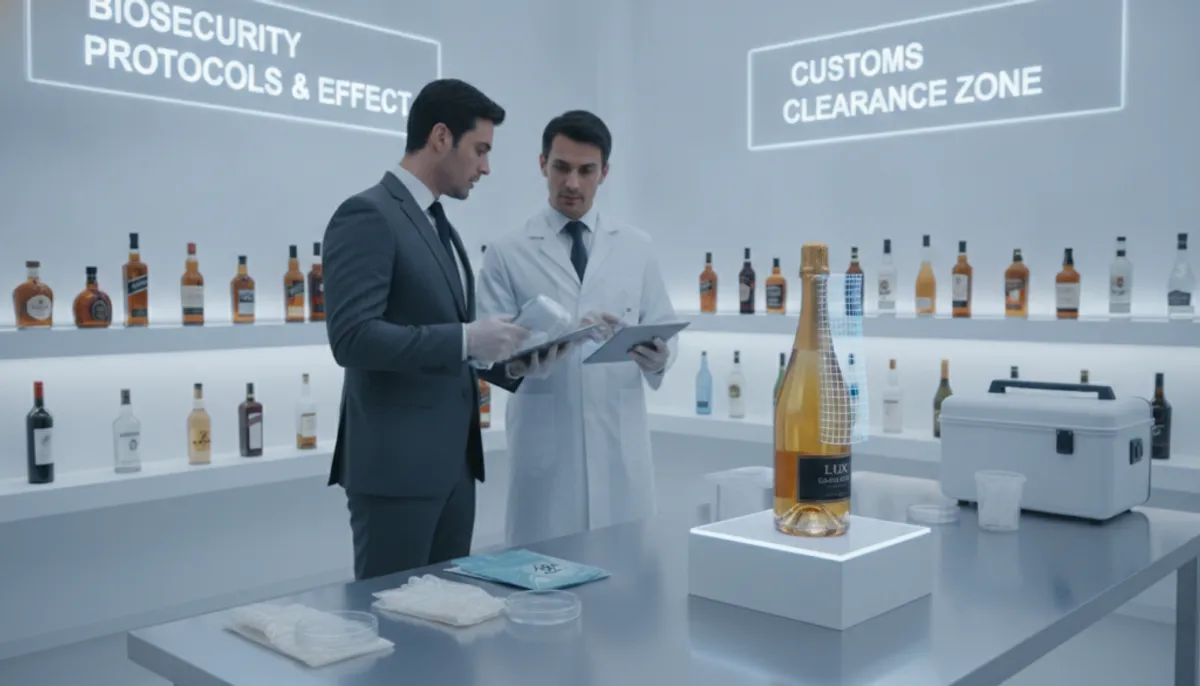
The Department of Agriculture, Fisheries and Forestry (DAFF) enforces the Biosecurity Act 2015 and checks goods for pests and contaminants. Most shelf‑stable, packaged alcoholic beverages clear with standard documentary checks and move on to customs clearance quickly.
Products that contain plant or animal ingredients can trigger extra assessment via the Biosecurity Import Conditions (BICON) system. These reviews protect local ecology and can affect duty, excise, and other taxes if treatment or destruction is required.
- Use BICON early to confirm requirements for wine, spirits, and other products.
- Keep accurate paperwork to speed customs checks and avoid delays or seizure.
- Travelers may bring 2.25 liters duty‑free for personal use; commercial import rules differ.
Looking for Champagne? We’ve got you covered. Discover the finest selections, ready to be exported anywhere in the world. Request your personalized quote today on https://champagne-export.com.
Choosing the Right Logistics and Transportation Methods
Logistics choices shape cost, speed, and the condition of every bottle you move overseas. Air freight delivers speed but raises freight and insurance costs. Sea freight lowers unit cost for large shipments of alcoholic beverages and suits bulk wine and spirits.
Temperature control matters for sensitive products. Use refrigerated containers or climate‑controlled air shipments to protect flavor and cork integrity. Poor temperature management can ruin product quality and trigger customs disputes.
Factor freight, insurance, customs clearance fees, duties, and excise into your landed cost. Accurate budgeting avoids surprises and keeps margins stable.
- Consolidating smaller loads reduces per‑unit freight and simplifies compliance.
- Choose freight forwarders who know alcohol australia rules and customs requirements.
- We help calculate logistics costs and advise on reliable carriers and temperature solutions.
| Mode | Best for | Considerations |
|---|---|---|
| Air Freight | Fast, small high‑value batches | Higher cost, reliable speed, ideal for urgent wine samples |
| Sea Freight | Large shipments of alcoholic beverages | Lower cost, longer transit, needs good temperature control |
Looking for Champagne? We’ve got you covered. Discover the finest selections, ready to be exported anywhere in the world. Request your personalized quote today on https://champagne-export.com.
Securing Your Supply Chain with Legal Agreements
Strong contracts protect margins and help your business respond fast when goods hit customs delays. Draft distribution agreements that state product specifications, pricing, and quality check schedules. Clear specs reduce disputes and speed border clearance.
Supplier agreements should cover intellectual property use, shipping terms, and confidentiality. Include non‑disclosure clauses before sharing new recipes, branding, or commercial plans with partners.
Define Incoterms clearly so both parties know when title and risk transfer. This avoids confusion over who pays insurance or handles damaged goods during transit. Well‑written clauses also limit liability if a shipment is held at customs, including understanding kuwaiti customs procedures.
- Use distribution contracts to lock in price, delivery windows, and quality control steps.
- Include NDAs for early negotiations to protect trade secrets and commercial terms.
- State Incoterms in every contract to clarify risk, cost, and who handles customs clearance.
Looking for Champagne? We’ve got you covered. Discover the finest selections, ready to be exported anywhere in the world. Request your personalized quote today on https://champagne-export.com.
Avoiding Common Pitfalls in the Import Process
Small compliance errors often trigger expensive delays and lost stock at the border, especially when navigating thai import laws.
Labeling mistakes are a leading cause of rework or seizure. Ensure every package shows ABV, standard drinks, country of origin, allergy info, and the mandatory pregnancy warning before goods depart.
Underestimating duty and GST creates cash-flow shocks. Model ad valorem duty, specific excise equivalents, and GST in advance so you can pay at clearance without scrambling for funds.
Missing a state or territory liquor license risks heavy fines. Confirm local sales approvals for your channel — retail, online, or hospitality — before you sell.
Advertising alcohol requires care. Follow the ABAC Code and Australian Consumer Law to avoid enforcement action on promotions and labels.
Biosecurity breaches carry fines between $660 and $6,600 for individuals. Keep complete paperwork and check BICON for any products with plant or animal inputs.
- Verify labels for FSANZ rules before the exporter ships your goods.
- Forecast duties, excise, and GST to prevent payment shortfalls.
- Secure the right liquor license for your state or territory sales.
- Train staff on advertising rules and consumer law to avoid penalties.
- Maintain biosecurity and customs records to reduce inspection risk.
| Risk | Common Cause | Impact |
|---|---|---|
| Label non-compliance | Missing ABV, allergens, or pregnancy warning | Rework, seizure, or return of goods |
| Underpaid duties & GST | Poor cost forecasting | Cash-flow shortfalls, delays at customs |
| Licensing gaps | No state/territory liquor approval | Fines, illegal sales, product removal |
| Biosecurity breach | Undeclared plant/animal ingredients | Infringement notices ($660–$6,600) or destruction |
Looking for Champagne? We’ve got you covered. Discover the finest selections, ready to be exported anywhere in the world. Request your personalized quote today on https://champagne-export.com.
Requesting Your Personalized Export Quote
A custom export quote gives you precise pricing based on volume, routing, and service levels. Provide vessel type, pallet counts, and desired delivery windows so we can calculate duties, taxes, and freight with accuracy.
Looking for Champagne? We’ve got you covered. Discover the finest selections, ready to be exported anywhere in the world. Request your personalized quote today on https://champagne-export.com.
Our team prepares detailed quotes that show all costs: customs, excise equivalents, GST, and carriage. This helps you compare suppliers and plan cash flow before goods move.
- Tailored pricing for your shipment volume and routing.
- Clear breakdown of duties, taxes, and logistics fees.
- Expert support to answer questions about compliance and timelines.
- Competitive rates for premium Champagne and other high‑quality alcohol products.
Request a no‑obligation quote and let us design a supply plan that keeps your margins healthy and your chain reliable. Contact our U.S. team today to begin.
Conclusion
Good preparation and the right partners make customs clearance predictable.
Importing alcohol to Australia demands careful planning: secure licenses, follow FSANZ labeling, adhere to chilean import regulations, and model duty and GST before goods move. Keep clear records and set contracts that define responsibilities.
Looking for Champagne? We’ve got you covered. Discover the finest selections, ready to be exported anywhere in the world. Request your personalized quote today on https://champagne-export.com.
Work with brokers and advisors to protect your supply chain. That support reduces risk at customs, keeps beverages and wine compliant, and helps you deliver high‑quality products to market.