Understanding the final steps in sparkling wine production helps collectors and curious drinkers alike. The cellar master guides a delicate process that shapes texture, clarity, and flavor.
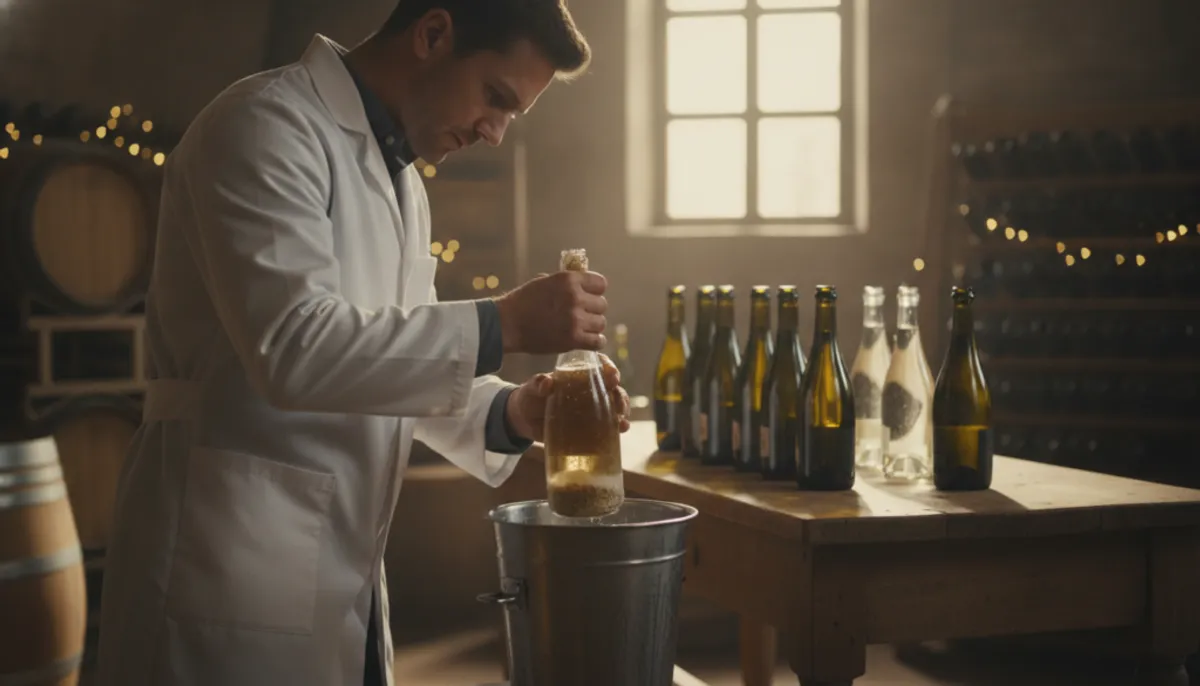
Non-vintage bottles must rest on laths for at least one year, while vintage cuvées need a minimum of three years. During that time, yeast works through a second fermentation to build bubbles and body.
The production involves precise moves like dosage and a careful removal of spent yeast to keep each cuvée crystal clear. This champagne disgorgement step is vital for consistency in any house blend.
Collectors should note ageing periods to build a reliable cellar. If you seek curated selections or an export quote, visit our export site to request personalized information from trusted producers.
Key Takeaways
- Reserve ageing rules differ: non-vintage vs. vintage affect rest years.
- Yeast and second fermentation create the bubbles and character.
- Dosage and disgorgement ensure clarity and balance in cuvées.
- A good cellar plan relies on understanding production and ageing.
- Contact our export team for personalized sourcing and quotes.
Understanding Champagne Disgorgement Explained
A quick cold step transforms the bottle. A brief freeze at the neck traps the spent yeast into a plug. When that frozen plug is removed, the sediment is expelled and the liquid clears.
This action is vital for the final clarity and texture of the wine. The procedure removes lees and polishes the sparkle. It also sets the stage for the final dosage and corking.
Looking for quality bottles handled with care? We’ve got you covered. Request a personalized quote at https://champagne-export.com to learn how this process influences taste and presentation.

- The removal of sediment preserves a clear pour and steady effervescence.
- Export services ensure each bottle reaches its destination in peak condition.
- Working with experts helps buyers understand how this step shapes aroma and mouthfeel.
The Technical Process of Removing Sediment
Clearing the neck of each bottle demands precise timing and steady technique.
The Traditional Method
The classic hand method relies on skill. Bottles are tilted so lees and sediment collect in the neck. This gathers yeast cells in one place for removal.
In the à la volée style, a practiced hand can process about 400 bottles per day. This approach minimizes wine loss but needs experience.
Freezing the Neck
Modern producers often use an ice bath at -25°C to form a roughly 4 cm ice plug. The frozen plug traps sediment and lets the cellar team remove it cleanly.
This method reduces exposure to oxygen and prevents loss of mousse during the release of carbon dioxide from secondary fermentation.
Dosage and Final Corking
After the plug is ejected, a precise liqueur dosage is added. That small addition sets sweetness and supports long-term aromatic evolution.
Final corking seals the bottle for ageing, including the important aspect of champagne aging. Controlling time on lees and the dosage determines how the wine will evolve in months and years.
- Tilting concentrates lees and sediment in the neck for efficient removal.
- Freezing the neck limits oxygen contact and protects the mousse.
- Dosage liqueur shapes sweetness and long-term evolution.
- Automation can process up to 18,000 bottles per hour for large-scale production.
| Method | Typical Rate | Key Advantage | Control Factor |
|---|---|---|---|
| À la volée (hand) | ~400 bottles/day | Minimal wine loss, artisanal control | Skilled hand technique |
| À la glace (freezing) | Automated lines up to 18,000/hr | Fast, consistent, limits oxygen | Temperature control (-25°C) |
| Dosage & Corking | Variable | Determines sweetness and evolution | Precise liqueur measurement |
Looking for Champagne? We’ve got you covered. Discover the finest selections, ready to be exported anywhere in the world. Request your personalized quote today on https://champagne-export.com.
Why the Disgorgement Date Matters for Quality
Reading the date on the back label helps you decide whether a bottle will taste bright or deeply developed.
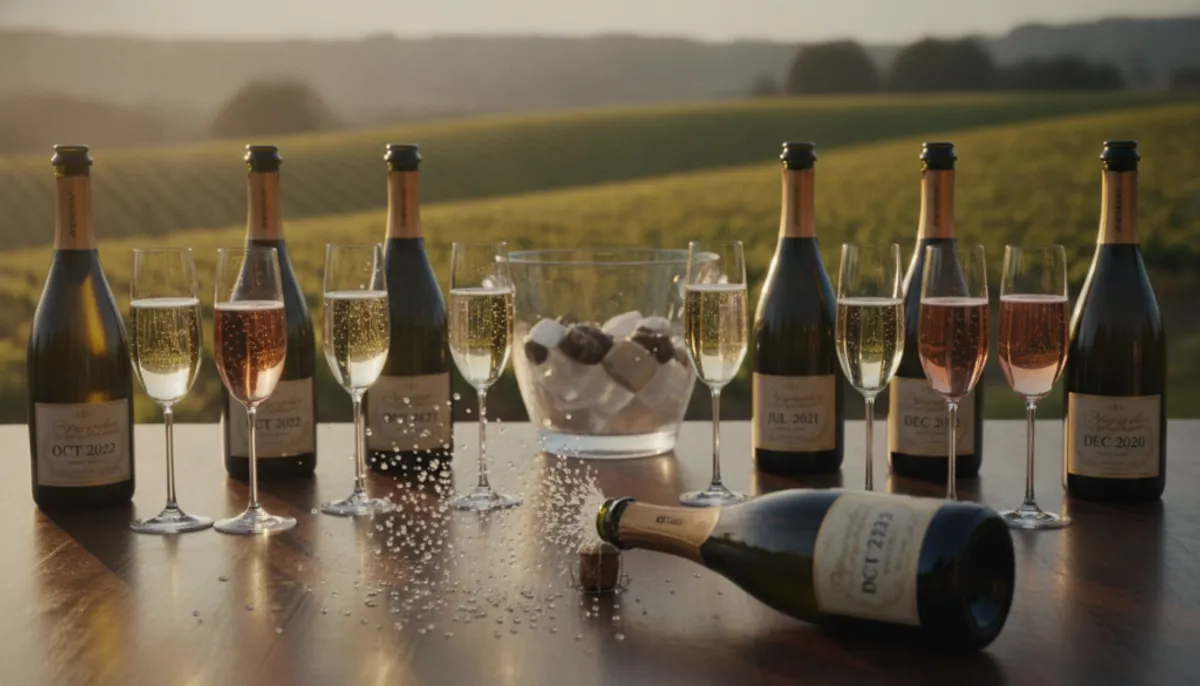
The disgorgement date tells how long the wine rested on lees and how much time it had to evolve in the cellar.
Tracking Freshness and Cellar Aging
The back label’s date gives consumers clear information. A recent disgorgement often signals a fresher, lively wine.
By contrast, a late disgorgement — for example, a 2004 vintage disgorged in October 2013 — shows over eight years on laths. That extra time adds nutty, complex notes.
Non-vintage rules require at least 15 months between base vintage and the date of disgorgement, so the date also confirms legal minimum ageing.
| Type | Date Meaning | Typical Result |
|---|---|---|
| Recent disgorgement | Back label shows a recent date | Fresh fruit, higher vivacity |
| Late disgorgement | Date much later than vintage | More complex, toasty, evolved aromatics |
| Non-vintage (min.) | At least 15 months to disgorgement | Baseline maturity, balanced texture |
Producers and big houses may prioritize a consistent house style over emphasizing exact dates, but the back label remains useful for the curious consumer.
Looking for Champagne? We’ve got you covered. Discover the finest selections, ready to be exported anywhere in the world. Request your personalized quote today on https://champagne-export.com.
The Ongoing Industry Debate Regarding Labeling
Recent clashes over label transparency reveal deeper tensions about quality and consistency, especially regarding imported wine labeling.
In 2014, Frédéric Panaiotis of Ruinart prompted a public row by opposing mandatory display of the disgorgement date on non-vintage labels. That move set critics and producers at odds.
Antonio Galloni responded sharply, saying he would stop reviewing non-vintage bottles if disgorgement dates were absent. His point: a reader needs the date to match the review to the exact wine.
Producers such as Billecart-Salmon defend their approach. They argue their cuvées reach the market ready to drink, so the back label need not carry extra information for the consumer.
- Divide: traditional houses favor house style; some critics demand transparency.
- Impact: the presence of a disgorgement date helps buyers track vintage evolution and quality.
- Support: our export platform at https://champagne-export.com clarifies labeling differences so you can choose the right bottle and producer.
The debate over disgorgement dates reflects how the industry balances terroir, house consistency, and consumer information when listing dates on the label.
Conclusion and Export Opportunities
A clear grasp of the final cellar steps helps collectors choose bottles with confidence. Understanding drink terminology, disgorgement, and lees aging reveals how the production process shapes texture and flavor in each wine.
Whether you track a disgorgement date or value long cellar time, those choices affect tasting and aging. Good knowledge helps you build a reliable cellar and select the right wines for your collection.
Looking for Champagne? We’ve got you covered. Discover the finest selections, ready to be exported anywhere in the world. Request your personalized quote today on https://champagne-export.com.
Why work with us: clear sourcing, expert handling, and tailored export support to match your standards for provenance and quality.