Choosing between a single-year bottle and a blended house style is a personal choice. Your palate and the moment you celebrate shape the best pick. Some people seek the depth that a single harvest can bring. Others prefer the steady profile found across many years.
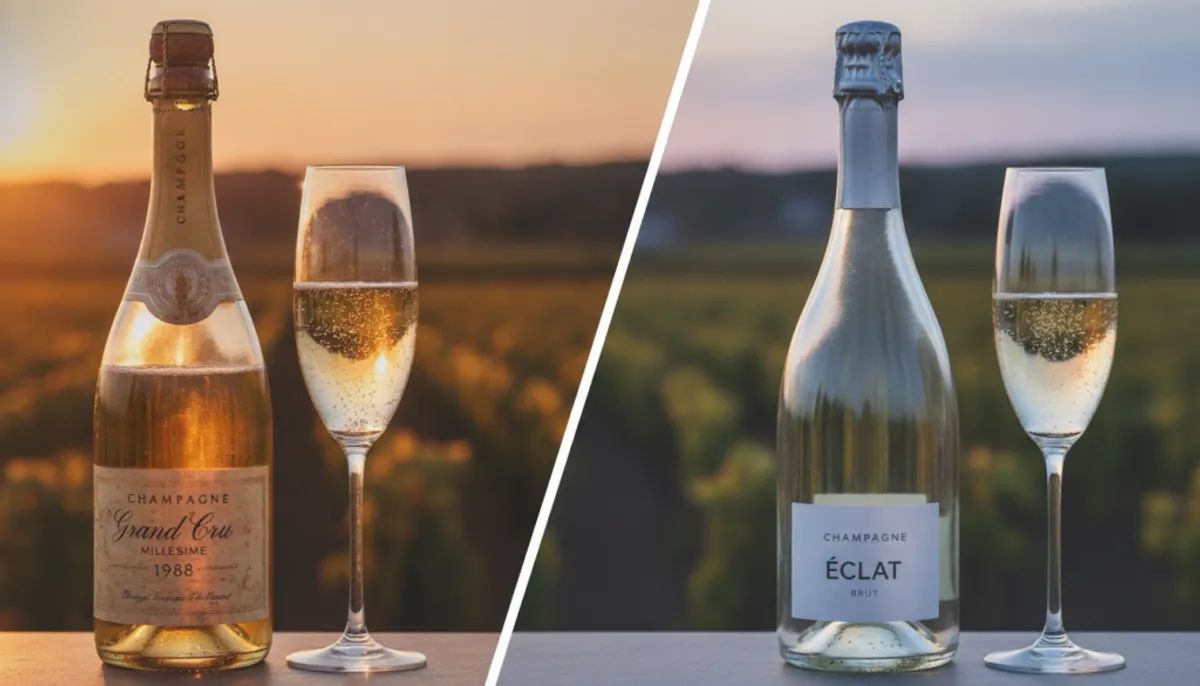
A single-year release reflects the climate and character of one harvest. It can show unique flavors tied to that year. By contrast, a blended house style aims for consistency. That steady profile is why many wine lovers return to the same label for dinners and parties.
In this guide, we explain history, production, and tasting tips. You will learn how each method affects flavor and aging. That will help you make an informed choice for your next special event.
Key Takeaways
- Single-year bottles mirror the climate of a distinct harvest.
- Blended styles deliver a consistent, reliable profile across years.
- Both categories of wines offer excellent quality and character.
- Consider the occasion and your palate when making a choice.
- This guide covers history and production to aid smart selections.
Understanding the Basics of Champagne
Wines labeled Champagne follow precise regional laws that shape their identity and quality. Producers must grow grapes and vinify them inside France’s Champagne region to use the name.
A dedicated house often protects a steady style across releases. That identity keeps customers returning, whether they prefer single harvest bottles or blended labels.
When you open a non-vintage champagne bottle, you taste a careful blend of vintages collected over several years. Winemakers mix base wines to achieve balance and a signature profile. For those interested in importing champagne to the usa, understanding these blends is essential.
Strict rules govern pruning, pressing, fermentation, and aging each year. These controls ensure high-quality sparkling wine and protect regional tradition.
- Region: Must be made in Champagne.
- House style: Created and maintained by cellar teams.
- Harvest expression: Single-year bottles capture a season’s character.
| Feature | Single Year | Blended House |
|---|---|---|
| Character | Reflects one growing season | Consistent signature profile |
| Blend | Often single vintage components | Multiple years combined |
| Aging | Can be more variable | Designed for steady drinkability |
Defining Vintage vs Non-Vintage Champagne
A bottle made from one harvest tells a direct story of that year’s weather and grapes. When a house declares a release from a single year, it signals that the grower found the season exceptional. Such a bottle shows unique terroir and a focused character.
The Significance of a Single Year
A single-year bottle uses only grapes harvested in that season. By rule, the producer must age that release at least three years on the lees to build depth and complexity.
The Consistency of Non-Vintage Blends
In contrast, multi-year blends combine components from different years. This blend preserves a reliable house style so consumers get a familiar profile year after year.
- Declaring a single-year is a major decision for any house; the harvest must be near-perfect.
- Single-year bottles often need more cellar time than blended releases to reach their peak.
- Blended labels focus on steady quality and drinkability across many occasions.
| Feature | Single-Year | Multi-Year Blend |
|---|---|---|
| Source | Grapes harvested in one year | Wines from several years |
| Aging | Minimum three years on lees | Shorter, consistent program |
| Result | Distinct character and complexity | Reliable house style |
The Crafting Process and House Style
The cellar master shapes each house’s signature through tasting and timing. The master tastes base lots, checks acidity and structure, and decides if a single year merits a declared release.
The Role of the Cellar Master
A cellar master balances art and science to protect quality. They ensure grapes harvested meet the house standard before naming a year on the label, especially in light of evolving regulations such as brexit trade policies.
The 2016 Taittinger vintage Brut showcases this work: it rested five years on lees to build texture and depth.
- The cellar master blends components to preserve the house style while highlighting a great harvest.
- Many houses use Grand Cru and Premier Cru grapes to boost aging potential in a declared release.
- Including Pinot Noir and Pinot Meunier adds structure and mid-palate weight versus steady non-vintage champagnes.
| Aspect | House Practice | Effect on Wine |
|---|---|---|
| Decision maker | Cellar master | Consistency and quality control |
| Fruit source | Grand & Premier Cru grapes | Improved aging potential |
| Lees aging | 3–5+ years (example: Taittinger 2016) | Richer texture, complex notes |
| Blend makeup | Chardonnay / Pinot Noir / Pinot Meunier | Balance between finesse and depth |
Aging Potential and Cellar Requirements
Cellar conditions are the quiet engine behind a bottle’s ability to age gracefully. Proper storage preserves acidity and allows complexity to develop over time. That matters whether a house declares a single year or blends across seasons.
The Significance of a Single Year
A declared single-year release often needs patience. These bottles commonly show deeper development and can last for decades when stored well.
The Comtes de Champagne 2014 spent 10 years on lees before release, a clear example of how time builds texture and depth.
The Consistency of Multi-Year Blends
Blended bottles aim for steady drinkability and must adhere to uae alcohol labelling requirements. They still benefit from cool, dark cellar space and consistent temperature control.
Key cellar rules:
- Store bottles in a cool, dark place with stable temperature.
- Respect the minimum three years on lees for declared releases as the baseline for complexity.
- Consider specialized racks and humidity control when investing in high-value bottles.
| Factor | Single-year Bottle | Multi-year Blend |
|---|---|---|
| Aging potential | Higher with proper cellar care | Designed for earlier drinkability |
| Lees time | Often 3–10+ years (example: Comtes de Champagne 2014) | Minimum three years for house quality |
| Collector needs | May require specialized equipment | Lower storage demands |
The cellar master monitors bottles as they age, ensuring each release reaches the intended quality. For many collectors, the higher costs of production mean investing in proper cellar gear is worthwhile. Additionally, champagne imports cyprus have become increasingly popular, highlighting the importance of maintaining temperature steady and light minimal so grapes from a great year can show their full potential in the bottle.
Sensory Profiles and Tasting Notes
Your first sip can tell whether a bottle leans toward bright youth or slow-molded depth. This section outlines how aromas and palate change with time and style so you can taste with confidence.
Young vintage characteristics
Young single-year bottles often show crisp fruit and lively bubbles at release. Expect citrus, green apple, and a direct, focused mouthfeel.
Pinot Noir and Pinot Meunier add mid-palate weight while Chardonnay lends fresh acidity. These wines are bright and energetic right after release.
Mature complexity
With time on the lees, aromas shift to brioche, toast, and honeyed notes. Layers of stone fruit and dried citrus develop as tertiary flavors emerge.
Finer, persistent bubbles are a hallmark of well-aged releases and signal strong aging potential. A famous line in Casino Royale — “I’ll take Taittinger blanc de blancs” — captures the refined character such bottles can show.
The freshness of non-vintage bottles
Many houses craft blended releases that prioritize immediacy and a lively profile. These are ideal for early enjoyment.
Non-declared blends focus on consistency: clean fruit, vibrant acidity, and approachable bubbles that suit a wide range of foods and occasions.
| Profile | Young Single-Year | Mature Single-Year | Blended Release |
|---|---|---|---|
| Aroma | Citrus, green apple | Brioche, toast, honey | Fresh fruit, floral notes |
| Palate | Bright, direct | Layered, silky | Balanced, approachable |
| Bubbles | Energetic, lively | Finer, more persistent | Fresh, lively |
| Aging potential | Good short-term | High with cellar time | Designed for early drinkability |
Food Pairing Recommendations for Every Occasion
Pairing the right bottle with a menu turns any meal into a memorable event. Think of the bottle’s age, structure, and fruit profile when you plan a menu.
Mature vintage champagne with toast and honey notes pairs beautifully with rich dishes. Try truffle risotto or roasted lobster for a refined match. Older bottles from a notable year need gentle, complementary food so the wine stays in balance.
The lively bubbles of a non-vintage champagne make it ideal for lighter fare. Sushi, scallops, and salads work well. Sparkling wines with bright fruit also suit brunch and casual gatherings.
- Hearty options: Pinot Noir and pinot meunier-based blends stand up to roasted meats and game.
- Delicate plates: Older vintage bottles pair best with subtle seafood or creamy starters.
- Versatile picks: Fruit-forward sparkling wine fits international dishes from tapas to Thai.
Practical tip: match intensity, not just style. Choose a bottle that complements the food so both shine and guests remember the meal.
Sourcing and Exporting Your Favorite Bottles
Securing a sought-after bottle depends on timing, provenance checks, and careful logistics, including malta customs clearance. Our export team makes that process simple for U.S. buyers. We source rare releases and everyday favorites with equal care.
Requesting Your Personalized Quote
Looking for Champagne? We’ve got you covered. Discover curated selections ready to ship anywhere in the world. Request your personalized quote today on https://champagne-export.com and get tailored pricing and shipping options.
- We offer a curated selection of the finest wines, including rare vintage bottles that collectors prize as vintage champagne expensive items.
- Our team handles each bottle—Pinot Noir blends and crisp non-vintage champagne alike—so every order leaves the cellar in perfect condition.
- We ship globally, ensuring your chosen wines reach you anywhere in the world with secure packaging and clear documentation.
- If you seek fruit-forward vintages for your cellar, we can source specific years and guide you on authenticity and value.
| Service | What we do | Benefit |
|---|---|---|
| Curated sourcing | Locate rare and classic bottles | Access to hard-to-find wines |
| Export logistics | Handle paperwork and secure shipping | Safe delivery across the world |
| Personal quotes | Custom pricing and advice | Transparent costs and timelines |
Request your personalized quote today on https://champagne-export.com to start your journey toward owning prestigious bottles. Our friendly team will answer questions and arrange shipment to your door.
Conclusion
Every bottle tells a story. Some speak of a single harvest and a marked year. Others reflect a house’s steady style and careful blending.
The Laurent-Perrier 2002 is often cited as one of the greatest modern vintage champagne examples. It shows how grapes, weather, and time combine to make exceptional quality.
Choosing between a declared year and a signature release is a rewarding journey. Learn the roles of Pinot Noir and other varieties, consider aging and fruit character, and pick what fits your occasion.
Whether you build a cellar or select a bottle for tonight, the choice reveals your taste and appreciation of fine wines.