, Looking for exceptional bubbly for your business? Our team makes the process simple and friendly. We source top producers and handle the complex steps behind every shipment.

Whether you deal in wine or other fine alcohol, we provide clear information and tailored support. You can request a personalized quote right now at https://champagne-export.com and start planning delivery into the United States. Additionally, we offer wholesale champagne deals to help you find the best prices for your business needs.
Our experts check standards and paperwork so your brand stays compliant. We focus on quality, timing, and customs details so you can grow with confidence.
Key Takeaways
- Get a custom quote fast via our official website.
- We provide clear guidance on wine and alcohol shipments.
- Every shipment is reviewed for U.S. entry standards.
- We simplify paperwork and logistics for your brand.
- Support is tailored for business needs in the United States.
Understanding the Federal Requirements to Import Champagne to USA
Understanding federal rules is the first step for any company bringing alcoholic beverages into the United States. This section summarizes the core federal requirements every importer must meet before arranging product entry.
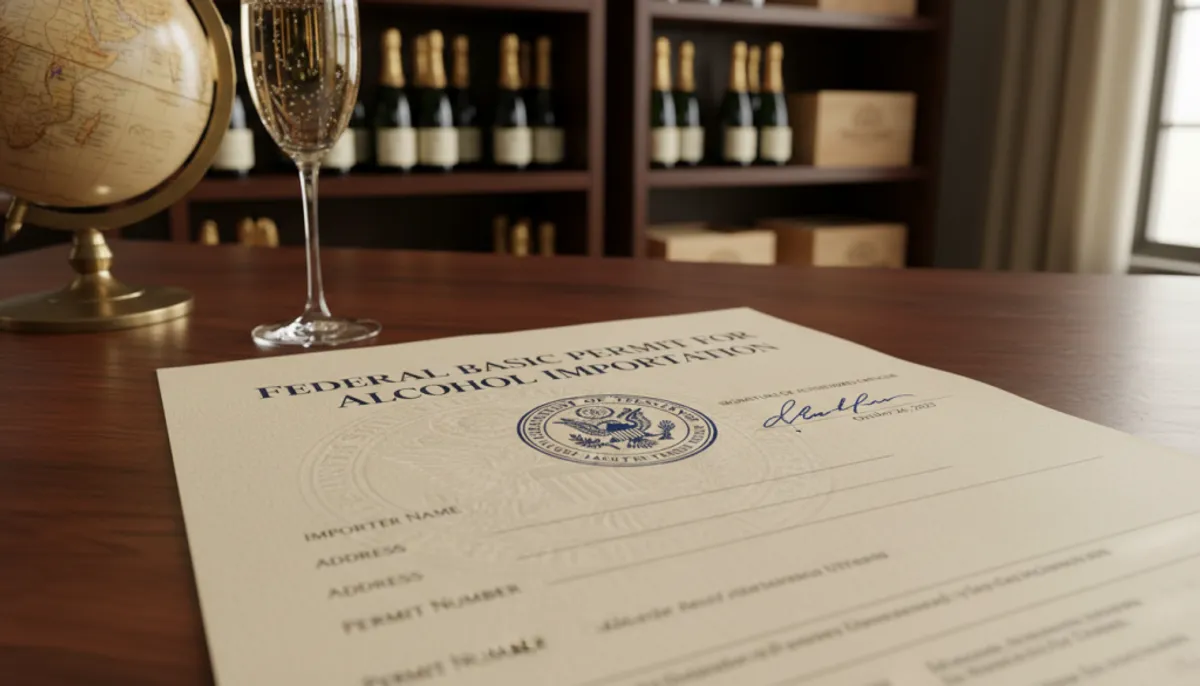
Federal Basic Permit
To legally import alcoholic beverages, an importer must secure a Federal Basic Permit. File form TTB F 5100.24 under the Federal Alcohol Administration Act.
The Alcohol and Tobacco Tax and Trade Bureau (the TTB) reviews the application and enforces regulations on every beverage product entering the United States. There are no government fees for the basic permit application.
Business Office Requirements
Applicants must maintain a physical business office in the United States. The office shows your company can handle compliance and ongoing operations.
If you cannot staff a U.S. office, contract with a licensed importer to manage entry and compliance. Every importer must also show financial standing and trade connections.
- File form TTB F 5100.24 for the basic permit.
- Contact the National Revenue Center at 877-882-3277 for application assistance.
- Work with a licensed local importer if you lack a U.S. office.
Navigating Labeling and Formula Approval Standards
A clear label and verified formula are required before any beverage may clear entry into the United States. These rules protect consumers and help customs process shipments without delay.
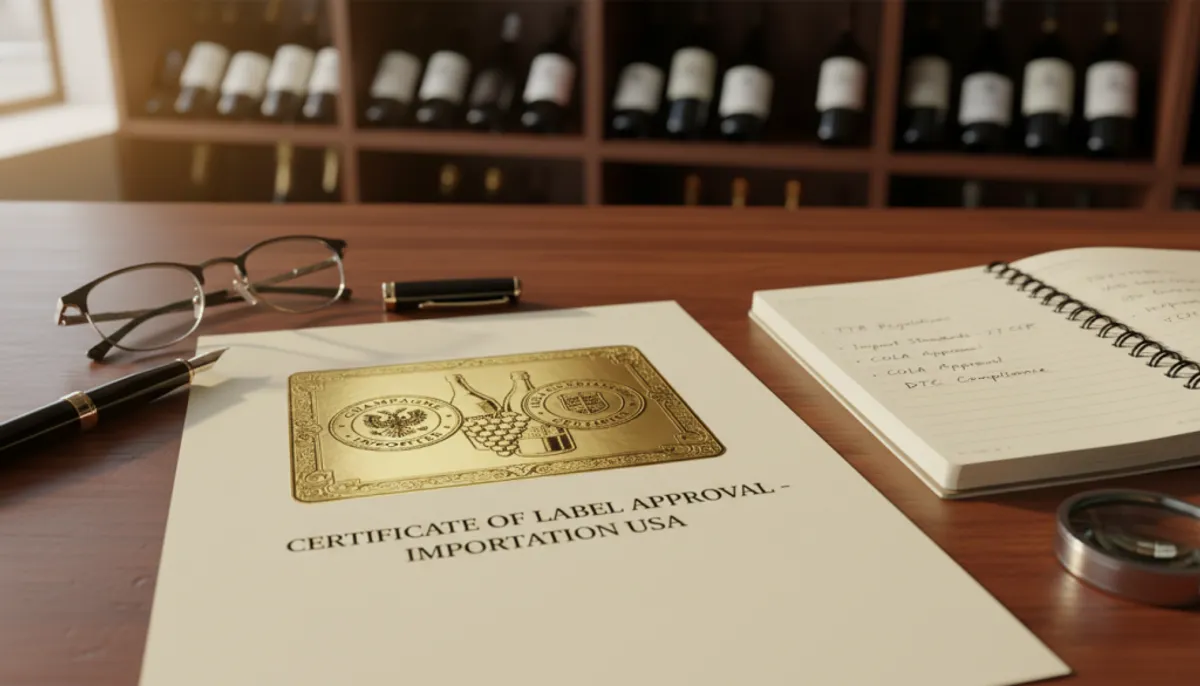
Certificate of Label Approval Process
Every unique wine or alcohol product must have a certificate label approval (COLA) before arrival. Submit form TTB F 5100.31 to the Alcohol Labeling and Formulation Division for review.
- COLA required: Each beverage needs a valid certificate of label approval at the time of entry.
- Why it matters: The tax trade bureau verifies that label content is accurate and not misleading.
- Formula checks: If ingredients or non‑traditional methods are used, the TTB may require formula approval and documentation such as flavor ingredient sheets.
- Age and origin: A certificate of age or origin is mandatory for certain wine and spirit products.
- Questions: Contact the Alcohol Labeling and Formulation Division at 202-453-2250 for COLA guidance.
Plan ahead: a complete certificate label package and supporting documentation keeps customs moving and helps the importer avoid costly holds at the port.
Managing Federal Excise Taxes and Customs Duties
Handling federal excise and customs duties early prevents costly delays at port entry. Importers are responsible for federal excise taxes and duties collected by Customs and Border Protection when a product arrives at the port.
The Craft Beverage and Modernization Act (CBMA) offers lowered excise rates for qualifying wine and spirits. Travelers may bring one liter duty-free, while larger shipments are subject to standard tax rules.
- File form TTB F 5630.5(d) to register as an alcohol dealer before commercial activity.
- Work with your freight forwarder to prepare documentation for customs clearance at the port.
- Federal excise is calculated by product type and volume; rates differ for beer, wine, and spirits.
| Item | Who Pays | Where Collected | Notes |
|---|---|---|---|
| Federal excise taxes | Importer | Port of entry | Rates vary by beverage type and volume |
| CBMA reduced rates | Eligible brands | Applied at tax filing | Requires qualification documentation |
| Customs duties & fees | Importer | CBP at port | Handled during customs clearance |
| Dealer registration | Importer | TTB filing | File TTB F 5630.5(d) before operations |
Good tax management keeps margins healthy for high-volume beverage shipments. The TTB and Customs play key roles in ensuring correct payment and smooth entry.
Selecting Distribution Partners and State Compliance
State rules shape every step of distribution for alcoholic beverages, so a local strategy is essential.
Each of the 50 states in the United States has its own regulatory framework for alcohol sales. Some operate as open markets while others are control states where a government agency manages wholesale distribution.
State Regulatory Frameworks
Before market entry, an importer must research state requirements, including the best champagne prices in saudi arabia. That includes registration, local fees, and any price posting deadlines for wine or other beverage products.
State-level regulations may be more restrictive than federal rules. Obtain any required permit and verify how government agencies handle wholesale distribution in each state.
Selecting a Distributor
Choosing a distributor is a key business decision. A luxury champagne distributor can enhance your offerings. Review a distributor’s current portfolio, warehouse reach, and sales structure.
Confirm they understand local regulations and can handle compliance for alcoholic beverages and product entry paperwork.
Building Sales Relationships
Work closely with sales reps to gain market traction. Strong relationships help your company place products on shelves and gain timely feedback on retail performance.
- Engage local suppliers for practical information on the state process.
- Confirm the distributor supports COLA and any TTB-related records.
- Monitor state permit renewals and compliance changes regularly.
Conclusion
Start your export journey with clear guidance and fast, personalized quotes.
Looking for Champagne? We’ve got you covered. Our team helps brands handle permits, labels, and customs so deliveries reach American shelves safely.
For expert guidance, contact the TTB International Affairs Division at 202-453-2260. We secure necessary paperwork and manage compliance for state and federal rules.
Ready to expand? Request your personalized quote at https://champagne-export.com and let our experts simplify the process for your brand.