Looking for Champagne? We’ve got you covered. This guide outlines the key steps for bringing premium sparkling wine to the Brazilian market in 2027.
Clear rules, practical tips, and expert support help you move from quote to customs release with confidence. You will learn about duties, labeling standards, and the customs checks that matter most for compliance.

Our team assists businesses with export paperwork, quality control, and logistics for top houses like Moët & Chandon and Veuve Clicquot. Request your personalized quote today on https://champagne-export.com and start your export journey with professional care.
Key Takeaways
- Understand 2027 customs, duties, and labeling rules early to avoid delays.
- Work with specialists to ensure full compliance and smoother clearance.
- Quality checks and proper documentation reduce inspection risks.
- Top Champagne selections are available for global distribution at the provided site.
- Request a tailored quote to match your shipment size and route.
Understanding the Brazilian Wine Market
Consumer demand now favors quality and clear brand stories. The market mixes strong local producers with selective imported wines that offer provenance and luxury.
Current Market Trends
Chandon Brasil, founded in 1973 in Garibaldi, set early standards for luxury sparkling wine value. Today, volume is rising in urban centers like São Paulo and Rio de Janeiro.
Importers and local companies adjust portfolios to match changing tastes. Professional importers list portfolios on their website to show how they position products and manage distribution from each company address.
Changing Consumer Preferences
Modern buyers seek unique stories and consistent quality. Exporters must offer premium products that justify the exchange rate and compete on value, not just price.
- Premium sparkling and distinctive regional wines perform well.
- Top importers focus on traceability and brand narrative.
- Distribution hubs in major cities speed market reach.
| Segment | Typical Volume | Value Per Bottle | Key Buyers |
|---|---|---|---|
| Local Sparkling | High | Medium | Retail chains, hospitality |
| Imported Premium | Moderate | High | Specialty importers, sommeliers |
| Everyday Table Wines | High | Low | Supermarkets, mass distributors |
Looking for Champagne? We’ve got you covered. Discover the finest selections, ready to be exported anywhere in the world. To fully enjoy your champagne, it's essential to consider the champagne serving temperature. Request your personalized quote today on https://champagne-export.com.
Essential Requirements for Importing Champagne into Brazil
Successful entry of luxury bottles depends on correct certificates, labeling, and declared value. In 2020, the imported FOB value for wine exceeded USD 427 million, showing clear market potential for exporters, especially considering the impact of champagne tariffs in south korea.
Strict regulations govern the entry of alcohol products, including adherence to thailand customs regulations. You must submit accurate documentation that proves origin, value, and safety. Missing papers cause delays and extra costs.
- The 2020 data (USD 427M) highlights opportunity for trade and higher-value wines.
- Certificates of origin and precise invoices speed customs review and protect declared value.
- We offer practical information to manage requirements so your goods clear without surprise fees.
| Requirement | Why It Matters | Suggested Action |
|---|---|---|
| Certificate of Origin | Reduces duty risk and proves provenance | Obtain notarized export papers |
| Accurate Invoice Value | Determines taxes and compliance checks | Declare true FOB value and attach proof |
| Health & Labeling | Ensures product safety and market entry | Meet MAPA rules and provide lab reports |
Looking for Champagne? We’ve got you covered. Discover the finest selections, ready to be exported anywhere in the world. Request your personalized quote today on https://champagne-export.com.
Navigating the Radar Registration System
Radar Registration is the gateway that lets a company begin formal foreign trade and access Siscomex. This qualification is mandatory for any importer who wants to use the Portal Único do Comércio Exterior.

Understanding Import Limits
Every importer must secure Radar Registration to gain access to the Siscomex platform, which is monitored by the Brazilian Federal Revenue Service.
The type of license you obtain determines the volume and type of goods your business can import. Choose wisely: the license class affects how many imports you may declare and how customs processes your entry.
- Proper management of your import license keeps goods moving through customs with fewer delays.
- We guide companies through paperwork, ensuring compliance with federal revenue rules and smoother trade operations.
- Need tailored support? Request a personalized quote to streamline registrations and imports at https://champagne-export.com.
Compliance with MAPA and Agricultural Regulations
Start compliance early: MAPA registration and SIGVIG filings prevent costly border holds. The Ministry of Agriculture, Livestock and Supply requires formal product registration via SIPEAGRO for all wine and other alcohol products. Additionally, understanding alcohol import restrictions is crucial for ensuring that your products meet all necessary legal requirements.
SIPEAGRO Registration
SIPEAGRO records each product so state inspectors can verify safety for human consumption. Your company must file accurate product data and lab reports. Missing details cause delays and extra inspections.
SIGVIG Procedures
SIGVIG manages the import application and coordinates inspections at state level. An approved SIGVIG request clears the entry of agricultural goods and reduces the chance of rejection.
- Mandatory: Register product in SIPEAGRO before shipment.
- State checks: SIGVIG links federal approval to local inspections.
- Certificate support: We help obtain the right certificate for each product to meet MAPA requirements.
| Process | Who Manages It | Key Action | Outcome |
|---|---|---|---|
| SIPEAGRO Registration | MAPA | Submit product dossier and lab reports | Product approved for market entry |
| SIGVIG Application | State inspectors | Request inspection and entry clearance | Goods released after state verification |
| Certificate Issuance | Export company / MAPA | Obtain and attach certificate to shipment | Smoother customs processing |
Need help? We provide clear guidance to avoid common errors that block goods at the border. Looking for Champagne? We’ve got you covered. Discover the finest selections, ready to be exported anywhere in the world. Request your personalized quote today on https://champagne-export.com.
Mandatory Documentation for Customs Clearance
Clear, organized documentation speeds customs review and gets goods released faster.
Successful customs clearance depends on accurate paperwork. Start with a correct commercial invoice and an exact bill lading. These two items set the declared value and help agents process the entry.
Prepare your import license and related certificates early. A valid certificate origin must match the invoice and packing list. Small errors trigger checks and delays.
- Keep the commercial invoice clear: unit counts, HS codes, and FOB value.
- Match the bill lading to the shipment details and consignee name.
- Ensure the import license is active for the declared goods and volume.
- Attach any health or lab reports that support the certificate requirements.
| Document | Why It Matters | Action |
|---|---|---|
| Commercial Invoice | Sets taxable value for customs clearance | Verify prices, HS codes, and signatures |
| Bill Lading | Proves shipment movement and carrier data | Confirm consignee and shipment dates |
| Import License / Certificate | Allows legal entry and regulatory checks | Obtain and match to product description |
We provide the information and details to prepare every certificate correctly. Our experts check each document so customs agents can release your goods quickly.
Looking for Champagne? We’ve got you covered. Discover the finest selections, including champagne half bottles, ready to be exported anywhere in the world. Request your personalized quote today on https://champagne-export.com.
Managing Import Taxes and Duties
A clear tax plan helps protect your shipment’s value from unexpected fees. Start by mapping the main levies: Import Tax (II), IPI, PIS/PASEP, and state ICMS. These charges determine the landed cost of your goods at entry.
Align documents early. Make sure the commercial invoice and bill lading show consistent values and descriptions. The Federal Revenue relies on matched paperwork to process customs clearance smoothly.
We calculate how each tax affects final pricing so you avoid sudden financial impacts. Proper alignment with your import license reduces the risk of fines and holds during customs checks.
- Understand II and IPI rates and how ICMS is applied at state level.
- Keep the commercial invoice accurate to protect declared value.
- Match bill lading details to shipment and consignee data for faster customs clearance.
| Tax | Who Charges | Impact on Price |
|---|---|---|
| Import Tax (II) | Federal | Increases base cost on arrival |
| IPI | Federal | Applies to industrialized goods; affects margin |
| ICMS | State | Varies by state; can significantly raise retail price |
| PIS / PASEP | Federal | Small percentage but required for clearance |
We help secure the correct import license and prepare filings that satisfy the Federal Revenue. For a detailed tax analysis, visit https://champagne-export.com and request your personalized quote today.
Logistics and International Freight Considerations
Freight choices and staging points define how your wines, including private label wine, move, cost, and arrive in market-ready condition.
Choosing the Right Modal
Maritime or air? For large volume shipments, maritime transport often lowers cost per case and protects value. For small, urgent loads, air freight reduces time but raises cost.
Insurance Coverage
Protect the goods. Insurance should match the declared value and cover transit risks. Review rate and type options so your product reaches the destination address intact.
Customs Bonded Areas
Use bonded storage to stage goods before customs entry. This gives exporters access to flexible timing and reduces pressure on documentation.
- Choosing the right freight modal, for example, maritime transport for large volumes, controls cost and preserves wine value.
- We provide information on using customs bonded areas to store goods safely before Federal Revenue checks.
- Proper logistics planning and insurance ensure the bill lading and shipment details align for smooth customs entry.
| Consideration | Benefit | Recommended Action |
|---|---|---|
| Modal (sea/air) | Balance cost vs. speed | Select by volume and rate |
| Insurance | Protects declared value | Insure at CIF or full coverage |
| Bonded Area | Flexible clearance timing | Stage goods near port before entry |
Looking for Champagne? We’ve got you covered. Discover the finest selections, ready to be exported anywhere in the world. Request your personalized quote today on https://champagne-export.com.
Selecting the Right Brazilian Importer
A trusted partner on the ground opens distribution doors and builds local brand recognition.
Selecting the right importer is a strategic decision. Established names like Adega Curitibana (active since 2001) and Baccos (founded July 18, 1968) bring deep market access and proven expertise. To make an informed choice, consider conducting a champagne distributor comparison to evaluate their offerings and capabilities.
We help you evaluate potential partners by checking their official website, physical address, and track record of handling wine from multiple countries.
- A reliable importer acts as an extension of your company and protects your brand across regions.
- Look for firms with clear logistics, compliance knowledge, and retail or hospitality contacts.
- Use our database to shortlist partners who provide genuine market access and local insight.
| Importer | Established | Strength | Best For |
|---|---|---|---|
| Adega Curitibana | 2001 | Regional networks, retail | Premium and regional wine |
| Baccos | 1968 | Longstanding trade ties, family expertise | Luxury and heritage brands |
Looking for Champagne? We’ve got you covered. Discover the finest selections, ready to be exported anywhere in the world. Request your personalized quote today on https://champagne-export.com.
Labeling and Certification Standards
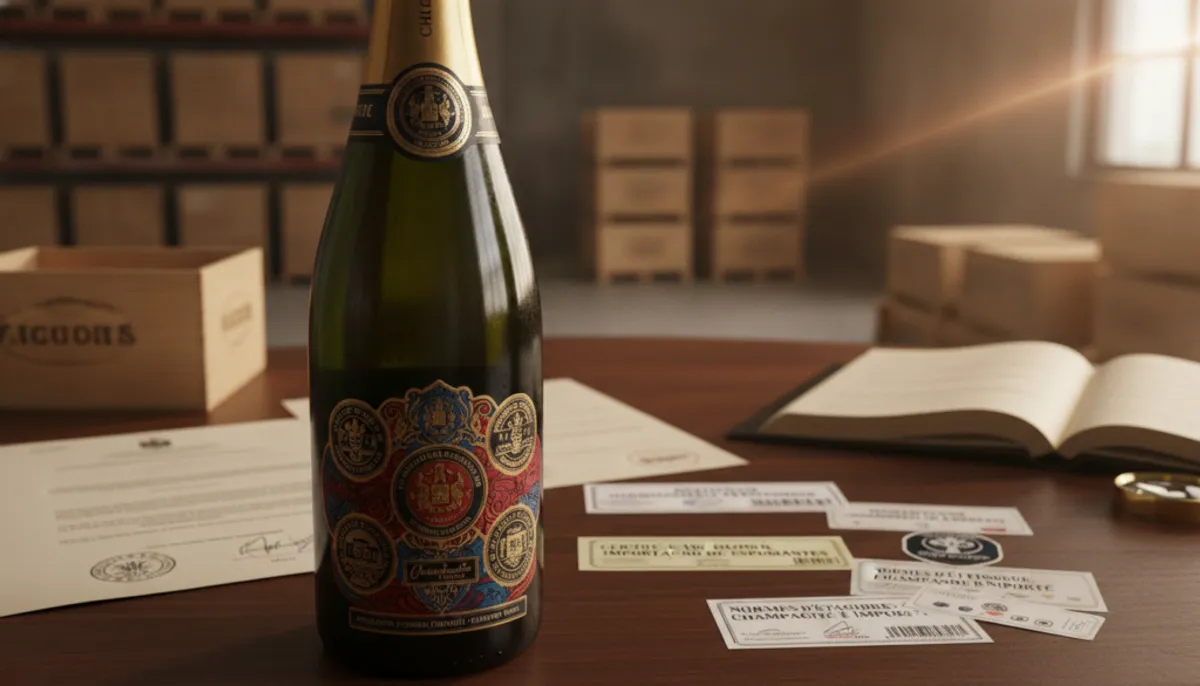
Clear labeling tells buyers and customs exactly what’s inside each bottle and where it comes from. Proper labels protect your product, speed clearance, and help the importer present accurate information to authorities.
Certificate of Origin Requirements
Every wine product must display alcohol content, ingredients, and the specific origin of the grapes. These details are mandatory and help officials verify the certificate origin.
Exporters should supply a notarized certificate that exactly matches the product description and address on the commercial invoice. Mismatched data triggers extra checks.
- Strict labeling regulations require visible alcohol percentage, ingredient list, and place of origin for each product.
- We guide exporters through certificate origin procedures to meet the rules of the destination country.
- Each label must comply with local regulations so the importer can clear customs without delays.
- Our team verifies packaging and certification to prevent refusals due to missing or incorrect information.
| Item | Why it matters | Action |
|---|---|---|
| Label data | Supports customs inspection | Match label to invoice and certificate |
| Certificate origin | Proves country of grape origin | Obtain notarized and translated copy |
| Importer details | Needed for clearance | Confirm address and contact on documents |
Looking for Champagne? We’ve got you covered. Discover the finest selections, ready to be exported anywhere in the world. Request your personalized quote today on https://champagne-export.com.
Strategic Tips for Successful Market Entry
Clear priorities—product positioning, tax planning, and local access—cut time to market. Start by defining which products and wine styles match your target buyers in the U.S. export channel.
Plan taxes early. Map likely tax rates and the total cost so your price protects value and margin. Use conservative estimates for tax and freight in your business model.
Work with vetted importers and a reliable importer contact to secure local access. Gather key information and documents — certificate origin, license status, and company address — before shipping.
- Focus on premium wine products that deliver high value and appeal to discerning buyers as an example of a focused strategy.
- Manage tax exposure by modelling II, IPI, and ICMS impacts on landed cost.
- Optimize freight and volume choices to balance speed, cost, and product safety.
- Build clear product details and labels that meet local regulations to speed entry.
- Let experts collect the information you need to form strong relationships with importers and grow brand volume.
| Action | Benefit | Example |
|---|---|---|
| Tax modelling | Protects margin | Estimate II and ICMS rates |
| Choose importer | Faster market access | Local distributor with retail links |
| Align origin & label | Fewer inspections | Match certificate to invoice |
Visit our website to request a tailored plan. Looking for Champagne? We’ve got you covered. Discover the finest selections, ready to be exported anywhere in the world. Request your personalized quote today on https://champagne-export.com.
Conclusion
A smooth market launch depends on accurate data, firm processes, and trusted local partners.
Work with experienced importers who know customs, tax rules, and freight options. They shorten entry time and control cost while protecting product volume and value.
Ask your importer about license, certificate, and address verification before shipment. Clear paperwork reduces inspections and eases foreign trade barriers for your company.
We help exporters match products to the right market and manage taxes and logistics from quote to delivery. Looking for Champagne? We’ve got you covered. Discover the finest selections, ready to be exported anywhere in the world. Request your personalized quote today on https://champagne-export.com.