Enjoying a fine bottle starts with a few small choices. The right approach keeps the bubbles lively and lets the wine show its best aromas. Small steps make a big difference in how each pour feels and tastes.
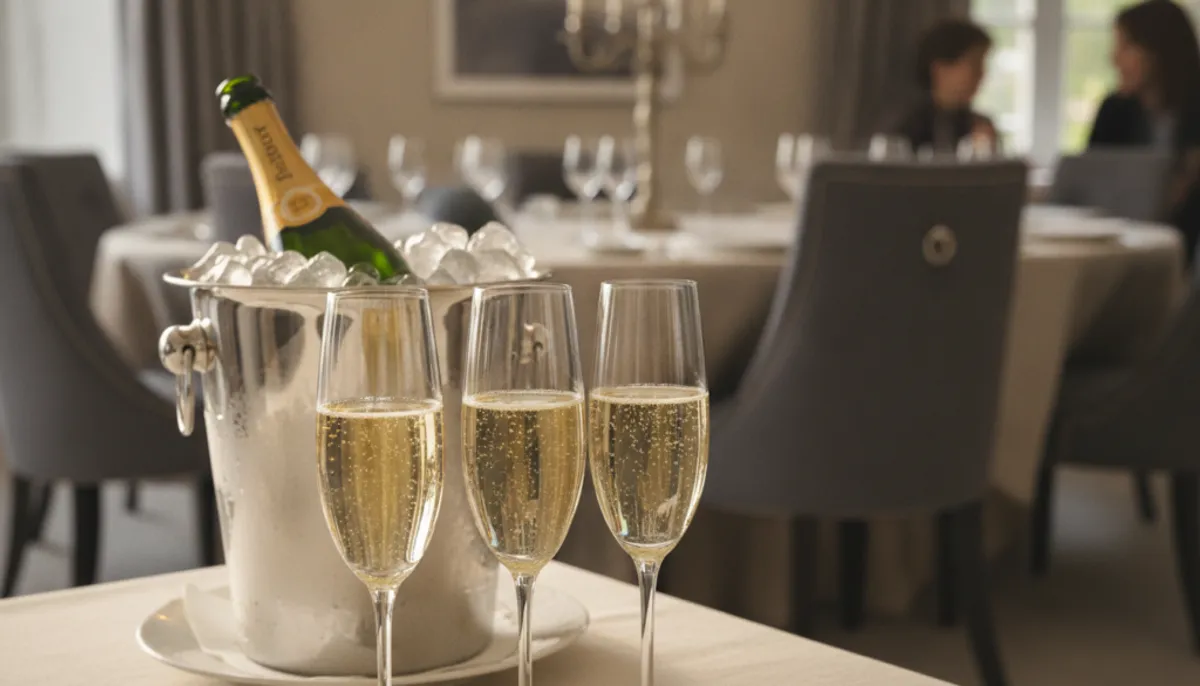
Maison Laurent-Perrier and other houses agree that careful care before the first pour rewards you with a cleaner, brighter profile. A chilled bottle held well will keep the fizz steady and the scent clear.
Think about the glass, the brief rest after chilling, and simple tools like an ice bucket. These choices turn a casual toast into a refined experience that highlights the craftsmanship behind every bottle champagne.
Key Takeaways
- Small steps matter: prep the bottle and glass for better bubbles.
- Glassware counts: the right glass shapes the aroma and feel.
- Use an ice bucket: it helps keep the bottle stable.
- Timing is simple: short rests can improve each pour.
- Craftsmanship shows: proper care reveals the wine’s true character.
Why Serving Champagne Temperature Defines Your Tasting Experience
How cold a bottle is will change the aromas and balance you notice.
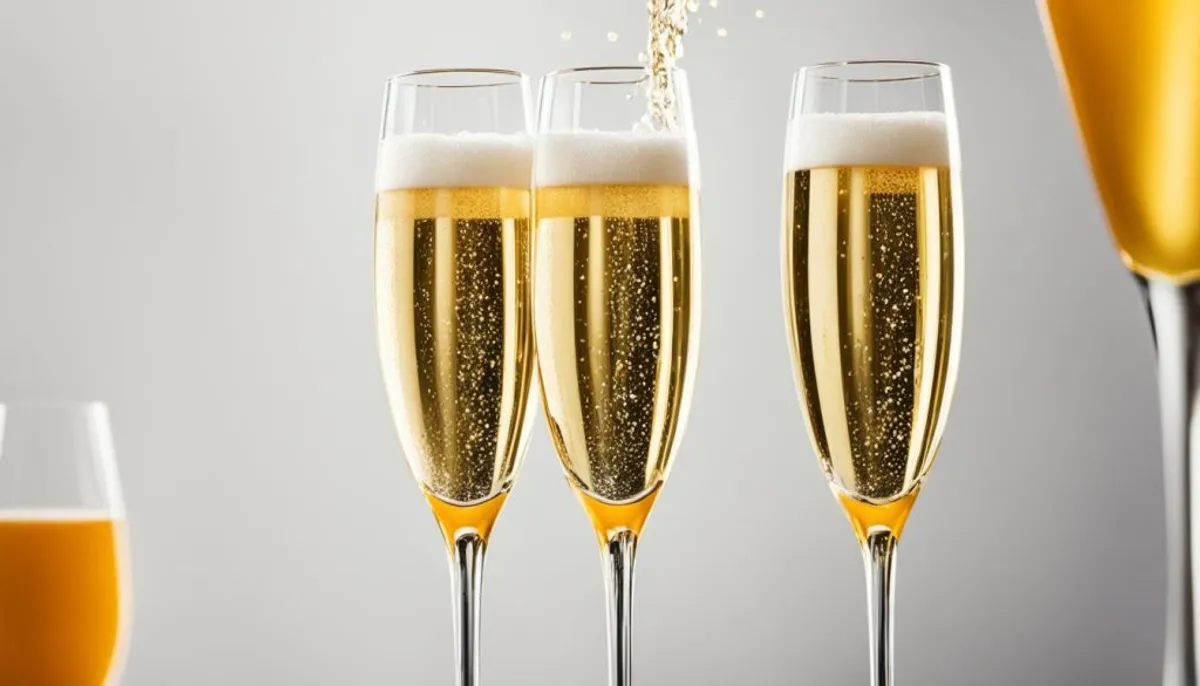
A practical rule: a bottle at 6°C often feels neutral and restrained. At 20°C, the same bottle can turn heavy and lose its fine balance.
The right temperature is a gastronomic tool. It lets acidity and complexity shine during tasting. Maison Laurent-Perrier stresses that an ideal serving temperature is essential for true aromas and the overall quality of their cuvées. Additionally, understanding wine industry regulations can enhance the appreciation of these nuances.
- 10°C: peak freshness, lively bubbles and clear fruit.
- 16°C: richer, more opulent expression.
- Avoid extremes: too cold mutes aromas; too warm makes the glass feel cloying.
| Perceived Effect | Approx. Level | Best Result |
|---|---|---|
| Neutral, muted | 6°C | Use for very bracing, mineral styles |
| Fresh, balanced | 10°C | Most versatile for food pairing |
| Opulent, aromatic | 16°C | Great for aged cuvées and richer dishes |
| Heavy, unbalanced | 20°C | Avoid for delicate wines |
Mind the glass and the pour. When the right temperature and glass work together, the expression of the wines is clearer and tasting becomes more rewarding.
Factors That Influence Your Ideal Serving Temperature
Style and grape mix decide whether a bottle should be cooler or slightly warmer for best flavor.
Grape variety and style
Blanc de Blancs usually needs a lower chill to show minerality and crisp acidity. A vintage rosé or mature vintage often benefits from being slightly warmer to reveal deeper aromas and texture.
Seasonal factors and food pairing
In summer, a chilled champagne feels refreshing. In winter, a slightly warmer pour brings out aromatic richness.
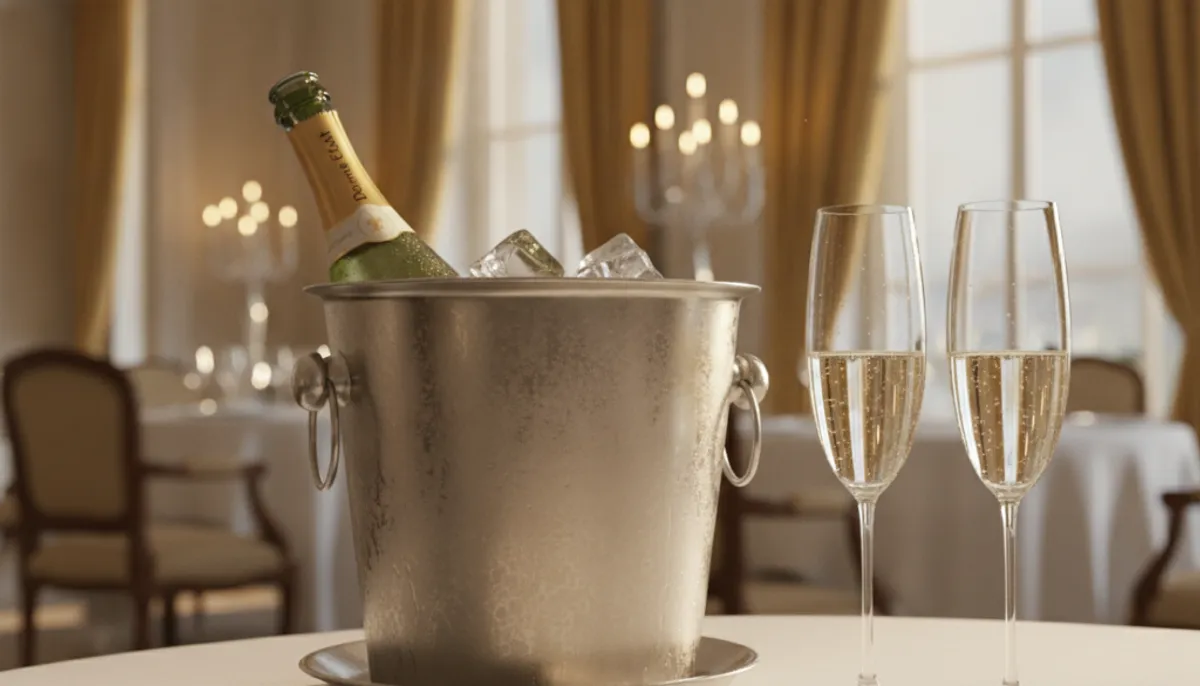
- Recommended range: 46–54°F (8–12°C) for balanced complexity.
- Match acidity and character to food—oysters like higher acid; roast poultry pairs with richer notes.
- Older vintages often need a higher ideal serving to open up.
| Style | Best Range | Why |
|---|---|---|
| Blanc de Blancs | 46–50°F (8–10°C) | Preserves minerality and delicate aromas |
| Vintage rosé | 50–54°F (10–12°C) | Shows fuller bouquet and texture |
| Mature vintage | 50–54°F (10–12°C) | Lets aged complexity open up |
Proven Methods for Chilling Your Bottle to Perfection
Cooling a bottle the right way takes a little planning and the right tools.
The Ice Bucket Technique
Fill a bucket half with ice and half with cold water. Submerge the bottle for 20–30 minutes to chill fast and evenly.
This approach helps the bubbles stay lively and brings the bottle to the ideal temperature without shock.
Refrigerator Storage Best Practices
Place the bottle on its side in a stable shelf. Allow 3–4 hours in the fridge so the chill reaches the center.
This method is slow but reliable for planned occasions and keeps aromas steady until service.
- Avoid the freezer: rapid cold can harm the wine and burst bubbles.
- Do not add ice cubes to the glass; they dilute flavor and mute aromas.
- Running a bottle under tap water rarely cools it evenly—skip this way for consistent results.
- Use a bottle ice bucket during meal times to keep the sip steady and at the right chill.
| Method | Time Needed | Best Use |
|---|---|---|
| Ice + water bucket | 20–30 minutes | Quick chill; ideal for last-minute events |
| Refrigerator (laid on side) | 3–4 hours | Planned service; steady aromas |
| Freezer (not recommended) | Under 30 minutes (risky) | Risk of thermal shock and loss of bubbles |
| Ice in glass / tap rinse | Immediate (not advised) | Dilutes wine or chills unevenly |
Expert Tips for Global Champagne Export and Selection
A great export starts with selecting a bottle whose character holds up through travel and final service, including understanding the champagne customs in chile.
Maison Laurent-Perrier has refined the art of maceration and reserve-wine blending to protect aroma and structure. Their approach keeps the bubbles and expression intact, even after long transit.
Work with exporters who monitor fridge and bucket conditions during shipping. This helps the wine keep its acidity and complexity on arrival.
- Quality control: choose houses that test vintage lots for resilience.
- Handling: pack bottles to avoid shock and preserve bubbles.
- Final prep: ensure the ideal serving temperature is reached before opening.
| Need | Action | Benefit |
|---|---|---|
| Blanc de Blancs | Cool steadily in fridge | Preserves minerality and tight aromas |
| Vintage cuvée | Allow slightly warmer rest after chill | Reveals depth, texture, and complex character |
| Export service | Use monitored cold-chain and secure packing | Maintains quality from cellar to table |
Looking for Champagne? We’ve got you covered. Discover the finest selections and request your personalized quote at https://champagne-export.com.
Conclusion
A mindful final pour pulls together every choice you made from cellar to glass.
Mastering the ideal temperature is the best way to unlock aroma and complexity. Use an ice bucket and avoid the freezer to protect the bubbles and the wine’s character.
Different styles and vintage bottles need small adjustments. A slightly warmer pour can reveal depth in aged cuvées, while a cooler chill keeps fresh styles bright for tasting.
Care from storage to the final glass matters. Explore varied champagnes, apply these tips, and enjoy more consistent, memorable pours. Thank you for reading and happy tasting.