Looking for Champagne? We’ve got you covered. This short guide opens the door to the elite terroirs where select villages earn top status for their exceptional output.
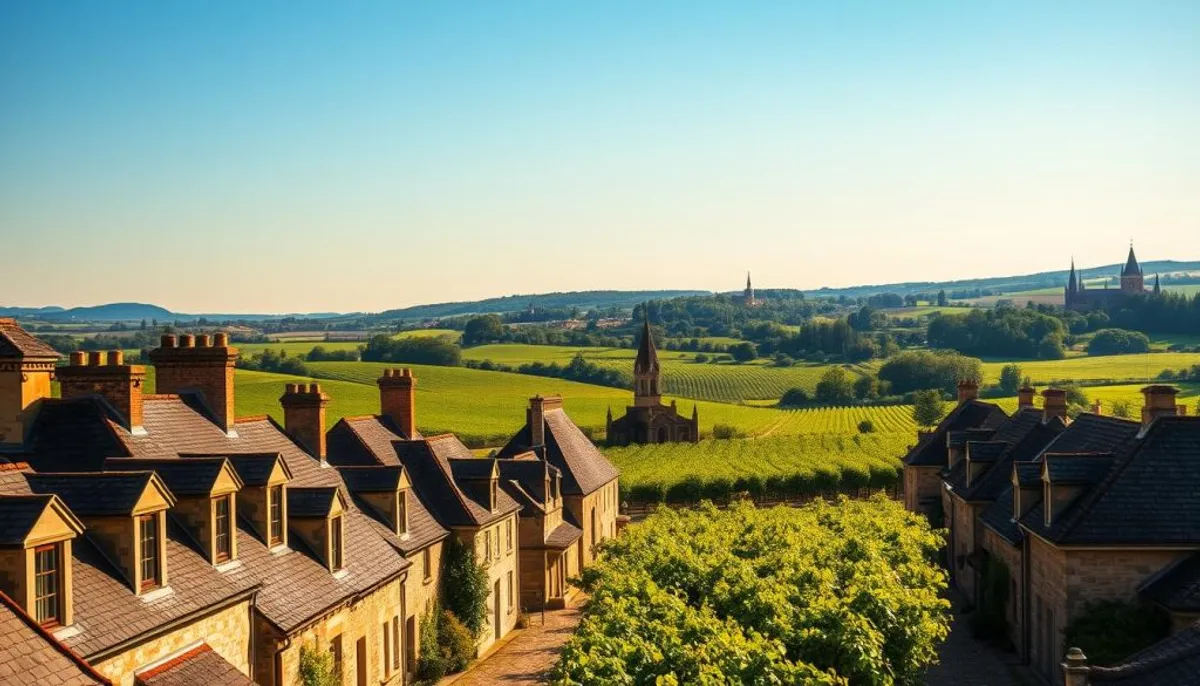
Whether you are a collector or a curious drinker, understanding these rankings helps you pick bottles with real depth and history. Our team connects you with renowned estates and trusted exporters, so acquiring fine selections is simple. Additionally, being aware of luxury champagne prices can guide your purchasing decisions.
Ready to buy? Discover curated selections that can be exported anywhere in the world. Request your personalized quote today at https://champagne-export.com and start your journey into fine wine.
Key Takeaways
- The guide explains top-tier village classifications and what they mean for quality.
- We source exceptional sparkling wines from renowned estates with export options.
- Understanding classifications helps collectors choose wines with greater depth.
- Personalized quotes are available to ship selections worldwide.
- Start exploring curated selections now at the official site for tailored service.
Understanding the Grand Cru Champagne Villages Classification
Certain villages yield fruit that sets the benchmark for quality in the appellation. The formal growth scale dates to 1911 and still guides how houses value fruit today.
Defining the Cru
Defining the Cru
The term cru points to a specific terroir or village where grapes are grown. Wineries evaluate fruit from each vineyard to rate its consistency and flavor profile.
The 1911 hierarchy gave producers a clear system to reward the best sites. That rating helped major houses decide which grapes to buy and which to blend for top cuvées.
The 17 Elite Villages
The 17 Elite Villages
Seventeen named sites earn the highest status across key zones: Montagne de Reims, Côte des Blancs, and Côte des Bar. These areas supply fruit that shapes the most famous wines.
- They provide distinctive grapes that inform house styles and reserve blends.
- Their soils and exposure create unique vines and year-to-year character.
- Producers seek these plots for consistent fruit quality and aging potential.
| Area | Main Grape | Role in Blends |
|---|---|---|
| Montagne de Reims | Pinot Noir | Structure and body |
| Côte des Blancs | Chardonnay | Freshness and finesse |
| Côte des Bar | Pinot Noir / Meunier | Ripe fruit and depth |
The Historical Origins of the Growth Scale
At the turn of the 20th century, turmoil in the vineyards forced a new system to calm growers and merchants.
After phylloxera and a run of poor harvests, the region faced riots and sharp disputes over price. To restore order, producers and growers agreed a village-based scale that tied quality to a percentage value, which also influenced the wine duties and taxes imposed on the trade.
How it worked
- The scale ranked each place and set the price negociants paid for grapes.
- That percentage guided contracts between houses and local growers during harvest.
- It helped stabilize income and supply for the top wine producers.
EU law ended the price-fixing mechanism in 2004, but the name grand cru remained protected for the 17 historic villages. The terroir of each area still shows in the wines, many of which age in deep, historic underground cellars.
Today the legacy shapes how collectors value bottles, including the jeroboam champagne bottle, and how houses source the best fruit for prestige cuvées.
Why Chalky Sub-soils Define Quality
Under the vines, geology sets the stage for grape health and flavor. In the best sites, deep white sub-soils offer both drainage and a steady supply of moisture.
The Impact of Limestone
Limestone acts like a natural sponge. It soaks up water, then releases it by capillarity during dry spells. This helps vines survive hot summers without excess stress.
Roots that reach deep into these soils access minerals that subtly shape aromatics and structure. That mineral access is a key reason wine from these plots shows notable complexity and aging potential.
- Deep chalky sub-soils ensure excellent drainage and steady water retention.
- Limestone outcrops create a spongy layer that supports vines in tough seasons.
- Roots penetrate far enough to draw essential minerals, boosting wine character.
- These combined effects explain why top site designations focus on soil profile.
| Feature | Effect on Vines | Wine Result |
|---|---|---|
| Deep chalk | Balanced drainage and moisture | Fine acidity and tension |
| Limestone sponge | Capillary water retention | Consistency in dry years |
| Deep rooting | Mineral uptake | Complex, age-worthy flavors |
| Thin topsoil | Controlled vigor | Concentrated fruit |
Exploring the Montagne de Reims Region
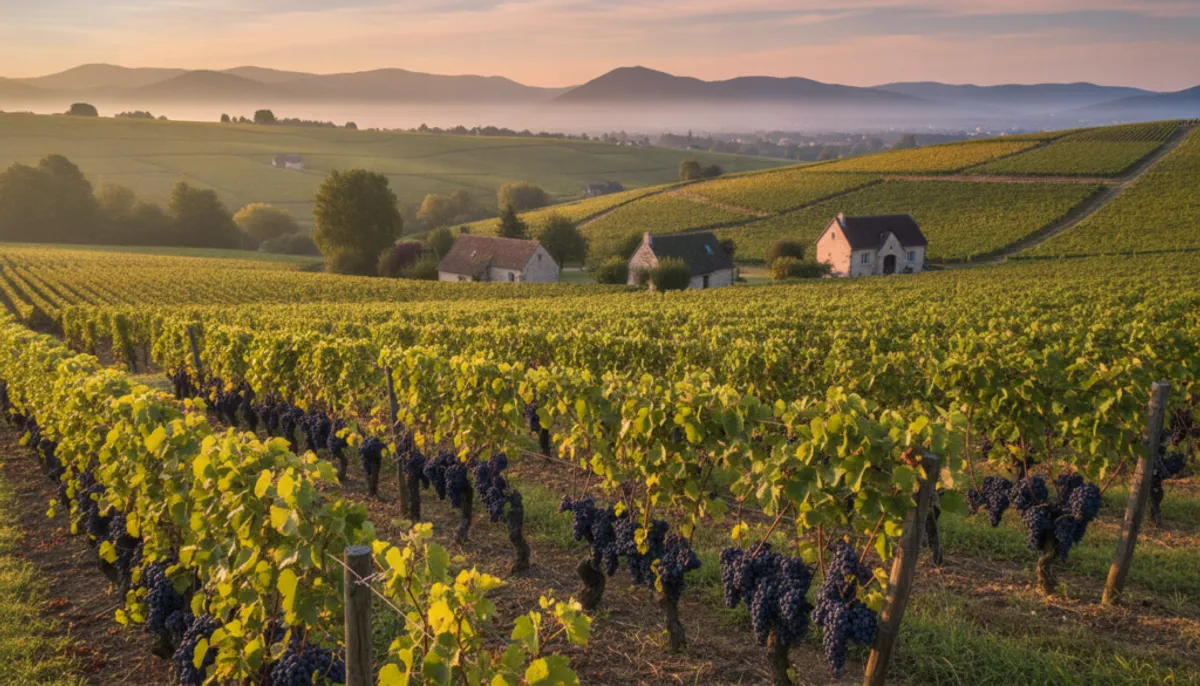
High on a broad plateau east of Reims, the Montagne de Reims produces some of the region’s most powerful pinot noir-based wines. The area reaches about 283 meters and includes well-known names such as Ambonnay and Bouzy.
The plateau offers shelter from extreme weather and creates consistent micro-climates. Its chalk-rich soils help vines keep steady moisture and develop fine acidity.
Pinot Noir Dominance
Pinot noir is the star here. It gives structure and depth that houses prize for single-vineyard cuvées and blends.
North-Facing Slopes
Sites like Verzenay and Verzy are uniquely north-facing. That exposure preserves freshness and extends hang time for the grapes.
The Plateau Geography
The plateau’s shelter and chalk create a terroir prized across the century for top classification status and lasting reputation.
- Plateau elevation supports consistent ripening.
- Chalky soils provide drainage and minerality.
- Pinot noir from here adds backbone to many blends.
| Feature | Effect | Example |
|---|---|---|
| Plateau height | Protected micro-climate | Ambonnay, Bouzy |
| North exposure | Retained freshness | Verzenay, Verzy |
| Chalk soils | Mineral tension | Structured wines |
The Unique Character of the Côte des Blancs
East-facing slopes of the Côte des Blancs bring a clarity and tension to Chardonnay that few areas match.
The district’s vineyards are almost entirely devoted to Chardonnay. This focus shapes a consistent style across the des blancs terroir.
The sub-soil here is pure Belemnite chalk. Those mineral-rich soils give the wines striking intensity and long aging potential.
Cramant, Avize, Oger, and Le Mesnil-sur-Oger are the four central grand cru villages. Producers from these sites craft elegant, mineral-driven wine that collectors prize.
- Chardonnay dominates, offering precision and finesse.
- Deep chalk deposits add minerality and tension.
- East exposure helps grapes reach balanced ripeness.
| Feature | Effect | Example |
|---|---|---|
| Pure Belemnite chalk | Mineral intensity, longevity | Cramant, Avize |
| Chardonnay focus | Refined, citrus-driven profile | Oger, Le Mesnil-sur-Oger |
| East-facing slopes | Even ripening, bright acidity | Classic côte des terroir |
Insights from Elite Champagne Producers
Elite houses rely on small plots and long cellaring to shape distinctive, age-worthy wine. Producers in top sites combine precise harvest timing with patient aging, including sparkling wine maturation, to reveal layered aromas and texture.
Champagne P. Lancelot-Royer in Cramant farms 5.3 hectares and focuses solely on blanc de blancs. Their work highlights how soil and name contribute to quality and freshness.
Champagne Franck Bonville manages 15 hectares and blends chardonnay from Avize, Oger, and Le Mesnil-sur-Oger. That approach balances mineral-driven salinity with bright fruit.
Champagne Paul Déthune in Ambonnay farms 7 hectares and uses a hemp cord closure for some labels. He makes single-vineyard and range wines that show village terroir and ripe pinot noir character.
- Meticulous harvests ensure only top grapes are used.
- Long time in cellars builds complex vintage aromas.
- These houses export to the United States, Japan, and Europe, reinforcing their reputation.
| Producer | Hectares | Focus |
|---|---|---|
| P. Lancelot-Royer | 5.3 | Blanc de blancs, Cramant soil |
| Franck Bonville | 15 | Chardonnay blends from Avize/Oger/Le Mesnil |
| Paul Déthune | 7 | Single-vineyard, hemp cord closure |
The Role of Blending in Prestige Cuvées
A cellar master blends years of reserve stock to craft a signature prestige cuvée that tastes consistent across vintages. Skilled blending gives houses a predictable style while allowing room for vintage expression.
The art of reserve wines
The Art of Reserve Wines
Reserve wines are kept in cool cellars for over ten years and are cataloged by harvest year and variety. Some houses use a solera or perpetual reserve system to maintain a steady average age for their prestige bottlings.
Many producers manage hundreds of hectares of vines and select the best grapes from each vineyard. They combine pinot noir and Chardonnay to balance freshness, structure, and depth.
- Blending matches recent vintages with aged reserves to smooth variation between years.
- Reserve ranges help non-vintage bottles keep a consistent house style.
- Each village and parcel adds its own aroma and terroir signature to the final blends.
| Element | Purpose | Result |
|---|---|---|
| Young base wine | Freshness and fruit | Vibrant lift in blends |
| Reserve stocks (10+ years) | Depth and complexity | Layered aromas and stability |
| Perpetual reserve / solera | Consistent average age | Stable house style |
| Pinot Noir + Chardonnay | Structure + brightness | Balanced, long-lived wine |
Navigating the Differences Between Premier Cru and Grand Cru
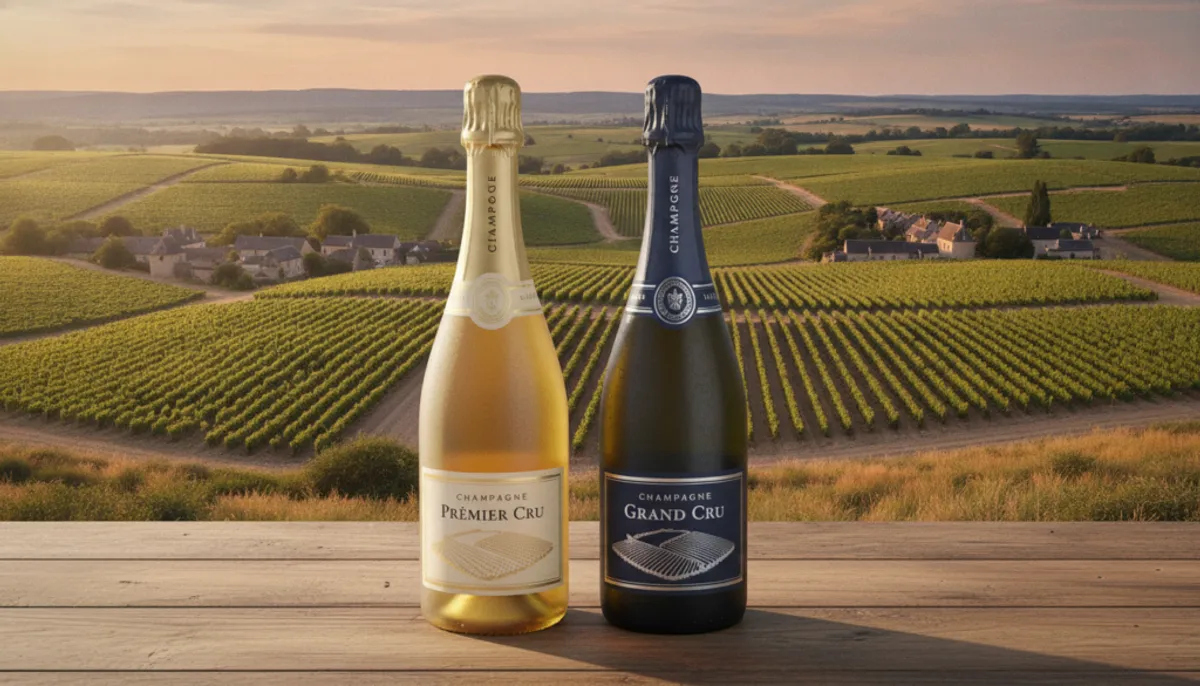
Choosing between Premier Cru and the top 100% rating depends on nuance, not just a label. A Premier site (44 places) scores between 90% and 99% on the old Échelle des Crus. The top 17 receive the full 100% mark and are prized for consistent quality.
Why it matters:
- Rating reflects long-held views of soil, exposure, and micro-climate in the region.
- Producers blend grapes from several vineyards to balance freshness, structure, and depth for their wines.
- Houses may mix fruit from Premier sites with top-rated parcels to craft stable non-vintage and vintage cuvées.
Geography — from Montagne Reims to Côte des Bar — shaped the history of the scale, including aspects like champagne duties morocco. That history still guides how buyers value bottles and how vineyards are farmed today.
| Feature | Premier (90–99%) | Top 100% |
|---|---|---|
| Number of places | 44 | 17 |
| Typical role | High-quality blends, single-vineyard wines | Benchmark parcels, prestige cuvées |
| Collector value | Great balance of price and quality | Highest demand and aging potential |
Understanding these distinctions helps collectors pick the best wines for their cellar. Whether you favor pinot noir-driven styles or mineral Chardonnay, the dedication of the houses shines through each bottle.
How Micro-climates Influence Grape Ripeness
Small shifts in slope and sun can change a harvest from good to remarkable. Micro-climates shape sugar levels, acidity and aroma as grapes ripen. They are a top reason some parcels produce superior wines.
On south-facing slopes like Ambonnay, pinot noir reaches fuller ripeness than cooler sites. That extra warmth builds richer fruit and deeper color. Houses track heat, wind and soil moisture to time harvest precisely.
Aspect and exposure influence how fast a grape accumulates sugar and loses acidity. The result affects both single-vineyard bottlings and long-aged blends. Producers use this data to plan blending and cellar strategy.
- Micro-climates matter: they determine ripeness and final wine quality.
- Local orientation: some villages deliver more complex pinot noir from favorable slopes.
- House decisions: careful monitoring ensures grapes are picked for ideal balance.
- Blend outcomes: selecting the best sites keeps freshness and maturity in check.
| Factor | Effect on grape | Wine result |
|---|---|---|
| Slope exposure | Faster ripening | Riper flavors |
| Morning sun | Quick sugar build | Fuller body |
| Cooling wind | Preserves acidity | Fresh tension |
Exporting Fine Champagne to the United States
Moving select cuvées from vineyard cellars to U.S. doors blends logistics with deep provenance. Our team coordinates licensing, customs, and climate-controlled transit so your order arrives in peak condition. Additionally, we offer champagne importation services to ensure a seamless experience for our clients.
Looking for Champagne? We’ve got you covered. Discover the finest selections, ready to be exported anywhere in the world. Request your personalized quote today on https://champagne-export.com.
We specialize in shipping rare pinot noir cuvées from the prestigious montagne reims area. Our network works directly with renowned houses to protect provenance and ensure careful handling.
| Service | Benefit | Note |
|---|---|---|
| Temperature control | Preserves bottle quality | Monitored during transit |
| Customs support | Smooth import to U.S. | Experienced clearance team |
| Direct sourcing | Access to rare stock | Trusted relationships with houses |
We bring the region’s authentic taste to your doorstep. If you are looking for Champagne, we have you covered. Visit https://champagne-export.com to secure your favorite bottles and request a quote today.
Request Your Personalized Champagne Quote
Looking for Champagne? We’ve got you covered. If you want a bottle for a special event or to round out a collection, we make sourcing simple and dependable.
Discover the finest selections, ready to be exported anywhere in the world. Our team works with top estates to secure rare bottles and arrange climate-controlled transit to the United States.
- Access exclusive estates and sought-after cuvées for collections or celebrations.
- Fast, global export options so your chosen bottles arrive in peak condition.
- Personalized quotes tailored to your needs — vintage, quantity, and delivery timing.
Request your personalized quote today by visiting https://champagne-export.com. Our specialists will confirm availability, pricing, and shipment details.
| Service | Benefit | How to Request |
|---|---|---|
| Direct sourcing | Access to limited-release bottles | Submit wishlist on the website form |
| Export logistics | Temperature-controlled shipping to U.S. | Choose delivery window during quote |
| Concierge support | Custom packing and insurance | Speak with a specialist after requesting a quote |
Conclusion
Taste and history meet where vines root in deep chalk and skilled hands harvest fruit.
The 17 top sites represent the pinnacle of the appellation and explain much about terroir and style. From the chalky soils of the Côte des Blancs to pinot noir power in Montagne de Reims and the Côte des Bar, each place gives unique aromas and structure to the wines.
Knowing the classification and the art of blending helps you read a bottle before you buy. Whether you collect vintage bottles or enjoy a fresh glass, exploring these vineyards links you to a long history of quality and care.
Request your personalized quote on our site to source select champagnes and begin your cellar journey.