Collecting fine bottles calls for clear knowledge. This short guide helps U.S. buyers and sellers make smart moves in the secondary market. We break down how labels hold value and why some bottles rise faster than others.
Expect practical tips on spotting which bottles to sell now and which to keep. We reference major houses like Dom Pérignon, Krug, and Louis Roederer to show how history shapes demand.
Our analysis covers market trends across the world and gives clear steps for both new collectors and seasoned investors. Read on to learn how to protect and grow the worth of your collection.
Key Takeaways
- Understand how label reputation affects market value.
- Use historical performance to guide sell-or-hold choices.
- Recognize which bottles attract steady buyer interest.
- Monitor secondary market signals to time sales.
- Balance short-term gains with long-term appreciation goals.
Understanding the Current Champagne Price Tiers Resale Market
Recent shifts in the fine-bottle market reflect a new, more cautious trading period. Volatility rose after the boom that ended in 2022, according to Decanter’s March 2025 issue. The Bordeaux Index notes most labels still sit above 2020 baselines despite recent softening.
Market Trends and Price Volatility
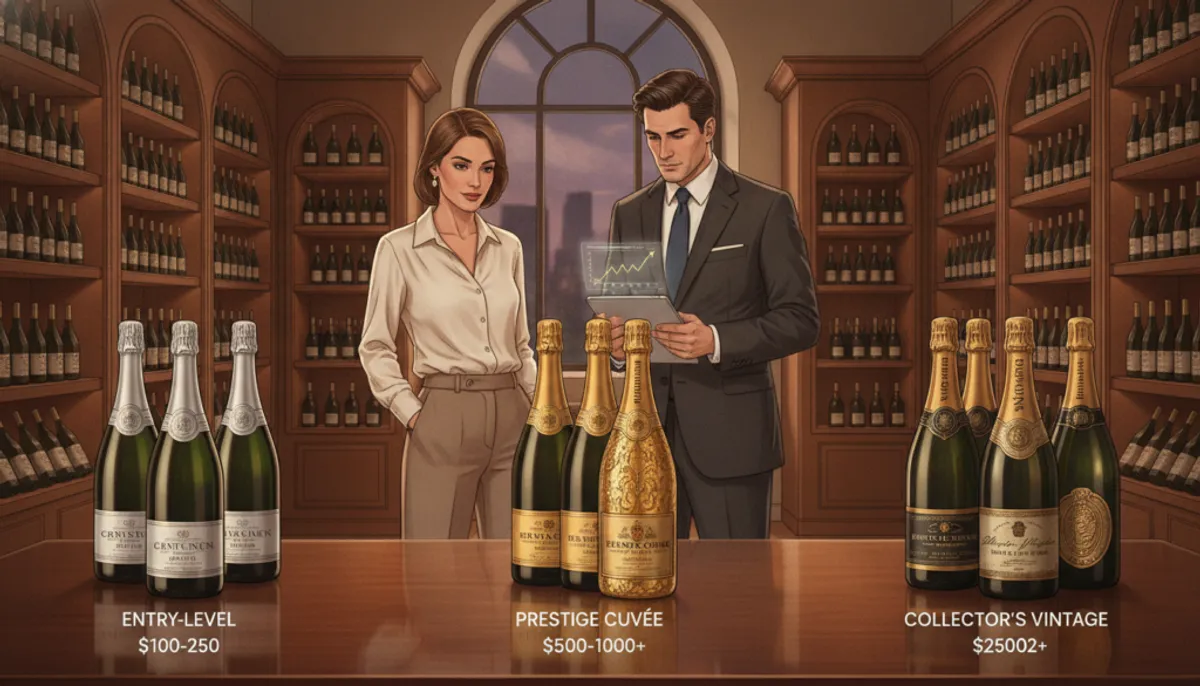
Top-tier houses such as Krug, Dom Pérignon, and Cristal saw sharp swings on secondary platforms. Collectors felt the impact as trading volumes slowed and some prices eased.
Future Outlook for Prestige Labels
Experts expect cautious recovery in the medium term. The trade remains subdued now, but demand tied to luxury food pairings and high-end consumption could lift value over the next few years.
- Storage matters: Proper cellaring and cork care protect a bottle’s value.
- Collector focus: Even after drops, prestige names draw serious interest.
| Indicator | Current Signal | Implication for Sellers |
|---|---|---|
| Volatility | High since 2022 | Delay sales if timing matters |
| Baseline vs. 2020 | Mostly higher | Long-term value intact |
| Trade Activity | Subdued | Expect slower turnover |
| Collector Interest | Strong for prestige | Target specialist buyers |
Key Factors Influencing the Value of Your Bottles
Value hinges on a mix of maker reputation, storage history, and the vintage’s track record.
Producer Reputation and Label Prestige
Top houses like Veuve Clicquot, Bollinger, and Moët & Chandon set market expectations. Collectors trust these names for consistent quality and long-term value.
Smaller producers such as Roger Brun or H. Blin may offer upside if the vintage is strong. Always check recent news and auction results when you assess a lot.
The Importance of Provenance and Storage
Provenance is vital: where a bottle spent its years affects the liquid and the cork.
Heat and light damage reduce quality quickly. Good cellaring preserves aroma and protects future sale potential.
Assessing Vintage Quality and Age
A clearly marked vintage year usually adds appeal. Vintage wines and vintage champagne often attract higher interest from enthusiasts who pair these bottles with fine food.
Keep a detailed account of each bottle in a spreadsheet. Record maker, vintage, storage place, and condition to support valuations.
| Factor | What to check | How it affects value |
|---|---|---|
| Producer | Reputation, recent releases | Strong names boost demand and stability |
| Provenance | Storage history, receipts | Clear provenance preserves quality and trust |
| Vintage quality | Year reviews, tasting notes | Good vintages raise long-term desirability |
| Condition | Cork level, fill, label state | Poor condition can drop a bottle’s value sharply |
Evaluating the Best Channels for Selling Your Collection
Choose the right sales channel to match your collection and goals. Each route suits different bottles, timelines, and desired returns. A quick sale to a professional reseller gets cash fast but reduces net value due to their margin.
For higher returns, consider specialist auctions. Houses like Bonhams and Christie’s reach serious buyers for rare bottles and vintage champagne. Expect fees and a longer wait, but auctions often deliver top prices for standout lots.
- Call 01206 700888 in the UK for a free valuation of your collection and an informed opinion on market timing.
- Use ChampagneCollectors.com as a website community to trade wines at market rates and avoid heavy auction fees.
- Note that marketplaces such as eBay require approved seller accounts for alcohol and can add friction to listings.
- Always include clear photos of the cork and label to prove quality and provenance to buyers.
| Channel | Turnaround | Best for |
|---|---|---|
| Professional reseller | Days to weeks | Bulk bottles, quick trade |
| Specialist auction | Weeks to months | Rare vintages, high value |
| Collector website/marketplace | Weeks | Targeted buyers, lower fees |
During this period of market fluctuation, research recent news and prices by year and vintage. A clear history, good storage notes, and pairing suggestions for food can increase buyer interest and protect the value of your wines.
Conclusion and Global Export Opportunities
Finish with an action plan for moving bottles from your cellar to buyers around the world, including understanding alcohol import procedures.
Looking for champagne? We’ve got you covered with the finest selections ready for export. Request your personalized quote at champagne-export.com to start in the global wine market.
Successfully selling a collection needs clear knowledge of value, vintage quality, and current market news, including wine import duties. Keep records and photos to prove provenance.
Store each bottle to protect the cork and the liquid. Proper care preserves quality over the years and boosts your returns.
Whether collector or investor, our website offers resources on wines, food pairings, and export steps to help you sell with confidence worldwide.