The world’s most prestigious sparkling wine is a staple at celebrations and a marker of memorable moments. Retailers and event planners need clear guidance on the nine main formats and how each size affects service, cost, and guest experience.
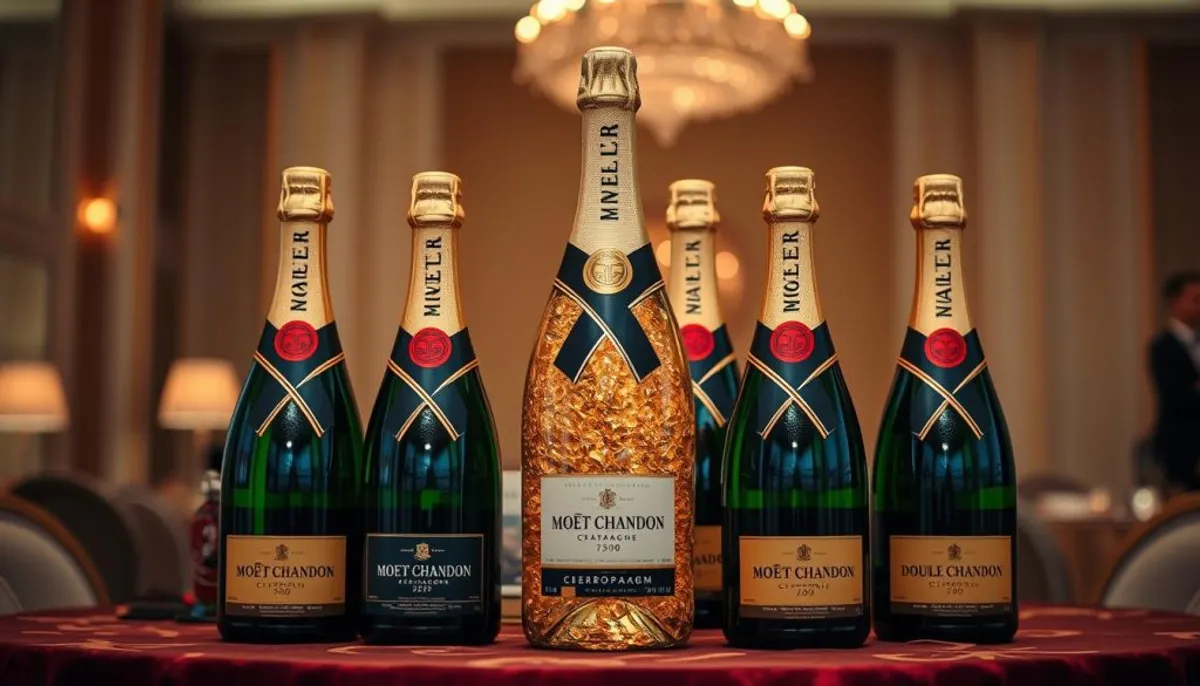
A standard 75cl container yields about 6 to 8 glasses, depending on flute pour. Trade favorites include the 20cl mini, the classic 75cl, and the 1.5L magnum for larger gatherings.
Understanding these options makes it easier to curate inventory and pick the right format for an event. Knowing the range of bottles and their capacities helps you plan service, control costs, and create the right impression. Additionally, retailers must anticipate holiday champagne demand to ensure they are well-stocked for the festive season.
Key Takeaways
- There are nine common formats from mini to Nebuchadnezzar.
- The standard 75cl serves roughly 6–8 glasses.
- Mini 20cl, 75cl, and 1.5L magnum are top trade choices.
- Choose formats based on guest count, price, and presentation.
- Retailers benefit from stocking a mix of sizes for events and sales.
Understanding the Importance of Champagne Bottle Sizes
Picking the right format transforms an event from ordinary to memorable.
Choice matters when planning weddings, birthdays, and corporate gatherings. Larger formats work well for big receptions and high-profile meetings because they improve presentation and reduce pour frequency.
Retailers stock a wide range so every customer finds the right match. Smaller formats suit intimate dinners and individual service. Mid and large options help hosts control cost and streamline service for many people.
The naming of these formats often carries historical or biblical significance, which adds prestige. Knowing the common names and the practical effect of each bottle size makes choosing easier.
- Match format to guest count and tone of the event.
- Consider presentation, pours per unit, and budget.
- Retailers should offer mixed formats to meet diverse needs.
The Standard Bottle and Its Role in the Industry
The 75cl standard remains the trade workhorse, offering a familiar pour and predictable cost per guest.
The Standard 75cl Format
The standard 75cl container holds roughly six glasses of sparkling wine. This measurement makes planning service simple for restaurants and hotels.
While neck shape and labels change between houses, the 75cl format is the most common choice for professional service. Staff train around its pours and storage needs, so it sets expectations for guests.
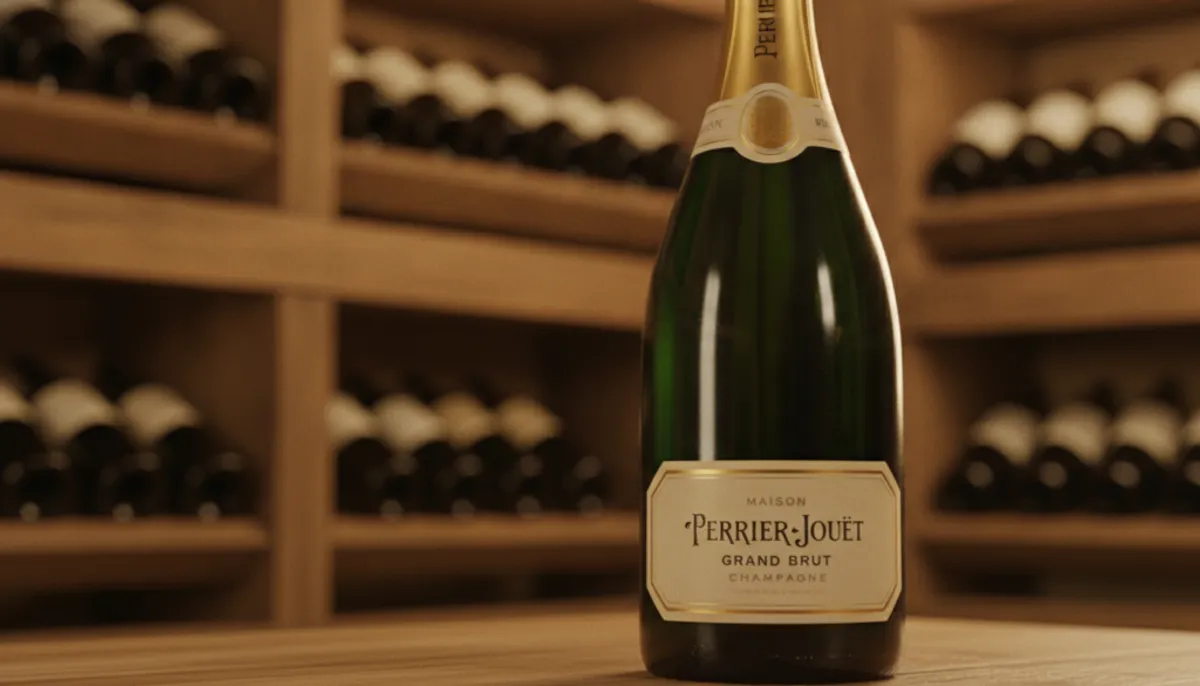
Experts often compare it to a magnum, which is a double at 1.5 liters and prized for aging. However, the thicker glass and sloping shoulders of standard and larger containers can make rack storage tricky.
- Practical yield: ~6 glasses per 75cl.
- Service fit: Most hospitality teams prefer this format for steady demand.
- Storage note: Thick-walled bottles may not fit winery racks built for smaller units.
The standard bottle is the industry benchmark for everyday consumption and professional hospitality service.
Miniature Formats for Individual Servings
Mini formats let guests enjoy a single serving without opening a full standard bottle. They work well for travel, gifts, and small celebrations.
Piccolo Bottles
The piccolo, also called a split, holds 20cl. It gives one neat pour and is perfect for an event favor or a flight on the go.
Key benefit: single-serve convenience that keeps larger stock sealed for later.
Half Bottles
A half contains 37.5cl, about three glasses. This makes it a great pick for a picnic or dinner for two.
Mini bottles often appear in goodie bags and event gifting. They are practical for people who want quality without opening a standard champagne unit.
- Not for long-term aging: these small formats are best consumed young.
- Rare note: the imperial pint (600 milliliters) is an uncommon historical name linked to famous leaders.
Large Format Bottles Named After Biblical Figures
When service calls for spectacle, oversized formats named after kings and magi steal the show. These large formats add ceremony and make pours a focal point at weddings and other celebrations.
Magnum Benefits
Magnums (1.5 liters) are prized for cellaring and service. The lower air-to-liquid ratio slows aging, so many houses and restaurateurs favor magnum for quality pours at events.
Jeroboam and Mid-Range Sizes
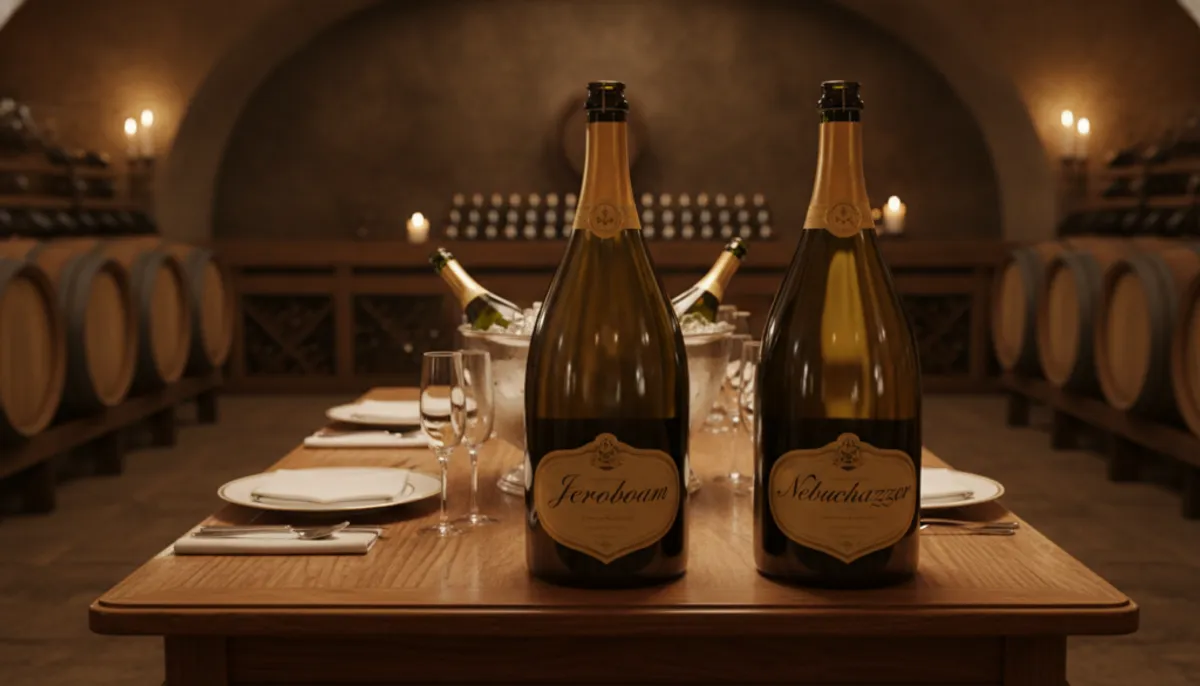
The Jeroboam holds 3 liters, equal to four standard bottles, and takes its name from the first king of Northern Israel. Mid-range formats like the Balthazar—named for one of the three wise men—work well as centerpieces and serve a crowd without frequent recorking.
The Massive Melchizedek
At the top end, a Nebuchadnezzar contains 15 liters and can serve roughly 120 people. The Melchizedek is the largest in the world at 30 liters and is produced exclusively by Drappier. These dramatic sizes are meant for grand parties and public celebrations where presentation matters as much as the pour.
Exporting Your Selection Worldwide
From cellar to client, we manage international logistics, including champagne imports morocco, so you can focus on service.
We specialize in exporting the finest selections to retailers and event planners across the United States and beyond. Our inventory covers standard bottles and larger formats up to 15 liters of wine, including important considerations like wine duties and taxes. Each unit is packed and handled with care to protect quality during transit.
Our global supply chain simplifies customs, freight, and local delivery. You can request a personalized quote for specific needs on our platform. Visit https://champagne-export.com to submit quantities, preferred formats, and destination details.
Benefits at a glance:
- Wide selection: everything from small pours to large, ceremonial units.
- Secure handling: climate-aware packing and vetted carriers.
- Flexible quotes: tailored pricing for retailers and event organizers.
Looking for premium shipments? Partner with us to access reliable delivery of champagne bottles worldwide and unlock curated supply for any event or retail need.
Conclusion
Choosing the right format matters for planners and retailers. Understanding names, yields, and practical yield keeps service smooth and costs clear. From the 20cl piccolo to the 30-liter Melchizedek, every format fits a different event and guest count.
Historical names like Jeroboam and Balthazar, linked to one of the three wise men, add ceremony and prestige. Larger units such as the magnum often age more gracefully than a standard bottle, giving better value for cellaring and special pours.
Need help sourcing unique bottles worldwide? Visit https://champagne-export.com for export quotes and secure delivery. We hope this guide makes choosing the right bottle size easier for your next celebration or event.