Looking for Champagne? We’ve got you covered. This guide explains key rules for moving premium bottles across EU borders in 2027 and what U.S. businesses need to know.
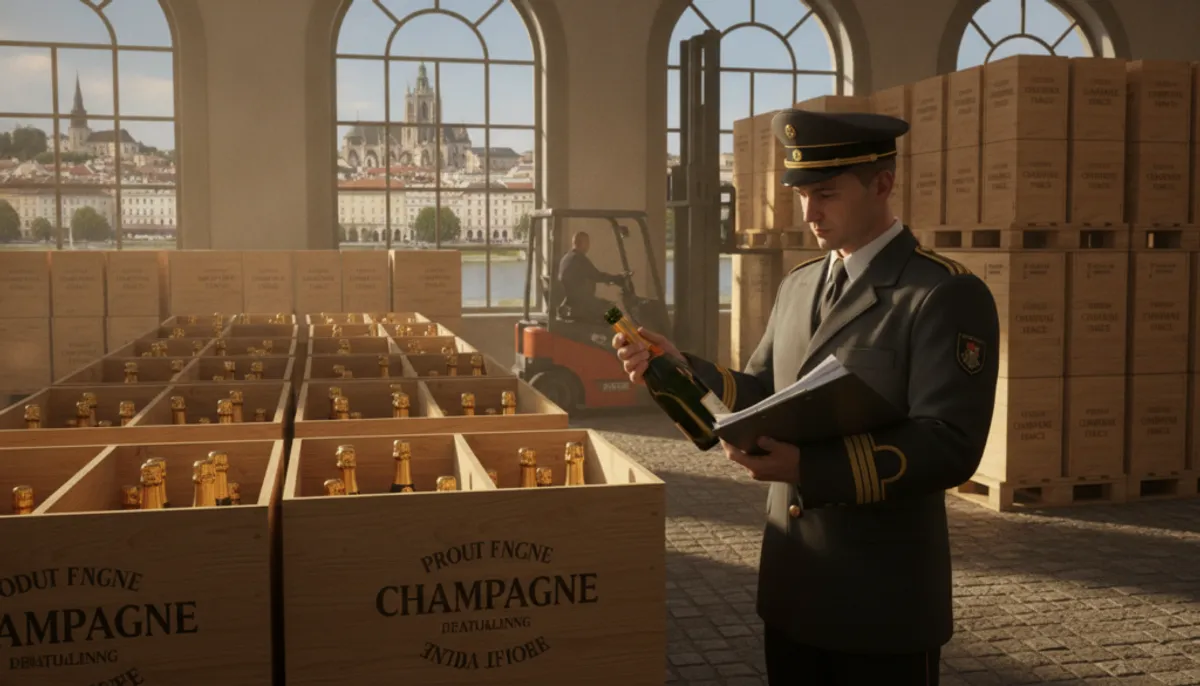
EU law and national rules shape how luxury beverages cross borders. Clear paperwork, correct labels, and the right tariffs cut delays and avoid fines.
Our guide covers practical steps to simplify the process. Learn how customs checks work, what paperwork is required, and how to craft a compliant logistics plan.
Need tailored help? Visit https://champagne-export.com to request your personalized quote today and secure top selections ready for global export.
Key Takeaways
- Understand EU and Austrian requirements to avoid hold-ups at customs.
- Accurate labeling and documentation speed the import process.
- Plan logistics with compliance in mind to protect your shipment.
- Professional support can simplify complex regulatory steps.
- Request a personalized quote at https://champagne-export.com to start moving product.
Understanding the Basics of Importing Champagne into Austria
Cross-border trade of high-value beverages calls for precise customs checks and proper labels. Austria is part of the EU, which eases movement of goods between member states while keeping external borders controlled. For businesses looking to optimize their supply chain, low moq wine sourcing can be a strategic advantage.
When you import from third countries, follow specific procedures so your products meet both EU and national standards. We handle paperwork and verify origin to speed clearance and reduce risk.
Looking for Champagne? We’ve got you covered. Discover the finest selections ready for export and request a personalized quote at https://champagne-export.com.
- Trade rules differ for EU member countries and non-EU partners.
- We care for your goods and manage logistics to meet legal requirements.
- Verify origin and documentation to avoid delays at customs.
| Scope | EU Countries | Third Countries |
|---|---|---|
| Border control | Internal movement is simplified | Requires formal customs checks |
| Documentation | Standard EU paperwork | Additional certificates and origin proofs |
| Our services | Catalog access and fast quotes | Full clearance support and logistics |
Essential Labeling Requirements for Alcoholic Beverages
Accurate label information reduces delays and protects brands when shipping alcoholic goods. Clear labels help customs officers, retailers, and buyers verify product facts at a glance. Follow EU rules to avoid hold-ups and fines.
Mandatory Labeling Information
Directive 2000/13/EC requires the product type, net quantity, and alcohol content for beverages over 1.2% volume. Labels must list the volume and net quantity in clear units.
Wine-Specific Labeling
Wine labels must include the appellation of origin and bottler details. All allergen wording like “Contains sulphites” must appear within a single field of vision.
For sparkling wine, sugar content and other specific descriptors must be shown to meet market rules.
Allergen and Sustainability Claims
Allergen statements are mandatory for wine and other food or drink products. Sustainability or organic claims must follow Regulation (EC) No 834/2007 to avoid misleading consumers.
- We ensure your labels meet EU standards for goods and products.
- Looking for Champagne? We’ve got you covered. Request your personalized quote today at https://champagne-export.com.
Navigating EU Standards of Fill and Winemaking Practices
Standards for fill and winemaking ensure that every bottle meets EU market expectations before clearance. Directive 2007/45/EC sets precise fill levels for products such as wine and spirits. These rules help customs and traders by providing consistent volume measures across member states.
The 2006 U.S.-EU Wine Agreement recognizes U.S. winemaking methods that meet EU criteria. That recognition speeds the import of quality wines from the United States when documentation matches the accepted standards.

- We guide you through complex EU regulations on standards of fill for sparkling and still goods.
- Our team verifies compliance with 2007/45/EC so your shipment clears quickly.
- Proper records of winemaking practices ease the entry of U.S. wines into EU markets.
| Rule | Scope | Benefit |
|---|---|---|
| Directive 2007/45/EC | Fill levels for wine and spirits | Uniform volume standards; fewer customs queries |
| 2006 U.S.-EU Agreement | Recognized winemaking practices | Smoother entry for compliant U.S. wines |
| Our services | Documentation & technical checks | Faster clearance and reduced risk |
Looking for Champagne? We’ve got you covered. Discover the finest selections, ready to be exported anywhere in the world. Request your personalized quote today on https://champagne-export.com.
Required Documentation for Customs Clearance
Clear paperwork is the backbone of smooth customs clearance for high-value beverages. Submit accurate papers early to avoid inspections and delays, including understanding the duty rates for champagne.
Essential Shipping Documents
To move goods across borders you need a complete file. Key items are the commercial invoice, the customs value declaration, and the Single Administrative Document (SAD).
For alcohol and wine shipments, ensure the invoice lists net quantities, alcohol content, and origin. Additionally, consider offering wine by the glass to enhance customer experience. Incorrect products or missing information triggers extra checks.
Simplified Export Certificates
The TTB Industry Circular 2007-2 explains the VI1 simplified export certificate for wines. We assist in preparing this form so your declaration meets U.S. and EU expectations.
- Provide a valid customs declaration and all shipping documents for alcoholic beverages and wines.
- Documentation from third countries must be precise to avoid delays; our team verifies every detail.
- We help prepare the VI1 certificate and file the required paperwork for current years.
| Document | Purpose | Who files |
|---|---|---|
| Commercial Invoice | Value & product details | Exporter |
| SAD / Declaration | Customs clearance | Customs agent |
| VI1 Certificate | Simplified wine export | Exporter / Broker |
Looking for Champagne? We’ve got you covered. Discover the finest selections, ready to be exported anywhere in the world. Request your personalized quote today on https://champagne-export.com.
Managing Import Procedures and Declarations
The road to free circulation begins when the correct customs forms are filed. The Single Administrative Document (SAD) is the primary form used for a customs declaration when bringing goods across EU borders.
Goods clear customs only after the declaration is processed and all duties and taxes are paid. Provide accurate information about value, origin and alcohol content to avoid holds or extra checks.
We manage the entire import process, ensuring your customs declaration is filed correctly so you face no unexpected restrictions on wine products.
- Proper use of the SAD form is mandatory for all goods entering the country; our team supplies the required information for compliance.
- We explain any import restrictions that may apply to your specific products and help secure release for free circulation.
- For professional assistance with your customs declaration and current regulations, visit https://champagne-export.com and let us handle the complexities.
Looking for Champagne? We’ve got you covered. Discover the finest selections, ready to be exported anywhere in the world. Request your personalized quote today on https://champagne-export.com.
Understanding Taxes and Tariff Obligations
Knowing how VAT and duties apply gives you control over final landed costs. This section explains the main figures and steps you need to calculate true import prices, including champagne duties in norway.

Calculating Import VAT and Duties
The standard Value Added Tax (VAT) rate in Austria is 20%. VAT is assessed on the customs value of the goods, which includes price, insurance, and freight.
Import duties vary by product and origin. Correct classification of your products determines the duty rate and helps avoid unexpected fees.
Importers may claim a refund of the import VAT from the tax office once the wine or other product has been sold. Keep clear records so refunds are smooth.
- Calculating the correct import duties and VAT is essential for your business, and you can request your personalized quote at https://champagne-export.com.
- We provide clear information on how to manage your tax obligations and duties when bringing wine and other luxury goods across borders, including champagne importation regulations.
- Visit https://champagne-export.com to see how we help you navigate the tax office requirements and ensure your products are correctly valued.
- Our team ensures that all duties are paid accurately, allowing your goods to be released for consumption without financial surprises.
- For expert advice on calculating your import costs, visit https://champagne-export.com and request your personalized quote today.
| Cost Element | How It’s Calculated | Who Manages It |
|---|---|---|
| Customs value | Price + insurance + freight (CIF) | Exporter / Importer |
| Import duties | Based on HS code and origin | Customs agent / Importer |
| VAT (20%) | Applied to customs value + duties | Importer; refundable after sale |
| Refund paperwork | Sales records and tax office claim | Importer / Tax office |
Personal Use Allowances and Travel Restrictions
Knowing duty-free thresholds keeps your trip smooth and prevents unexpected taxes or seizures.
Key allowances: Travellers aged 17 or older may bring up to 4 liters of non-sparkling wine and 16 liters of beer for personal use without tax. Air travellers benefit from a higher duty-free cumulative value of EUR 430 per calendar day; other travellers have a EUR 300 limit.
Tobacco rules are strict. From non-EU countries you may carry 200 cigarettes or 250 grams of smoking tobacco. Quantities above these amounts require a customs declaration and may trigger tax or seizure.
Declare any goods that exceed duty-free amounts at the customs office. This includes alcoholic beverages, ethyl alcohol and tobacco products. Younger travellers face amounts generally reduced for age limits, so check rules before your trip.
- Declare excess goods. Honest declaration avoids fines.
- Check cumulative value 430 if you fly—this affects tax and release.
- Need help? We provide guidance on goods intended personal use; visit https://champagne-export.com to request your personalized quote today.
| Item | Duty-free amount | Notes |
|---|---|---|
| Non-sparkling wine | 4 L | Personal use only |
| Beer | 16 L | Per traveller aged 17+ |
| Tobacco | 200 cigarettes / 250 g | From non-EU countries |
Key Contacts for Import Assistance
For fast answers about goods, value or tax questions, contact the main customs office in Vienna.
The Hauptzollamt Wien (Central Customs Office) is at Schnirchgasse 9, A-1030 Vienna. Call (43-1) 795 90 3200 for guidance on customs procedures and entry requirements for beverages and tobacco.
The Office of Agricultural Affairs at the U.S. Embassy in Vienna helps with import information on agricultural products. Their address is Boltzmanngasse 16, A-1090 Vienna.
- Professional help: For assistance with alcoholic beverages, reach Hauptzollamt Wien or visit https://champagne-export.com for personalized support.
- We provide contact details to resolve issues about tobacco products, ethyl alcohol and goods intended personal use.
- Whether a traveller or a business, we help you manage the cumulative value 430 limits and other restrictions on following goods for your trip.
| Office | Purpose | Contact |
|---|---|---|
| Hauptzollamt Wien | Customs queries, entry & tax for goods | Schnirchgasse 9, A-1030 Vienna — (43-1) 795 90 3200 |
| U.S. Embassy — Ag. Affairs | Support for agricultural products and paperwork | Boltzmanngasse 16, A-1090 Vienna |
| Our team | Help with allowances, beer, cigars, cigarettes, and undenatured ethyl alcohol | https://champagne-export.com — request a personalized quote |
Looking for Champagne? We’ve got you covered. Discover the finest selections, ready to be exported anywhere in the world. Request your personalized quote today on https://champagne-export.com.
Conclusion
A final compliance check makes the difference between a smooth customs release and costly delays.
For successful movement of alcoholic beverages and wine, keep labels, documentation and tax records clear. Follow rules for personal use and commercial shipments so goods intended personal arrive without problem. Additionally, conducting a champagne trade analysis can provide valuable insights into market trends and pricing strategies.
Confirm amounts for tobacco, cigarettes, cigars and beer before travel. Review limits for the current years and any updates that affect the traveller.
For reliable support and tailored help, Looking for Champagne? We’ve got you covered. Discover the finest selections and request your personalized quote today at https://champagne-export.com. For concise information about tobacco products and the following goods, contact our team.