Looking for Champagne? We’ve got you covered. This concise guide offers clear information about the duties and customs you faced when entering the Indian market in past years.
India’s wine sector grew fast, and the market outlook showed strong demand worldwide. Our team explained key steps that saved companies time during setup and helped them meet global standards for premium sparkling wine exports.
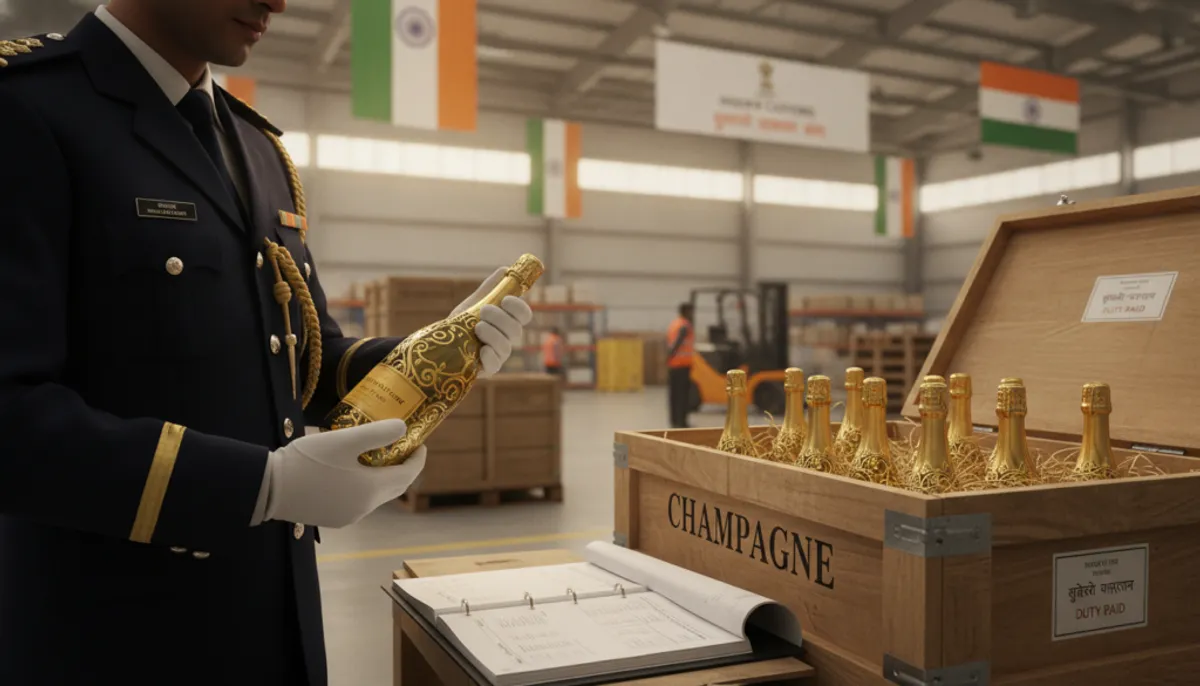
From documentation to labeling, the right support made the process simpler. Use our expertise to connect with the wider world of luxury beverage trade and start exporting to meet rising consumer interest.
Key Takeaways
- One clear guide covered duties and customs for market entry.
- Practical information reduced setup time for distributors.
- Labeling and paperwork aligned with global standards.
- Demand growth in India opened new opportunities worldwide.
- Request a personalized quote to begin your export journey.
The Growing Appeal of Champagne in the Indian Market
A younger, wealthier audience is reshaping demand for premium sparkling labels.
Current Market Trends
The market is on track for strong expansion, with projections showing a 16.3% CAGR from 2025 to 2033. Urban centers lead the way as bars and restaurants list more premium options.
Changing Consumer Preferences
Adults aged 25–44 now make up most wine drinkers, and millennials (25–34) account for about 45% of all consumption. This shift favors lighter, refined choices over traditional hard alcohol.
- Growth drivers: higher disposable income among young professionals and rising curiosity about global wines.
- Demand shifts: sparkling styles gain status as a symbol of sophistication in social settings.
- Brand opportunity: companies that match quality with local tastes win lasting consumer loyalty.
Understanding the Regulatory Landscape for Importing Champagne into India
Success in this market depends on understanding a layered web of federal and state rules.
The Customs Tariff Act of 1975 sets the base for any legal import process. Strict compliance with tariff codes and valuation rules keeps shipments moving and avoids costly delays. Understanding customs clearance procedures is essential to navigate these regulations effectively.
Securing the right license is non-negotiable for long-term access to the alcohol market. A proper import license speeds customs and helps establish steady distribution for your wine labels.
State excise laws add layers of paperwork and taxes. Staying updated on local rules and on the EU–India trade talks (restarted in 2022) may open better access for European wines by 2025.
- Tip: Build a compliance calendar to track renewals and policy changes.
- Tip: Work with a licensed local partner to navigate state excise requirements.
| Requirement | Why it matters | Action |
|---|---|---|
| Customs Tariff Act | Defines duties and classification | Align invoices and HS codes with law |
| Import License | Needed for legal market entry | Apply early; maintain records |
| State Excise Rules | Control sale and distribution | Partner with local distributor |
| FTA Progress | May reduce tariffs for EU wines | Monitor negotiations and update plans |
Our team focuses on ongoing compliance so you can grow brand presence in this dynamic market. Staying proactive keeps your supply chain steady as world trade rules change.
Navigating Customs Clearance Procedures
Clear airport procedures make the difference between a smooth arrival and costly delays for travelers and commercial shippers.
Green Channel versus Red Channel
At arrival, passengers choose the Green Channel for duty-free items or the Red Channel to declare dutiable goods. Choosing Green when you carry dutiable goods risks prosecution, penalties, and confiscation.
Use the ATITHI mobile app as a recommended step. Filing declarations before boarding saves time and helps customs officers process arrivals faster.
Required Documentation for Clearance
Proper papers protect your shipment and help ensure compliance. Key documents include invoices, a certificate of origin, and any valid license for commercial shipments.
- Declare commercial goods—failure to do so brings severe penalties or confiscation.
- Duty-free alcohol allowance is limited to 2 litres per person from most countries.
- Keep records to prove the origin and purpose of goods for customs review.
| Document | Why it matters | Action |
|---|---|---|
| Passport + Boarding Pass | Identity and arrival proof | Have ready at counters |
| Certificate of Origin | Proves origin of goods | Include with commercial declarations |
| Import License | Required for commercial import use | Secure before shipment |
Follow these steps to reduce risk and keep your goods moving. Strong compliance habits shorten clearance time and protect your name in the market.
Essential Labeling Requirements for Alcoholic Beverages
Clear labeling keeps goods moving and protects consumers. Rules demand visible warnings and accurate details on every bottle.
Mandatory Pictorial Health Warnings
All imported products must show prescribed pictorial warnings. The Cigarettes and Tobacco Products Packaging and Labelling Rules apply, so check each element carefully.
Strict compliance with the Ministry of Health and Family Welfare guidelines is mandatory for all beverages. Missing or incorrect art can trigger rejection at customs and costly delays.
Each bottle must display the required pictorial warnings and clear statements about the nature of the products. Our guide explains how to meet license and documentation needs while keeping designs market-friendly.
| Requirement | Why it matters | Action |
|---|---|---|
| Pictorial Warnings | Informs consumer and meets national rules | Apply mandated graphics at correct size |
| Label Content | Shows origin, volume, and alcohol strength | Use approved wording and units |
| License Details | Proof of lawful entry for commercial sales | Link label claims to paperwork and keep copies |
| Regulatory Updates | Rules can change; noncompliance risks seizure | Monitor rules and update packaging promptly |
Maintaining high standards of compliance builds trust with local consumers who value safety and transparency. We help you design labels that satisfy authorities and appeal to buyers.
Calculating Import Duties and Taxes
Estimating landed costs starts with knowing the core customs rates that apply to your shipments. Imported wine faced a 150% Basic Customs Duty (BCD), while beer carried a 100% BCD plus a 10% social welfare surcharge.
Plan each step of financial forecasting to include base duties, the surcharge, and handling fees. These charges change the final retail price and affect margin and market access.
Compliance with the Customs Tariff Act of 1975 was essential to predict costs correctly. Accurate manufacturer details and country of origin documents helped customs officials classify goods and apply the right rate.
- Confirm the correct HS code and invoice values before shipment.
- Factor the social welfare surcharge into unit cost calculations.
- Keep your license paperwork current to avoid clearance delays.
| Item | Typical Charge | Action |
|---|---|---|
| Wine | 150% BCD | Verify origin and invoice value |
| Beer | 100% BCD + 10% surcharge | Include surcharge in landed cost |
| Other fees | Handling / clearance | Estimate per shipment |
The Role of Local Importers and Distributors
Choosing the right importer speeds customs, secures the right license, and helps your brand reach premium outlets, especially in the context of wine imports in kenya.
Partnering with an experienced local importer like Rad Elan Distributors is a crucial step. They hold the necessary license and know how to navigate state-by-state rules.
Their deep experience in the wine and alcohol sector covers storage, logistics, and retail placement. This knowledge helps move your product faster to bars and restaurants.
- Market access: Local partners open doors to key urban centers and high-end venues.
- Compliance: They maintain the license paperwork that customs and excise officers check.
- Distribution: Established routes make sure wines reach the right shelves at the right time.
| Role | Benefit | Action |
|---|---|---|
| Local importer | Licensing & customs support | Confirm license details before shipment |
| Distributor | Storage & delivery network | Review warehousing and retail plans |
| Brand partner | Market positioning | Agree on promotional steps and timelines |
We provide this guide to help you select a partner with a proven track record. Building a strong relationship takes time, but it is the essential step to overcome marketing limits and win shelf space.
Strategic Tips for Successful Market Entry
Targeting major cities gives brands the fastest path to visibility and early sales traction. Start small, learn fast, then scale.
Focusing on Key Urban Centers
Delhi, Mumbai, Bangalore, and Goa concentrate most premium sales. Launching in these hubs helps you reach affluent consumers and on-trade venues quickly.
Navigating Price Sensitivity
Offer a tiered range of wines to meet different budgets. Entry-level bottles build trial while premium labels protect margin and brand prestige.
Work with your importer to model landed costs and set realistic retail price points that respect local taxes, the required license rules, and the minimum order quantity.
Overcoming Marketing Restrictions
Since mass media ads for alcohol face limits, use events, tastings, and social channels to tell your story. Host small trade tastings with distributors to build on-trade momentum.
- Step up presence with sample-driven events.
- Partner with importers to coordinate promotions and share the cost of activations.
- Follow every legal requirement and keep your license documentation ready to avoid delays.
This champagne investment guide gives practical, time-tested tips so your entry step into the market respects cultural and legal boundaries while building lasting consumer interest in your wines.
Managing Unaccompanied Baggage and Commercial Shipments
Unaccompanied baggage and commercial shipments follow different rules that affect duty, clearance time, and documentation.
Unaccompanied baggage bears a 38.5% total duty rate (35% ad valorem + 3.5% social welfare surcharge). That rate applies when alcohol or other goods arrive separate from a traveler.
Key requirements include strict compliance with the Baggage Rules of 2016 and full documentation. Every shipment must show the manufacturer’s name and the country of origin to satisfy customs.
- Keep the number of alcoholic drinks within allowed limits to avoid classification as commercial quantity.
- Use authorized cargo services to protect product quality and speed transit time.
- Plan paperwork ahead so the import license and invoices match customs requirements.
We guide you through each step for clearing goods. Our process reduces hold-ups and keeps you in full compliance with customs laws for alcoholic beverages and other products.
| Issue | What to do | Benefit |
|---|---|---|
| Duty rate | Calculate 38.5% for unaccompanied baggage | Avoid surprise costs |
| Documentation | Include manufacturer name & origin | Faster customs clearance |
| Shipment type | Choose licensed cargo partner | Protect product and time |
Leveraging Free Trade Agreements for Better Access
New trade pacts now give wine exporters clearer routes to lower tariff barriers and faster market entry.
The TEPA deal signed in March 2025 with EFTA and the AI-ECTA with Australia changed duties for many labels. These agreements reduce tariff hurdles for wine products, including slovakian wine imports, and make it easier to import premium bottles.
Work with experienced local importers to claim tariff benefits. They handle paperwork, verify origin rules, and secure preferential rates so you can offer better pricing in the target market.
- Use trade provisions to lower landed cost and protect margin.
- Confirm rules of origin to qualify for reduced duties.
- Monitor updates so your goods keep benefiting from new terms.
| Agreement | Benefit | Action |
|---|---|---|
| TEPA (EFTA, Mar 2025) | Reduced tariffs on select wines | Validate origin and claim preference |
| AI-ECTA | Lowered duties for Australian labels | Work with importers to apply reduced rates |
| Ongoing monitoring | New opportunities as trade evolves | Subscribe to trade alerts and update processes |
Our team tracks world trade shifts so your brand can seize openings quickly. Understanding the specific provisions is the key to expanding share and staying competitive.
Handling Documentation and Compliance
Clear, accurate paperwork is the single factor that most often decides whether a shipment clears customs smoothly or stalls at the border.

All imported alcoholic beverages require a certificate of origin and precise supporting documents for customs clearance. This is the first step in meeting national requirements and securing timely access to the market.
Handling documentation with precision is the most important compliance step. Each product must show the manufacturer’s name, country of origin, volume, and alcohol strength. Missing details trigger inspection or seizure of goods.
Our guide breaks the process into clear steps: verify the import license, gather health certificates, and match invoices to the shipment. A simple checklist saves time and reduces errors.
- Record accuracy: Keep original certificates and digital copies ready for customs and importers.
- Label clarity: Ensure required warnings and origin details appear on every bottle.
- Compliance program: Regular audits prevent routine mistakes that cause delays.
| Document | Why it matters | Action |
|---|---|---|
| Certificate of origin | Qualifies goods for customs processing | Attach original and scanned copy |
| Import license | Required for commercial sale | Verify validity before shipment |
| Health certificate | Shows product safety for beverages | Obtain from manufacturer or regulator |
Maintain a rigorous compliance routine and work with trusted importers to streamline clearance. When records are in order, you gain reliable market access and build a reputation for dependability.
Best Practices for Storage and Distribution
Maintaining stable storage conditions is the single best step to protect premium wines. Proper temperature and humidity control preserve aroma and texture. Small changes can harm taste and shorten shelf life.
This guide outlines basic requirements for preserving imported products in warm climates. Use climate-controlled facilities and monitor conditions daily. Follow strict compliance rules to avoid spoilage and regulatory fines.
Work with experienced importers who operate reliable distribution networks. They understand transit time, handling, and warehousing needs. That experience keeps bottles in ideal condition from the warehouse to retail.
- Climate control: 12–16°C storage and 60–70% humidity where possible.
- Quality checks: temperature logs, shock sensors, and regular audits.
- Regulatory compliance: follow local storage requirements and labeling rules.
| Storage element | Why it matters | Action |
|---|---|---|
| Temperature | Prevents oxidation and flavor loss | Install continuous monitors |
| Handling | Reduces breakage and label damage | Train staff and use padded racks |
| Documentation | Shows compliance for inspections | Keep records for every shipment |
Follow these tips to protect your brand and ensure customers receive top-quality wines. We help you find partners who prioritize quality control at every stage.
Targeting the Right Consumer Demographics
Health-focused buyers now see wine as a lighter, more refined choice than heavier spirits, and they are increasingly drawn to festive bubbly trends.
Younger, urban professionals are the primary drivers of wine consumption. They favor labels that reflect lifestyle, food pairing, and moderate drinking habits.
Aligning your brand with these aspirations builds loyalty. Work with trusted local importers to shape messaging that fits cultural tastes and local market norms.
We analyze market data to find the groups most likely to buy your products. That lets you use marketing budgets more effectively and tailor offers for repeat purchase.
- Target affluent urban centers with tastings and food-pairing events.
- Use lifestyle storytelling to appeal to younger consumers.
- Partner with importers who know retail and on-trade behavior.
| Demographic | Key Preference | Marketing Action |
|---|---|---|
| Urban professionals | Quality, convenience | Events, social media storytelling |
| Health-conscious adults | Lower-alcohol, moderation | Label info, wellness angles |
| On-trade buyers | Pairing & presentation | Tastings, trade samples |
Overcoming Common Logistical Challenges
Moving wine across a large country means juggling permits, routes, and local rules at the same time.
Successful entry requires a clear step plan that links customs clearance to last-mile distribution.
Start with a state-by-state checklist. Identify license needs, tax differences, and warehouse rules for each state. This reduces surprises and saves time at customs.
Work with experienced local importers to secure access and speed clearance. Their knowledge of liquor laws, including estonia import regulations, and distribution routes keeps goods moving.
Document control matters: manufacturer name, origin, invoice and license must match for every shipment. We help manage these records to cut delays.
- Follow a step-by-step process for permits and transport.
- Use local partners for distribution and compliance support.
- Audit paperwork before shipment to avoid hold-ups.
| Challenge | Action | Benefit |
|---|---|---|
| State liquor rules | Create tailored compliance checklists | Fewer rejections and faster clearance |
| Customs delays | Pre-verify invoices and HS codes | Smoother port processing and lower costs |
| Wide geography | Partner with national distributors | Reliable delivery and better market reach |
| Paperwork errors | Centralize document control | Reduced risk and steady supply |
Utilizing Digital Tools for Customs Declarations
Digital declaration tools now let travelers pre-file customs data and reduce wait times at arrival.
Using the ATITHI mobile app is a key step to streamline customs clearance. The app helps you submit accurate details for goods and avoids common mistakes that cost time and money.
These platforms give clear information on documentation and license needs. They support better compliance by guiding you through each required field before arrival.
Integrating digital tools into your import workflow speeds market access and improves coordination with local importers. Our guide shows practical steps to use apps properly and prepare required paperwork.
- File declarations in advance to reduce inspection risk.
- Match invoices and certificates to avoid delays.
- Keep digital copies to support rapid verification at customs.
| Tool | Benefit | Action |
|---|---|---|
| ATITHI app | Faster processing | Pre-file traveler declarations |
| Document portal | Central record | Upload certificates & invoices |
| Importer dashboard | Real-time status | Coordinate clearance steps |
Final step: treat digital filing as routine. It reduces penalties, shortens clearance time, and keeps your products moving to market with fewer surprises.
Requesting Your Personalized Champagne Export Quote
Get a clear plan for your next shipment by requesting a custom quote from our export team.
Requesting your personalized quote is the first step toward bringing the finest champagne selections to the growing Indian market. We outline landed costs, customs steps, duty rates for champagne, and timeline so you can make fast, informed decisions.
Our team works with top importers around the world to ensure your products are handled with care and expertise. We coordinate paperwork, match label requirements, and advise on the best routes for safe transit.
We provide a transparent and efficient process for all your import needs. That includes customs guidance, documentation checks, and partner recommendations to avoid common delays.

- Tailored quotes that reflect your product mix and business goals.
- Support from vetted importers and logistics partners worldwide.
- Clear customs advice to reduce hold-ups and extra costs.
Looking for Champagne? We’ve got you covered with premium options ready to be exported to your chosen destination. Visit https://champagne-export.com today to get started and discover how our personalized quotes meet your exact business needs.
Conclusion
Success in the Indian wine market comes when brands pair careful planning with strong local partners, clear compliance, and consistent follow-through.
This guide helps you meet regulatory needs and position your products for steady growth. Follow the steps to keep paperwork correct and shipments on time.
Know the modern consumer and protect product quality. Focus on health, transparency, and clear labeling so buyers trust your brand.
We commit to supporting you year after year. With patience, smart strategy, and the right partners, your products can win shelf space and lasting market share.