Welcome to the epitome of luxury champagne. Established in 1743 in Épernay by Claude Moët, this brand has become instrumental in how we celebrate milestones. With a history extending over 275 years, it’s evolved from royal endorsements to becoming a staple of contemporary enjoyment. Currently, it epitomizes sophistication, meticulous craftsmanship, and jubilation with every sip.
Dom Pérignon, a supreme offering by Moët & Chandon, takes its place as a prestigious cuvée within the LVMH conglomerate. It is celebrated for its vintage specificity, aging on lees to achieve its noteworthy depth, and maintaining perfect balance. Among connoisseurs, its Rosé, the vibrant P2 series, and the exclusive Oenothèque editions are highly coveted.
These brands collectively symbolize the zenith of French champagne. They range from the celebrated Impérial to the contemplative vintages of Dom Pérignon, leading connoisseurs through refined champagne experiences. Additionally, they meld tradition with contemporary responsibility, emphasizing sustainable practices in both vineyard and cellar operations. The allure of a champagne salon enhances these experiences, inviting enthusiasts to savor the elegance of each pour.
In choosing champagne gifts with intentionality or orchestrating tastings, Moët & Chandon and Dom Pérignon present unparalleled sophistication and distinctiveness. They embody luxury that communicates subtly but impresses indelibly. Among their offerings, the Moët White Star stands out as a delightful choice for those seeking a unique experience.
Key Takeaways
- Moët & Chandon has led luxury champagne since 1743, shaping global celebration culture.
- Dom Pérignon stands as a vintage-only icon with long lees aging and remarkable finesse.
- The portfolio ranges from Moët Impérial to Dom Pérignon Rosé, P2, and Oenothèque.
- Both houses support thoughtful champagne tasting and elevated champagne gifts.
- Heritage, artistry, and LVMH backing ensure quality, consistency, and cultural relevance.
- Sustainability in the vineyard and cellar underpins modern luxury standards.
Heritage of Excellence: From Épernay to the Global Stage
In Épernay’s stone cellars to grand European banquets, the house earned a reputation for elegance and luxury. Today, Moët & Chandon is a luxury champagne benchmark, the result of visionary leadership, premium vineyards, and meticulous craftsmanship.
Épernay remains the heartbeat of operations, a place where tradition converges with innovation. The story of Moët & Chandon champagne starts here, weaving through royal courts and historic partnerships, culminating in a legacy of unparalleled blending expertise.
The vision of Claude Moët and the rise of Moët & Cie
In 1743, Claude Moët established Moët & Cie, aspiring to supply the French royal courts with Champagne. Its adoption by Versailles’ nobility distinguished Moët & Chandon as a symbol of indulgence and high-end champagne.
By emphasizing quality and dependable supply, Claude Moët built a foundation of trust with courtiers and merchants. His strategy propelled Moët & Chandon champagne’s presence beyond its Marne origins, setting the stage for wider distribution.
Jean-Rémy Moët and the partnership with Chandon de Briailles
Jean-Rémy Moët expanded exports and established pivotal connections throughout Europe. Together with his son-in-law, Pierre-Gabriel Chandon de Briailles, they cemented the Moët & Chandon partnership, signifying a new era of ambition and expansion.
The partnership enhanced sourcing, production, and distribution capacities. It ensured Moët & Chandon could satisfy the growing demand for top-tier champagne in cities like London and Vienna while maintaining Épernay as its central hub. Additionally, the introduction of champagne ct selections further diversified their offerings, appealing to a broader audience.
Grand Cru holdings and the foundation of Brut Impérial
The estate accumulated over 1,150 hectares in Champagne, half of which are Grand Cru. These vineyards are key to securing top-tier grapes vital for the house’s signature style. The meticulous selection process allows for the creation of consistent, distinctive wines.
The development of the first vintage Champagne and Brut Impérial marked significant milestones. Brut Impérial, in particular, rose to global prominence, epitomizing Moët & Chandon champagne’s accessible yet luxurious profile. With a diverse terroir and expert blending, the house crafted a champagne recognized worldwide for its quality.
| Milestone | Key Figures | Location | Impact on Style |
|---|---|---|---|
| 1743 Founding of Moët & Cie | Claude Moët | Épernay | Introduced courtly elegance; early hallmark of luxury champagne |
| Expansion and Renaming | Jean-Rémy Moët; Pierre-Gabriel Chandon de Briailles | Épernay to Europe | Global reach for moet chandon; refined house identity |
| Vineyard Consolidation | Estate Team | Grand Cru and Premier Cru sites | Reliable fruit quality for moet chandon champagne blends |
| Brut Impérial Emerges | Cellar Masters | Épernay Cellars | Signature balance of freshness and depth in luxury champagne |
Dom Pérignon: The Apex of Luxury Champagne
Dom Pérignon, Moët & Chandon’s zenith, epitomizes luxury champagne, setting standards for connoisseurs. It blends Chardonnay and Pinot Noir harmoniously. This fusion highlights ripe fruit, white flowers, and toasted brioche against a bright mineral backdrop.
Each bottle encapsulates a unique year, distinct from blends. Such specificity captures a detailed narrative of climate and terrain, showcasing Dom Pérignon’s lead in luxury discourse.
Why It Is the Flagship of Prestige Cuvées
Within Moët Hennessy, Dom Pérignon symbolizes excellence. Its crafting, aimed at elegance and strength, appeals to collectors who value nuanced tasting experiences in luxury champagnes, including the refreshing moët ice champagne.
- Signature profile: ripe stone fruit, citrus zest, toast, and saline minerality.
- Texture: fine mousse, seamless mid-palate, lingering finish.
- Purpose: express a singular year while staying unmistakably Dom Pérignon.
Vintage-Only Philosophy and Extraordinary Aging Potential
Declared only in stellar years, Dom Pérignon undergoes extended lees aging. This process, lasting at least eight years, enhances complexity and stability, promising decades of refinement.
- On the lees: time yields layers of brioche, hazelnut, and cream.
- In bottle: tension relaxes into harmony without losing drive.
- Across decades: spice, smoke, and truffle emerge alongside vivid fruit.
Chef de Cave Leadership and Pursuit of Harmony
Under Vincent Chaperon, Dom Pérignon strives for precision, intensity, and completeness. Each strategy, from vineyard selection to final blend, is balanced. This ensures Dom Pérignon’s status as a benchmark in the realm of premium champagne and sophisticated tasting experiences.
moet chandon dom perignon
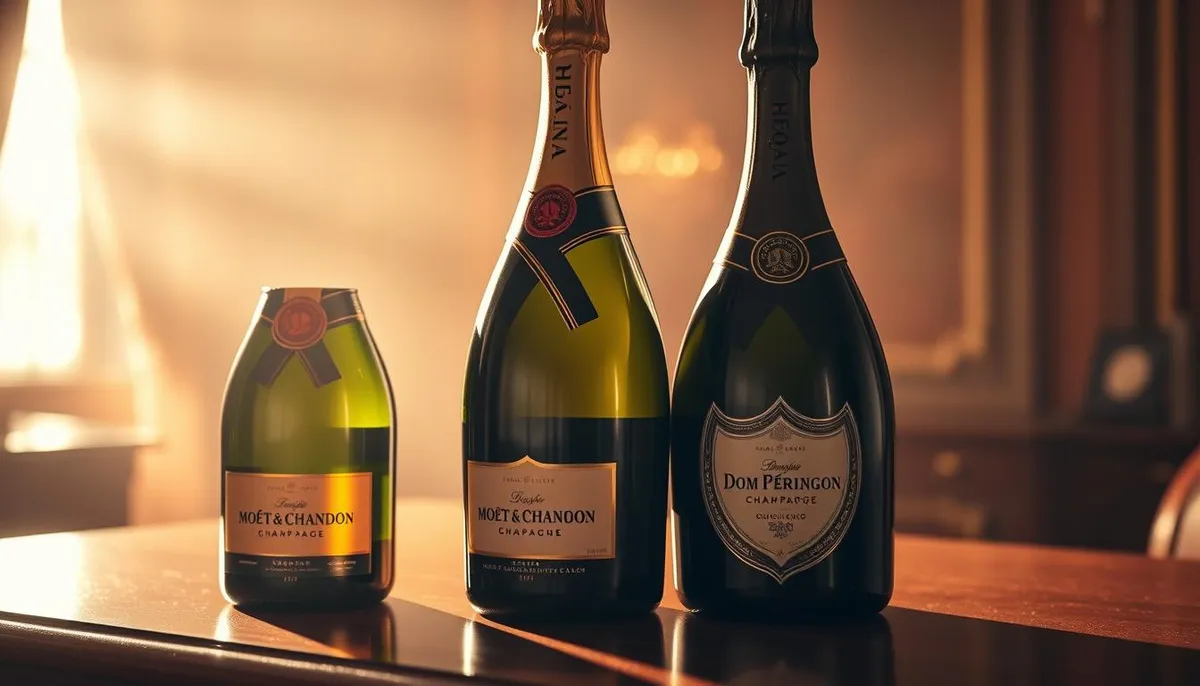
Moët & Chandon, alongside Dom Pérignon, epitomizes a unique blend of vastness and exclusivity. Their shared narrative originates from a dormant emblem, previously owned by Champagne Mercier. This emblem was subsequently incorporated by Moët & Chandon in 1927. The rebottling of the 1921 vintage, spearheaded by Robert-Jean de Vogüé, marked a pivotal moment. It established a new standard in luxury. Consequently, moet chandon dom perignon was transformed into a prestigious cuvée, meticulously curated from premier vineyards, including exclusive beverages that enhance the overall experience.
Over the years, Dom Pérignon has achieved remarkable milestones, distinguishing itself within the collection. It attained autonomy, while Moët & Chandon maintained their production of widely celebrated non-vintage and vintage wines. This distinction allows moet champagne to embody celebration and reach, whereas moet chandon dom perignon epitomizes craftsmanship, patience, and the pinnacle of terroir.
Presently, the demarcation between the two is unequivocal. Moët & Chandon excels in extensive production, characterized by both consistency and flair. Conversely, Dom Pérignon is exclusive to vintages. It unveils Plénitudes, showcasing the nuanced influence of time on both texture and vitality. For those who appreciate consistency, moet champagne represents a dependable brand identity. For the connoisseur, moet chandon dom perignon offers a profound experience, enriched through prolonged maturation and selective vineyard sourcing.
The result burgeons into a synergy of legacy and magnitude, with prestige intricately crafted through meticulous focus.
The Origins and Legacy of Dom Pierre Pérignon
In 1668, Dom Pierre Pérignon set his sights on the Abbey of Hautvillers with one ambition: to create unparalleled wine. His enduring influence dictates the essence of Dom Perignon today, shaping the sensory experience of luxury champagne. This vision continues to guide the selection of champagne as a distinguished gift for momentous occasions.
Hautvillers Abbey and innovations in winemaking
Dom Pierre Pérignon’s tenure at Hautvillers was marked by several key advancements. He improved vineyard cultivation and introduced methods to ensure the wine’s clarity. His mastery in blending Chardonnay with Pinot Noir established a template for tension and harmony. This sophisticated approach led to a new echelon of luxury champagne, defining the criteria for prestigious champagne gifts today.
From Versailles to modern-day reverence
The Champagne crafted by Pérignon’s methods captivated King Louis XIV at Versailles, enhancing its renown beyond Reims. Presently, Dom Pérignon epitomizes prestige with its extended lees aging and non-oxidative winemaking methods. These techniques imbue the champagne with a layered complexity, making it a remarkable choice for valuable champagne gifts.
The aesthetic values: precision, intensity, minerality, completeness
Dom Pérignon’s ethos is built on four essential elements. Each blend is precisely crafted, with intensity that escalates elegantly. The minerality outlines the fruit flavors, while a comprehensive finish completes the experience. The aim is to achieve a luxury champagne that resonates with vibrancy and tranquility. This meticulous approach dignifies the tradition of selecting champagne as an esteemed gift.
Moët & Chandon Today: Scale, Style, and Sustainability
Originating from Épernay, Moët & Chandon operates Champagne’s largest estates, producing millions of bottles annually. The brand masterfully maintains its distinctive essence, adhering to meticulous production techniques. It is a beacon of luxury champagne, championing stringent quality measures, adept blending, and forward-thinking strategies.
Integration within LVMH and global luxury positioning
Since its incorporation into LVMH in 1987, Moët & Chandon has been in illustrious company with Louis Vuitton, Hennessy, and Dior. This affiliation has elevated its worldwide presence, guaranteeing prominence in premier hotels, dining establishments, and retail venues. The collaboration facilitates robust procurement practices and adherence to high standards, thereby establishing Moët & Chandon as a paragon of opulence globally.
Eco-friendly viticulture and biodiversity commitments
Stéphane Baschiera, President and CEO, has directed the brand towards sustainable practices and soil vitality. Adoption of cover crops, minimized pesticide usage, and enhancement of biodiversity corridors are notable efforts. Such initiatives are crucial for conserving the Champagne region’s unique terroir while ensuring the continuity of Moët & Chandon’s distinguished style for posterity.
Leadership, innovation, and the art of blending
Moët & Chandon was a trailblazer in developing reserve wine programs, which stabilize its non-vintage offerings. The skilled Épernay team meticulously selects from numerous base wines to create a harmonious, vivid, and rich cuvée. This meticulous process allows Moët & Chandon to consistently offer delightful experiences, while its vintage selections display the complexity and luxury of fine champagne.
Signature Expressions: Exploring Dom Pérignon’s Plénitudes
Each plénitude signifies a distinct epoch in the life of Dom Pérignon, embodying the epitome of luxury champagne designed for those who value patience and precision. For connoisseurs eyeing a meticulous champagne tasting, these phases elucidate the influence of time on texture, aroma, and vivacity, including the allure of authentic dom perignon.
Dom Pérignon Vintage: eight years on lees and timeless balance
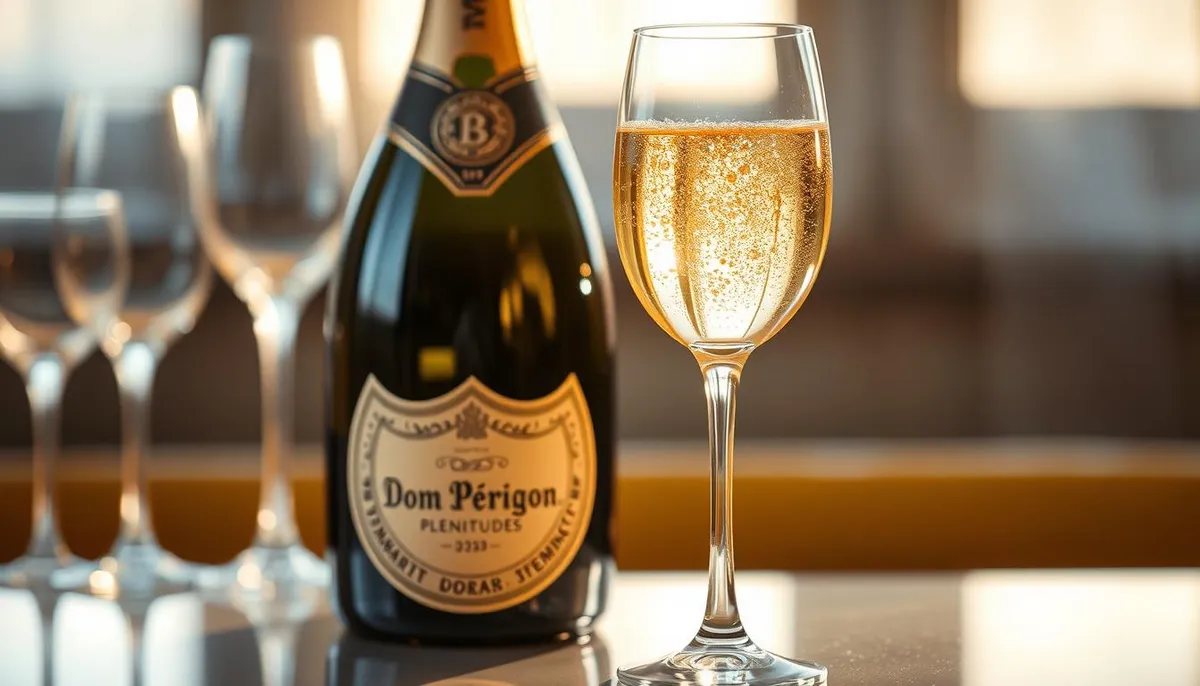
The Vintage, unveiled solely in standout years, matures over eight years on the lees, presenting ripe fruit, white flowers, and toasted brioche. This ensemble is enveloped in a creamy texture alongside vibrant minerality. During an intensive champagne tasting, its balance emerges effortlessly, epitomizing Dom Pérignon’s hallmark of luxury distilled through rigorous selection.
Dom Pérignon P2: extended aging, intensity, and energy
The second incarnation, known as P2, emerges after 12–15 years, achieving enhanced vigor and precision. It exhibits notes of citrus zest, toasted hazelnut, and a smoky undercurrent. The culmination is mineral-rich and electrifying. In a thorough champagne exploration, P2 underscores Dom Pérignon’s exploration of tension and resolution, a marriage of potency and lucidity.
Oenothèque releases: library treasures and profound complexity
The Oenothèque selection, a forerunner to the current Plénitude system, showcases late-disgorged vintages that have rested for decades. These bottles boast a delicate mousse, layers of tropical fruit, praline, and brioche, unraveling gracefully with each sip. Within the realm of the luxury champagne market, they position Dom Pérignon as a paragon of mature sophistication during a discerning tasting session.
Collectively, these distinct expressions spotlight the staged maturation process, unveiling progressive textures, scents, and dynamism as time unfolds.
Moët & Chandon Icons Beyond Dom Pérignon
Beyond Dom Pérignon, the Maison articulates an engaging narrative of elegance and craftsmanship. From the historic cellars in Épernay, Moët & Chandon perfects each cuvée, aiming to encapsulate vibrancy, complexity, and pleasure. Their champagnes interact with contemporary palates through a lens of revered traditions.
Impérial, Grand Vintage, and the art of selecting, aging, and blending
Moët & Chandon’s Impérial cuvée embodies the essence of the brand’s savoir-faire. It emerges from a meticulous process: selecting outstanding vineyards, utilizing the insight of reserve wines, and embracing a thoughtful maturation phase. The result is a symphony of vibrant fruitiness, a delicate bead, and a pure, enduring finale.
The Grand Vintage collection, with unique editions such as 2016, captures the essence of singular years. The selection process commences only when the natural cycle yields its best expression. Extended contact with lees lends the champagne a rich texture, a complex profile, and a subtly forceful character.
The Art of Selecting, Aging, Blending, and Maturing finds its manifestation in endeavors like Collection Impériale Création N°1 and the Grand Vintage Collection. These ventures underscore the profound impact of vineyard selection and temporal investment on the evolution of Moët & Chandon champagnes into multidimensional, articulate beverages.
Ice Impérial and Nectar Impérial: modern expressions of indulgence
Ice Impérial introduces a novel concept, serving champagne over ice, accentuating lush, tropical essences and an exhilarating freshness. Conversely, Nectar Impérial offers a richer, voluptuous experience, harmonizing splendidly with aromatic cuisines and the ambiance of after-dark soirees.
Both expressions demonstrate Moët & Chandon’s adeptness in capturing the zeitgeist without compromise. They widen the maison’s appeal, from sophisticated beach parties to chic rooftop gatherings, maintaining an equilibrium that’s quintessentially Moët & Chandon.
Visiting Épernay: Moët & Chandon bar and immersive experiences
The main avenue in Épernay leads to the Moët & Chandon Bar and its renowned cellars, providing experiences centered on texture, sweetness, and the art of presentation. The “Art de Vivre” adventures offer an insightful delve into the brand’s rich legacy, navigating through art galleries, elegant rooms, and dimly lit passages.
A visit here offers an exploration of the estate’s terroir, blending experiments, and the etiquette surrounding champagne service. It bridges the historical with the sensorial, positioning Moët & Chandon within a vibrant, effervescent culture.
| Cuvée | Style & Purpose | Aging Approach | Flavor Markers | Best Moments |
|---|---|---|---|---|
| Impérial | Signature non-vintage built for balance | Reserve wines for consistency; careful maturation | Green apple, pear, citrus zest, brioche | Everyday celebrations and aperitif service |
| Grand Vintage (e.g., 2016) | Declared years with distinct character | Extended lees aging to add depth and texture | Stone fruit, toasted almond, mineral line | Gastronomic pairings and cellaring |
| Ice Impérial | Designed to be served on ice | Blend tuned for chill and dilution | Mango, guava, grapefruit, fresh mint | Day parties, poolside, summer brunch |
| Nectar Impérial | Opulent, demi-sec indulgence | Balanced dosage to preserve lift | Ripe pineapple, peach, vanilla, spice | Desserts, spicy cuisine, late-night lounges |
Art, Design, and Limited Editions
In the realm of luxury champagne and luxury drinkware, both aesthetics and flavor are paramount. A daring design can transform an outstanding bottle into an object of discussion. Similarly, the rarity of a release brings a theatrical flair to its unveiling. For enthusiasts and entertainers alike, the confluence of moet chandon dom perignon and contemporary culture is pivotal.
Dom Pérignon collaborations: Lady Gaga, Jeff Koons, Lenny Kravitz, David Lynch
Through its collaboration with Lady Gaga, Dom Pérignon introduced sculptural casings and vibrant colors reflective of performance art. Jeff Koons gave the bottle a makeover with his signature pop-art gleam. In contrast, Lenny Kravitz introduced tactile surfaces that impart a sense of bespoke luxury.
David Lynch infused labels and coffrets with a moody, cinematic quality. Additionally, the house’s partnership with Bvlgari on capsule collections showcases the intersection of luxury champagne with fashion and design.
Moët & Chandon partnerships and cultural moments
Moët & Chandon has become synonymous with glamour, making its mark on red carpets, sporting events, and musical celebrations. Its collaboration with Pharrell Williams highlighted a blend of playfulness and sophistication. For those looking for a perfect serving size, the moet 200ml is an excellent choice for intimate celebrations.
Such collaborations shape the narrative of champagne as a lifestyle accessory. Innovative packaging and limited-edition releases attract new demographics while honoring the brand’s legacy.
Collectibility and gifting appeal in the luxury champagne market
Design-led editions seamlessly transition from storage to festivity. Limited quantities, artist endorsements, and unique packaging transform moet chandon dom perignon into coveted collectibles with enduring worth.
The allure of scarcity and craftsmanship speaks volumes when gifting. Meticulously curated presentation complements these champagne offerings, ensuring their desirability amongst collectors and connoisseurs year after year.
Champagne Tasting and Buying Guide
A discerning palate finds its rewards in superior bottles. A methodical champagne tasting delineates style, texture, and finish, guiding your selection process. Opt for moet champagne for its effervescent charm or a vintage that promises cellar longevity, guided insights enhance the experience.
Tasting notes: ripe fruit, toasted brioche, citrus, and mineral drive
Initiate with the aromatics: ripe fruit, citrus zest, and white flower essences predominate. Upon tasting, one discerns toasted brioche nuanced by praline, courtesy of lees aging. The conclusion is sculpted by a clean mineral drive, with a fine mousse enhancing texture and creaminess.
For optimal enjoyment, serve well-chilled in a tulip glass. This preserves the champagne’s intricate texture while concentrating its bouquet.
Choosing between Moët Champagne and Dom Pérignon vintages
Moët & Chandon Impérial beckons when energy and adaptability are desired. For gatherings, Ice Impérial and Nectar Impérial blend exquisitely with vigorous flavors, while Grand Vintage delivers singular year nuances and an extended finish.
Dom Pérignon, exclusively vintage, is crafted for equilibrium and tension. P2 and Oenothèque selections intensify the sensory journey, rewarding the aficionado with layered complexity.
Champagne gifts, storage tips, and understanding moet et chandon price
A gift of champagne transcends the ordinary when limited editions or artist collaborations enhance its allure. A note about serving temperature adds a considerate flourish.
Bottles should lie horizontal in a cool, dark, stable environment. Savor non‑vintage Moët promptly to capture its zestfulness. Conversely, a vintage Dom Pérignon matures beautifully over decades, enriching in complexity.
The pricing of moet et chandon mirrors its classification, vintage distinction, and the exclusivity of late‑disgorged offerings. While special editions may command a premium, the core moet champagne selections maintain their appeal for regular celebrations. For those looking to make informed purchasing decisions, reviewing champagne wholesale quotes can provide valuable insights into market trends and pricing.
Looking for Champagne? We’ve got you covered. Discover the finest selections, ready to be exported anywhere in the world. Request your personalized quote today on https://champagne-export.com.
- Curated picks for refined champagne gifts
- Global export support and secure packing
- Personalized selections for cellars, events, and restaurants
Conclusion
Claude Moët initiated a legacy in Épernay that dominated global celebrations. The establishment of Grand Cru vineyards and Brut Impérial’s invention were milestones. Jean-Rémy Moët, together with Pierre-Gabriel Chandon de Briailles, pioneered standards that prevail. Now, under LVMH, moet chandon integrates tradition and innovation, emphasizing sustainable practices and biodiversity.
Dom Perignon, under the stewardship of Vincent Chaperon, commits to exceptional harmony and profundity. Its offerings, including Plénitudes, manifest the sagacity of time with vigor. Moet Chandon juxtaposes with a diverse portfolio including Impérial and Ice Impérial, marrying tradition with contemporary satisfaction.
The collaboration with luminary figures such as Lady Gaga and David Lynch keeps moet chandon and dom perignon culturally relevant. Whether opting for the vibrant moet chandon or the intricate dom perignon, both epitomize the pinnacle of Champagne luxury worldwide.
The essence of our discussion is straightforward. The significance of history, the value of vineyards, and the essence of time are paramount. Opting for moet chandon brings a mix of expansiveness and elegance. Choosing dom perignon offers depth and contemplation. In either choice, a toast to magnificence is ensured.
FAQ
What’s the difference between Moët & Chandon and Dom Pérignon?
Dom Pérignon serves as the pinnacle, vintage-sole label within Moët & Chandon’s collection, unveiled solely in exceptional years and matured extensively on the lees to enrich depth and longevity. Moët & Chandon provides emblematic non-vintage selections like Impérial, fit for daily celebrations, alongside Grand Vintage during select years, ensuring consistency, elegance, and widespread accessibility.
Why is Dom Pérignon considered the apex of luxury champagne?
This esteemed champagne is created only in superior vintages by Chef de Cave Vincent Chaperon. It undergoes a minimum eight-year lees maturation. It embodies harmony, tension, and precision pairing Chardonnay and Pinot Noir. The profile exhibits ripe fruit, white flowers, toasted brioche, and dynamic minerality, underlining its aging prowess, particularly in the context of a dom perignon magnum.
What is the history behind Moët & Chandon’s rise?
Established in 1743 in Épernay by Claude Moët as Moët & Cie, the brand quickly became favored by the French royal court. Expansion on a global scale was driven by Jean-Rémy Moët. Together with Pierre-Gabriel Chandon de Briailles, they solidified Moët & Chandon. The brand was instrumental in pioneering vintage Champagne and devising Brut Impérial, considered a benchmark globally. The champagne history of this esteemed house reflects its commitment to quality and innovation.
How did Dom Pérignon become part of Moët & Chandon?
The integration of Dom Pérignon into Moët & Chandon occurred in 1927. The re-release of the 1921 vintage under Dom Pérignon’s name, spearheaded by Robert-Jean de Vogüé, marked the beginning of its transformation. It evolved into a dedicated luxury label, leveraging elite vineyard sources, later emerging as an autonomous unit within the portfolio.
What does vintage-only mean for Dom Pérignon?
Dom Pérignon’s production is exclusive to years that fulfill the maison’s stringent quality criteria. Each vintage embodies the unique disposition of its respective year, maturing a minimum of eight years on lees. Certain vintages are elevated to P2 (Plénitude 2), signifying an apex of vigor and intricacy.
What are Dom Pérignon P2 and Oenothèque?
P2 denotes the second emergence of Dom Pérignon, with an extended maturation of 12–15 years, culminating in enhanced intensity and precision. Oenothèque encompasses select late-disgorged vintages, offering intricate flavors, fine effervescence, and profound complexity developed across many years.
What are the key tasting notes for Moët Champagne and Dom Pérignon?
Anticipate flavors of mature fruit, citrus zest, and white flowers, finishing with a mineral flourish. Moët Impérial is characterized by its freshness and smooth texture. In contrast, Dom Pérignon offers augmented tension, depth, and elegance, evolving into nuances such as hazelnut, smoke, and praline over time.
How should I choose between Moët Champagne and Dom Pérignon?
For a variety of celebratory moments and versatility, consider Moët Impérial, Ice Impérial, or Nectar Impérial. Opt for Grand Vintage for a distinct character reflective of the year. For occasions demanding vintage specificity, extensive aging, and a statement of luxury—like milestones, gifting, or cellaring—Dom Pérignon is preferred. Additionally, for those looking to elevate their celebrations, pairing a bottle of Dom Pérignon with lamborghini champagne can create an unforgettable experience.
What affects moet et chandon price and Dom Pérignon pricing?
The pricing matrix is influenced by the category (non-vintage, vintage, premium), vine origin, aging duration on the lees, and scarcity. Special editions, collaborations, and protracted maturation releases like P2 or Oenothèque demand higher prices owing to their limited availability and extended aging process.
How long can I age Moët & Chandon and Dom Pérignon?
Moët’s non-vintage champagnes are best enjoyed within a few years, capturing their vibrancy and fruitiness. Conversely, Grand Vintage displays potential for prolonged aging, enriching its complexity. Dom Pérignon, designed for durability, allows top vintages to mature elegantly for decades, given optimal storage conditions.
What are best practices for storing luxury champagne?
Store bottles horizontally in a cool, dim environment at approximately 50–55°F, ensuring minimal temperature variations and moderate humidity. Prevent exposure to light, vibrations, and strong scents. For extended aging—particularly with Dom Pérignon—maintaining stable conditions is crucial to conserving the wine’s subtlety and effervescence.
Which Moët & Chandon cuvées should I know?
Fundamental selections encompass Impérial (the standard for non-vintage), Grand Vintage (specific to declared years), Ice Impérial (crafted for consumption over ice), and Nectar Impérial (a plush, luxurious variant). These exemplify the maison’s proficiency in selection, aging, blending, and maturation on a substantial scale.
What defines the heritage of Claude Moët and Jean-Rémy Moët?
Claude Moët introduced Champagne to the lavishness of the French royal courts, instilling a tradition of festivity. His descendant, Jean-Rémy Moët, spearheaded the expansion across borders and, alongside Pierre-Gabriel Chandon de Briailles, crystallized Moët & Chandon’s identity. Their visionary leadership propelled the house to global eminence and a hallmark of unwavering quality.
How does LVMH ownership influence Moët & Chandon and Dom Pérignon?
Incorporated into the LVMH portfolio since 1987, these maisons gain from unparalleled luxury acumen, universal distribution networks, and visibility paired with icons like Louis Vuitton, Dior, and Hennessy. This affiliation fosters innovation, ecological responsibility, and prominent cultural partnerships, augmenting their global stature further.
What sustainability steps is Moët & Chandon taking?
Committed to ecological viticulture, the brand emphasizes biodiversity and reducing carbon emissions, incorporating organic methods across its vast vineyard territories. Initiatives are centred on soil vitality, judicious resource management, and the sustainable guardianship of the Champagne region’s distinctive terroirs.
Who leads Dom Pérignon’s style today?
Chef de Cave Vincent Chaperon steers the stylistic direction, blending ideals of precision, intensity, and minerality into a coherent whole. His oversight ensures the continuity of the label’s vintage-exclusive principle and the legacy instilled by Dom Pierre Pérignon.
What makes Dom Pierre Pérignon historically significant?
Appointed procurator of the Abbey of Hautvillers in 1668, he revolutionized viticulture and winemaking, aspiring to produce the unparalleled wine. His breakthroughs enhanced the quality and prestige, finding echoes in Versailles’ wines and laying the groundwork for Dom Pérignon’s contemporary philosophy.
Are there notable artist collaborations for Dom Pérignon and Moët & Chandon?
Indeed. Dom Pérignon has collaborated with Lady Gaga, Jeff Koons, Lenny Kravitz, and David Lynch on memorable limited editions. Moët & Chandon deepens its cultural resonance through significant events and partnerships, bolstering collectability and the allure of luxury gifting within the champagne domain, including various celebrity champagne brands.
What are the best champagne gifts from Moët & Chandon and Dom Pérignon?
Dom Pérignon Vintage or P2 are exemplary for commemorating significant events, and their limited editions appeal to those with a penchant for design. Moët Impérial, Grand Vintage, and specially packaged offerings provide refined and universally appealing gifting options across varied price segments.
Where can I request a personalized quote for global champagne export?
In pursuit of Champagne? Look no further. We present the most exquisite selections, poised for global dispatch. Secure your personalized quotation today at https://champagne-export.com.
What is champagne tasting like across the Moët Chandon & Dom Pérignon range?
One can expect freshness, delicate effervescence, and complex layering. Moët Impérial distinguishes itself with vivacious fruit and a supple texture; Grand Vintage contributes unique yearly nuances. Dom Pérignon, on the other hand, offers equilibrium and tension, showcasing an evolution from citrus and white florals to toasted brioche, hazelnut, and a mineral profundity.
How do Grand Cru holdings shape Moët & Chandon’s style?
With over 1,150 hectares under cultivation, about half bearing the Grand Cru title, these premier parcels yield dense fruit and definitive terroir expressions. This allows the stable quality of Impérial and enriches the distinctiveness of Grand Vintage and Dom Pérignon.