This guide, dedicated to enthusiasts in the United States, delves into sweet champagne distinctions across style, grape composition, and sweetness levels. Discover the origins of sweetness and discern why some champagnes exhibit opulence, whereas others are marked by crispness.
Champagne possesses a Protected Designation of Origin status, exclusive to Northern France. True “Champagne” owes its creation solely to this region, undergoing the Méthode Champenoise. This intricate technique includes a primary fermentation to develop the base wine. Subsequently, a secondary fermentation within the bottle generates the celebrated bubbles and pressure, quintessential to sweet champagne varieties.
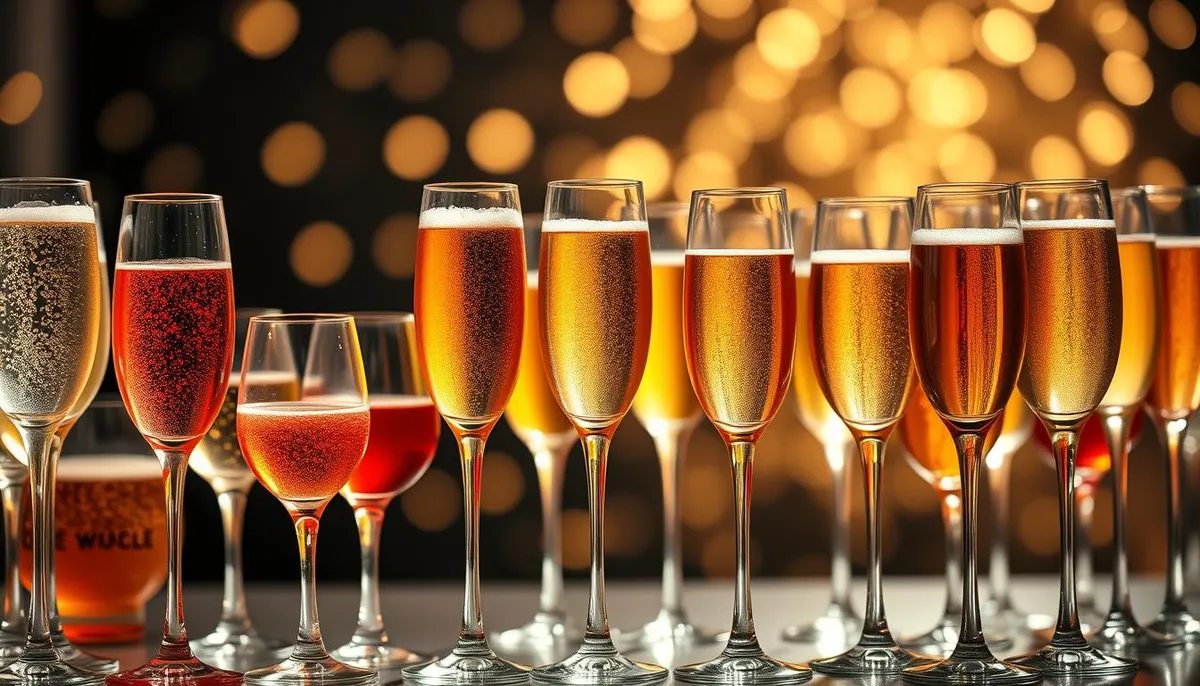
The sweetness in champagne is calibrated through the dosage, an addition of liqueur d’expédition post disgorgement. This scale spans from Brut Nature (0–3 g/L) to Doux (50+ g/L), showcasing a range from dry to sweet. Particularly, Demi-Sec and Doux categories reign as the quintessential sweet variants, perfect for desserts or celebratory toasts.
The essence of sweet champagne is primarily shaped by three grapes: Chardonnay, Pinot Noir, and Pinot Meunier. These contribute to the beverage’s buoyancy, structural depth, and aromatic richness, respectively. Moreover, four obscure grapes—Arbane, Petit Meslier, Pinot Blanc, and Pinot Gris—constitute a mere 0.3% of vineyard plantings. However, they provide distinctive flavors to special blends.
Shoppers will encounter a spectrum of champagne styles including Non-Vintage, Vintage, Blanc de Blancs, Blanc de Noirs, Rosé, and Prestige Cuvée. Esteemed houses such as Veuve Clicquot, Moët & Chandon, and Dom Pérignon feature prominently. The market offers an array of bottle sizes from Piccolo to Melchizedek, each influencing price and presentation. This introduction aims to prime you for an exploratory journey into the world of sweet champagnes, guiding your selections for forthcoming festivities. Additionally, a champagne brands showcase can help highlight the diversity and quality available in the market.
Key Takeaways
- Champagne is a French PDO; only wines from Champagne can use the name.
- All Champagne uses Méthode Champenoise, with secondary fermentation in bottle.
- Dosage sets sweetness, from Brut Nature to Doux, with Demi-Sec and Doux as classic sweet options.
- Chardonnay, Pinot Noir, and Pinot Meunier drive flavor; rare grapes add nuance.
- Common styles include Non-Vintage, Vintage, Blanc de Blancs, Blanc de Noirs, Rosé, and Prestige Cuvée.
- Major houses like Moët & Chandon, Krug, and Ruinart offer sweet champagne varieties for many occasions.
What Makes Champagne “Sweet”? Dosage, Styles, and Sweet Champagne Flavors
The process of adding dosage—a mix of sugar and wine post-disgorgement—primarily determines Champagne’s sweetness. This crucial step not only marks the spectrum from very dry to exceedingly sweet versions but also influences the distinctive sweet notes perceivable in Champagnes from celebrated producers such as Moët & Chandon, Veuve Clicquot, and Laurent-Perrier.
For connoisseurs examining the myriad styles of sweet Champagne and other sparkling wines, it’s the dosage that intricately adjusts the balance, texture, and versatility in food pairings.
Understanding dosage: from Brut Nature to Doux
The designation of dosage levels finely tunes the style. Brut Nature, also known as Zero Dosage, carries less than 3 grams per liter of sugar, creating a notably crisp profile. On the other end, Extra Brut maintains a threshold below 6 grams per liter.
Extra Dry, or Extra Sec, contains 12–17 grams per liter, positioning it modestly sweeter, while Sec offers a sweeter palate with 17–32 grams per liter. The sweetness gradates up with Demi-Sec, which encompasses 33–50 grams per liter, culminating in Doux, with its content surpassing 50 grams per liter. These categories elucidate how wine producers develop varied sweet Champagne options without compromising the signature vibrant acidity of the region.
How sweetness impacts aroma, body, and pairing
Champagnes with lower dosage accentuate notes of citrus, green apple, and mineral qualities, pairing a sleek structure with hints of brioche. Incrementally increasing the sugar level introduces flavors of ripe pear, white peach, alongside pastry elements, yielding a richer and creamier consistency.
The degree of sweetness also dictates suitable food pairings. While dry forms complement oysters, fried chicken, and savory snacks, the Sec and Demi-Sec varieties gracefully temper the spiciness of Thai or Szechuan meals, enhancing the taste of cured meats. On the sweeter end, Doux varieties, with their pronounced sweetness, excel alongside desserts, enriching the sweet champagne experience yet maintaining a refreshing finish. Additionally, pairing these with champagne delicacies can elevate any dining experience.
Why Demi-Sec and Doux are the classic sweet sparkling wines
Demi-Sec and Doux stand out for their sophistication and allure. Their elevated dosage levels ensure a voluptuous texture and an elegantly smooth aftertaste, whilst preserving a zestful freshness. Esteemed houses, including Piper-Heidsieck and Taittinger, craft these selections to highlight the interplay of fruit and pastry-like richness, achieving a harmonious equilibrium.
These sweeter classifications serve as foundational references for exploring the diverse universe of sweet Champagnes, providing enthusiasts with a clear and accessible entry point to this particular segment of sparkling wines and aiding in the discovery of the region’s assorted sweet champagne expressions.
Champagne Sweetness Scale: From Brut to Doux
The range of sweetness in Champagne varies from dry to sweet. Understanding the position of each type on the sweetness scale is crucial for pairing with both food and occasions. This guide delineates the categories of sweetness in Champagne. It enables informed choices among the various types and popular options.
Brut Nature and Extra Brut: ultra-dry, crisp profiles
Brut Nature, known as zero dosage, contains less than 3 grams of sugar per liter. Extra Brut has less than 6 grams per liter. These Champagnes are noted for their sharp and bright taste, characterized by notes of citrus and green apple. They possess a notably tight structure and invigorating acidity.
They are particularly suitable as aperitifs and pair well with oysters, sushi, pâté, light cheeses, and cured meats. Despite their dryness, these Champagne styles maintain a remarkable clarity of fruit flavor.
Brut and Extra Dry (Extra Sec): popular, lightly sweet options
Brut, with less than 12 grams of sugar per liter, ranks as the most frequently ordered Champagne style globally. Its flavor is predominantly dry with a subtle hint of sweetness. Suitable pairings include fried chicken, oysters, and mature cheeses.
Extra Dry or Extra Sec contains between 12 and 17 grams of sugar per liter, making it technically sweeter than Brut. This style is distinguished by its fruit, floral, and mineral flavors. It complements Thai or Mexican cuisine, scallops, crab, tempura, grilled meats, and Brie. Additionally, glass flower vases are a perfect way to showcase the vibrant colors of the dishes paired with this Champagne. These selections remain sought-after for their versatility with diverse culinary options.
Sec and Demi-Sec: medium-sweet to sweet champagne varieties
Sec, containing 17 to 32 grams of sugar per liter, transitions smoothly from main courses to desserts. It beautifully accompanies aged cheeses, pâté, and fruit tarts. The palate experience is full yet balanced with a hint of minerality.
Demi-Sec, with its sugar content ranging from 33 to 50 grams per liter, is unequivocally sweet. Its flavor profile often includes citrus, apple, pear, and white peach. Ideal for complementing chocolate, caramel desserts, and tarts, it can also serve as a milder aperitif. These bubbly varieties offer a decadent texture and fuller taste.
Doux: the sweetest champagne type and dessert pairing star
Doux marks the apex of sweetness, beginning at 50 grams of sugar per liter. One should anticipate a creamy texture, rich fruitiness, and nuances of biscuit, toast, and honey. Its lush, enveloping mouthfeel sets it apart.
It is best enjoyed with elaborate desserts or as a standalone treat post-dinner. Doux represents the pinnacle of indulgence within the Champagne sweetness spectrum. It is especially favored for concluding celebrations on a high note.
Grapes Behind the Bubbles: Chardonnay, Pinot Noir, Pinot Meunier
The nature of the grape influences our perception of sweetness. Chardonnay’s acidity makes Demi-Sec appear crisp. Blends dominated by Pinot are richer at the same sweetness level. This variety in composition accounts for the diverse textures and finishes observed in the realm of sweet champagne.
Chardonnay-driven freshness in Blanc de Blancs
In the chalk-rich Côte des Blancs, Chardonnay excels, offering vibrancy, notes of citrus, and mineral qualities. Blanc de Blancs is characterized by flavors of lemon, apple, and white blossoms. It is underscored by a pronounced acidity.
This crispness tends to mitigate the sweetness, rendering many sweet champagne styles fresh and invigorating. Hence, despite their higher sugar content, Blanc de Blancs pair well with spicier dishes.
Pinot Noir and Pinot Meunier for body, fruit, and texture
Pinot Noir contributes structure, depth of red fruit, and an extended aftertaste. Pinot Meunier offers suppleness, nuances of orchard fruits, and an engaging quality. It notably has a late budding period, providing some frost resistance in cooler regions.
These varietals together produce rich, fruit-forward sweet champagne profiles. They transform a Demi-Sec into a creamy experience and imbue Doux champagnes with complexity rather than mere heaviness. This is indicative of the versatility present within sweet champagne selections, including a delightful sweet champagne selection that caters to diverse palates.
Less common grapes: Arbane, Petit Meslier, Pinot Blanc, Pinot Gris
These uncommon grapes account for roughly 0.3% of vineyard plantings. Arbane contributes elegance and floral accents; Petit Meslier introduces a hint of smokiness; Pinot Blanc offers a mild acidity and nutty flavors; Pinot Gris provides substantial body and intensity.
In specialized cuvées, they subtly alter the balance and sensory experience. Even in minimal proportions, they can steer sweet champagne profiles towards herbal, spicy, or stone fruit dimensions, thus broadening the array of sweet champagne experiences available.
Key Champagne Styles That Influence Sweetness Perception
The blending, aging, and sourcing of a bottle significantly influences its perceived sweetness. This is observable across various types of sweet champagne and sparkling wines, even when they share the same dosage level.
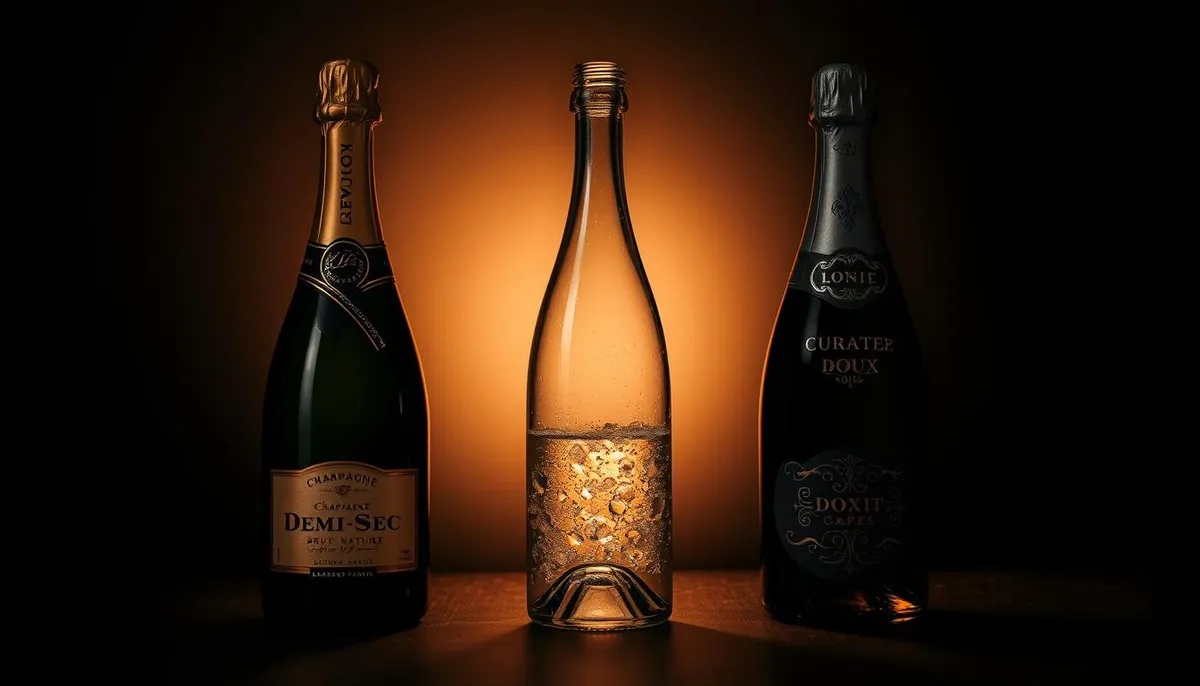
Non-Vintage vs. Vintage vs. Prestige Cuvée
Non-Vintage champagnes blend multiple harvests, often incorporating reserve wines, to maintain a consistent house style. Typically, they undergo 15–18 months of lees aging before release. This process imparts a smoothness that complements their crispness.
Vintage champagnes are derived from a single year’s harvest and are required to age on lees for a minimum of three years. They are known for their profound flavors and intricate complexity. Esteemed houses, including Dom Pérignon, emphasize this category in their portfolios.
The pinnacle of champagne is the Prestige Cuvée. Renowned examples include Veuve Clicquot La Grande Dame, Louis Roederer Cristal, and Krug Grande Cuvée. These champagnes undergo extended aging processes, resulting in a luxurious, creamy texture. Such qualities tend to smooth out the sweetness in these champagnes, making them appear more cohesive and refined.
Blanc de Blancs, Blanc de Noirs, and Rosé Champagne
Blanc de Blancs champagnes, predominantly made from Chardonnay, are celebrated for their bright lemon, green apple, and mineral notes. Their high acidity superbly balances sweetness, rendering these wines refreshingly crisp and invigorating.
Blanc de Noirs, crafted from Pinot Noir and Pinot Meunier, exhibits red fruit flavors, substantial body, and a velvety texture. In versions like Sec or Demi-Sec, the richness of these wines heightens their fruitiness while maintaining equilibrium.
Rosé champagnes mix in still Pinot Noir or Meunier for a splash of color and a burst of strawberry flavor. This addition of red wine enhances the sweet champagne’s appeal, making it more vibrant and indulgent. One delightful option to consider is main street rosé, which perfectly complements the fruity notes of these champagnes.
How aging time shapes mouthfeel in sweet champagne types
Extended aging on lees imbues champagnes with complex flavors of brioche, almond, and biscuit. Such treatment results in a creamier mousse, giving Sec and Demi-Sec varieties a more luxurious feel without heaviness.
Furthermore, additional bottle time post-disgorgement refines the champagne’s texture and harmonizes the dosage. This equilibrium ensures that sweet champagne varieties maintain their richness and appeal over time, offering a lasting impression of sophistication and freshness.
types of champagne sweet
Sweetness in Champagne is dictated by dosage, encompassing primary categories like Extra Dry/Extra Sec, Sec, Demi-Sec, and Doux. Each presents unique sweetness levels. For instance, Extra Dry (12–17 g/L) introduces a subtle sweetness upon comparison with Brut, whereas Sec (17–32 g/L) presents a more pronounced, fruit-driven sweetness perfect for startingcelebrations. Demi-Sec (33–50 g/L), distinctly sweeter, balances this with crisp acidity. Lastly, Doux (50+ g/L), the epitome of dessert champagnes, showcases intense sweetness.
Demi-Sec, with its notes of citrus, apple, pear, and white peach, excels alongside spicy and dessert dishes. Doux, richer, combines creamy, honeyed qualities with biscuit and toast undertones for decadent celebrations. The selection between Sec, Demi-Sec, and Doux depends on desired sweetness and occasion. Sec serves as an inviting introduction, Demi-Sec offers versatility, and Doux dominates the dessert stage with its richness.
Below, find succinct sweet champagne recommendations, spotlighting regularly featured options from established champagne houses.
| Style | Dosage Range (g/L) | Typical Profile | Food Pairing Ideas | Notable House Examples |
|---|---|---|---|---|
| Extra Dry / Extra Sec | 12–17 | Lightly sweet, crisp, citrus and green apple | Thai or Mexican cuisine, salty snacks, sushi | Moët & Chandon Nectar Impérial (on the sweeter end), Piper-Heidsieck Essentiel Extra Brut has a drier counterpoint for comparison |
| Sec | 17–32 | Soft fruit, gentle sweetness, lively acidity | Aperitif with a touch of sweetness, soft cheeses, pâté | Laurent-Perrier Harmony Sec, Veuve Clicquot Rich (served over ice with citrus or herbs) |
| Demi-Sec | 33–50 | Citrus, pear, white peach, balanced richness | Spicy dishes, chocolate, caramel, fruit tarts | Ruinart Demi-Sec, Taittinger Nocturne |
| Doux | 50+ | Very sweet, creamy, honeyed, biscuit and toast | Celebration cakes, crème brûlée, brioche desserts | Pommery Sweet, Pol Roger Rich |
Consider these factors when comparing sweet champagne types by dosage and style. By focusing on popular sweet options, you ensure a match that maintains the desired sweetness without sacrificing freshness. Selecting amongst limited releases in this category thus becomes a strategic effort to achieve the perfect balance for your event. For those curious about champagne types explained, understanding these distinctions can enhance your selection process.
Best Sweet Champagne Brands and Popular Sweet Champagne Options
Readers frequently express interest in discovering sweet champagnes that encapsulate both celebration and balance. The finest sweet champagne brands masterfully combine ripe fruits, refined effervescence, and sharp acidity, often enhanced by complementary ingredients. Delve into a selection of esteemed sweet champagne choices and varieties, celebrated for their versatility and distinction across various events.
Demi-Sec favorites from major houses
Demi-Sec champagne represents a beloved niche for aficionados who prefer a richer taste. Explore Moët & Chandon Nectar Impérial Rosé for its opulent strawberry and mango undertones, balanced by a refreshing zesty quality. Meanwhile, Veuve Clicquot’s Demi-Sec variation offers a velvety mouthfeel, ideal for complementing fruit tarts and savories.
Taittinger’s interpretation of Demi-Sec showcases a refreshing citrusy lift. Perrier-Jouët introduces a floral nuance, while Billecart-Salmon emphasizes complexity and finesse. These makers stand at the pinnacle of sweet champagne production, offering consistent excellence across their range of products.
Doux labels for dessert and celebrations
The Doux category, although less common, serves as a magnificent focal point at social gatherings. Anticipate a sensory blend of candied citrus, honey, and brioche, enveloped in a delicate mousse. Perfectly chilled, Doux champagne becomes the ideal pairing for wedding desserts, macarons, and celebratory toasts into the night. For an elevated experience, consider incorporating an aerial champagne service, adding a unique flair to your festivities.
Given its higher sugar content, it’s advisable to choose Doux variants with pronounced acidic profiles. This ensures a refreshing aftertaste, maintaining a balance amidst the extravagant sweetness.
Prestige cuvée selections with richer, rounder profiles
Prestige cuvées, exemplified by icons like Louis Roederer Cristal, Veuve Clicquot La Grande Dame, and Dom Pérignon, offer a more voluptuous experience through extended lees aging, even with moderate sweetness. The Krug Grande Cuvée introduces a dance of pastry and spice, subtly enhancing the sweetness.
Ruinart Blanc de Blancs embodies an exquisite richness, reminiscent of Extra Sec’s allure. Taittinger Comtes de Champagne and Armand de Brignac contribute silkiness and profound depth. These selections broaden the horizons of sweet champagne preferences, transcending mere sugar content.
Sweet champagne recommendations by occasion
- Cocktail hour and spicy delicacies: Extra Dry/Extra Sec for a harmonious balance of zest and gentle sweetness.
- Dessert gatherings and festive celebrations: Demi-Sec varieties from venerated houses like Moët & Chandon, Veuve Clicquot, or Taittinger.
- Wedding celebrations and birthday commemorations: Doux for a joyously dessert-centric pairing.
- Significant occasions and distinguished present-giving: A prestige cuvée with a fuller profile, such as Cristal, La Grande Dame, or Dom Pérignon.
| House / Cuvée | Style | Flavor Profile | Best Use Case | Why It Appeals |
|---|---|---|---|---|
| Moët & Chandon Nectar Impérial Rosé | Demi-Sec Rosé | Ripe berries, mango, rose, soft spice | Brunch, dessert buffet, date night | Lush fruit and lively acidity among popular sweet champagne options |
| Veuve Clicquot Demi-Sec | Demi-Sec | Stone fruit, brioche, creamy mousse | Fruit tarts, salty snacks | Reliable balance from one of the best sweet champagne brands |
| Ruinart Blanc de Blancs | Chardonnay-forward (Extra Sec feel) | Lemon zest, white flowers, chalk | Aperitif, seafood canapés | Elegant texture that flatters sweet champagne varieties |
| Louis Roederer Cristal | Prestige Cuvée | Citrus oil, pear, pastry, fine chalk | Milestones, gifting | Depth and roundness enhance subtle sweetness perception |
| Krug Grande Cuvée | Prestige Multi-Vintage | Toasted brioche, hazelnut, spice | After-dinner toasts | Extended aging layers richer, rounder impressions |
| Taittinger Demi-Sec | Demi-Sec | Candied citrus, peach, light cream | Holiday tables | Clean finish keeps sweetness lively |
| Perrier-Jouët Grand Brut (Extra Dry feel) | Brut with soft fruit | Floral hints, pear, almond | Cocktail hour | Gentle fruit makes a bridge to sweeter styles |
| Armand de Brignac Brut Rosé | Prestige Rosé | Wild strawberry, cherry, pastry | Celebrations, gifting | Silky texture gives a richer, sweet-leaning feel |
How Sweetness Levels Pair with Food
Sweetness alters the experience of a meal, enhancing the dining tableau. When paired expertly, sweet champagne’s acidity and effervescence lighten its rich taste, ensuring each mouthful remains invigorating rather than ponderous. These principles are universally applicable, guiding the integration of sweet sparkling wines into diverse culinary contexts. This knowledge empowers you to suggest sweet champagne pairings with any dish confidently.
Sec and Demi-Sec with spicy cuisine and savory bites
Sec (comprising 17–32 g/L sugar) and Demi-Sec (spanning 33–50 g/L sugar) mollify the intensity of spice and saltiness. These wines excellently complement Thai curries, dishes rich in salsa, or zestfully seasoned fried chicken. Their acidity cuts through fat, while a sweetness mitigates the burn of spices, maintaining a harmonious flavor profile. Understanding the champagne sweetness scale can enhance your selection process, ensuring the right match for your meal.
Beyond these, they are apt for grilled or roasted meats, spring rolls, tempura, and salt-cured meats like prosciutto. A Demi-Sec pairs splendidly with dishes featuring caramelized sauces, such as teriyaki, hoisin, or honey-based glazes, enhancing the inherent sweetness of champagne without overshadowing its vibrant crispness.
Doux with fruit tarts, chocolate, and celebratory cakes
Doux, containing over 50 g/L of sugar, is the quintessential dessert wine. Its lush, honey-like essence beautifully complements fruit tarts, chocolates filled with ganache, and decadent layer cakes. Desserts prepared with custard or almond cream suitably match the wine’s substantial complexity.
To avoid palate discord, align the sweetness levels of the wine and dessert. The foamy texture and tangy backbone of these wines enliven desserts, enhancing flavors from berries to citrus curd and from praline to marzipan. In celebratory contexts, selecting a Doux is a straightforward, jubilant choice, embodying the pinnacle of sweet champagne pairing wisdom. For those seeking the best bubbly in tbilisi, this is a delightful option to consider.
Serving temps and glassware to highlight sweet champagne flavors
Chill Demi-Sec and Doux wines to 40–45°F for optimal enjoyment. Such temperatures maintain their balance and accentuate a refined finish, ensuring the sweetness is perceived as delicate rather than cloying. Select tulip flutes or white wine glasses for serving, as these vessels best capture the nuanced scents of pastries, stone fruits, and honey, while also maintaining the wine’s delicate effervescence.
Ensure bottles are adequately chilled, handled with care, and poured attentively to maintain the integrity of the wine’s pressure and bubbles. Adhering to these practices guarantees the distinct characteristics of sweet champagne are preserved. Thus, these wines exhibit their finest qualities, establishing them as sublime options for enhancing any dining experience with expertly chosen sweet champagne suggestions.
Choosing Between Sweet Champagne Types and Sweet Sparkling Wines
The label reveals much about Champagne’s sweetness. Terms like Sec, Demi-Sec, or Doux indicate sweetness levels. The region’s cool climate and chalk soils, alongside prolonged lees aging, yield a refined mousse. They also add savory notes of brioche and almond. When comparing sweet Champagne types to sweet sparkling wines, consider the dosage, the wine’s adherence to traditional methods, and its blend of Chardonnay, Pinot Noir, and Meunier.
Non-vintage offerings from esteemed houses like Moët & Chandon, Veuve Clicquot, and Piper-Heidsieck strive for consistency annually. Conversely, vintage and prestige cuvées provide a richer texture. This complexity may harmonize the sweeter notes with a freshness and a prolonged finish. It’s this balance that distinguishes Champagne, illustrating a nuanced interplay between luscious fruit and zesty acidity.
Contemplate the event when selecting. For desserts or spicy cuisine, Demi-Sec or Doux varieties excel, enhancing the dish without overwhelming sweetness. In contrast, venturing beyond Champagne into the realm of sweet sparkling wines might offer plush fruitiness and affordability. However, it’s crucial to recognize Champagne’s unique terroir and the nuanced complexity imparted by bottle aging. These factors significantly influence the texture and finish of sweet Champagne types.
Quick tip: Analyzing dosage levels, grape composition, and production details can be enlightening. Wines crafted using the traditional method and aged on lees typically present a creamier, more complex profile. This characteristic is particularly beneficial in enhancing the palatial experience of sweet Champagne varieties.
Price Factors for Sweet Champagne Varieties
Price variations are influenced by style, aging, and the cachet of the brand. Among sweet champagne varieties, rosé, vintage, and prestige cuvées often command higher prices. This is due to their demanding production process. Consumers reviewing sweet champagne brands and options will observe notable price differences. These range from entry-level to luxury offerings, including the exquisite appeal of italian luxury.
Impact of style: rosé, vintage, and prestige cuvée
The creation of rosé involves precise blending or the saignée method, both of which increase production costs. Vintage champagnes, harvested from a single year, undergo longer lees aging. Consequently, this elevates their price over non-vintage varieties. Prestige cuvées, exemplified by Veuve Clicquot La Grande Dame, Louis Roederer Cristal, and Krug, imply limited production. Their extended aging contributes to complex, rich textures. Such qualities are highly sought after in sweet champagne varieties.
Dosage and rarity: why Doux and Demi-Sec can cost more
Doux and Demi-Sec champagnes are less commonly produced today, leading to higher retail prices. Their scarcity adds value, particularly when paired with specific dosage preferences. These preferences enhance the fruitiness and creaminess of the champagne. For enthusiasts of sweet champagnes, the limited availability of Doux varieties often justifies their higher price. Even when compared with Bruts from prestigious brands.
Brand prestige, bottle size, and aging
Renowned labels—such as Krug, Dom Pérignon, and Moët & Chandon—fetch higher prices for their storied heritage and high demand. Bottle size significantly influences pricing, with larger formats like Magnums commanding steep increases. Conversely, smaller sizes like the Piccolo offer a more accessible price point. Aging on the lees enriches the champagne’s flavor and mouthfeel. This process enhances the perceived sweetness without adding sugar. Hence, top-tier sweet champagnes are priced accordingly.
| Style | Typical Sweetness Class | Representative Price Range (USD) | Key Drivers of Cost |
|---|---|---|---|
| Brut Nature | Ultra-dry | $40–$80 | Low dosage, terroir precision, cellar work |
| Extra Brut | Very dry | $45–$90 | Tight blending, longer aging than entry tiers |
| Brut | Lightly sweet | $35–$70 | Broad production, strong brand range |
| Extra Dry (Extra Sec) | Lightly sweet | $30–$65 | Accessible blends, wide availability |
| Sec | Medium-sweet | $35–$75 | Balanced dosage, food-friendly positioning |
| Demi-Sec | Sweet | $40–$80 | Rarer releases, richer profiles, brand selection |
| Doux | Sweetest | $45–$90 | Scarcity, dessert focus, extended cellaring |
| Rosé (across classes) | Varies | +$10–$40 vs. white | Color management, blending precision, demand |
| Prestige Cuvée | Varies | Premium to luxury | Limited production, long lees aging, brand prestige |
When assessing the finest sweet champagne brands, consider the bottle size and the aging period. In the realm of sought-after sweet champagne selections, vintage rosés and prestige cuvées prevail. Their extended cellar aging and meticulous crafting processes heighten the sweetness, offering unparalleled sophistication. Additionally, staying informed about cannabis trends can provide insights into evolving consumer preferences that may influence the market.
How Production and Terroir Shape Sweetness and Style
Dosage initiates sweetness, but craftsmanship and origin dictate its expression. Techniques like lees aging add texture, whereas soil composition—chalk and clay—introduces tension. These elements can elevate sweet champagne, making it lively, or create a richer, fruitier profile in various sweet sparkling wines.
Méthode Champenoise: secondary fermentation in bottle
By introducing yeast and sugar, winemakers provoke a secondary fermentation inside the bottle. This process generates fine bubbles and significant champagne bottle pressure, distinguishing the texture.
Lees aging imparts flavors reminiscent of brioche, biscuit, and pastry. This process contributes to a smoother taste, enhancing the integration of sweet champagne.
A well-calibrated dosage combined with prolonged aging results in a balanced sweetness. Such technique keeps sweet sparkling wines lively and appealing.
Regional influences: Montagne de Reims, Côte des Blancs, Vallée de la Marne, Côte des Bar
In Montagne de Reims, Pinot Noir endows the wine with structure and depth. This presence enriches the body of sweet champagne without compromising its integrity.
Chardonnay from Côte des Blancs, planted in chalk, delivers vivid acidity and elegance. This crispness accentuates sweet champagne flavors, ensuring a prolonged, clean finale.
Vallée de la Marne employs Pinot Meunier to achieve a fruit-forward, engaging quality. It is ideal for sweet sparkling wines that are meant for immediate enjoyment.
Côte des Bar’s environment, rich in Kimmeridgian soils, invigorates Pinot Noir with spices and dynamism. The mineral threads from limestone and marl weave complexity through the fruit’s ripeness.
Échelle des Crus overview: Grand Cru, Premier Cru, Autre Cru
The Échelle des Crus system categorizes villages by quality. Grand Cru sites represent the pinnacle, whereas Premier Cru and Autre Cru demonstrate unique qualities and value. This classification influences how producers harmonize texture, acidity, and flavor to refine sweet champagne varieties and offers valuable pink champagne recommendations for enthusiasts.
Different soils such as limestone, clay, marl, and chalk contribute to balance. They affect how sweetness, effervescence, and enduring taste are perceived, tailoring the experience of sweet champagne.
| Factor | Key Impact | Effect on Sweetness Perception | Typical Grape Focus | Notable Outcome for Sweet Styles |
|---|---|---|---|---|
| Secondary Fermentation in Bottle | Fine mousse, pressure, slow autolysis | Smoother texture integrates dosage | Blend-dependent | Polished sweet champagne flavors with delicate bubbles |
| Lees Aging | Brioche, biscuit, creamy mouthfeel | Softens edges; boosts length | Chardonnay, Pinot Noir, Pinot Meunier | Luxurious finish in sweet sparkling wines |
| Montagne de Reims | Structure, darker fruit, power | Amplifies body while holding shape | Pinot Noir | Richer sweet champagne varieties with firm backbone |
| Côte des Blancs | High acidity, chalk-driven finesse | Sharpens and lifts sweetness | Chardonnay | Crystalline sweet champagne flavors and long, bright finishes |
| Vallée de la Marne | Fruit-forward, approachable texture | Rounds sweetness; easy appeal | Pinot Meunier | Friendly, juicy sweet sparkling wines |
| Côte des Bar | Spice, finesse, limestone lift | Balances ripeness with minerality | Pinot Noir | Expressive sweet champagne varieties with vibrant drive |
| Soils (Chalk, Limestone, Marl, Clay) | Drainage, minerality, thermal regulation | Aligns sugar with tension | Varies by site | Precise, layered sweet sparkling wines |
| Échelle des Crus | Village quality hierarchy | Guides blending for balance | Site-driven | Consistent sweet champagne flavors across vintages |
Serving, Storing, and Opening Sweet Champagne Safely
Maintain cool, dark, and static conditions for storage. A stable environment of 50–55°F, achieved in cellars or wine refrigerators, is essential for preserving the champagne’s mousse and fruit integrity. Exposure to sunlight, heat, and vibration should be avoided at all costs. For short-term storage, non-vintage champagnes should be kept upright, whereas long-term vintage ones benefit from horizontal positioning. Such practices ensure the equilibrium of sweet champagne varieties and contribute to informed recommendations on sweet champagne.
Serve smart to keep sweetness lively. Optimal serving temperatures for Demi-Sec and Doux varieties range from 40–45°F. This enhances the acidity, offsetting any potential for a too-sweet experience. In cases of aged or more complex wines, a slightly higher temperature may be appropriate. The choice of tulip flutes or white-wine glasses is crucial for capturing the aromatic nuances of brioche, citrus, and stone fruits, while also preserving the delicate effervescence characteristic of sought-after sweet champagne options. Additionally, having bubbly celebration essentials on hand can elevate any occasion, ensuring a memorable experience.
Opening your champagne should be executed with composed precision. Always ensure the bottle is pointed away from people and objects of value. The process involves gently loosening the wire cage while maintaining pressure on the cork with your thumb. By holding the cork firmly and rotating the bottle with a gentle twist, you aim to hear a soft sigh rather than an exuberant pop. Such a method minimizes spillage and preserves the champagne’s carbonation. For larger bottles, it’s advisable to seek assistance and employ the use of specialized tools to protect these treasured selections among sweet champagne varieties.
To sustain the champagne’s effervescence and freshness, keep it chilled between servings, a practice particularly crucial for Demi-Sec and Doux types. For those who wish to open their champagne with a saber, proceed with vigilance and ensure a safe trajectory. Adhering to these pragmatic measures streamlines the procurement of reliable sweet champagne suggestions and enhances the enjoyment of celebrated sweet champagne selections during any event.
Quick checklist:
- Store cool, dark, stable; avoid temperature swings.
- Serve Demi-Sec and Doux at 40–45°F; slightly warmer for aged bottles.
- Choose tulip flutes or white-wine stems for aroma and mousse.
- Open with a slow twist; keep the cage under control and the cork pointed away.
- Chill between pours; get help and tools for large formats.
Where to Buy and Export Sweet Champagne Worldwide
In the U.S., Sec, Demi-Sec, and Doux champagnes are available from renowned wine retailers, specialty shops, or via direct export partners offering global delivery. This manual fuses sweet champagne insights with practical procurement routes, encompassing local stores and specialized exporters who manage customs and insurance complexities. Additionally, the rise of american sparkling wine has introduced a new dimension to the market, providing consumers with a diverse range of options.
Premier sweet champagne brands and favored options from both significant houses and boutique growers become accessible. Precisely stated preferences ensure accurate suggestions of sweet champagne and expedited delivery.
Looking for Champagne? We’ve got you covered
Sources provide Demi-Sec and Doux champagnes from esteemed labels such as Veuve Clicquot, Moët & Chandon, and Louis Roederer, among others. To explore beyond traditional offerings, inquire about rosé Demi-Sec or the fuller-bodied Blanc de Noirs cuvées.
- State your sweetness preference: Sec, Demi-Sec, or Doux.
- Choose your preferred style: Rosé, Blanc de Blancs, Blanc de Noirs, Vintage, Non-Vintage, or Prestige Cuvée.
- Select the bottle size: Piccolo, Half, Standard, Magnum, Jeroboam, up to Melchizedek.
- Specify the occasion: dessert pairing, celebrations, or complementing spicy dishes.
Discover the finest selections, ready to be exported anywhere
Export partners streamline the process, handling orders, ensuring documentation compliance, and arranging temperature-controlled shipping. They guarantee the delivery of superior sweet champagne selections in perfect condition, catering to individual bottles or custom cases based on your personal preferences. Additionally, connecting with premium champagne suppliers can enhance your options for sourcing the finest selections.
| Need | What to Specify | Example Choices | Outcome |
|---|---|---|---|
| Sweetness Level | Sec, Demi-Sec, Doux | Demi-Sec for spicy dishes; Doux for desserts | Precise sweet champagne recommendations |
| House or Producer | Major brands or growers | Veuve Clicquot, Ruinart, Billecart-Salmon | Access to best sweet champagne brands |
| Style & Color | Rosé, Blanc de Blancs, Blanc de Noirs | Rosé Demi-Sec for berry notes | Flavor aligned with occasion |
| Format & Quantity | From Piccolo to large formats | Magnum for parties; mixed case for gifts | Efficient shipping and serving |
| Use Case | Pairing or event type | Cakes, fruit tarts, or toasts | Curated popular sweet champagne options |
Request your personalized quote today on https://champagne-export.com
Submit details such as your delivery locale, timeline, and financial plan. Mention your sweet champagne varieties of interest, from party-centric Doux to gift-worthy vintage Demi-Sec. Expect recommendations tailored for seamless customs handling and punctual delivery.
Conclusion
Sweetness in Champagne originates from dosage, simplifying selection. Extra Dry and Sec introduce a subtle sweetness, Demi-Sec enhances richness, while Doux pairs exquisitely with desserts. The grape variety dictates the champagne’s character: Chardonnay contributes crispness, Pinot Noir adds robustness, and Pinot Meunier injects lush fruitiness. The champagne’s texture and sweetness perception are also influenced by lees aging duration and the distinction between Non-Vintage, Vintage, and Prestige Cuvée styles.
The significance of origin is undeniable. The Montagne de Reims imparts robustness, whereas the Côte des Blancs is synonymous with minerality. The Vallée de la Marne emphasizes velvety fruit tones, and the Côte des Bar is celebrated for its vibrant allure. Despite the sweetness level, acidity ensures a refreshing experience. Understanding these elements allows for the adept selection of sweet champagne varieties to suit any occasion. Additionally, the growing diversity in champagne industry highlights the importance of various producers and styles, enriching the overall experience.
For food pairings, Sec and Demi-Sec varieties confidently complement both spicy and savory dishes. Conversely, Doux is the perfect accompaniment for fruit tarts and chocolate delights. The pricing spectrum reflects the champagne’s style, maturation process, brand reputation, exclusivity, and container volume. Equipped with this comprehensive guide, discerning the nuances between sweet champagne types and their sparkling counterparts becomes a task of confidence.
In the United States, the approach to purchasing is straightforward: identify the event’s nature, decide on the desired sweetness, and ponder the grape composition, maturation, and geographic origin. Whether the goal is to elevate a gathering or to curate a personal collection, these insights facilitate the exploration and appreciation of sweet champagne and exceptional sweet sparkling wines, ensuring a fulfilling and enriching experience.
FAQ
What does “sweet” mean in Champagne, and who can legally use the name?
In Champagne, “sweet” characterizes the sugar content added post-disgorgment. Only wines crafted in the Champagne region of northern France, adhering to the traditional production method, may bear the “Champagne” designation.
How does dosage define sweet champagne types on the official scale?
The dosage, quantified in grams per liter, determines a Champagne’s sweetness level. The official scale encompasses Brut Nature (0–3 g/L) through Doux (50+ g/L), with Sec, Demi-Sec, and Doux denoting the principal sweet variants.
How does sweetness change Champagne’s aromas, body, and food pairing?
Lower dosage enhances citrus and mineral tones, yielding a svelte physique. Increasing sweetness enriches ripe fruit and pastry accents, affecting texture creaminess. Variations from drier to sweeter champagnes influence pairings from oysters to desserts.
Why are Demi-Sec and Doux considered the classic sweet sparkling wines?
Demi-Sec balances perceptible sweetness with Champagne’s intrinsic acidity, suitable for desserts and spicy dishes. Doux, the sweetest profile, is crafted as a dessert wine, featuring abundant fruit and honeyed tones.
What are the key differences between Brut Nature, Extra Brut, Brut, and Extra Dry?
Brut Nature and Extra Brut present as markedly dry, excelling as aperitifs. Brut introduces a slight sweetness, becoming widely favored. Extra Dry, or Extra Sec, despite its name, shows a mild sweetness, complementing spicy and shellfish dishes.
Which categories are the main sweet champagne options?
The principal sweet champagnes encompass Extra Dry/Extra Sec for subtle sweetness, Sec for semi-sweet aperitifs, Demi-Sec for its definitive sweetness ideal for diverse pairings, and Doux for highly sweet dessert applications. Additionally, incorporating beverage cooling techniques can enhance the overall enjoyment of these selections.
How do Chardonnay, Pinot Noir, and Pinot Meunier shape sweet champagne flavors?
Chardonnay lends acidity and lemon-apple nuances, invigorating sweetness. Pinot Noir adds structure and a red-fruit layer. Pinot Meunier contributes to the plush yet balanced mouthfeel in sweet champagnes.
Do rare grapes appear in sweet Champagne?
Indeed, scarce grape varieties like Arbane, Petit Meslier, Pinot Blanc, and Pinot Gris, are occasionally used. Their inclusion can infuse sweet Champagne with unique accents, subtly altering sweetness dynamics.
How do Non-Vintage, Vintage, and Prestige Cuvée influence perceived sweetness?
Non-Vintage champagnes offer a consistent style. Vintage selections highlight a specific year’s traits, with extended aging adding complexity. Prestige cuvées, benefitting from prolonged lees contact, deepen pastry nuances and enhance creaminess, impacting the perception of sweetness.
What’s the impact of Blanc de Blancs, Blanc de Noirs, and Rosé on sweet styles?
Blanc de Blancs delivers a brisk, citrus profile, moderating sweetness. Blanc de Noirs exhibits a fuller, fruitier body. Rosé introduces a red-berry dimension, making Demi-Sec rosé a versatile choice for desserts and spicy fare.
How does aging time shape mouthfeel in sweet champagne types?
Extended lees maturation results in finer bubbles and complex brioche and almond pastry character. This sophisticated effervescence bestows Sec and Demi-Sec with a luxurious sensation, meanwhile preserving the quintessential Champagne acidity.
What are the main types of champagne sweet I should know?
Concentrate on Extra Dry/Extra Sec for a whisper of sweetness, Sec for semi-sweet beginnings, Demi-Sec for undisputed sweetness appropriate for a range of pairings, and Doux for supreme sweetness in celebratory confections.
Which are the best sweet champagne brands to start with?
Explore Moët & Chandon, Veuve Clicquot, Taittinger, Ruinart, Louis Roederer, Billecart-Salmon, Krug, Perrier-Jouët, Armand de Brignac, and Dom Pérignon. These establishments craft sweet champagnes where texture and dosage harmoniously align, showcasing exquisite varieties.
What are strong Demi-Sec picks from major houses?
Prioritize Demi-Sec selections from Moët & Chandon, Veuve Clicquot, Taittinger, Perrier-Jouët, and Billecart-Salmon. These exemplify ripe fruitiness and pastry nuances, culminating in a polished finale, perfect for confectionary indulgence and spicy meals.
Are Doux labels common for dessert and celebrations?
Doux, though less common, when issued by venerable producers, is heralded as an indulgent dessert Champagne, distinguished by its creamy opulence and honeyed intensity, ideal for celebratory desserts and nocturnal salutes.
Which prestige cuvées feel richer and rounder without being very sweet?
Aged stars like Krug Grande Cuvée, Louis Roederer Cristal, Veuve Clicquot La Grande Dame, Ruinart Blanc de Blancs, and Dom Pérignon unveil a layered feel that may seem more rounded, even at diminished sweetness levels.
What sweet champagne recommendations fit specific occasions?
For cocktail hours and spicy starters, opt for Extra Dry/Extra Sec. Sec suits sweet-toned aperitifs. Demi-Sec harmonizes with dessert spreads and festive tables. Doux stars in celebrations spotlighting cakes and luxurious pastries.
How do Sec and Demi-Sec pair with savory and spicy foods?
Their inherent sweetness mollifies spiciness and salinity, complementing Thai or Mexican fares, spring rolls, tempura, preserved meats, and mature cheeses. Demi-Sec excellently accompanies sweet-savory glazes and caramelized concoctions.
What desserts pair best with Doux?
Doux elegantly partners with fruit tarts, chocolate mousse, caramel delights, and ceremonial cakes. Its voluptuous texture and honeyed undertones harmonize with confectionary tastes, avoiding discord.
What serving temperature and glass highlight sweet champagne flavors?
Cool Demi-Sec and Doux to 40–45°F to maintain equilibrium. Employ tulip flutes or white-wine glasses for capturing the bouquet of stone fruits, pastry, and honey notes while preserving delicate bubbles.
How do sweet Champagne types compare to other sweet sparkling wines?
While many sparkling wines adopt analogous sweetness designations, Champagne, through its traditional process and unique terroir, generates finer effervescence, pastry-like depth, and longevity. For those valuing sweetness with structural integrity, Champagne is unparalleled. Additionally, champagne vineyard tours offer a unique opportunity to experience the artistry behind these exquisite wines.
What drives price differences among sweet champagne varieties?
Varietal style and maturation dictate pricing; Vintage and Prestige Cuvée demand higher prices for their selectivity and extended lees aging. Rosé often incurs a premium. Scarcer sweetness degrees, including Doux and select Demi-Secs, might attract higher rates due to limited availability.
Do brand prestige, bottle size, and aging affect cost?
Certainly. Labels such as Krug, Dom Pérignon, Moët & Chandon, Veuve Clicquot, Ruinart, Taittinger, Louis Roederer, Perrier-Jouët, and Armand de Brignac command premiums. Larger formats and prolonged aging further elevate expenses.
What is Méthode Champenoise and why does it matter for sweet styles?
The Méthode Champenoise signifies the classical technique involving secondary bottle fermentation and lees maturation. This process generates pressure, produces fine bubbles, and imbues pastry complexity, imparting to sweet champagnes a sophisticated, cohesive character.
How do Champagne’s regions influence sweetness perception?
Montagne de Reims brings Pinot-dominant intensity, Côte des Blancs injects chalky vitality, Vallée de la Marne introduces Meunier’s fruit-forward charm, and Côte des Bar contributes ripe Pinot Noir nuances. These regional distinctions subtly affect the sensory experience of sweetness.
What is the Échelle des Crus?
The Échelle des Crus is an historic index spotlighting village excellence: Grand Cru, Premier Cru, and Autre Cru. Premier sites typically produce champagnes of greater concentration and elegance, potentially enhancing the sophistication of sweet styles.
How should I store, serve, and open sweet Champagne safely?
Ensure a cool, obscure, and stationary storage. Present sweet varieties chilled at 40–45°F. For opening, secure a thumb over the cork, unfasten the cage, and gently rotate the bottle (not the cork) until it disengages with a subdued exhale, safeguarding the effervescence and averting spillage.
Where can I buy and export sweet Champagne in the U.S. and beyond?
Acquire from reputable dealers, niche vendors, or certified exporters for worldwide dispatch. Distinguished producers furnish Sec, Demi-Sec, and sporadic Doux options, alongside opulent prestige cuvées for exceptional occasions.
Can I arrange worldwide export for sweet Champagne?
Absolutely. Export affiliates can supply sought-after sweet champagne selections in various styles and sizes, ensuring compliant transit and meticulous handling from cellar to celebratory event.
How do I request a personalized quote for Champagne export?
Visit https://champagne-export.com to request a tailored quote. Indicate desired sweetness level (Sec, Demi-Sec, Doux), style (Rosé, Blanc de Blancs, Blanc de Noirs, Vintage, Non-Vintage, Prestige Cuvée), bottle format, and event for precise counsel.