Looking for Champagne? We’ve got you covered. Discover the finest selections, ready to be exported anywhere in the world.
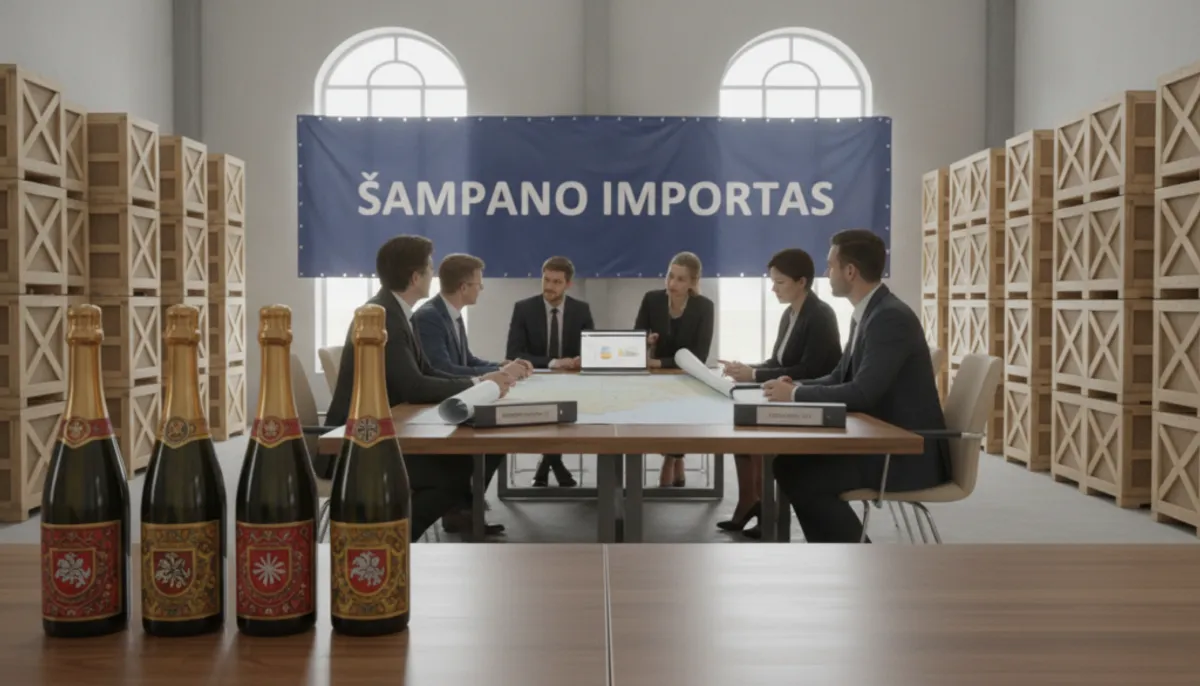
The Government of the Republic of Lithuania set Resolution No. 559 on June 5, 1997 to regulate the importation of alcoholic products. This rule still shapes how shipments clear customs and meet labeling standards in 2027.
Successful trade needs clear planning. Understand local duties, paperwork, and labelling rules before you ship. Our team at https://champagne-export.com offers expert guidance to help your business stay compliant.
Request a personalized quote at https://champagne-export.com to tap into our logistics network and get a tailored plan for your next shipment. Proper preparation avoids delays and ensures financial duties are calculated accurately.
Key Takeaways
- Resolution No. 559 governs alcohol entry and labels in Lithuania.
- Know the duties and paperwork to prevent costly delays.
- Use expert help for customs and logistics planning.
- Get a personalized quote at https://champagne-export.com for 2027 trade needs.
- Early compliance checks save time and money at arrival.
Understanding the Market for Importing Champagne into Lithuania
Knowing who buys and why gives your brand a real advantage in a tight market. The Law of the Republic of Lithuania on Alcohol Control was last amended on 2 July 2013, and rules still guide how alcoholic beverages reach shelves.
The market for alcohol and beverages is tightly regulated to protect public health. Imported products, including champagne imports bahrain, must meet safety and labeling standards before they move through customs.
Consumption trends have changed over the years. Demand for high-quality beverages has grown, creating opportunities for premium product placement.
- Regulations ensure products comply with safety and label rules.
- Monitored consumption helps preserve economic stability.
- Growing demand in recent years favors premium brands.
Looking for Champagne? We’ve got you covered. Discover the finest selections, ready to be exported anywhere in the world. Request your personalized quote today on https://champagne-export.com for a tailored market analysis across countries and regulations.
| Factor | What to Check | Why It Matters |
|---|---|---|
| Regulatory date | Law amendment (2 July 2013) | Sets current control and labeling rules |
| Demand | Premium beverage trends | Signals best entry points and pricing |
| Consumption monitoring | Public health and tax data | Influences market stability and forecasts |
Regulatory Framework for Alcohol Products
A clear regulatory framework keeps alcoholic beverages safe and market-ready. Resolution No. 559 of 5 June 1997 assigns the State Agency of Tobacco and Alcohol Control to license all imported alcohol products, including adherence to champagne labeling regulations.
Alcohol Control Principles
The state enforces strict control principles to protect public health and ensure fair trade. Licensing and oversight cover production, transportation, and retail distribution.
- All beverages and food products containing ethyl alcohol must meet national safety standards.
- The amount of ethyl alcohol in each product must be documented to satisfy the regulation.
- Licensing is handled by the State Agency of Tobacco and Alcohol Control under Resolution No. 559.
Safety and Quality Indicators
Article 6 sets the safety and quality indicators that products must meet. Labels, lab testing, and traceability are part of those requirements.
Our team at https://champagne-export.com helps verify that your materials containing alcohol meet the necessary quality indicators for the market.
| Requirement | Who | Why |
|---|---|---|
| Licensing | State Agency of Tobacco and Alcohol Control | Ensures legal sale and distribution |
| Ethyl alcohol documentation | Exporter / Producer | Verifies strength and tax classification |
| Quality indicators | Laboratory / Inspector | Confirms safety and compliance |
Looking for Champagne? We’ve got you covered. Discover the finest selections, ready to be exported anywhere in the world. Request your personalized quote today on https://champagne-export.com.
Licensing Requirements for Importers
Getting the correct license is the first step for any firm that trades alcoholic beverages across borders. The State Agency of Tobacco and Alcohol Control issues licenses for alcohol products and sets the core requirements, including the minimum order quantity for each product.
To import beer or other beverages, your enterprise must hold a valid license that lists the specific products. The license must reflect the ethyl alcohol content for each product.
We at https://champagne-export.com guide every person involved in the process. Our team helps meet state requirements and checks that shops and distributors can legally handle these alcohol beverages.
- Licenses are product-specific and tied to ethyl alcohol levels.
- The state controls consumption through permit rules and authorized sellers.
- Our experts ensure your enterprise meets all licensing requirements for beer and other beverages.
| Requirement | Who | Why |
|---|---|---|
| Product-specific license | State Agency of Tobacco and Alcohol Control | Ensures lawful sale of alcoholic beverages and traces ethyl alcohol content |
| Documentation of ethyl alcohol | Exporter / Enterprise | Classifies tax and health compliance for alcohol products |
| Authorized shop registration | Retailer / Distributor | Limits consumption by ensuring only licensed shops sell alcohol beverages |
| Consultancy support | https://champagne-export.com | Guides each person through state requirements and licensing steps |
Looking for Champagne? We’ve got you covered. Discover the finest selections, ready to be exported anywhere in the world. Request your personalized quote today on https://champagne-export.com.
Essential Documentation for Customs Clearance
Clear paperwork sets the pace for fast customs clearance of high-value beverages. Before submission, gather each required form and check dates, product codes, and signatures. Accurate files speed processing and reduce extra costs.
Commercial Invoices
A commercial invoice must list product details, unit values, and the seller and buyer. Every shipment of alcoholic beverages requires this invoice for EU customs to assess duties and VAT.
Certificates of Origin
The certificate of origin proves where goods were produced. Customs use it to apply trade agreements and tariff rates, so the document must match shipment contents exactly.
Transport Documents
Transport papers and the Single Administrative Document (SAD) complete the import declaration. Our team at https://champagne-export.com ensures the SAD and transport documents have correct dates and product info.
- Commercial invoice and certificate of origin are required by EU law.
- We prepare transport documents and the SAD to avoid border delays.
- Proper documentation is critical for time-sensitive clearance of premium products.
| Document | Purpose | Who Prepares |
|---|---|---|
| Commercial Invoice | Value, product details for duty calculation | Exporter / Seller |
| Certificate of Origin | Proves production country for tariff rules | Chamber of Commerce / Exporter |
| SAD & Transport Docs | Formal import declaration and freight proof | Customs Broker / https://champagne-export.com |
Looking for Champagne? We’ve got you covered. Discover the finest selections, ready to be exported anywhere in the world. Request your personalized quote today on https://champagne-export.com.
Navigating Customs Procedures and Declarations
A smooth customs process starts with accurate electronic declarations and timely data. The Customs Department under the Ministry of Finance accepts digital filings to speed the release of goods.

Electronic Declaration Systems
The customs portal requires that all alcoholic beverages and related products be declared through the electronic system. This ensures goods are cleared for free circulation and meet state requirements.
In accordance with national rules, we at https://champagne-export.com assist you in preparing the correct form for your import declaration, including understanding champagne importation regulations. We check each date and field to prevent holds by the customs authority.
- All alcoholic beverages must be submitted electronically for clearance.
- Our team verifies the date and the required form to avoid errors.
- We manage customs procedures so you can focus on growing your business.
| Step | Purpose | Who helps |
|---|---|---|
| Electronic declaration | Release goods to the market | Customs Department / Broker |
| Form verification | Meet documentation requirements | https://champagne-export.com |
| Date confirmation | Prevent inspection delays | Exporter / Consultant |
Looking for Champagne? We’ve got you covered. Discover the finest selections, ready to be exported anywhere in the world. Request your personalized quote today on https://champagne-export.com.
Understanding Excise Duties and Value Added Tax
Understanding how alcohol excise tax, excise, and VAT apply helps you price goods correctly and avoid surprises at the border.Value Added Tax (VAT) in Lithuania is known as Pridėtinės vertės mokestis. It applies to value added at each stage of the supply chain and affects the final price of alcoholic beverages and related beverages.
- Excise duties on alcoholic beverages, including wine duties in latvia, are set by volume of ethyl alcohol; our team at https://champagne-export.com helps estimate these costs for your products.
- The overall tax burden on alcohol products affects the final amount you pay. We calculate the correct tax to avoid unexpected fees.
- We clarify VAT rules for beverages so your financial planning stays accurate and compliant.
- We monitor consumption taxes and state rules for ethyl alcohol to help keep your business profitable.
| Charge | Basis | Who Calculates |
|---|---|---|
| Excise duty | Volume of ethyl alcohol per unit | Exporter / Customs broker with consultant support |
| VAT (Pridėtinės vertės mokestis) | Value added across the supply chain | Seller / Accountant |
| Total landed tax amount | Sum of excise, VAT, and other consumption levies | https://champagne-export.com provides estimates |
Looking for Champagne? We’ve got you covered. Discover the finest selections, ready to be exported anywhere in the world. Request your personalized quote today on https://champagne-export.com.
Compliance with EU Standards of Fill
EU rules set clear minimum and maximum fill levels so consumers get what a label promises.
Directive 2007/45/EC defines general standards of fill for wine and distilled spirits. Compliance is mandatory for all alcoholic beverages and helps protect buyers and sellers across the EU.
Producers must verify the volume and the ethyl alcohol content of their beverages. These checks ensure each product meets technical requirements and matches the declared net quantity.
- Mandatory checks: verify volume and ethyl alcohol per batch.
- Production controls: keep records showing accordance with EU standards.
- Market clearance: correct fill prevents holds and penalties at customs.
| Requirement | Who verifies | Why it matters |
|---|---|---|
| Net volume accuracy | Manufacturer / Quality lab | Ensures label matches bottle contents |
| Ethyl alcohol content | Laboratory analysis | Classifies tax and consumption limits |
| Traceable records | Producer / Exporter | Proves accordance with Directive 2007/45/EC |
Looking for Champagne? We’ve got you covered. Discover the finest selections, ready to be exported anywhere in the world. Request your personalized quote today on https://champagne-export.com.
Adhering to Oenological Winemaking Practices
Good winemaking practice starts long before the bottle is corked. Following established oenological methods protects the quality of your alcoholic beverages and helps clear regulatory checks.
The 2006 Agreement between the United States and the European Community on Trade in Wine recognizes existing winemaking practices for imported products. This recognition makes it easier to verify that your wine and related beverages meet EU expectations.
We at https://champagne-export.com support your production process by checking ethyl alcohol figures and batch records. Our team ensures that your products match declared levels of ethyl alcohol and comply with accepted techniques.
- Adhere to documented oenological steps to secure market acceptance.
- Verify ethyl alcohol content with accredited testing during production.
- Align labels and technical files so your beverages pass inspection quickly.
| Benefit | What We Do | Outcome |
|---|---|---|
| Standards alignment | Review production records | Fewer customs holds |
| Alcohol verification | Test ethyl alcohol per batch | Correct tax classification |
| Market entry | Consult on winemaking practice | Products accepted for sale |
Looking for Champagne? We’ve got you covered. Discover the finest selections, ready to be exported anywhere in the world. Request your personalized quote today on https://champagne-export.com.
Mandatory Labeling Requirements for Alcoholic Beverages
Labels do more than identify a bottle; they prove compliance with legal and safety standards, including labeling requirements. Clear labels speed customs checks and build shopper trust. They must list key facts in a legible format so officials and consumers can read them at a glance.
Language Requirements
Labels must use a language easily understood by local consumers. For the U.S. market, English is required for mandatory information.
We at https://champagne-export.com help ensure your labels include the correct manufacturer name and all required fields. This reduces the risk of a customs hold or a case of non-compliance.
Net Quantity Specifications
Net quantity must be shown as a number and unit. The amount of ethyl alcohol must be declared in accordance with EU and local rules.
Food solutions with flavor additives sold without a license must be in disposable containers no larger than 20 grams capacity.
- Mandatory items: product name, net quantity, ethyl alcohol amount.
- We verify: additives, production date, and manufacturer name to meet requirements.
| Label Element | Why It Matters | Who Checks |
|---|---|---|
| Product name | Identifies goods for tax and consumer use | Customs & regulators |
| Net quantity | Ensures correct purchase amount and fill rules | Market inspectors |
| Ethyl alcohol amount | Determines excise and safety classification | Tax authorities / labs |
Looking for Champagne? We’ve got you covered. Discover the finest selections, ready to be exported anywhere in the world. Request your personalized quote today on https://champagne-export.com.
Specific Rules for Wine Labeling
C every bottle that crosses a border must tell a transparent story on its label.
Alcoholic beverages with an ethyl alcohol strength above 1.2% by volume follow specific wine labeling rules. Labels must show the appellation of origin, the name of the producer, and the declared alcohol content.
The law also requires the name of the importer and clear lot identification on each product label. Understanding russian alcohol laws is essential as these elements speed customs checks and protect consumers.
- Appellation of origin, producer name, and alcohol content are mandatory.
- Importer name and lot ID must be visible on all alcoholic beverages.
- Certificates that verify origin and analysis support label claims.
| Element | Why | Who verifies |
|---|---|---|
| Appellation of origin | Proves provenance | Certifying body / exporter |
| Producer & importer name | Traceability | Customs / market inspectors |
| Alcohol content & lot ID | Tax class & recall control | Lab certificate / importer |
We at https://champagne-export.com help you obtain the necessary certificate and align labels with all requirements. Looking for Champagne? We’ve got you covered. Discover the finest selections, ready to be exported anywhere in the world. Request your personalized quote today on https://champagne-export.com.
Managing Allergen and Sustainability Claims
Accurate allergen and sustainability statements protect consumers and your brand. Clear labels ensure people with sensitivities can make safe choices. They also help customs and market inspectors verify compliance quickly.
Sulphite Labeling Rules
Alcoholic beverages that contain sulphites over 10 mg/liter must carry a clear warning. This rule applies across wines, beer, and other products with preservatives.
Managing allergen claims is critical for consumer safety. List additives and the declared ethyl alcohol content so buyers and regulators see the facts at a glance.
- We verify labels state the presence of additives and the exact volume or ethyl alcohol per bottle.
- Sustainability claims must follow strict standards for organic or biodynamic labeling.
- Our team provides guidance to present sustainability claims without misleading consumers in the EU and U.S. markets.
Looking for Champagne? We’ve got you covered. Discover the finest selections, ready to be exported anywhere in the world. Request your personalized quote today on https://champagne-export.com.
| Claim Type | Key Requirement | Who Verifies |
|---|---|---|
| Allergen (sulphites) | Warning if >10 mg/liter; clear placement | Producer / Importer / Market inspector |
| Ethyl alcohol & volume | Declared percentage and net volume on label | Laboratory / Customs / Seller |
| Sustainability | Certification evidence for organic or biodynamic claims | Certification body / Consultant |
Handling Genetically Modified Food Regulations
Rules for genetically modified food demand careful checks before any product reaches the market.
Regulation (EC) No 1829/2003 governs labeling of food products containing or consisting of GMOs. This regulation sets clear labeling and notification steps for food items sold in the EU market.
We at https://champagne-export.com guide you through those rules. Our team verifies that your beer and other food products do not contain materials containing GMOs that would trigger extra labeling demands.
- We check ingredient lists and supplier certificates to confirm compliance.
- We audit production processes to ensure records meet regulatory standards.
- We monitor updates to the regulation so your product files stay current.
| Action | What We Do | Benefit |
|---|---|---|
| Ingredient verification | Confirm no materials containing GMOs are present | Reduce risk of re-labeling or market withdrawal |
| Production audit | Review batch records and supplier declarations | Ensure traceability and fast customs checks |
| Regulation monitoring | Track legal changes and guidance updates | Keep your food products compliant and market-ready |
Looking for Champagne? We’ve got you covered. Discover the finest selections, ready to be exported anywhere in the world. Request your personalized quote today on https://champagne-export.com.
Contacting Relevant Lithuanian Authorities
A clear point of contact at each agency makes regulatory steps easier for any person handling beer or other beverages.
Contacting the Ministry of Agriculture and the Customs Department is a vital step for any person planning cross-border trade. The Customs Department sits at A. Jakšto g. 1/25, LT-01105 Vilnius. The Ministry of Agriculture is at Gedimino av. 19, LT-01103 Vilnius.
We at https://champagne-export.com provide up-to-date contact information so you can reach the right person fast. Whether you need help with tobacco alcohol rules, beer permits, or shops registration, we help find the correct name and office.
- Verify the office hours and the latest date for submissions before you call.
- Ask for the specific person responsible for tobacco alcohol matters to speed replies.
- Use our directory to get clear information and the correct contact name.
Looking for Champagne? We’ve got you covered. Discover the finest selections, ready to be exported anywhere in the world. Request your personalized quote today on https://champagne-export.com.
Streamlining Your Global Champagne Export Process
Clear documents and a trusted certificate make the export chain predictable and fast. A simplified export certificate (VI-1 form) often speeds wine shipments that must meet EU entry rules.
We guide every person in your supply chain to prepare the right documents for each stop. This reduces customs questions and saves time.
Our team handles paperwork for beer and wine exports and ensures the certificate is accepted by target countries. We check dates, signatures, and box-level details before dispatch.
- Document checks: commercial invoices, VI-1, transport papers, and lab results.
- Person-level training: we brief the exporter, broker, and carrier on required steps.
- Logistics optimization: routes, hold-free documentation, and insurance cover.
| Need | What We Provide | Who acts | Benefit |
|---|---|---|---|
| Certificate (VI-1) | Preparation & verification | Exporter & consultant | Faster customs clearance |
| Documents | Invoices, origin, lab reports | Producer & broker | Accurate duty and tax assessment |
| Supply chain person | Training & checklists | Carrier & warehouse staff | Fewer handling errors |
| Country-specific rules | Regulatory brief & updates | Consultant | Compliance across markets |
Looking for Champagne? We’ve got you covered. Discover the finest selections, ready to be exported anywhere in the world. Request your personalized quote today on https://champagne-export.com.
Common Pitfalls to Avoid During Importation
Small errors in paperwork or tax calculation can stop a shipment cold at the border.
Failure to pay import taxes in slovakia or to submit correct documents may lead the State Agency of Tobacco and Alcohol Control to invalidate an import license. That is a serious violation that costs time and money.
Every person in your team must know the requirements for production and consumption records. Clear records for materials and lab tests prevent a case of non-compliance during customs checks.
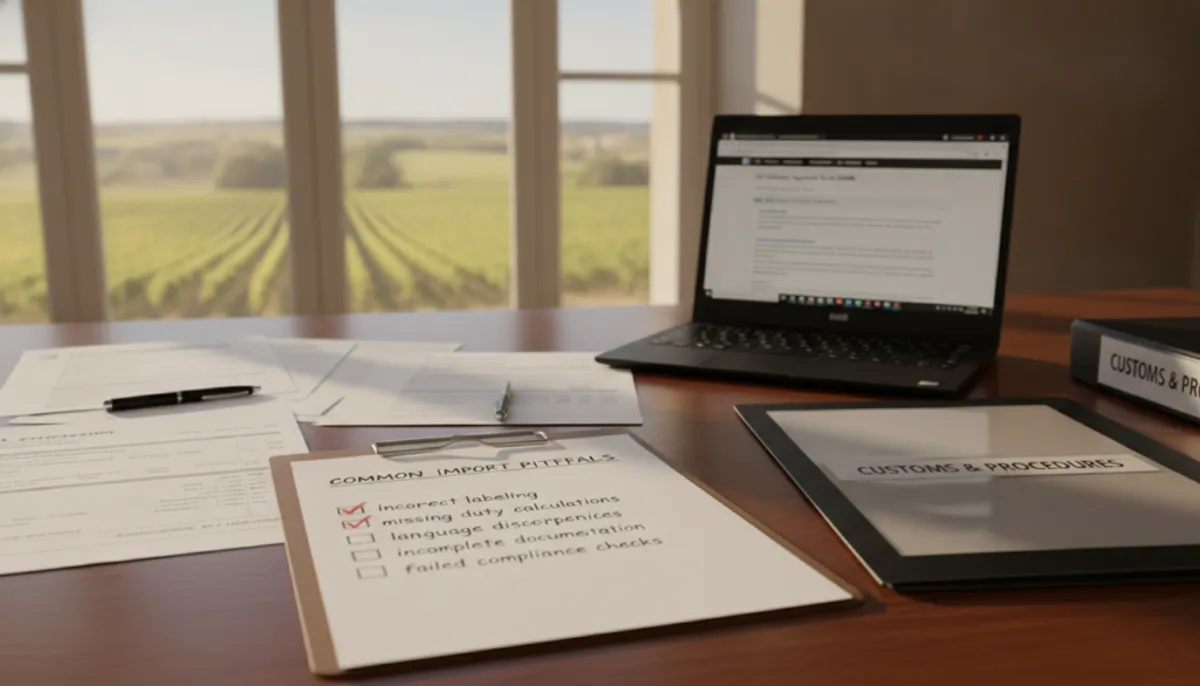
- Avoid violation: we help manage taxes and documents so your goods pass review.
- Train your staff: each person should understand documentation and production rules.
- Check amounts: confirm the tax amount, product volumes, and lab certificates before shipment.
| Risk | Action | Benefit |
|---|---|---|
| Missing documents | Pre-flight audit of files | Faster customs clearance |
| Incorrect tax amount | Tax calculation review | Avoid fines and license revocation |
| Regulation breaches | Compliance checklist per shipment | Lower inspection risk |
Looking for Champagne? We’ve got you covered. Discover the finest selections, ready to be exported anywhere in the world. Request your personalized quote today on https://champagne-export.com.
Conclusion
A final audit of paperwork and labels keeps shipments moving smoothly.
Importing premium beverages is a real opportunity that rewards careful compliance with rules, duties, and labeling. Partnering with https://champagne-export.com helps you meet each requirement and avoid common delays.
We handle customs declarations, excise and VAT calculations, and label checks so your team can focus on sales. Our experts guide each step and verify dates, certificates, and lab data for fast clearance.
Ready to start? Request a personalized quote at https://champagne-export.com and let us manage the details while you deliver the finest champagne to your customers.