Seeking a finish that subtly exudes sophistication? Champagne automotive paint offers a genteel shimmer, along with a soft metallic sheen. It suits various vehicle models beautifully, enhancing sedans, coupes, SUVs, and trucks. Opting for this hue is an ingenious strategy for noteworthy distinction whilst preserving the vehicle’s market value.
This exposition delves into the allure and application nuances of the champagne hue in vehicular aesthetics. We compare its characteristics against metallic and pearl finishes. The discourse extends to contrasting DIY aerosol applications with professional auto painting techniques. It highlights automotive coatings that epitomize impeccable gloss and clarity.
We draw upon Luna OEM Basecoat specifications from DipYourCar and validated shop practices. Our guide provides insights into preparation, optimal flash durations, and the timing for applying clear coats. It also introduces wrap alternatives by CARLIKE WRAP, encompassing Gloss Metallic Champagne Gold. The discussion touches on custom design elements, including chrome elimination and the employment of satin and brushed textures.
Contemplating minor retouches or an extensive color refresh? We chart out the preparatory stages, from initial scuffing to applying clear layers for enhanced durability. For clientele outside the United States, we present an efficient export mechanism for acquiring premium materials. The quality of resources significantly influences the outcome when utilizing champagne automotive paint.
Key Takeaways
- Champagne car color melds warmth with a nuanced metallic depth, crafting a polished, contemporary visage.
- Expert advice spans surface readiness, optimal flash periods, and clear coat applications, referencing Luna OEM Basecoat metrics.
- Both DIY aerosols and specialized auto painting methods yield refined finishes when executed properly.
- Select high-grade automotive coats for superior clarity, endurance, and sustained sheen.
- PET-based wrap choices like Gloss Metallic Champagne Gold deliver swift aesthetic enhancements with resilience against UV exposure.
- Styling suggestions incorporate chrome removal, black detailing, and brushed features for a harmonious contrast.
- Elementary touch-up strategies ensure the preservation of the champagne finish’s original allure.
Why Champagne Hues Elevate Any Vehicle’s Look
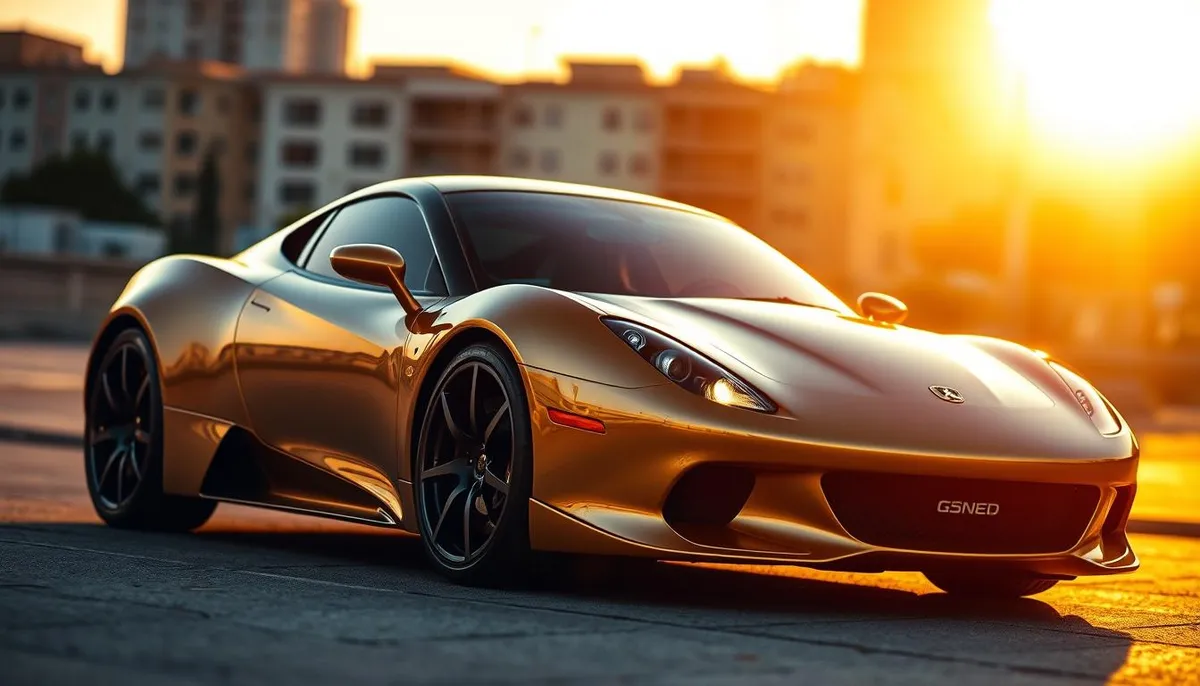
Champagne hues are a sophisticated mix of warm gold and soft silver, creating a serene, high-end atmosphere. This balance makes it attractive for both everyday cars and show models. As an automotive paint, champagne offers an elegant finish. It complements the vehicle’s design without being overly brash.
Under sunlight, the glow is unmistakable. The champagne color emits a subtle sparkle, enhancing the vehicle’s depth while maintaining discretion. This effect is achieved through precise timing and meticulous layering. This technique mirrors those used in advanced metallic finishes, ensuring the sparkle remains clear from sunrise to sunset.
Luxury appeal with soft metallic undertones
This color embodies the finest aspects of metallic paints: a delicate micro-flake shimmer, stark highlights, and seamless color transitions on the car’s exterior. Major automotive brands like BMW, Audi, and Ford display how this shade elevates the elegance of sedans, coupes, and sports cars. The addition of a high-quality clearcoat provides a glossy finish that exudes luxury both up close and from a distance.
Warmth, elegance, and subtle shimmer on the road
Automotive enthusiasts prefer this paint not only for its warmth but also for how it complements contemporary LEDs and alloys. While in motion, the finish showcases a refined shimmer that exudes confidence and sophistication. This unique character positions it as a top choice for bespoke finishes, where timeless elegance is favored over fleeting fashion.
Pairs beautifully with chrome deletes and black trims
The champagne color contrasts splendidly with satin or matte black details. Integrating chrome deletion with shadowline window frames and gloss-black grilles enhances the vehicle’s structure. Meanwhile, the body retains its gentle glow. This combination creates a sleek, contemporary profile. It suits various models, including the BMW 7 Series, Audi TT, or a Ford Mustang, complementing both stock and striking decal designs.
champagne automotive paint
Champagne automotive paint merges the warmth of gold with silver’s delicate luminosity. This combination produces a sophisticated shine. It is perfect for contemporary sedans, SUVs, and vintage restoration projects. Brands like PPG, Axalta, and BASF provide OEM-style basecoats. They also offer custom blends that achieve a subtle metallic or pearl effect. These options keep the vehicle’s panels looking pristine and luxurious.
For both professionals and hobbyists, access to a dependable automotive paint supply chain is crucial. Selecting UHS or 2K primers, superior basecoats, and tough 2K clears is key. These elements guarantee uniform color and enduring gloss. With proficient application, these materials meet professional auto painting standards. They enhance the appearance of new constructions and refinishing projects.
Champagne hues are realized through fine aluminum flakes or mica pearls. They subtly accentuate the vehicle’s contours without excessive glitter. When clearcoated accurately, they exhibit depth and radiance. This effect signifies luxury in both sunlight and nighttime illumination. Employing top-notch automotive refinishing products is essential. It ensures the vehicle’s sheen remains through varied weather conditions and regular cleansing.
Ready-to-spray systems like Luna OEM base and midcoats allow for efficient application. They maintain color uniformity across different surfaces and trims. In the U.S., established automotive paint supply distributors provide easy access to mixers, strainers, and suitable reducers. This facilitates timely project completion and ensures consistent finishes.
Whether aiming for a muted pearl aesthetic or a gentle metallic glow, champagne automotive paint presents an ageless color scheme. It complements satin black accents and shining accessories beautifully. Employing the finest automotive refinishing products, painting shops can fulfill professional auto painting criteria. This results in a finish that exudes sophistication and subtlety.
Champagne vs. Metallic and Pearl: Choosing the Right Finish
First impressions are pivotal. Whether your aesthetic favors bold sparkle or understated luminosity, selecting an appropriate combination of hue, effect layer, and sheen level is key. This ensures a sophisticated appearance, with automotive coatings engineered for resilience amidst the rigors of daily use.
Set your booth between 65–75 °F with 40–60% RH. Allow proper flash, usually 5–15 minutes, to keep film build even and clean.
Metallic car paint for depth and light-play
Metallic car paint incorporates fine aluminum particles to capture light, creating depth. Achieve a uniform surface without imperfections by applying a duo of medium-wet coats. Follow with a precise third application to calibrate flake orientation perfectly.
Allow roughly 30 minutes before adding a clear coat, enhancing transparency. This method excels in custom auto applications where uniformity across panels is critical.
Champagne pearl paint for a refined, upscale sheen
Champagne pearl paint utilizes mica flakes to emanate a subtle, luxurious radiance. Maintaining evenly distributed midcoats prevents uneven texture. A final, gentle coat guarantees uniformity of the pearl’s effect. This technique yields sophistication without overt flashiness.
When integrated with premier automotive coatings, pearl finishes maintain their hue integrity, even in direct sunlight. They gracefully embellish vehicle contours and lines.
Gloss, satin, and matte topcoat choices for custom auto finishes
Gloss coatings enhance vibrancy and depth, mirroring the reflective quality of top-tier wrap films. Meanwhile, satin reduces shine, offering a contemporary feel that preserves body details.
Matte finishes offer a subdued, avant-garde look. Strategically mixing these finishes allows for personalized auto exteriors. These can accentuate the dynamic sparkle of metallic paints or the subtle radiance of champagne pearl.
Prep Like a Pro: Surface and Environment Essentials
Initiating a flawless champagne hue commences well before the sprayer’s inaugural movement. Adequate preparation morphs imaginative concepts into immaculate panels and defined boundaries. This is particularly critical when employing superior automotive finishes alongside reputable refinishing items from 3M, SATA, and PPG. Possessing a stocked supply of automotive paint essentials allows for the replication and streamlining of professional auto painting tasks.
Clean, decontaminate, and scuff (P400–P600) for adhesion
Commence by eradicating road contaminants, wax, and silicones. Employing a clay mitt or an iron removal solution aids in extracting embedded particles. Uniform scuffing with P400–P600 ensures an even surface, followed by a final cleanse using a permeable tack cloth or isopropyl alcohol, referencing Luna OEM’s instructions. These actions guarantee that superior automotive coatings adhere flawlessly and bond securely.
Primer guidance for bare metal and repaired panels
Utilize a UHS primer on exposed steel or extensive filler regions to obstruct moisture and enhance bonding capabilities. Maintain a final sanding granularity of P400 prior to coloring to foster robust mechanical adhesion. To avert disparities and secure uniformity in professional auto painting, synchronize the primer and reducer within the same family of automotive refinishing products.
Ideal booth conditions: 65–75 °F and 40–60% relative humidity
Enforce a temperature range of 65–75 °F (18–24 °C) and humidity levels between 40–60% RH, complemented by consistent air movement. Optimizing ventilation not only mitigates overspray and solvent accumulation but also prevents particulate intrusion onto the surfaces. Such precise climate regulation is pivotal for the preservation of metallic and pearl nuances when utilizing premium automotive coatings from a dependable paint supply.
Safety first: respirator, nitrile gloves, and goggles
Adorn a solvent vapor-rated respirator, nitrile gloves, and tight-fitting goggles for protection. Eliminate potential fire hazards and ensure containers are earthed during mixture preparation. Adopting these precautionary measures fosters concentration, superior outcomes, and a seamless transition through the preparatory stages to painting—foundational practices of professional auto painting reliant on correct refinishing products.
Spray Technique for a Flawless Champagne Finish
Mastering the champagne automotive paint requires viewing the process as an art form. It bridges professional auto painting with the nuanced control of custom auto finishes. Each stroke demands patience, rhythm, and precision. The outcome is a tone that remains opulent, with a flake distribution that is impeccably uniform.
Mix well, test-spray, and overlap 50% for uniform coverage
First, thoroughly mix the basecoat to ensure the metallic flakes and pigments are evenly dispersed. A short test-spray on a card is crucial to verify both atomization and the accuracy of the color match. Employing steady, overlapping strokes secures a cohesive film crucial for achieving the desired champagne effect.
Apply 2 medium-wet coats; add a controlled 3rd coat for pearls/metallics
Commence with two medium-wet coats, emulating Luna’s technique of two 75% wet layers. Follow with a gentle third coat, focusing on uniform pearl or metallic flake dispersion. This approach not only heightens the signature shimmer but also ensures the edges remain sharp and well-defined.
Respect flash times to avoid runs and orange peel
A waiting period of 10–15 minutes between applications is essential, until the surface has dried to the touch. Observing proper flash times aids in achieving a smooth finish, minimizes texture, and deters sagging. Such meticulous attention to detail accentuates the sophistication that is the hallmark of professional auto painting.
Wait 30 minutes before clearcoat for maximum clarity
After applying the final color layer, a 30-minute interval before the clear coat is recommended. This crucial pause allows the high-quality automotive coatings to solidify, enhancing the depth and brilliance of the champagne hue. The result is an unrivaled clarity and luminosity, whether displayed under the sun or artificial lighting.
Aerosol and DIY-Friendly Options
Transform your garage project with champagne automotive paint in aerosol form. The correct automotive paint supply and technique achieve professional-level control. High-quality cans are compatible with advanced automotive refinishing products. They deliver consistent color and smooth metallic finishes.
Luna aerosols are prepped for immediate use. Vigorously shake for 45–60 seconds and invert to mix pigments and metallic flakes. Then, conduct a trial spray on a card. Maintain steady passes for uniform coating and vibrant color.
Position the can 5–6 inches from your work, aligning it perpendicular to the panel. Engage the trigger fully with each sweep, pausing only between strokes. This technique prevents uneven application and ensures edge-to-edge coverage.
For opaque finishes, two moderate coats achieve approximately 85% coverage, pausing briefly between. Pearlescent or metallic effects require a lighter third layer from a greater distance to enhance the visual depth. Adhere to 5–10 minute intervals between applications, followed by a 30-minute wait before applying a 2K clear coat. This seals the finish.
Maintaining cleanliness prolongs your equipment and automotive paint supply lifespan. Clear the nozzle by inverting and spraying until propellant is the only emission, then cleanse the tip with solvent. Avoid submerging it. Store aerosol cans vertically in a cool, dry area, shielded from direct sunlight, extreme cold, or temperatures surpassing 120 °F (49 °C). Such practices ensure your champagne automotive paint emulates professional auto painting results consistently.
High-Quality Automotive Coatings and Refinishing Products
Systems that function collectively yield superior outcomes. Employ Luna OEM Basecoats and Midcoats (Ready to Spray) alongside UHS primers for foundational or extensive repairs. Subsequently, utilize VHS or traditional clearcoats, or opt for 2K aerosol clears for minor areas. Such a composite strategy fosters the maintenance of champagne paint shades, ensuring their brilliance and cleanliness in diverse lighting conditions.
To assure uniform application, employ a scuffing technique using P400–P600 sandpaper, ensuring a 50% overlay between strokes, and introduce a third effect layer judiciously. Adhere to a 10–15 minute interval for each coat to dry, and postpone the application of clearcoat for 30 minutes. Control the painting environment’s temperature between 65–75 °F and humidity within 40–60% to minimize textural flaws and discoloration. These guidelines are consistent with top-tier professional standards nationwide, safeguarding the finish’s transparency.
Touch-up procedures prolong the aesthetic life of finishes amidst comprehensive repaintings. Employ a precise, fine bristle brush for color application, wait 15–20 minutes for setting, then apply 2–3 thin clear layers at 5-minute pauses. Subject the area to an hour of sunlight for curing, achieving complete hardening in 48 hours. This technique ensures the vibrancy and luster of metallic and pearl qualities in champagne paints, preventing unwanted outlines.
Enlist a paint resource conducive to color matching, mixing precision, and the right diluents. When paired with authentic automotive refinishing items, top-notch coatings fend off superficial marks and UV degradation. They further sustain the refined, warm luster preferred by vehicle owners.
Pro tip: Match reducer and hardener rates to your painting environment to preserve consistency and obviate textural issues on intricate surfaces.
Brands such as 3M for abrasives, SATA and DeVilbiss for spray equipment, alongside PPG or Axalta for clearcoats, guarantee a flawlessly smooth final layer. Supported by a comprehensive automotive paint supply, champagne finishes achieve depth, uniformity, and enduring resilience, whether for daily use vehicles or show cars.
Wrap Alternatives: Gloss Metallic Champagne Gold
Gloss Metallic Champagne Gold wraps offer an aesthetic of paint-like sheen, blending warm gold with soft silver accents. This choice embodies a refined champagne car hue, ensuring reversibility remains. It presents a comparison avenue for builders between metallic car paint and vinyl, emphasizing speed, style, and adaptability in contemporary automotive finishes.
PET-based construction endows these wraps with superior gloss, enhanced clarity, and minimal orange peel effects, in contrast to many PVC options. Its UV stability maintains the vibrant champagne automotive paint appearance, resisting shrinkage across climates from Miami to Phoenix.
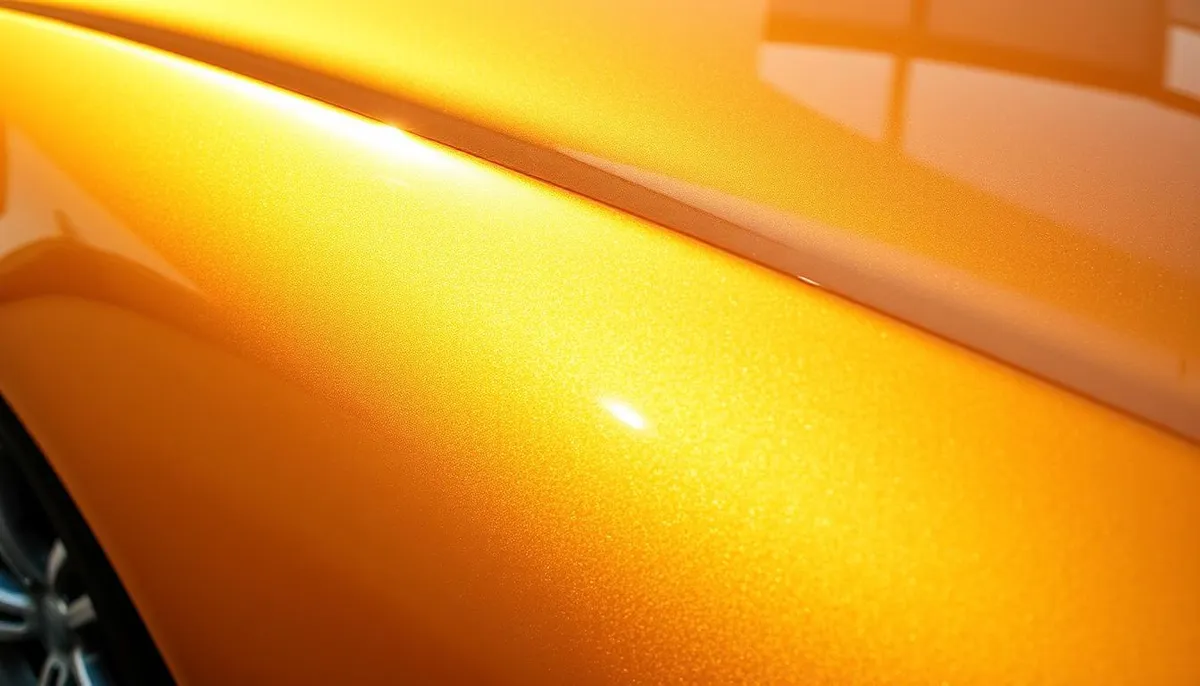
For those desiring a cohesive appearance, a full wrap is an optimal choice. Alternatively, incorporating accents on mirrors, roofs, or hoods can accentuate. This tone is in harmony with original factory colors, reflecting the sophistication of high-end metallic paints without requiring the extensive downtime associated with respraying.
The technology behind these wraps includes air-release channels and a stretchable film design. These features facilitate ease of application over tight curves and deep contours. Both DIY enthusiasts and professional installers will find achieving a smooth, bubble-free finish achievable, further enhancing the vehicle’s champagne glow.
To accentuate its design, consider integrating the wrap with chrome deletes, satin black trims, or impactful decals. This combination enhances the champagne paint’s luxurious feel, fitting perfectly with contemporary vehicle aesthetics for a range of car models.
- PET-based wraps: Higher gloss, UV durability, and low shrinkage for long-lasting clarity.
- Placement options: Full-body coverage or targeted accents on mirrors, roof, and hood.
- Install ease: Air-release tech supports bubble-free, conformable application over complex curves.
- Design synergy: Works with chrome deletes and bold decals for standout custom auto finishes.
Whether aiming for a weekend vehicle refresh or a comprehensive show-ready makeover, this finish taps into the richness of metallic car paints while offering versatility. It marries a clean, contemporary aesthetic with the timeless appeal of champagne automotive hues.
Design Inspiration: From Satin Champagne to Brushed Gold Accents
Champagne car colors transform into statements through the right blend of tone and texture. By integrating a subtle sheen with stark contrasts, custom auto finishes emerge as tailored and contemporary. Brands like BMW, Lexus, and Mercedes-Benz utilize light gold hues to accentuate body lines. This technique is equally effective with metallic car paint and champagne pearl on various automobile models.
Two-tone pairings with black, silver, or white
High-contrast two-tones favor most vehicle shapes, offering aesthetic depth. For instance, a gloss champagne body paired with a black roof mirrors performance aesthetics seen in models from Audi and Cadillac. Alternatively, silver roofs or mirrors add a clean, technical dimension. White accents, meanwhile, brighten the vehicle’s profile and enhance the highlights within a champagne car color.
Opting for satin champagne on the body juxtaposed with a gloss black roof and chrome delete crafts a sleek, refined appearance. Underneath streetlights, this combination allows champagne pearl paint to emit a subtle radiance.
Stripes, monograms, and metallic-flake flourishes
Racing stripes, whether in brushed gold or piano black, introduce dynamism unobtrusively. Incorporating thin monograms on the decklid or lower door cultivates an air of custom exclusivity. Likewise, metallic flake accents create focal points that enrich the depth in custom auto finishes.
Strategically placing metallic flakes—on the center hood or along the shoulder line—intensifies the shimmer of champagne pearl paint. This approach maintains visual cohesion.
Texture contrasts: gloss champagne with matte or brushed accents
Diverse textures enrich the perceived value of color. A gloss champagne canvas paired with matte or brushed gold accents on auxiliary elements heightens definition. This method distinctly outlines edges and accentuates the vibrancy of metallic car paint under various lighting conditions.
Preferred configurations feature a gloss champagne body complemented by a brushed gold roof or satin champagne with gloss black mirrors. Integrating subtle gold pinstripes and emblem decals unifies the overall theme. Such details elevate the sophistication of a champagne car color, ensuring custom auto finishes project precision and luxury.
Touch-Up and Maintenance Tips
Address small chips and scuffs swiftly with the correct automotive refinishing products readily available. Applying a meticulous touch ensures the preservation of the vehicle’s champagne hues, rendering repairs virtually undetectable under both sunlight and artificial lighting. This approach aligns with methodologies employed in professional auto painting, yet remains accessible for those dedicated to DIY weekend projects.
Feather-sand (600–800), degrease, and apply thin color coats
Commence with rinsing the affected area using a gentle detergent before drying thoroughly. Proceed by feather-sanding the perimeter utilizing 600–800 grit sandpaper to ensure a smooth transition and enhance adhesion. Subsequently, cleanse with isopropyl alcohol to eliminate any residual oils. Vigorously agitate the touch-up paint prior to application, executing thin, uniform layers using a fine-tip tool. Awaiting 15–20 minutes between applications facilitates a seamless integration under high-quality automotive coatings.
Layer clear for protection; allow sun cure and full set times
Implement 2–3 light applications of clear coat, spacing them approximately five minutes apart to augment clarity and durability. Expose the treated area to direct sunlight for a minimum of 60 minutes, and anticipate a comprehensive cure within 48 hours. Opting for matched supplies from a reputable automotive paint supply ensures the repair ages in harmony with the surrounding bodywork.
Gentle washing routines to preserve gloss and pearl effects
For the initial 48 hours post-repair, steer clear of potent chemicals and high-pressure washing. Favor handwashing with pH-balanced soap, utilizing soft mitts alongside ample rinsing water. Abstain from using coarse towels and rough substances that might impair the finish of delicate champagne flake. Adhering to these practices, informed by professional auto painting, guarantees seamless integration of the repair and the durability of the gloss.
Sourcing Pro Paint and Supplies in the United States
U.S. buyers have access to trusted networks specializing in automotive paint supplies. They offer Ready to Spray Luna OEM Basecoats, Midcoats, UHS primers, and clearcoats, including efficient aerosol systems. These networks provide exhaustive technical data covering P400–P600 scuffing, 50% overlap techniques, 10–15 minute flash-off times, and a mandatory 30-minute interval before applying clearcoat. Furthermore, they ensure compatibility and predictability by supplying matched reducers and hardeners.
When searching for champagne automotive paint, prioritize distributors that supply factory-matched formulas from leading brands including PPG, Axalta, BASF, and Sherwin-Williams Automotive Finishes. Complement these paints with refinishing accessories such as panel wipes, tack cloths, and precision mixing cups to ensure color accuracy and optimal film build. For challenges presented by complex metallic finishes, request spray-out cards to verify flop and face tones before large-scale application.
For shops dedicated to delivering superior automotive finishes, comparing OEM-style basecoat systems with low-VOC alternatives is crucial. This comparison ensures compliance with regional environmental regulations without compromising on gloss or durability. Those interested in Champagne Gold wraps will find PET-based films with air-release channels and enhanced UV protection readily available. Specialty wrap retailers and certified installers provide these options, ensuring an upscale appearance complemented by reliable warranties and straightforward removal.
International buyers benefit from streamlined logistics offered for premium champagne finishes and related accessories. Comprehensive export support includes meticulous packing, adept customs handling, and insured shipping to major global ports and airports. Regardless of location, ensuring your automotive paint supplies meet verified specifications is paramount. This diligence safeguards finish quality and preserves the long-term aesthetic appeal of automotive coatings.
Conclusion
Champagne automotive paint merges the warmth of gold with a subtle metallic sheen, embodying elegance. Proper preparation using P400–P600 grit, adherence to drying times, and application of two medium-wet coats followed by a lighter effect coat illuminate the surface with exceptional clarity and balance. Allowing a 30-minute interval before applying the clear coat ensures a luminous gloss and uniform flake distribution, characteristic of high-quality custom auto finishes.
DIY enthusiasts can achieve a professional showroom appearance using aerosol sprays designed for ease of use. Vigorous shaking for 45 to 60 seconds, maintaining a spraying distance of 5 to 6 inches with a 50% overlap, and regular nozzle cleaning result in a flawless application. Storing cans properly is crucial for maintaining the integrity of the color, whether opting for a timeless champagne hue or a contemporary champagne pearl for that extra sunlight shimmer.
For those seeking temporary change, PET Gloss Metallic Champagne Gold wraps offer a vibrant, durable finish. These high-gloss, UV-resistant wraps with minimal shrinkage and air-release technology are perfect for both full vehicle coverage and accent pieces. They complement chrome deletes and striking decals, providing creative flexibility without committing to permanent paint.
Maintaining the vehicle’s appearance involves gentle cleaning and precise touch-ups. Feather-sanding with 600–800 grit, layering clear coat carefully, and allowing panels to cure in the sun preserve the finish’s freshness. Access to quality materials is streamlined by reliable networks across the United States, with options for international shipping. These resources make it feasible to recreate the sophisticated champagne color, enhancing the artistry involved in custom auto finishes.
FAQ
What makes champagne automotive paint look so luxurious on the road?
Champagne tones combine the warmth of gold with the elegance of soft metallic silver undertones. This mix, particularly under sunlight, exhibits depth and brilliance. A controlled third effect coat and clear finish enhance this effect. The outcome is a sophisticated champagne car color, perfect with chrome deletes, black trims, and striking decals.
Is champagne paint better as metallic or pearl for my build?
For a dynamic light-play, choose metallic with its crisp flake pop. Pearl paint, however, offers a smoother sheen and a more understated depth. Both options require professional painting techniques for optimal results: a 50% overlap, two wet coats at 75%, a controlled third effect coat, and a 30-minute wait before clear application.
How do I prep the surface for champagne automotive paint?
Begin with a thorough cleaning and decontamination, then scuff with P400–P600 grit for proper adhesion. For bare metal or significant repairs, apply a high-quality UHS/2K primer. Sanding should not be finer than P400 before the color application. Ensure your working environment is between 65–75 °F with 40–60% relative humidity. Use a respirator, nitrile gloves, and goggles for safety.
What spray technique delivers a flawless champagne finish?
Start by thoroughly mixing the paint, then conduct a test spray. Apply with smooth, perpendicular movements and a 50% overlap. Add two 75% wet coats and a controlled third for either pearls or metallics. After 10–15 minute flash times, wait 30 minutes before applying clear for ultimate gloss and clarity.
Can I use aerosols for DIY champagne paint?
Absolutely. Use Ready to Spray aerosols from DipYourCar’s Luna OEM Basecoat line for best results. Shake vigorously for 45–60 seconds before spraying 5–6 inches from the surface. Ensure consistent flow by managing the trigger. After 5–10 minute flashes, apply a lighter third coat for depth, then wait 30 minutes before clear coating with a 2K aerosol.
How do metallic and pearl champagne finishes differ once cleared?
Metallic champagne finishes showcase reflective flakes that sparkle brilliantly, creating lively light reflections. In contrast, pearl champagne finishes emanate a sophisticated glow with smoother transitions. While gloss clearcoats amplify the brilliance, satin and matte finishes provide a contemporary look by softening reflections yet maintaining the color’s essence.
What booth or garage conditions should I target?
Maintain conditions at 65–75 °F (18–24 °C) and 40–60% relative humidity for optimal painting. Good airflow and filtration are crucial. Such conditions help manage paint drying times, reduce imperfections in pearls, and avoid striping in metallic finishes. A stable environment is key to achieving consistent quality in champagne automotive paints.
How does a PET Gloss Metallic Champagne Gold wrap compare to paint?
PET wraps offer high gloss and durability against UV rays, with minimal shrinkage and less orange peel effect compared to many PVC alternatives. They utilize air-release technology for a smooth application and can be removed easily. Perfect for full car wraps or accents, they closely resemble high-quality paint finishes.
Where do wraps work best—full coverage or accents?
Both applications are effective. Full wraps can completely transform a vehicle’s appearance. Accents, such as on the mirrors, roof, or hood, introduce stylish contrasts. Champagne wraps are particularly suited for modern luxury vehicles and custom projects, enhancing them with a refined ambiance.
What design ideas suit champagne metallic car paint?
Consider two-tone designs, combining champagne with black, silver, or white. Incorporate stripes, monograms, or metallic flake accents. This approach, when contrasted with matte or brushed finishes, creates a sophisticated and custom aesthetic influenced by high-end finishes like those from CARLIKE WRAP.
How do I handle chips and scratches on champagne finishes?
Start by cleaning the affected area and feather-sanding with 600–800 grit paper. After degreasing, apply thin layers of color. Allow the color to cure for 15–20 minutes before adding 2–3 clear coats at 5-minute intervals. Finally, a 60-minute sun cure will ensure durability.
What maintenance keeps champagne finishes looking fresh?
Employ pH-neutral soap and a soft mitt for washing. Steer clear of harsh chemicals and abrasive materials. These gentle washing methods apply to wraps as well, maintaining their luster and depth. Such maintenance extends the lifespan of custom finishes and keeps them clear and vibrant.
What clearcoat sheen should I choose for champagne?
Gloss clearcoats deliver maximum clarity and enhance sparkle, imitating the sheen of premium wraps. Satin offers a muted reflection for a modern look. Matte finishes scatter light, making a bold design statement. Choose the sheen that aligns with your vision, using products compatible with your basecoat system.
What are the key spray timings I should remember?
Observe 10–15 minute flash periods for spray application and 5–10 minutes for aerosols. After applying the final color coat, a minimum 30-minute wait before clearcoating is essential. These intervals minimize potential defects, ensuring a high-quality finish.
Where can I source high-quality automotive coatings and supplies in the U.S.?
Seek out reputable supply stores that carry Luna OEM Basecoats and Midcoats, UHS/2K primers, and 2K clears. Ensuring access to comprehensive technical details for preparation and application is vital. Such due diligence guarantees consistency in color quality and durability.
Can I export champagne-themed products or finishes internationally?
Indeed. For international availability and logistics, consider export-ready solutions. Find top-grade selections at https://champagne-export.com and request tailor-made quotes. This approach simplifies obtaining champagne-inspired solutions globally.
How do I avoid metallic striping or mottling with champagne paint?
Ensure even gun distance, maintain a 50% overlap, and apply a controlled third effect coat for uniform flake or pearl distribution. Adhering to the recommended environment and timing is critical. Testing on sample panels first can prevent mistakes on the actual project.
Are there professional tips to improve DIY aerosol results?
For optimal aerosol application, bring the can to room temperature and shake well before use. Maintain a steady hand 5–6 inches away from the target surface. To preserve the aerosol’s quality, clear the nozzle by spraying upside down after use and store the cans upright in a temperate, dry area.
Which vehicles look best in champagne car color?
Champagne paint pairs well with luxury sedans, sporty coupes, robust SUVs, and high-performance vehicles. It highlights the contours of models like the BMW 7 Series, Audi TT, and Ford Mustang. Even motorcycles and show cars gain a timeless, upscale look with champagne finishes.
What keywords help me find the right products for a champagne build?
Utilize terms such as champagne automotive paint, metallic car paint, champagne pearl paint, and custom auto finishes. Also include professional auto painting, high-quality automotive coatings, automotive refinishing products, and automotive paint supply in your search. These keywords will lead you to reputable brands and systems.