The 1990 release from Dom Pérignon, fashioned by Moët & Chandon, epitomizes a landmark in vintage champagne history. It skillfully combines sophistication with magnificence, reflecting the brand’s apex of prestige. Esteemed by collectors, it’s recognized as a quintessential fine wine and a symbol of luxurious indulgence, intended both for immediate enjoyment and prolonged cellaring.
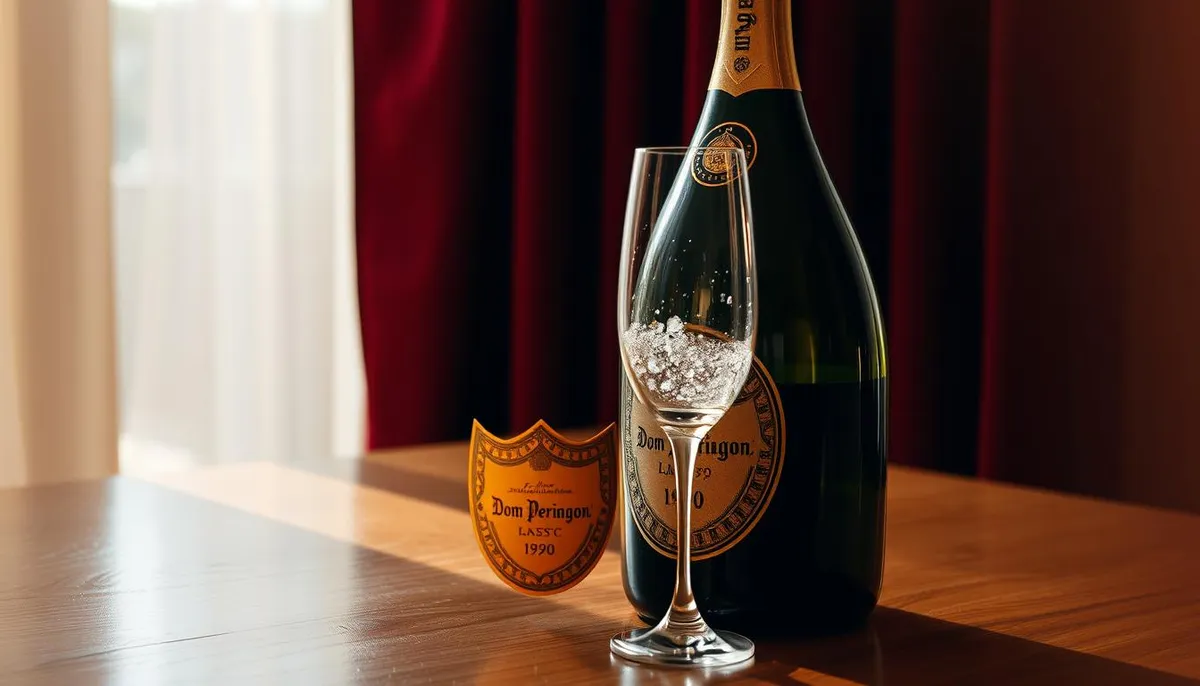
The initial scent reveals jasmine and narcissus before transitioning to notes of warm brioche and subtle roasted elements. The climatic conditions of 1990 bestowed the grapes with optimal ripeness, balanced by perfect acidity. This equilibrium yields a wine of substantial depth yet maintains a lightness, offering complexity without overwhelming the senses.
The flavor profile is rich with nuances of sun-drenched orchard fruits, complemented by toasted almonds and a touch of candied citrus zest, grounded by a mineral essence. Its texture is notably smooth and silky, culminating in a prolonged saline resonance indicative of the brand’s signature. Here, Dom Perignon 1990 is expressed in its entirety: a champagne that embodies grace, a distinguished wine of everlasting appeal, and a luxury emblematic of a revered marque, demanding and rewarding in equal measure.
Key Takeaways
- Celebrated as one of the most flattering vintages of the 20th century.
- Aromas of jasmine, narcissus, brioche, and roasted nuances.
- Summer warmth and ideal acidity deliver depth, balance, and lift.
- Palate features orchard fruits, toasted almonds, and candied citrus.
- Silky texture with a prolonged saline-mineral finish true to the house style.
- Highly rated, age-worthy, and prized by collectors worldwide.
Why the 1990 Vintage Champagne Year Still Captivates Collectors
The 1990 Champagne season began vibrantly, only to be challenged by April’s frosts, which impacted early growth negatively. The subsequent summer brought redemption through consistent warmth and clear skies. By harvest in September, the grapes were in exceptional condition, ripe with maintained acidities and rich flavor profiles. These conditions laid the groundwork for creating collectible wines that enthusiasts continue to seek.
Across the region, houses noted pristine fruit and superb balance. The resulting champagnes, characterized by ripe orchard nuances, robust structure, and definitive freshness, solidified 1990’s reputation. This vintage is renowned for its potential for long-term cellaring and its graceful aging process.
Climatic conditions that shaped a legendary harvest
The frost in spring contributed to a reduced yield, intensifying the flavors in the fruit that survived. The summer’s consistent dryness allowed for uninterrupted ripening. This was complemented by cool evenings that preserved the grapes’ essential acidity. These factors collectively influenced the wine’s complexity and defined character.
Harvest commenced in September, with the grapes showcasing optimal sugar levels, resilient skins, and lively acids. Such characteristics are fundamental for producing champagnes with multifaceted aromas and a structure that matures well over time, highly valued by champagne collectors.
How summer warmth and ideal acidity built depth and balance
The steady warmth of summer enhanced the wines’ texture and the richness of the fruit, while the retained acidity ensured a structured composition. This balance facilitated a tension and length in the wine, typical of an exceptional vintage designed for evolution.
In Dom Pérignon 1990, this equilibrium is pronounced, featuring aromatic florals, a palate of orchard fruit and toasted nuts, followed by a subtle saline-mineral finish. These attributes affirm its standing as a premier vintage and a prime addition for any collector.
Age-worthiness and the enduring appeal to champagne collectors
The longevity of the 1990 vintage stems from its phenolic maturity aligned with sharp acidity. Aging on lees further enhanced its complexity, introducing notes of brioche and honey without compromising the wine’s vibrancy.
For collectors viewing from an investment angle, careful provenance and proper cellaring are key to unveiling its layered dimensions over time. As the wine matures, its savory and mineral qualities become more pronounced. This maturation cements its reputation as a distinguished wine, a superior vintage, and a sought-after collectible.
dom perignon 1990
This release is unparalleled among champagne icons, highly coveted for its balance, complexity, and longevity. It represents a top-rated vintage, embodying luxury and rarity, a symbol of excellence from a celebrated year.
Tasting profile at peak maturity
The 1990 Dom Perignon showcases initial aromas of jasmine and narcissus, followed by roasted, buttery brioche notes. It presents a rich palate of preserved citrus, sun-kissed orchard fruits, and toasted almonds.
Its mineral core maintains structure. The wine’s texture is both creamy and silky, leading to a prolonged finish with a hint of salinity, prompting further exploration.
Cellaring insights and current drinking window
Optimal consumption spanned 1997 to 2020, emphasizing the importance of storage conditions. Excellently preserved bottles still offer vibrant, mature, and finely bubbled experiences today.
- Currently, it appeals to those appreciating tertiary flavors and intricate notes.
- To fully experience its brioche and citrus notes, serve slightly cool.
- Handling with care ensures its clarity and enduring, saline finish.
What makes this top-rated vintage a luxury bottle and rare wine
The wine’s scarcity arises from its selective vintage production, the precise blend of Chardonnay and Pinot Noir, and sourcing from distinguished vineyards. Such careful maturation significantly enhances its complexity, making it an ideal choice for those seeking elegant dessert recipes to complement its rich flavors.
The market recognizes its value, priced at about $560 per bottle, with notable sales, like a $4,900 auction for 12 bottles at Sotheby’s in 2016. These aspects confirm its status as a rare, luxury wine from a top-rated vintage.
The House Behind the Legend: Dom Pérignon’s Vintage-Only Philosophy
Dom Pérignon exemplifies exclusivity, releasing vintages solely during remarkable years. Each vintage encapsulates the unique character of its season, maintaining the brand’s distinguished elegance and restraint. This method regards every cuvée as a refined wine, its essence forged over time rather than by recipe.
Grand Cru and Premier Cru sourcing across Champagne
The estate selects from an extensive array of vineyards throughout Champagne. This selection includes sites in Montagne de Reims, Côte des Blancs, and Vallée de la Marne. Possessing access to approximately 1,200 hectares, primarily of Grand Cru and Premier Cru status, grants the maison a vast spectrum of terroirs. Consequently, this diversity not only fortifies the brand’s esteemed image but also roots each vintage in its distinctive place of origin.
Masterful blending of Chardonnay and Pinot Noir
Guided first by Richard Geoffroy and currently by Vincent Chaperon, the amalgam of Chardonnay and Pinot Noir articulates each year’s uniqueness along with Dom Pérignon’s hallmark finesse. Chardonnay contributes crispness and brightness; Pinot Noir imparts structure and intensity. Together, they produce a wine that balances complexity and elegance, revealing intricate nuances while maintaining overall cohesion.
Extended aging and the signature saline-mineral finish
Aging in the cellar far exceeds industry averages, introducing a complex array of flavors like brioche, citrus oil, and chalk. As time progresses, the wine’s texture softens, and its finish becomes distinctly saline-mineral. Such prolonged maturation combines the distinctiveness of each vintage with the brand’s renowned clarity and finesse, thus positioning Dom Pérignon amongst the elite in fine wine.
Signature Tasting Notes: From Jasmine and Brioche to Candied Citrus
This top-rated vintage shines as a pinnacle in the realm of vintage champagne, celebrated widely as a model of fine wine. Its complexity is captured through bright ripeness matched with meticulous acidity.
Nose: floral intensity, roasted and buttery nuances
The olfactory journey begins with the heady scents of jasmine and narcissus, suggesting full maturity. Roasted, buttery brioche then envelops these floral notes, creating a layered depth. A discrete minerality subtly enhances the bouquet, heralding the champagne’s distinguished birthright.
Palate: orchard fruits, toasted almonds, preserved citrus
On tasting, ripe pear and apple blend seamlessly with toasted almonds. This melds into a zesty essence of preserved and candied citrus, radiating vibrancy. A crystalline mineral core tightens the assemblage, marrying opulence with momentum in this distinguished top-rated vintage.
Texture and finish: creamy, silky, and prolonged saline echo
The mouthfeel is both creamy and silky, countered by a lively acidity which introduces dynamism. A prolonged finish characterizes the savor, echoing saline nuances, attributable to significant lees aging and the expression of terroir. This harmonic balance confirms its stature among the vintage champagne elite, epitomizing fine wine. Additionally, the allure of personalized champagne pricing adds a unique dimension to its exclusivity.
Critics’ Reviews and Scores for a Prestigious Brand Icon
The unanimity found regarding Dom Pérignon 1990 is exceptional. Esteemed publications highlight its depth, grace, and potential for longevity. These are hallmarks of a venerable brand, symbolizing both a collector’s gem and a paragon of fine wine.
Highlights at a glance reveal a composition of rich fruit layers, exquisite texture, and intricate tertiary nuances. The diversity in scores mirrors the individual reviewer’s stylistic preferences yet collectively affirms the wine’s exceptional caliber.
| Critic / Publication | Score | Key Descriptors | Takeaway |
|---|---|---|---|
| James Suckling | 99 | Flan, orange peel, cooked pineapple finish | Opulent detail and soaring perfume mark this fine wine as peak expression from a prestigious brand. |
| Robert Parker | 96 | Full-styled, creamy texture, high quality | Power with polish; texture-driven depth that suits long-term collectible appeal. |
| John Gilman | 95 | Full-bodied richness, crisp acidity, stewed apples, almonds, honey nut | Classical balance and drive; gastronomic breadth that underscores fine wine pedigree. |
| Wine Spectator | 90 | Full body, earthy tones, brioche, dried fruit | More savory register with bakery notes; a grounded view of a prestigious brand icon. |
| Vinous | 93 | Dusty minerality, spice, red fruit, toast, preserved ginger | Mineral line and spice complexity enhance its profile as a timeworthy collectible. |
Collectively, these assessments delineate a journey from lush tropical impressions to mineral elegance. They underscore the wine’s structural and textural integrity, elements essential for its dynamism in both cellar and glass.
In the U.S., this array of insights encourages assured acquisitions. This vintage serves as an exemplar of the brand’s esteemed reputation—a treasure coveted for its subtlety, vitality, and enduring appeal.
Value and Market Insights for the Champagne Collector
Experts analyze Dom Pérignon 1990 due to its consistent demand and clear price trends. In the realm of champagne collection, a delicate balance emerges: rarity intersects with prestige, crafting a highly desirable collectible, including engagement party presents. It boasts a robust trade velocity among its fine wine counterparts.
Current pricing benchmarks and auction highlights
Retail benchmarks currently indicate approximately $560 per bottle, signifying its matured excellence and sustained appeal. The secondary market presents a solid stance: a transaction involving 12 bottles reached $4,900 at a 2016 Sotheby’s auction, highlighting strong bidder trust.
- Retail cue: A stable price of ~$560 per bottle signifies a viable market for this mature wine.
- Auction cue: Documented success showcases sell-off possibilities for collectors looking to adjust their assortment.
Rarity factors that drive collectible status
Dom Pérignon’s commitment to vintage-only releases restricts availability. The exquisite blend of Chardonnay and Pinot Noir, sourced from top-tier vineyards, enhances its allure. Its aging process imparts a complex texture and nuance, elevating each bottle to coveted collectible status, including unique engraved gifts that celebrate special occasions.
- The 1990 vintage, known for its ripe harvest and harmonious acidity, introduces depth and maturity.
- Acclaim from critics sustains interest among collectors, underlining the significance of origin.
How provenance and storage affect fine wine value
Meticulous records, untouched packaging, and stable storage conditions are paramount. They safeguard the wine’s intricate bouquet, vivid citrus tones, velvety feel, and distinct finish. These factors are vital for preserving both the experiential and fiscal value of a scarce wine with many years ahead, including insights into global champagne chere pricing.
- The optimal environment: temperatures of 50–55°F, 70% humidity, dim light, and negligible vibrations.
- Verification is crucial: detailed invoices, shipping logs, and professional photographs enhance buyer assurance.
Food Pairings That Elevate This Fine Wine Experience
Dom Pérignon 1990 distinguishes itself at sophisticated gatherings. Its profile, a blend of preserved citrus, brioche, and saline-mineral nuances, renders it an impeccable match for elegant dining. Serving this vintage champagne at the onset introduces a luxurious atmosphere, ideal for celebrating special moments.
Seafood and caviar with preserved citrus intensity
Opt for cold-water oysters, beluga or osetra caviar, and bluefin tuna crudo. These choices, paired with the champagne’s candied citrus and oceanic undertones, elevate their natural flavors. Moreover, a soft mousse works to refresh one’s palate after each bite.
Butter-poached lobster, scallop carpaccio, and king crab harmonize with the creamy aspects of the wine’s palate. Enhancements like lemon, preserved Meyer lemon, or yuzu gel complement the citrus heart of this champagne.
Pork and aged cheeses for richness and balance
A dish of roast pork loin accented with fennel pollen and jus gras aligns with the wine’s layered complexity. Additionally, porchetta or Iberico secreto presents savory contrasts to the champagne’s toasty brioche flavors.
Selections of aged Comté, Parmigiano Reggiano, or Mimolette cheese with their nutty accents emphasize almond essences in the wine. Their substantial textures further accentuate the champagne’s enduring saline finish, enhancing its luxurious essence.
Entertaining tips for serving a luxury bottle
For optimal enjoyment, chill to between 45–48°F. This enhances the wine’s focus and aromatic bouquet. Selecting tall flutes increases the wine’s liveliness, while white-wine glasses allow for a broader sensory experience. Pouring gently is key to maintaining the wine’s effervescence.
Presenting this champagne as a centerpiece sets the stage for an exquisite meal. Begin with shellfish, transition to either pork or truffled poultry, and conclude with aged cheese. Such an arrangement showcases the wine’s versatility and depth throughout the dining experience. Additionally, consider pickling with champagne vinegar to enhance the flavors of your dishes, creating a delightful pairing that complements the wine.
| Course | Dish Recommendation | Why It Works | Serving Note |
|---|---|---|---|
| First | Oysters with caviar | Briny lift aligns with saline-mineral drive of vintage champagne | Serve very cold; minimal garnish |
| Second | Butter-poached lobster | Creamy texture echoes mousse and brioche tones | Add preserved lemon accents |
| Main | Roast pork loin, fennel, jus | Savory depth balances citrus and almond notes of fine wine | Keep sauces bright, not sweet |
| Cheese | Aged Comté or Parmigiano Reggiano | Nutty firmness complements long, saline finish | Serve at cellar temperature |
| Toast | Dom Pérignon 1990 | Iconic luxury bottle that frames the entire menu | Pour at 45–48°F in white-wine stems |
Aging Potential and Plénitudes: Understanding Maturity Stages
Dom Pérignon 1990 is recognized as a top-rated vintage, maturing magnificently over time. This collectible exemplifies how aging enhances its elegance yet preserves its distinctive saline-mineral essence.
Drinking window guidance for 1990 and how it evolved
The recommended consumption period extended from 1997 through 2020. During this time, numerous bottles achieved a rich, creamy zenith. Even now, well-preserved bottles feature notes of brioche, toasted almond, and preserved citrus, all enveloped by vibrant acidity.
It’s a vintage that appreciates prolonged cellaring. In ideal conditions, it retains its vivacity, presenting a delightful experience upon opening. Thus, it remains a coveted asset among aficionados of vintage champagne.
Plénitude releases and extended maturation benefits
The initiative spearheaded by Richard Geoffroy, and presently by Vincent Chaperon, showcases the vintage’s evolution at distinct milestones. Extended lees aging enhances its texture, complexity, and the characteristic saline resonance.
P2 and P3 iterations unveil a pronounced umami flavor, finer effervescence, and a more pronounced fruit clarity. Such releases solidify its position as a premier top-rated vintage and a pivotal collectible in the realm of vintage champagne.
Decanting and service temperature for older vintages
Serving at the correct temperature—between 46–50°F—ensures the fragrance blossoms without compromising texture. Typically, a gentle pour and a brief wait allow the wine to express itself fully.
Occasionally, a discreet decant might be preferred to enhance the aromatic palette of brioche, almonds, and citrus. This technique aims to preserve the vintage’s creamy texture and celebrate its sought-after saline finale.
The Craft Behind the Cork: From Abbey of Hautvillers to Modern Mastery
Within the ancient walls of the Abbey of Hautvillers, near Épernay, Benedictine monk Pierre Pérignon dedicated 47 years to perfecting wine-making techniques. His approach included the gentle pressing of Pinot Noir and meticulous blending of various crus. This process was aimed at achieving unparalleled balance and purity in the wine, alongside bespoke champagne sourcing. Long before Moët & Chandon released the first cuvée named Dom Pérignon in 1921, his influence had already set a standard for premium wine production.
Today, the house adheres to ten foundational principles, emphasizing vintage-only releases and the selection of grapes from the finest crus. The blend of Chardonnay and Pinot Noir aims for a perfect balance between tension and harmony. Extended aging contributes to its complexity, and the addition of a luxury champagne service enhances the overall experience. Consequently, each vintage champagne boasts exceptional finesse, roundness, and a smooth, enveloping taste.
From 1990 to 2018, Richard Geoffroy led the brand, releasing 15 vintages and establishing the Plénitudes to monitor the wine’s maturation. Vincent Chaperon took over in 2019, focusing on enhancing precision while maintaining the brand’s iconic style. Their vintages feature ripe fruit, roasted and buttery nuances, and a distinctive saline finish, traits clearly notable in the 1990 vintage. Additionally, the contributions of african american champagne makers have enriched the diversity and quality of the champagne industry.
The journey from monastic refinement to the current detailed craftsmanship unites place, time, and meticulous aging. This synergy manifests in a truly timeless expression of luxury wine.
| Era | Key Figures | Craft Milestones | Style Markers | Impact on a Prestigious Brand |
|---|---|---|---|---|
| 17th–18th Century | Pierre Pérignon | Delicate Pinot Noir pressing; blending of crus | Clarity, balance, vineyard expression | Foundations of fine wine technique and quality focus |
| 1921–Late 20th Century | Moët & Chandon | First Dom Pérignon cuvée; vintage-only ethos | Finesse with roundness; extended aging | Global benchmark for vintage champagne |
| 1990–2018 | Richard Geoffroy | 15 vintage releases; Plénitude concept | Silky texture, roasted and buttery undertones | Codified maturation stages and deeper cellar insight |
| 2019–Present | Vincent Chaperon | Precision viticulture; innovation with continuity | Ripe fruit tension, saline-mineral finish | Modern mastery that strengthens a prestigious brand |
The various eras showcase a commitment to blending Chardonnay and Pinot Noir, along with a strict selection of vintages. This melding, coupled with prolonged lees aging, creates a signature identity. Such discipline ensures the ongoing allure of their vintage champagne, maintaining the brand’s distinctive and authentic voice.
How to Source Authentic Top-Rated Vintage Champagne Worldwide
Obtaining a bottle like Dom Pérignon 1990 requires meticulous examination. Collectors must evaluate the vintage’s condition, trace its history, and consider logistic intricacies prior to acquisition.
Buying with confidence: condition checks and verification
- Inspect fill levels: shoulder or higher for 750 ml, with no signs of seepage.
- Check cork integrity and capsule condition for swelling, rust, or tears.
- Confirm label and vintage authenticity; compare fonts, glass markings, and disgorgement details where available.
- Review storage history: steady 50–59°F, 60–70% humidity, and darkness.
- Cross-reference tasting notes: James Suckling’s 99 points (flan, orange peel, cooked pineapple) and Robert Parker’s 96 points for creamy, full-styled texture, plus insights from John Gilman, Wine Spectator, and Vinous.
- Seek original cases and documented cellaring to support value, with expected jasmine, brioche, preserved citrus, almonds, and a saline finish.
Global export and logistics considerations
- Choose temperature-controlled shipping year-round; avoid tarmac heat spikes and winter freezes.
- Use shock-absorbing packaging and bottle neck protectors for older corks.
- Confirm customs compliance: HS codes for sparkling wine, duties, local import limits, and adult signature rules.
- Request in-transit insurance that reflects market value for a top-rated vintage and rare wine.
- Plan last-mile delivery to minimize handoffs and time out of cold chain.
- Document chain of custody to preserve resale confidence for a prestigious brand bottle.
Looking for Champagne? We’ve got you covered. Discover the finest selections, ready to be exported anywhere in the world. Request your personalized quote today on https://champagne-export.com.
Tip: Optimize shipping schedules for cooler weather. This guarantees your valuable investment maintains its integrity upon arrival.
Conclusion
Dom Pérignon 1990 serves as a paradigm for vintage Champagne, crafting a legacy with its cool inception and a warm, progressive summer. This season yielded ripe fruits coupled with optimal acidity. It is emblematic of a fine wine, striking a balance between traditional charm and a refreshing novelty, exuding grace and complexity. For those seeking the ultimate experience, it represents one of the top american champagne options available.
Upon serving, one notices the ascent of jasmine and brioche aromas, swiftly followed by layers of orchard fruits, toasted almonds, and preserved citrus. Its texture—creamy and silky—culminates in a lasting saline-mineral resonance. This denotes the distinction of its Grand and Premier Cru roots alongside the expert blending of Chardonnay and Pinot Noir.
The acclaim from critics is unanimous. James Suckling’s rating of 99 points and Robert Parker’s 96 underscore the consensus, with John Gilman at 95, Vinous at 93, and Wine Spectator at 90. These commendations, alongside robust auction interest and a valuation around $560, cement its revered status as a coveted collectible and a touchstone for fine wine.
The journey from the Abbey of Hautvillers to the contemporary Plénitudes exemplifies why Dom Pérignon releases solely vintage bottles. Currently at its zenith of harmony, it also promises further complexity if aged. This emblematic vintage appeals to both collectors and aficionados, embodying the essence of meticulous craftsmanship with each sample, and it serves as a perfect choice for customized celebration gifts.
FAQ
What makes the 1990 Dom Pérignon a standout vintage champagne for collectors?
The 1990 Dom Pérignon merges refinement with grandeur exquisitely. The season’s warmth yielded ripe fruits, balanced by perfect acidity. At its apex, it reveals jasmine, narcissus, and toasted brioche nuances, alongside candied citrus and a distinct saline-mineral finish. Its exceptional aging, sourcing from Grand and Premier Cru vineyards, and a commitment to vintage exclusivity, position it as a pinnacle choice for collectors.
How did the 1990 climatic conditions shape this rare wine?
Initial spring frosts led to uneven growth. However, the subsequent warm, consistent summer ensured the grapes matured excellently. The September harvest brought forth fruit of optimal ripeness and balance. This culminated in a wine of profound depth, structure, and complexity, underpinned by notable acidity—a testament to its collectibility and enduring acclaim.
What is the tasting profile of Dom Pérignon 1990 at or near peak maturity?
At or near its peak, this vintage exudes an intensely fragrant bouquet. Notes of jasmine and narcissus combine with the richness of roasted, buttery brioche. The palate is graced with flavors of ripe orchard fruits and toasted almonds, crowned with preserved citrus zest. A mineral-driven core underlines the experience, offering a full-bodied yet silky texture, culminating in a lengthy, saline finish—hallmarks of this esteemed marque.
Is Dom Pérignon 1990 still within its drinking window?
Initially, its optimal window spanned from 1997 to 2020. However, bottles kept in ideal conditions can still be enjoyed today, boasting tertiary nuances and dynamic acidity. The significance of provenance cannot be overstated; optimal storage ensures the preservation of the wine’s floral vibrancy, creamy texture, and characteristic saline finish.
Why is Dom Pérignon 1990 considered a luxury bottle and highly collectible?
This vintage’s exclusivity stems from its vintage-only production, choice Grand Cru and Premier Cru sourcing, and extensive maturation—surpassing typical vintage champagne aging. These elements, combined with its critical acclaim, rarity, investment potential, and longevity, elevate it to a premier tier in wine collectibles, showcasing the distinguished 1990 Dom Pérignon release.
How does Grand Cru and Premier Cru sourcing influence the wine’s character?
Sourcing from Montagne de Reims, Côte des Blancs, and Vallée de la Marne’s prime vineyards enriches Dom Pérignon. This selection yields Chardonnay and Pinot Noir grapes of exceptional ripeness, complexity, and finesse. Such precision forms the essence of the wine’s distinctive depth and its signature saline-mineral finish.
What role does Chardonnay–Pinot Noir blending play in the 1990 vintage?
The Chef de Caves fuses the precision and floral notes of Chardonnay with the body and spice of Pinot Noir. This blend captures the unique character of 1990, resulting in a wine with layered aromatics, a creamy texture, and outstanding freshness.
How does extended aging shape the 1990’s signature saline-mineral finish?
Extended lees aging imbues the wine with complexity, a refined mousse, and a silky, creamy mouthfeel. It accentuates savory, saline nuances that persist, defining Dom Pérignon’s style and this vintage’s enduring appeal.
What did top critics say about Dom Pérignon 1990?
Recognized critics have offered high praise. James Suckling assigned 99 points, noting flan, orange peel, and a cooked pineapple finale. Robert Parker gave a 96 rating for its creamy fullness. John Gilman awarded 95 points, admiring its richness and crisp acidity. Both Wine Spectator and Vinous acknowledged its minerality and toast, alongside red fruit and preserved ginger notes, reinforcing its complexity, age-worthiness, and top-tier status.
What are the current pricing benchmarks and auction highlights for this collectible?
Market prices average around 0 per bottle, influenced by condition and provenance. A notable auction at Sotheby’s in 2016 saw a 12-bottle lot achieve ,900, highlighting the sustained interest in this esteemed brand’s 1990 vintage.
Which factors drive the rarity and value of Dom Pérignon 1990?
Its exclusivity is driven by vintage-only production, constrained availability, discerning blending, superior terroir, and prolonged cellaring. These factors, paired with high critical acclaim and proven longevity, solidify its status as a sought-after collectible wine. Additionally, understanding the haton prix export can further enhance the appreciation of this vintage's market value.
How do provenance and storage impact fine wine value and enjoyment?
Proper storage is paramount, ensuring the preservation of aromatics, mousse, and texture, thus maintaining market value. Essential elements include high fill levels, unblemished capsules, intact corks, and original packaging. Additionally, temperature-controlled transportation is crucial for the longevity of vintage champagnes.
What foods pair best with Dom Pérignon 1990’s preserved citrus and saline-mineral profile?
Osetra or Sevruga caviar, fresh oysters, langoustines, and scallop crudo beautifully complement its briny essence. The wine’s lavish texture pairs splendidly with pork loin, jamón ibérico, Comté, and mature Parmesan, enhancing its almond and brioche nuances.
How should I serve this luxury bottle for entertaining?
Serving it well-chilled, between 46–50°F, optimizes its acidic sharpness and aromatic precision. Employing white-wine glasses or spacious flutes maximizes the release of its jasmine, brioche, and citrusy bouquet, asserting its fine wine pedigree.
What is the drinking window guidance for 1990, and how has it evolved?
Though the recommended period was initially 1997 to 2020, impeccably preserved bottles continue to enchant. Such wines now offer a deeper spectrum of tertiary flavors, including honeyed brioche and toasted nuts, all the while sustaining their effervescence and prolonged saline finish.
What are Plénitudes and how do they benefit the same vintage?
Plénitudes represent special releases following additional lees aging, which uncovers newfound vitality and complexity at varying maturity stages. These releases deepen the texture, mineral essence, and aromatic intensity, presenting novel dimensions to the original vintage.
Should Dom Pérignon 1990 be decanted, and at what temperature should it be served?
Decantation is optional, advisable to be brief if undertaken, as many favor the wine’s gradual opening in the glass. Serving it at 46–50°F is ideal for maintaining aromatic nuance and precision. Excessive chilling should be avoided to prevent dampening its aromatic profile and texture.
How does the Abbey of Hautvillers legacy inform modern craftsmanship?
The ethos instilled by Pierre Pérignon, emphasizing blending and gentle pressing, continues to guide Dom Pérignon. Today, under the stewardship of Vincent Chaperon, following Richard Geoffroy, the house adheres to its foundational practices of vintage exclusivity, selective terroir cultivation, and extensive aging, principles that the 1990 vintage epitomizes.
How can I buy authentic top-rated vintage champagne like Dom Pérignon 1990 with confidence?
To ascertain authenticity and quality, scrutinize the fill level, cork and capsule condition, label veracity, and storage records. Comparing critic assessments with the bottle in question further informs your decision. Possession of the original case and documented provenance significantly enhances a collector’s confidence and the wine’s value.
What logistics matter for global sourcing of collectible champagne?
Selecting temperature-controlled shipping, insulative packaging, and reliable carriers is crucial. Ensuring compliance with customs and regulations at the destination is vital. For older vintages, it is imperative to minimize travel time and avoid exposure to heat, safeguarding the wine’s integrity.
Where can I request a personalized quote for worldwide export?
Seeking exquisite Champagne? We offer an unparalleled selection, poised for global delivery. Secure your personalized quote today at https://champagne-export.com.