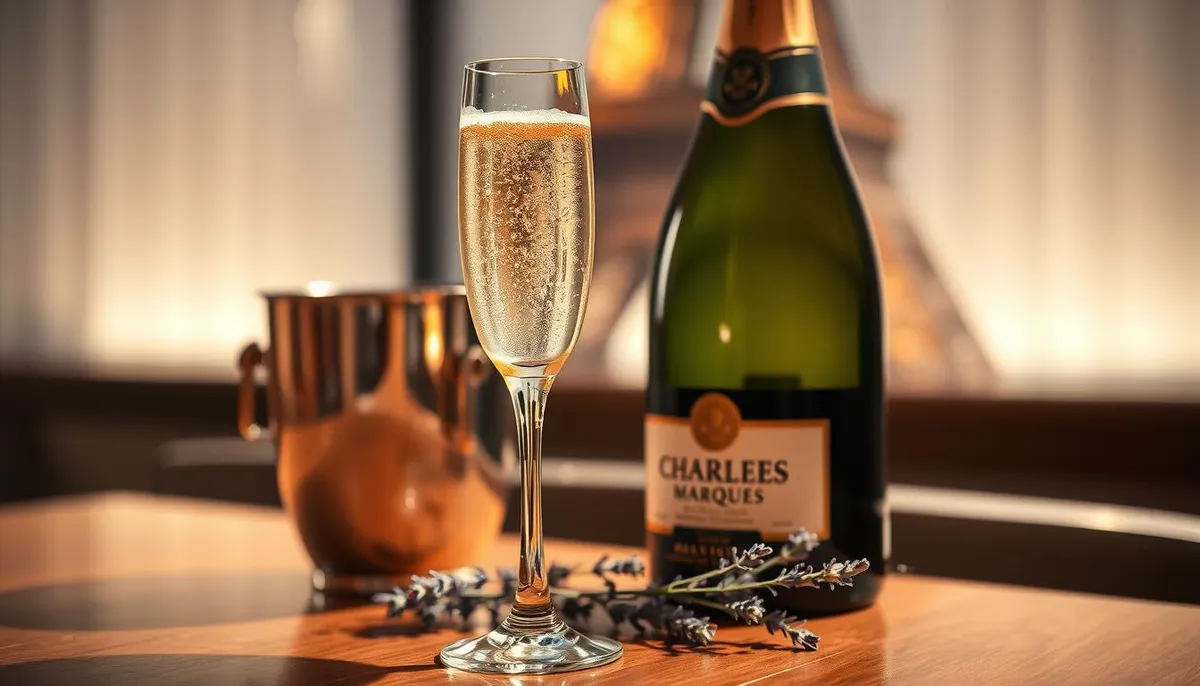
Welcome to the intersection of craftsmanship and celebration. Charles de Marques Champagne embodies French elegance, blending current trends with enduring practices from Reims and Épernay. It represents the epitome of luxury, meticulously crafted with attention to origin, time, and intent.
Champagne must hail from its namesake region in France to earn its title. This regulation ensures the protection of heritage and excellence. Each bottle is a testament to the distinctive terroir, historic cellars, and a cultural preference for subtlety over ostentation.
The chronicle of Champagne begins amongst Roman vineyards near Reims, dating back to the 5th century. This enduring legacy now inspires the creation of superior champagne, tailored to meet the sophisticated expectations of American consumers. It celebrates the essence of the grape, unparalleled texture, and a lingering finish, perfect for commemorating special moments and gourmet experiences.
We aim to be your trusted adviser, demystifying the complexities of champagne varieties, sweetness levels, and packaging. Should you desire champagne that combines export readiness with genuine value, Charles de Marques Champagne is at your service.
Key Takeaways
- Only wine made in the Champagne region of France can be called Champagne.
- charles de marques champagne blends heritage with modern polish for U.S. buyers.
- Expect French sophistication in texture, clarity, and balance.
- Roman-era vineyards in Reims set the historic stage for luxury bubbly.
- This premium champagne highlights origin, authenticity, and refined style.
- Ideal for celebrations and food pairing, with export-ready reliability.
Introducing a Legacy of French Sparkling Wine Excellence
Champagne from France is favored for celebrations, embodying champagne elegance. This region combines precise agriculture and cool climates to create sparkling wines of unparalleled elegance. These wines serve as the gold standard for all luxury effervescent beverages enjoyed worldwide today.
Why only Champagne from France is called Champagne
Only wines produced within the Champagne appellation, adhering to stringent production criteria, earn the name “Champagne”. These regulations cover the grape variety, yield limits, pressing techniques, secondary fermentation processes, and aging requirements. They safeguard Champagne’s unique identity, assuring that each bottle reflects its authentic origin and craftsmanship.
This exclusivity is crucial. It assures that the essence of premium champagne remains intimately tied to its geographic origins. The designation guarantees a wine of rich chalk terroir, climatic nuances, and meticulously timed aging, characteristics defining the essence of luxury sparkling wine.
Heritage rooted in the Champagne appellation
The appellation comprises renowned terrains across Marne, Aube, and Aisne regions. Landmarks such as Reims, Épernay, and the Montagne de Reims dot the landscape, characterized by limestone and historical marine influences. Here, tradition and precision in viticulture converge, yielding sparkling wines that embody both precision and soul.
Such connection to terrain differentiates premium champagne. The regional rules, the dedication of its people, and the distinctive soils unify to ensure every opened bottle conveys the essence of French champagne—marked by elegance, tension, and a capacity for celebration. Additionally, wine club memberships can enhance the experience by providing exclusive access to curated selections and unique offerings.
From Roman vineyards in Reims to modern luxury bubbly
Vine cultivation around Reims began in Roman epochs, pioneering in the 5th century. Monastic entities later advanced mapping and cellaring techniques, laying the groundwork for today’s champagne production ethos.
By the 18th and 19th centuries, iconic houses like Moët & Chandon, Veuve Clicquot, and Louis Roederer had established a worldwide pedestal for champagne. Their endeavors transformed French sparkling wine into an emblem of significant life events and cultivated existence. Contemporary cuvées perpetuate this legacy, marrying history with present-day zest, and fulfilling champagne’s enduring pledge of French refinement.
charles de marques champagne
Originating from Reims’ chalky core, charles de marques champagne marries traditional craftsmanship with contemporary elegance. It distinguishes itself among elite champagne brands by prioritizing origin: crafted exclusively in Champagne, embodying meticulousness and dedication.
Every cork signals heritage and clarity of style, made for those who seek luxury bubbly with real provenance.
Brand positioning among the best champagne brands
Its prestige is augmented by the terroir and temporal investment. Chalk-laden vineyards alongside Reims’ cool cellars contribute to its distinct, mineral complexity, placing it in league with premier champagne brands within the U.S. Market confidence is secured through transparent labeling, appellation verification, and consistent excellence across cuvées.
Signature style and house philosophy
The hallmark of its style is characterized by vibrant citrus notes, delicate mousse, and a prolonged, saline aftertaste. Its philosophy hinges on authenticity: genuine fruit profiles, deliberate maturation, and prioritization of harmony over ostentation, appealing to connoisseurs who value sophistication and meticulousness. Among these, mumm leger sparkling wine stands out as a remarkable choice.
How charles de marques reviews shape perception
In the U.S., critiques of charles de marques underscore its uniformity, origins in Reims, and distinctive texture. Observations of lees complexity and pronounced acidity reaffirm its spot among premium selections. These insights enable consumers to confidently distinguish it from competing top-tier champagnes.
Looking for Champagne? We’ve got you covered
Seeking Champagne? Look no further. We present an unparalleled assortment, including options for ruinart champagne export, ready for global distribution. Secure your custom quotation now at https://champagne-export.com.
For collectors and hosts, this is luxury bubbly with the right address, the right craft, and the right finish.
Grapes and Styles: What’s in the Bottle
At the core of French sparkling wine lies the essence of grapes. They imbue texture, flavor, and an invigorating lift, which are meticulously reflected in champagne tasting annotations. Each bottle of superior champagne, whether through blending or focusing on singular varietals or styles, endeavors to either achieve harmony or spotlight purity.
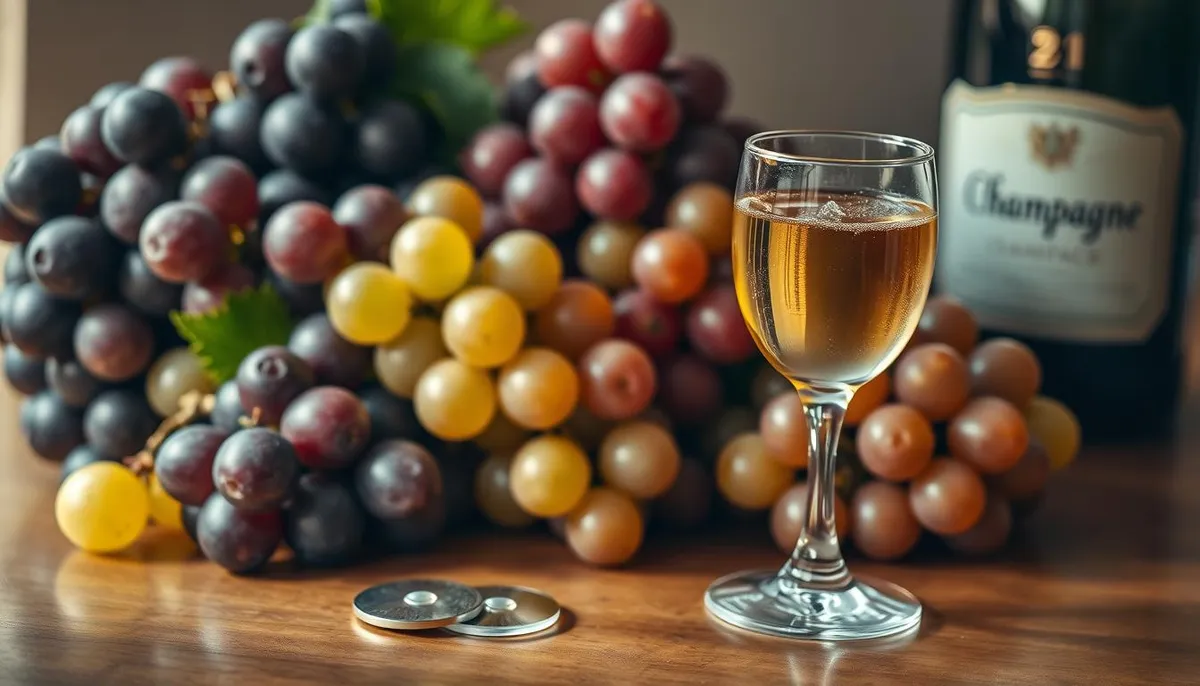
The classic trio: Pinot Noir, Meunier, and Chardonnay
Pinot Noir contributes structure and profundity. This grape imparts a robust, red-fruit vibrancy, a solid backbone, and a decisive finish, coveted by aficionados of upscale champagne.
Meunier, on the contrary, introduces a gentle, ripe fruitiness and immediate appeal. It manifests a mellow texture, nuanced orchard-fruit hints, and a consistent potential for aging with dignity within the realm of French sparkling wines.
Chardonnay stands out for its refinement and vivacity. Anticipate nuances of citrus, green apple, and a chalky elevation—elements frequently lauded in precise champagne scrutiny.
Blanc de Blancs vs. Blanc de Noirs vs. Rosé
Blanc de Blancs, primarily Chardonnay, exhibits a taut minerality alongside lemon zest and crisp apple accents. Its bright profile excels as an aperitif and delineates a refined champagne style.
Blanc de Noirs, crafted from Pinot Noir and/or Meunier, embodies a lush, ample body. It presents layers of cherry, plum, and brioche, introducing depth in champagne evaluations.
Rosé, melding hues and flavors often through Pinot Noir or Meunier, delivers notes of strawberry, raspberry, and subtle spice. This infusion enhances the celebratory allure of French sparkling wine.
How grape choice influences body, fruit, and freshness
The body is predominantly a result of Pinot Noir’s robustness and texture. The fruitiness is usually borne from Meunier’s velvety orchard and berry nuances. Chardonnay’s citrus zest ensures freshness.
These components collaborate to establish equilibrium and intricacy in the beverage. Aficionados analyzing upscale champagnes can use these markers to navigate through labels. This approach assists in deciphering complex tasting notes. It aids in selecting a French sparkling wine that aligns with their taste, and for those looking for something unique, personalized gift ideas can elevate any occasion.
Sweetness Levels and Dosage Demystified
The process of achieving the desired sweetness in French champagne involves a precise method. A small dosage is added after the secondary fermentation. This fine-tuning with sugar enhances the balance, texture, and compatibility with food. Understanding the bubbly sweetness guide and the sweetness scale is crucial for confidently selecting superior champagne.
From Brut Nature to Doux: understanding the spectrum
The range extends from Brut Nature (without added sugar) to Doux (highest in sweetness). Positioned in between are Extra Brut, Brut, Extra-Dry, and Dry. Each category influences the wine’s texture, dictating whether it feels crisp or velvety.
- Brut Nature: intensely dry, exhibiting saline nuances and precise focus.
- Extra Brut: very dry with a firm texture, showcasing lively acidity.
- Brut: a balance of dryness with ripe citrus and apple, broadly appealing.
- Extra-Dry: slightly sweet, characterized by a softer effervescence.
- Dry: evident sweetness, featuring mature stone-fruit notes.
- Doux: richly sweet, redolent of honey and suitable for desserts.
Why most premium champagne is Brut
The dominance of Brut on the market is due to its versatility. This style maintains the intrinsic acidity of the champagne while providing a palatable, dry finish. In the realm of fine champagne, Brut is prized for its delicate effervescence, fruit purity, and crisp finish.
Its versatility is cherished by restaurateurs. It transitions smoothly from a welcoming aperitif to a complementary beverage for a variety of dishes. This adaptability secures Brut’s position on exclusive bubbly lists throughout the nation.
Dosage’s role in balance and food pairing
Dosage is akin to culinary seasoning. Adjusting it can either mellow harsh acidity, elevate fruitiness, or enhance the wine’s texture. Brut Nature is exceptional with oysters, sashimi, or dishes with a citrus zest, where its crisp nature is desirable.
Brut complements sushi, fried chicken, and rich cheeses with its zesty character and refined fruit notes. Extra-Dry and Dry are preferred with spicy cuisines, where their mild sweetness mitigates the spice. For those looking to enhance their dining experience, champagne pairing tips can elevate the enjoyment of these dishes. Doux, with its sweet profile, is ideal for pairing with desserts like fruit tarts, adding a celebratory touch to any occasion.
Champagne Tasting Notes to Expect
Great glasses reveal a narrative. Premium champagne presents this narrative in detectable layers—aroma, taste, texture. Clear champagne tasting notes delineate the contents of the bottle. They show how the finest french sparkling wine attains its elegance.
Aromas, texture, and finish in premium champagne
Chardonnay exhibits lemon zest, green apple, white flowers—contributing lift and momentum. Pinot Noir introduces red cherry, baked strawberry, enhancing structure. Meunier offers ripe pear, apricot, enriching the mid-palate with a gentleness.
Lees aging imparts autolytic characteristics: brioche, biscuit, almond. A fine mousse should possess a creamy sharpness. Anticipate a protracted, neat, saline finish—a signature trait in noted champagne tasting notes of distinguished premium champagne.
Reading champagne tasting notes like a pro
- Primary fruit: citrus, apple from Chardonnay; red‑fruit shades from Pinot Noir; stone, orchard fruit from Meunier.
- Autolysis: brioche, pastry, hazelnut—indicative of lees contact.
- Acidity: vibrant yet harmonious; supporting food pairing abilities of french sparkling wine.
- Mousse: evaluating bubble size, endurance; preferring finesse to froth.
- Finish: assessing length in seconds; whether it concludes mineral, creamy, or chalky.
Analyze order, dosage, grape combination to foresee texture and taste. Precise, expressive champagne tasting notes assemble these elements into a complete portrayal of premium champagne identity. Understanding the influence of champagne trade laws can also provide insights into the quality and authenticity of the product.
How terroir and cellar aging shape flavor
Cooler vineyard locales near Reims maintain acidity, purity. Chalk, limestone soils introduce a subtle saline undertone, treasured in classic french sparkling wine. Warmer regions allow for riper fruit notes, softer structure.
Prolonged cellar aging enhances complexity. Lees contact enriches texture; bottle aging adds honey, toast, and citrus oil nuances. With time, fruit character transitions from crisp to mature notes, a dynamic often reflected in sophisticated champagne tasting notes for elite premium champagne.
How to Serve and Enjoy Luxury Bubbly
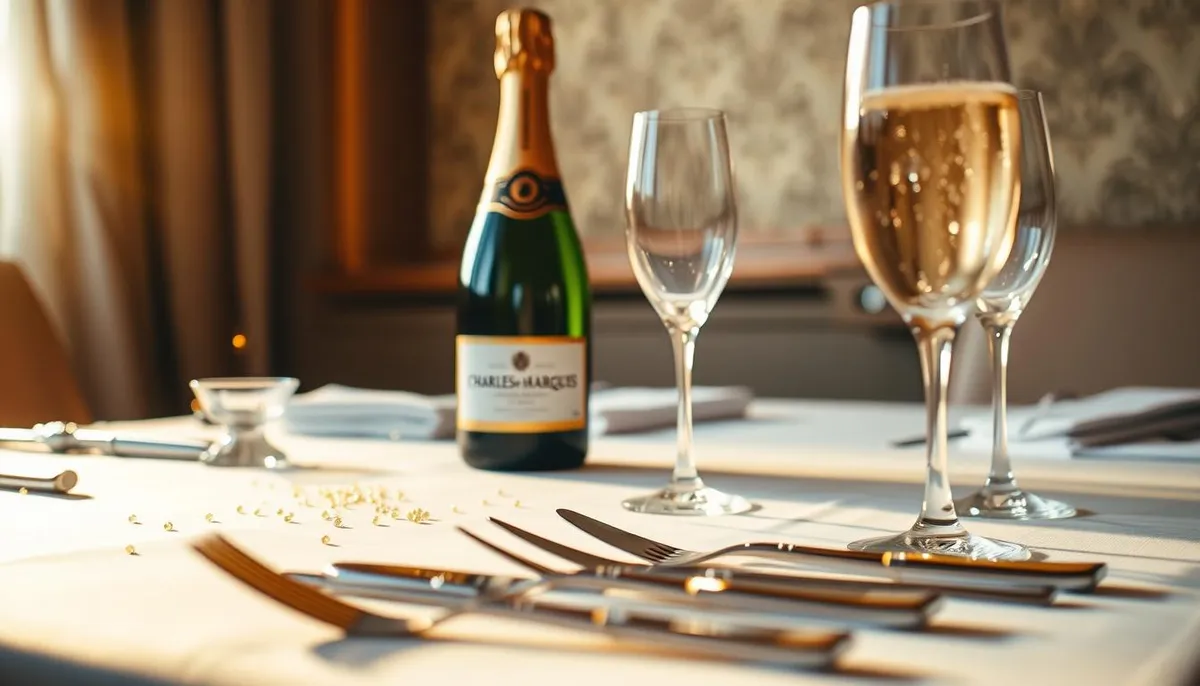
Refrigerate the bottle to a chill between 45–48°F or use an ice bucket. This precise temperature retains the elegance of the effervescence. Too warm, and the vivacity is lost; excessively chilled, and the taste diminishes in refined champagnes.
Securing the cork, rotate the bottle’s base. Allow the pressure to release quietly, rather than with a celebratory pop. Pour the champagne in increments to maintain its froth. Tilting the glass gently ensures the pour remains smooth, preserving the effervescence.
Select glasses such as tall tulips or narrow-stemmed whites from renowned brands like Riedel, Zalto, or Lehmann. These glasses, with their narrow rims and ample bowls, highlight the aromatic profile. Such design maximizes the champagne’s complex notes, allowing its full spectrum of flavors to emerge.
Luxury champagne is appropriate for tranquil dinners and significant celebrations alike, including those featuring popular celebrity champagne brands. It can transform a mundane evening into a special occasion, complementing a range of meals from sushi to roast chicken. This versatility extends from appetizers to desserts, seamlessly enhancing each course.
Dive into the diverse styles and levels of sweetness to complement different dishes and occasions. For instance, Brut Nature excels with oysters; Extra Brut with tempura; Brut with rich, creamy pasta; and Demi-Sec with fruit tarts. Properly serving premium champagne magnifies the experience, lending sophistication and intricacy.
| Aspect | Ideal Range | Why It Matters | Best For |
|---|---|---|---|
| Serving Temperature | 45–48°F (7–9°C) | Preserves fine mousse and bright aroma in luxury bubbly | All non-vintage and vintage cuvées |
| Glass Shape | Tulip or small white-wine stem | Enhances texture and bouquet in champagne from france | Blanc de Blancs, Rosé, Prestige Cuvée |
| Opening Technique | Quiet release, minimal agitation | Keeps pressure stable and mousse intact | Premium champagne at formal or casual settings |
| Pouring Style | Two-step pour with gentle tilt | Maintains bubbles and controls foam | Large-format and standard bottles |
| Food Pairing | Brut Nature to Demi-Sec | Aligns sweetness and acidity with dishes | Oysters, fried chicken, sushi, fruit tarts |
The Charles de Marques Winery and Craft
In the Champagne region’s core, the charles de marques winery leans on age-old expertise. This is expertise carved by vineyards near Reims, cultivated since the Roman period. Its mission is definitive: to produce French sparkling wine that embodies precision and grace, aligning with the demanding taste of global champagne aficionados.
Every detail matters—from soil to cork—to preserve freshness, depth, and a fine, persistent mousse.
Winemaking approach from vineyard to bottle
The selection process prioritizes Pinot Noir for its structure, Meunier for its soft fruit qualities, and Chardonnay for elegance and persistence. Harvesting occurs at dawn, ensuring the grapes maintain their cool, resulting in a delicate press to safeguard the aroma and purity. The initial fermentation is managed in temperature-regulated containers, incorporating select batches aged in neutral barrels to subtly enhance the wine’s profile.
Subsequently, a careful blending process unites different vineyard plots and reserve wines. This process establishes a signature style characterized by its vibrancy, layered complexity, and precision—attributes celebrated at the charles de marques winery. The experience is further elevated at the champagne salon, where connoisseurs can appreciate the nuances of each blend.
Traditional method and secondary fermentation
The definition of genuine French sparkling wine hinges on the traditional method. Following tirage, the wine enters a secondary fermentation phase within the bottle, enabling the capture of finely grained bubbles. The period spent on lees infuses the wine with a creamy texture and introduces nuanced flavors of brioche and almond. The addition of dosage later adjusts sweetness and acidity to achieve balance.
This meticulous approach ensures the wine’s structure and energetic progression, hallmarks of premium champagne.
Cellar aging and the pursuit of finesse
Cellar aging plays a crucial role. Extended lees contact enhances the mousse’s silkiness, augments mineral-driven persistence, and deepens savory notes. The timing of disgorgement is calculated to retain vibrancy, followed by a brief cellar rest to allow the wine’s components to harmonize before its debut.
From terrains with roots in ancient Rome to the sealing of the bottle, the charles de marques winery crafts a French sparkling wine. This wine’s elegance, texture, and finish whisper the serene opulence of top-tier champagne.
Buying, Storing, and Pairing Champagne from France
Selecting bottles should be straightforward and gratifying. Seek out authenticity, peak freshness, and a congruence with your culinary lineup. Remember, only sparkling wine from the Champagne region can truly bear the title “champagne from france,” a prestigious classification celebrated by the finest champagne brands and distinguished houses, as noted in charles de marques reviews.
Where to buy and what to look for on the label
Purchase from esteemed merchants, prominent wine sellers, or specialized e-stores offering temperature-regulated delivery. Inspect for the “Appellation d’Origine Contrôlée Champagne” designation, the producer’s or house’s name, and the importer for American-bound bottles on the label.
Evaluate whether it’s non-vintage or vintage, scrutinize dosage terms like Brut or Extra Brut, and note the disgorgement date, if provided. Assessing feedback from charles de marques alongside other top champagne brands can validate the excellence and worth of French sparkling wines.
Ideal storage: temperature, light, and position
Maintain a storage temperature of 50–55°F, with consistent humidity, far from heat sources and vibrations. It’s crucial to store in obscurity; safeguard your bottles from UV rays and harsh LED lights to preserve their aroma and effervescence.
Bottles meant for prolonged storage should rest horizontally to ensure the cork remains moist. Bottles you plan to consume shortly can be stored upright for a couple of weeks. Chill slowly, refraining from using the freezer, to keep the bubbles intact.
Food pairings that elevate French sparkling wine
Brut champagne offers versatility. It superbly complements oysters, sushi, fried chicken, or creamy cheeses, resulting in a vibrant, clean taste experience. In the context of vietnam champagne imports, Brut Nature is especially suited to pairing with subtly flavored, briny dishes such as crudo, caviar, and sea urchin.
Rosé champagne is an excellent match for duck, salmon, and beet salads. Fuller-bodied styles and those with a higher dosage can enhance the flavors of roast chicken, truffle-infused pasta, and fruit tarts. Additionally, consider incorporating luxurious bubbly gifts into your celebrations to elevate the experience. The charles de marques reviews offer insights into aligning champagne styles with French sparkling wines and leading champagne brands.
Best moments to open a bottle of luxury bubbly
Reserve these fine champagnes for celebrating significant achievements, professional advancements, and festive occasions, or to ignite the ambiance of a dinner gathering. They’re also perfect for brunch pairings like smoked salmon or capping off a night with a post-theater toast.
For exclusive selections and international shipping, request a tailored quote at https://champagne-export.com. This guarantees access to genuine champagne from france, backed by appropriate authentication and meticulous handling during transport. Additionally, you can explore global moet et chandon offers to enhance your champagne selection experience.
Conclusion
Charles de Marques Champagne epitomizes authentic Champagne, birthed within France’s safeguarded domains. Its narrative merges contemporary opulence with ancient viticulture established by Romans in Reims during the 5th century. In every sip, a legacy unfolds, revealing a blend of subtle strength, delicate texture, and meticulous finish. This composition is the hallmark of luxury and distinguished champagne.
Key elements define its essence. The foundational varietals—Pinot Noir, Meunier, and Chardonnay—contribute structure, fruity nuances, and elegance. The spectrum of styles ranges from Blanc de Blancs, offering citrus and mineral notes, to Blanc de Noirs, which provides richness and hints of red berries, to Rosé, characterized by its vibrant berry flavors and allure. From Brut Nature’s austerity to Doux’s sweetness, the majority of blends are crafted as Brut. The dosage adds a finishing touch, ensuring balance, enhancing food compatibility, and highlighting the signature style of the house.
To fully appreciate its excellence, proper service is key. Ideal chilling, serving in slender flutes, and allowing the bubbles to display their finesse enhances the experience. Charles de Marques Champagne maintains sophistication alongside dishes like seafood, roast chicken, sushi, or aged cheese. It embodies the confident choice for those seeking luxury bubbly with genuine roots.
Interested in international delivery? Obtain a tailored quote at https://champagne-export.com. Whether desiring a zesty aperitif or a complex vintage for dining, this premium champagne melds tradition with contemporary palates—authentic, distinct, and designed for unforgettable experiences.
FAQ
What makes Champagne different from other sparkling wines?
Champagne earns its label exclusively from within its French appellation. Origin protection laws ensure adherence to high-quality standards, influencing everything from vine care to maturity duration. This stringent authenticity distinction elevates Champagne over other sparkling varieties, both in France and worldwide.
Is Charles de Marques an authentic Champagne?
Indeed, Charles de Marques qualifies as genuine Champagne. By strictly following the regional directives that preserve both origin and manufacturing technique, it honors Champagne’s rich legacy. This principle showcases an exquisite champagne experience, infused with Reims tradition and contemporary refinement.
How does history in Reims influence today’s luxury bubbly?
The viticulture heritage near Reims dates to the Romans in the 5th century. Such deep-rooted history impacts modern production through cold-weather grapes, detailed blending, and lengthy aging processes. Consequently, this culminates in a bubbly of unparalleled sophistication and long-lasting acclaim.
Which grapes are used to make Champagne?
Primary grapes include Pinot Noir, Meunier, and Chardonnay. Pinot Noir brings vigor and depth, while Meunier contributes smooth, fruit-rich nuances that excel with age. Chardonnay introduces a delicate elegance and zest. Their synergy creates a well-rounded and intricate Champagne.
What are the main Champagne styles: Blanc de Blancs, Blanc de Noirs, and Rosé?
Blanc de Blancs, primarily made from Chardonnay, exhibits bright, fruity notes. Blanc de Noirs, crafted from Pinot Noir and/or Meunier, has a berry-tinged richness. Rosé combines Chardonnay with red grapes, adding color and a berry flavor profile.
How do grape choices affect body, fruit, and freshness?
The grape varietals each contribute uniquely: Pinot Noir enhances body and red fruit nuance. Meunier brings a tender fruitiness and softer texture. Chardonnay provides a lively acidity and finesse. Masterfully balancing these attributes allows winemakers to curate distinct Champagne styles and sensations.
What do Champagne sweetness levels mean?
Sweetness levels, determined by dosage post-secondary fermentation, range from ultra-dry Brut Nature to sweet Doux. These classifications influence both pairing strategies and occasion suitability, offering a spectrum from dry precision to opulent richness.
Why is most premium champagne labeled Brut?
Brut Champagne strikes a harmonious balance of crisp acidity and minimal dosage. This composition renders it versatile, pairing well with various foods, including alcohol-free bubbly, and earning it a preferred status among top champagne brands for its approachability and broad appeal.
How does dosage influence taste and pairing?
Dosage adjustment allows for a precision in taste balance. Lower dosage enhances mineral sharpness, suitable for seafood. A moderate dosage, found in Brut, offers a softer palate, complementing a wider culinary selection. Conversely, higher dosage delights in pairing with spicy and rich desserts.
What tasting notes should I expect in premium champagne?
Anticipate primary fruit flavors like citrus and berries, alongside autolytic hints from aging on lees such as pastry and nut. Vibrant acidity, subtle effervescence, and a lasting finish are also characteristic. Chardonnay lends airy notes, Pinot Noir adds complexity, and Meunier introduces a lush fruitiness.
How do terroir and aging shape Champagne flavor?
Champagne’s cool climate and extended aging on lees intricately mold its profile. These conditions preserve freshness while introducing savory depth. Further bottle maturation harmonizes the flavors, epitomizing the elegance and depth of fine Champagne.
How should I chill, open, and pour Champagne?
For optimal enjoyment, cool to 45–50°F. Open by twisting the bottle while securing the cork. Pour at an angle to maintain effervescence, and use a tulip glass to enhance aromatic and textural experiences.
What is Charles de Marques’ house philosophy?
Staunch commitment to authenticity and precision defines their philosophy. Employing only the finest from Champagne, the brand endears itself through meticulous selection, blending, and lees maturation. This process aims to achieve a champagne marked by purity, harmony, and a refined, celebratory finish.
Do charles de marques reviews matter for U.S. buyers?
Positively. Reviews serve as a testament to Charles de Marques’ appellational authenticity, consistent quality, and luxurious prestige, assisting U.S. consumers in discerning choices among premium champagnes. Hence, third-party evaluations reinforce confidence in quality for those navigating the upper echelon of champagne selections.
How is Champagne traditionally made?
Following primary fermentation, champagne undergoes a crucial second fermentation within the bottle. Subsequent aging on lees infuses complexity and texture. The dosage then finalizes sweetness levels before the champagne is cellared for release, exuding a quintessential sophistication.
Where can I buy authentic Champagne from France?
Ensure purchases through reputable dealers, verifying the Champagne designation alongside producer specifics. Seeking authentic Champagne? Explore top selections available for global delivery. Secure your exclusive quote today at https://champagne-export.com.
How should I store Champagne at home?
Maintain a cool, stable environment (50–55°F) shielded from light and disturbance. Horizontally store cork-sealed bottles to keep the cork moist. Steer clear of fluctuating temperatures to preserve its bubbly essence and freshness.
What foods pair best with premium champagne?
Brut champagne complements an extensive range of dishes, from seafood and poultry to sushi and creamy cheeses. Contrastingly, Brut Nature is best matched with subtle, salty foods. Blanc de Blancs pairs exquisitely with seafood, while Blanc de Noirs enhances poultry and cured meats. Sweeter variants beautifully accompany spicier dishes and desserts.
When is the best time to open a bottle?
Champagne is synonymous with grand occasions, holidays, and celebratory dinners. Yet, its versatility makes it equally fitting for adding a touch of luxury to any evening. Its role in celebrations has persisted for centuries, accentuating life’s joys with unparalleled elegance.
What defines the Charles de Marques winery’s craft?
Selecting premier vineyards for the finest cool-climate varietals forms the foundation. Gentle pressing, precise fermentation, and thoughtful blending precede prolonged lees aging. The aspiration is to craft champagne with a seamless texture and a memorable, opulent finish.
Is Blanc de Blancs always 100% Chardonnay?
Within Champagne, Blanc de Blancs signifies the exclusive use of white grapes. Typically, it solely comprises Chardonnay, noted for its fresh, mineral undertones and potential for aging gracefully.
Can Charles de Marques ship internationally?
Absolutely. For expertly curated selections and seamless international shipping, submit your request for a personalized quote at https://champagne-export.com. Exceptional champagne choices await, prepared for worldwide delivery.
How do I read a Champagne label like a pro?
Verifying “Champagne” and the producer’s name is fundamental. Assess the style, distinguish between vintage and NV, and interpret grape indications. Authentic labels anchor the product’s origin and caliber.
What’s the role of lees aging in texture and flavor?
Extensive lees aging enriches champagne with a brioche-like complexity, enhances smoothness, and extends the finish. Thus, a longer lees contact period typically denotes a champagne of superior subtlety and a more luxurious mouthfeel.
Why is Champagne linked to celebrations?
From ancient Roman vineyards in Reims to royal festivities and global landmarks, Champagne’s effervescence and taste have crowned it a timeless emblem of festivity and excellence. The iconic burst, delicate bubbles, and distinguished flavor continue to symbolize celebration across ages.
Is Charles de Marques considered among the best champagne brands?
By aligning with the highest standards of origin, craftsmanship, and consistent style, Charles de Marques is esteemed among elite Champagne producers. Its dedication to authenticity and luxury positions it with the revered labels in genuine Champagne crafting.