Looking to ship premium wine overseas? This short guide makes complex labeling and export steps easy to follow. We focus on clear, practical advice so your product moves quickly from cellar to shelf.
The Federal Alcohol Administration Act sets rules for wine sold in the United States. Importers must show a valid brand name and the bottling company’s physical address on every label. These details help avoid delays and keep your company compliant.
We provide concise information and hands-on support to help you meet labeling requirements and verify product claims. Our team simplifies how you manage brand, address, and labeling details.

Looking for Champagne? We’ve got you covered with the finest selections, ready to be exported worldwide. Our expertise in us champagne export ensures that you receive the best service. Request your personalized quote today on https://champagne-export.com to streamline your labeling process.
Key Takeaways
- The FAA Act requires clear brand and bottler address information on wine labels for the United States market.
- Accurate labeling prevents customs delays and protects product claims.
- We offer practical information to meet international labeling requirements.
- Our team helps manage your company’s brand and address details efficiently.
- Request a personalized quote at https://champagne-export.com to simplify export steps.
Understanding Champagne Label Requirements Export Regulations
Rules for sending wine across borders vary by destination and alcohol content. Knowing the right information helps avoid customs holds and extra costs.
Regulations differ if a product contains 7 percent or more alcohol by volume versus less than 7 percent. This one threshold changes which federal parts apply and what paperwork you must include.
All imported containers must display a country of origin statement under 19 CFR part 11, part 12, and part 134. Clear origin details let customs verify your product quickly and keep shipments moving.
Before shipping, verify the alcohol by volume for each item and confirm packaging meets the destination country’s rules this year. Accurate labeling information and secure packaging are critical to pass inspections.
- Check each country’s specific regulations before you pack.
- Confirm country origin is visible on every container.
- Measure alcohol volume to see which legal part applies.
- Use proper packaging and clear label information for smooth clearance.
Our guide walks you through these steps so your wine products meet U.S. and international standards with less stress, including options for champagne delivery maldives.
Mandatory Information for Wine Labels
Every bottle shipped to U.S. shores must carry specific facts that help buyers and regulators identify the product. These entries protect consumers and speed customs clearance.
Per 27 CFR 4.32 and 4.34, labels must show the brand name, the class or type designation, and the net contents. This form of identification makes retail display and point-of-sale checks straightforward.
Appellation of Origin
The appellation of origin is required in certain cases to verify the production region. Include the production area when it affects the wine’s quality or legal status.
Net Contents and Brand Name
Every product must list net contents clearly and display the brand. Accurate alcohol content and a country origin statement are also mandatory for each case sent to a new country.
- State the brand and net content visibly for retail consumers.
- Include appellation to verify production and quality.
- List alcohol content and country origin on every container.
- Refer to our information page for correct claims and producer address details.
Using the correct form and type designations ensures your wine products meet legal standards and reach shelves without delay.
Navigating TTB Approval and COLA Procedures
Before you remove wine from customs for sale, confirm if the TTB requires a Certificate of Label Approval (COLA). The TTB issues a COLA for imported wine that contains 7 percent or more alcohol by volume. This step protects your brand and helps prevent delays.
Bulk container exemptions can apply when wine arrives in containers not intended for retail. Such shipments may be exempt from the COLA at importation, but you must document that the product stays in bulk form.
What to check before applying
Ensure your labeling and packaging meet federal rules before you submit the COLA form. Confirm alcohol volume, packaging type, and any product claims are accurate.
- Importers must have a COLA to commercialize wine after customs release in the United States.
- Our guide gives clear details on the TTB approval path and bulk container exemptions.
- Visit our resource page for step‑by‑step instructions on submitting the form and managing brand claims.
Packaging Standards for International Shipments
Shipping wine across borders demands packaging that meets both safety and phytosanitary rules. Glass bottles must meet anti‑breakage standards and sit on pallets that follow international phytosanitary controls.
Declare composite goods correctly. If packaging value exceeds 10 percent, list HS 2204 for wine and include the packaging code. This helps customs identify the product and its country origin fast.
Palletize every case to ISPM 15 and your destination country’s rules. Secure packaging reduces damage and keeps export paperwork accurate during inspections.
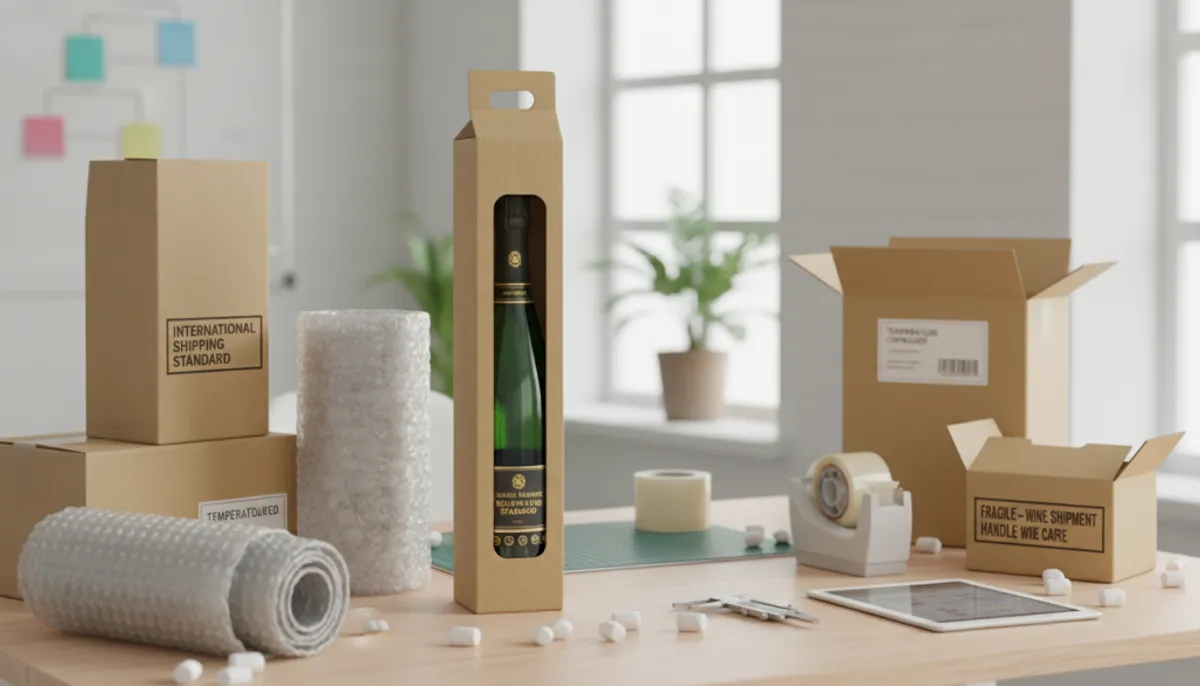
- Use recyclable materials that meet the 2025 regulations and anti‑breakage tests.
- Confirm labels and labeling are durable for long transit and varying volume handling.
- Verify each case and pallet against the importing country requirements before shipment.
- We assist in checking packaging, product protection, and documentation for smooth export clearance.
Handling Alcohol Content and Health Warnings
Clear statements about alcohol content and health warnings keep shipments moving and consumers informed. These entries are required on wine sold in the United States and must be easy to read.
Alcohol by Volume Thresholds
List the alcohol by volume (ABV) on every container. The ABV figure determines which federal part applies and affects the TTB review process.
Health Warning Statement Requirements
The Alcoholic Beverage Labeling Act of 1988 mandates a specific health warning statement. Place it where consumers can quickly find it and keep the wording exact.
Sulfite Declarations
Declare sulfites when levels exceed 10 mg/L. This addition protects sensitive consumers and satisfies United States labeling rules.
- Always include ABV, the health warning, and sulfite info on your wine products.
- Keep brand and address placement clear on every product label to avoid inspection delays.
- Our guide offers step‑by‑step information to help you meet labeling and country origin regulations.
Documentation and Proof of Exportation
Accurate proof of exportation helps wineries claim tax relief and avoid audits. Keep clear commercial records for every shipment to the United States.
Bonded wine premises owners must file TTB F 5120.24 to claim a drawback on excise taxes for exported wine. File this form promptly and keep a copy with your export file.
Acceptable proof includes ocean bills of lading, purchase orders, commercial invoices, and proof of payment. Each case must link to documentation that shows the product left the country.
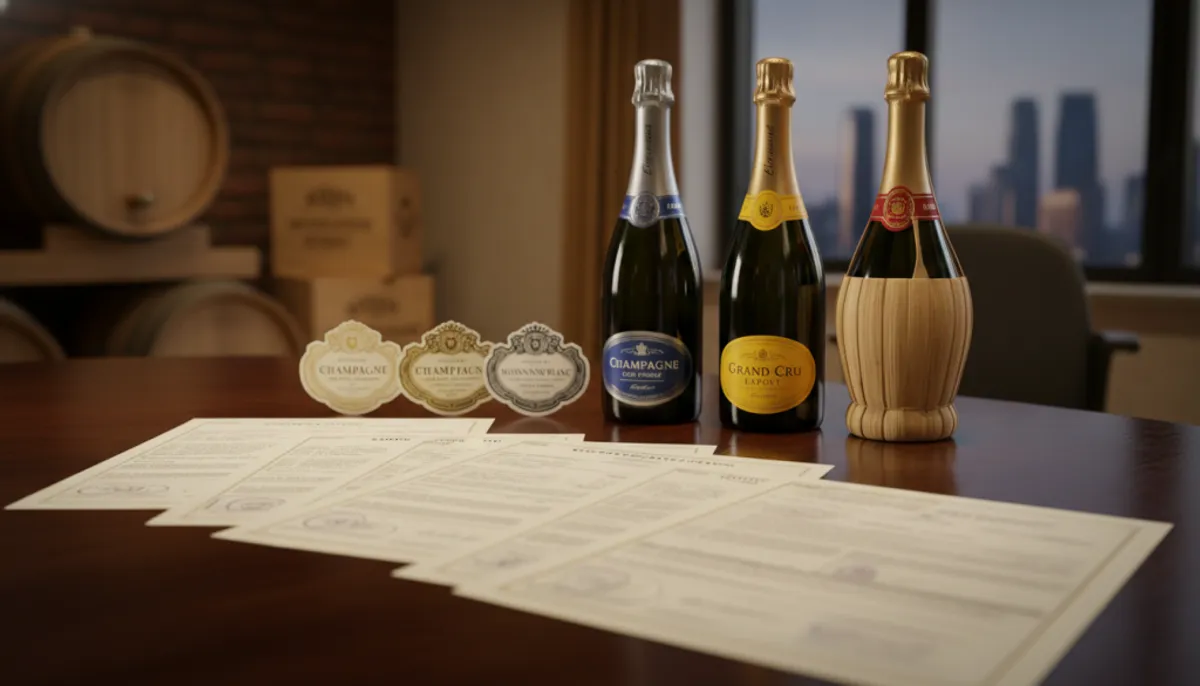
Your paperwork must verify alcohol content, wine type, and volume for each case. These details support claims on the form and satisfy United States regulators.
- Keep one export folder per shipment year to track claims and audits.
- Match each case number to its commercial invoice and bill of lading.
- Retain proof of payment to strengthen your export record.
| Document | Purpose | Who files |
|---|---|---|
| TTB F 5120.24 | Claim excise tax drawback | Bonded premises proprietor |
| Bill of Lading | Prove shipment left the country | Carrier / Exporter |
| Commercial Invoice | Shows buyer, price, and product details | Exporter |
| Proof of Payment | Confirms transaction and date | Exporter / Bank |
| Alcohol Analysis | Verifies alcohol content and volume | Producer / Lab |
We help manage form submission and records so your wine products meet labeling and export rules for the United States. Proper record-keeping makes claiming drawbacks straightforward and defends against audits.
Conclusion
A simple checklist of brand, alcohol content, and origin can prevent costly delays at U.S. ports.
Keep your wine products consistent from production to shelf. Use clear labels and accurate alcohol volume on every case to meet united states standards.
Good packaging and exact labeling speed inspections. Complete each form and verify claims so your product clears customs fast.
Our team handles the paperwork and packaging checks to protect your brand and company reputation. For a champagne purchase for birthdays, request a personalized quote at https://champagne-export.com to start a smoother export path today.