Looking for clear guidance on cross-border alcohol trade? This introduction lays out the essentials for moving premium wine and spirits through the russian federation system. It highlights the key legal change signed on 2 July 2021 and explains how that amendment shapes duties, stamps, and labeling for imported goods.

Our team helps importers navigate customs, duties, and retail requirements so products reach consumers with full compliance. We cover beer, cognac, whiskey, and other beverages as part of a complete service that manages production chain details and materials sourcing.
Want tailored support? Discover top selections and request your personalized quote today at the recommended supplier; we simplify documentation and help preserve product value in the Russian market for years to come.
Key Takeaways
- Major amendments to federal alcohol law were signed on 2 July 2021 and affect duties and labeling.
- Customs clearance and stamps are central to successful import and retail placement.
- Importers should align production, packaging, and paperwork with current regulation updates.
- Our services cover beer, wine, spirits, and other beverages as part of global market entry.
- Requesting a personalized quote helps secure supply chains and manage turnover effectively.
Understanding the Current Legal Landscape for Importing Champagne into Russia
A key 2021 amendment changed classification and controls for sparkling wines and related spirits in the russian federation. This shift redefined how alcohol goods are stamped, taxed, and tracked at border checkpoints.
The change affects foreign producers and manufacturers directly. French wines now make up roughly 5% of the russian market, partly due to higher duty and a 23% drop in French production in 2024, according to OIV.
Legislative Changes for Sparkling Wines
The amendments separate sparkling wine categories and add new labeling and duty rules. Exporters and distributors must adapt packaging, documentation, and volume plans.
Impact on Foreign Producers
- Foreign producers face distinct compliance steps to enter local channels.
- Reduced French production affects availability of premium products in several countries.
- Market turnover and duty shifts require updated commercial strategies.
| Aspect | Change | Practical Effect |
|---|---|---|
| Legal amendment | 2 July 2021 federal law update | New classification, labeling, and duty rules |
| Market share | French wines ~5% | Lower presence; importers need alternatives |
| Production | OIV: -23% in 2024 | Scarcity of premium wines; price pressure |
| Compliance | Distinct rules for sparkling and spirits | Higher documentation and duty planning |
Looking for Champagne? We’ve got you covered. Discover fine selections and request a personalized quote today at https://champagne-export.com. Our team provides timely news and information to help manufacturers adapt to turnover rules and keep consumer trust.
Licensing and Regulatory Compliance for Alcohol Importers
Before you move any bottles, confirm that your company meets charter capital and warehouse rules for high-strength products. These steps help avoid delays at border checkpoints and speed retail placement.

Charter Capital and Storage Requirements
Key funding rules: Organizations handling alcohol with over 15% ethyl alcohol must hold at least 10,000,000 rubles in paid-up charter capital. This rule protects consumers and stabilizes the market for wine, cognac, and other premium products.
License fee: The state duty for an alcohol turnover license is 800,000 rubles (about $10,200). Budget for this cost when planning imports and retail launches.
- Law 171-FZ requires importers to own or lease storage facilities for at least one year.
- Secure stamped documentation and register facilities to meet regulation and avoid fines.
- Plan for duty and stamp timing to protect product value during transit and storage.
- Additionally, understanding bulgarian import regulations is crucial for importers looking to expand their market presence.
| Requirement | Amount / Period | Who it affects | Practical tip |
|---|---|---|---|
| Charter capital | 10,000,000 rubles | Importers of >15% alcohol | Verify capital before licensing |
| License fee (state duty) | 800,000 rubles | All alcohol traders | Include in launch budget |
| Storage requirement | Owned/leased for 1 year | Warehouses and distributors | Register under Law 171-FZ |
We provide clear information and hands-on support to help producers, importers, and retailers meet these rules. Looking for Champagne? We’ve got you covered. Discover the finest selections, ready to be exported anywhere in the world. Request your personalized quote today on https://champagne-export.com.
Navigating Customs Procedures and Border Checkpoints
Clearing customs for alcohol shipments takes planning and strict adherence to designated checkpoints. The russian federation requires that all alcohol products pass through specific border posts and specialized customs excise points. Failure to follow the list can delay goods and raise costs. Understanding new zealand customs can also provide valuable insights for international shipping practices.
Connect to EGAIS — every importer must register operations in the EGAIS system. Each liter of wine, cognac, or beer must be logged. Fines for violations range from 50,000 to 100,000 rubles.
- Follow the approved checkpoints for smooth clearance of imported alcohol products.
- We help producers and importers link to EGAIS and log liters correctly to avoid penalties.
- Ensure production and packaging meet EAEU 047/2018 so products clear certification fast.
| Requirement | Impact | Tip |
|---|---|---|
| Designated checkpoints | Mandatory routing of goods | Plan routes with customs brokers |
| EGAIS registration | Traceability of liters | Automate reporting to reduce errors |
| EAEU 047/2018 | Certification for beverages | Confirm labels and specs before export |
Looking for Champagne? We’ve got you covered. Discover the finest selections, ready to be exported anywhere in the world. Request your personalized quote today on https://champagne-export.com.
Financial Obligations: Duties, Taxes, and Excise Rates
Understanding the full cost picture keeps your margins healthy and prevents surprises at the border.
The russian federation applies specific excise and VAT rules for beverage imports and other alcohol products, including compliance with italian customs regulations. From January 1 to December 31, 2025, the excise rate for wines (excluding fortified) is 113 rubles per liter.
VAT is charged at 20%. It is calculated on the customs value plus import duties and excise taxes. Goods from designated “unfriendly states” face extra import duties until December 31, 2025.
Understanding Import Customs Duties
Customs duties vary by country of origin and product classification. Duty adds to the base customs value and raises the taxable amount for VAT and excise.
Calculating VAT and Excise
To get total landed cost, add customs duty, the excise per liter, and then apply 20% VAT on that sum. This affects retail pricing and turnover planning throughout the year.
- Quick facts: 20% VAT and 113 rubles per liter excise for wine in 2025.
- We calculate total import value and guide producers on duty timing and license costs.
- Our team explains how taxes affect retail value for beer, whiskey, and cognac.
- Looking for Champagne? We’ve got you covered. Request a personalized quote today at https://champagne-export.com.
| Charge | Rate / Note | Impact |
|---|---|---|
| Excise (wine) | 113 RUB / liter (2025) | Raises unit cost for wines |
| VAT | 20% on customs value + duties + excise | Applied at clearance; affects retail price |
| Additional duties | Extra for some countries until 31.12.2025 | Higher import cost for affected goods |
Mandatory Labeling and Digital Tracking Requirements
Every unit must carry secure identifiers that prove origin, authenticity, and legal clearance.
Federal special stamps (FSS) from Goznak are mandatory for most alcohol products and must be acquired before imports arrive.
Digital marking via Chestny Znak requires a Data Matrix code on each bottle with a unique crypto identifier. This applies to wine, cognac, beer, and other beverages.
- Labels must follow EAEU 047/2018 and include Russian-language manufacturer, importer, and content information. Additionally, compliance with champagne labeling laws is essential to ensure proper market entry.
- We help producers and manufacturers obtain stamps and register codes so goods clear checkpoints smoothly.
- Tracking codes protect product value and support turnover reporting throughout the year.
| Requirement | Who it affects | Practical tip |
|---|---|---|
| Federal special stamps (FSS) | Wine, cognac, beer, most alcohol products | Order early from Goznak to avoid delays |
| Chestny Znak Data Matrix | Each retail unit | Assign crypto IDs and test scans before shipment |
| EAEU 047/2018 labeling | Imported alcohol and domestic goods | Include Russian-language info for importer and contents |
Looking for Champagne? We’ve got you covered. Discover the finest selections, ready to be exported anywhere in the world. Request your personalized quote today on https://champagne-export.com.
Personal Import Limits and Travel Regulations
Travelers should know the duty-free limits that apply to personal alcohol brought across borders.
Adults may carry up to 3 liters of alcohol duty-free, provided they are over 18 years old. This allowance covers wines, beer, cognac, whiskey and similar beverages for personal use.
The cash limit is 10,000 USD. Amounts above that must be declared to customs. For air arrivals, personal goods must not exceed 10,000 EUR in value or 50 kg in weight.
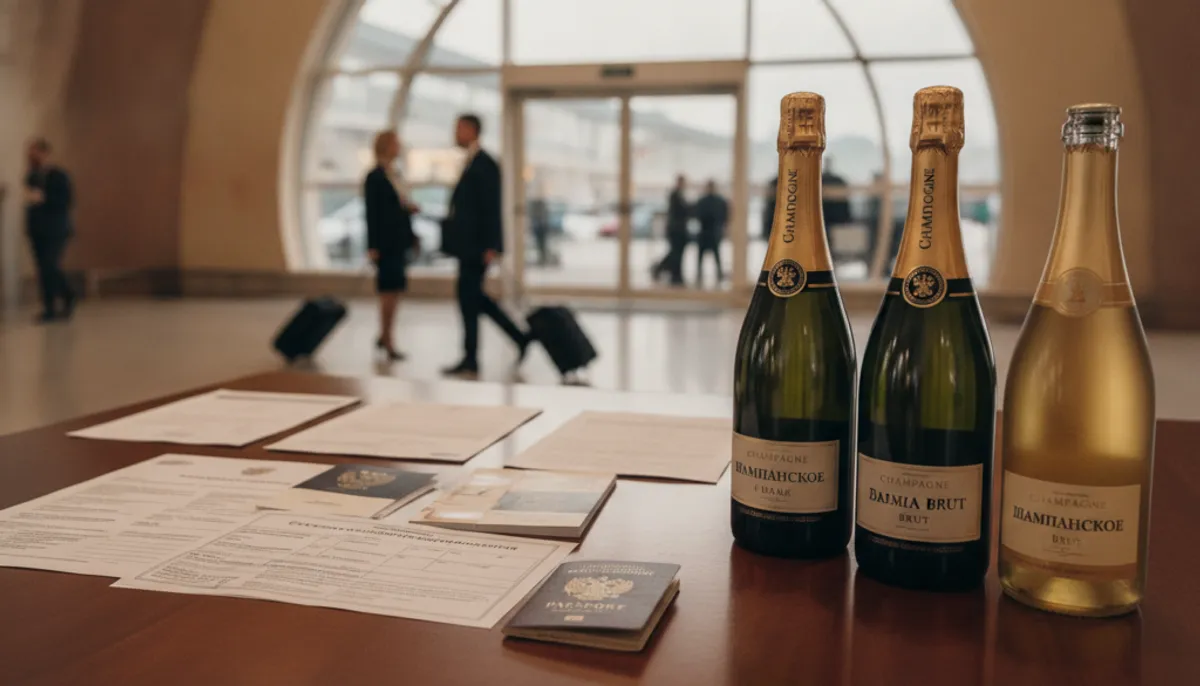
Simple planning avoids surprise duties and delays. Keep receipts and a clear list of products you carry. If you exceed allowances, expect duties and longer inspections.
- Know the 3-liter duty-free rule for alcohol products.
- Declare currency over 10,000 USD to avoid penalties.
- Track value and weight limits for air travel to stay compliant year-round.
- Contact specialists for tailored information and help with imports and customs paperwork.
| Item | Limit | Applies to |
|---|---|---|
| Alcohol | 3 liters duty-free | Personal goods, travelers over 18 |
| Cash | 10,000 USD declaration | All travelers |
| Air arrivals (value / weight) | 10,000 EUR / 50 kg | Personal imports by air |
Looking for Champagne? We’ve got you covered. Discover the finest selections, ready to be exported anywhere in the world. Request your personalized quote today on https://champagne-export.com.
Sourcing Premium Selections for Global Export
Sourcing top-tier selections for global export starts with matching product quality to each market’s taste and rules. This step protects brand value and reduces surprises at borders.
We help importers and manufacturers secure the finest wine, cognac, whiskey, and beer selections. Our team vets producers, confirms licenses, and reviews production and materials to meet retailer specs.
- Manage the full order path: production, stamps, license checks, and final delivery.
- Provide clear information on duties, liters tracking, and compliance for each country.
- Source high-quality materials so your products stay competitive through the year.
- Support producers in reaching the right consumer segments in the russian market and beyond.
| Step | What we do | Benefit |
|---|---|---|
| Order & production | Confirm specs, materials, and volumes | Consistent product value |
| Compliance | Manage stamps, license, and duties | Smoother imports and retail placement |
| Delivery | Coordinate logistics and retail handoff | Faster time to consumer |
Looking for Champagne? We’ve got you covered. Discover the finest selections, ready to be exported anywhere in the world. Request your personalized quote today on https://champagne-export.com.
Conclusion
A practical compliance plan protects product value and supports steady retail supply.
Navigate evolving rules by staying updated on latvia customs regulations, customs duties, excise rates, and mandatory labeling. Small changes can affect costs and clearance times.
Work with experts who handle licensing, digital tracking systems like Chestny Znak and EGAIS, and border checkpoint requirements. That support keeps your supply chain reliable.
We help source premium selections and manage the paperwork so you can focus on sales and growth. Visit our website to view offerings and request a personalized quote for global export needs today.