Dom Pérignon represents the pinnacle of Moët & Chandon’s efforts, with the 1973 vintage embodying the epitome of luxury. This exquisite wine continues to captivate, marking its prestige within the sparkling wine sphere. Its success in auctions and late-release programs attests to its enduring appeal.
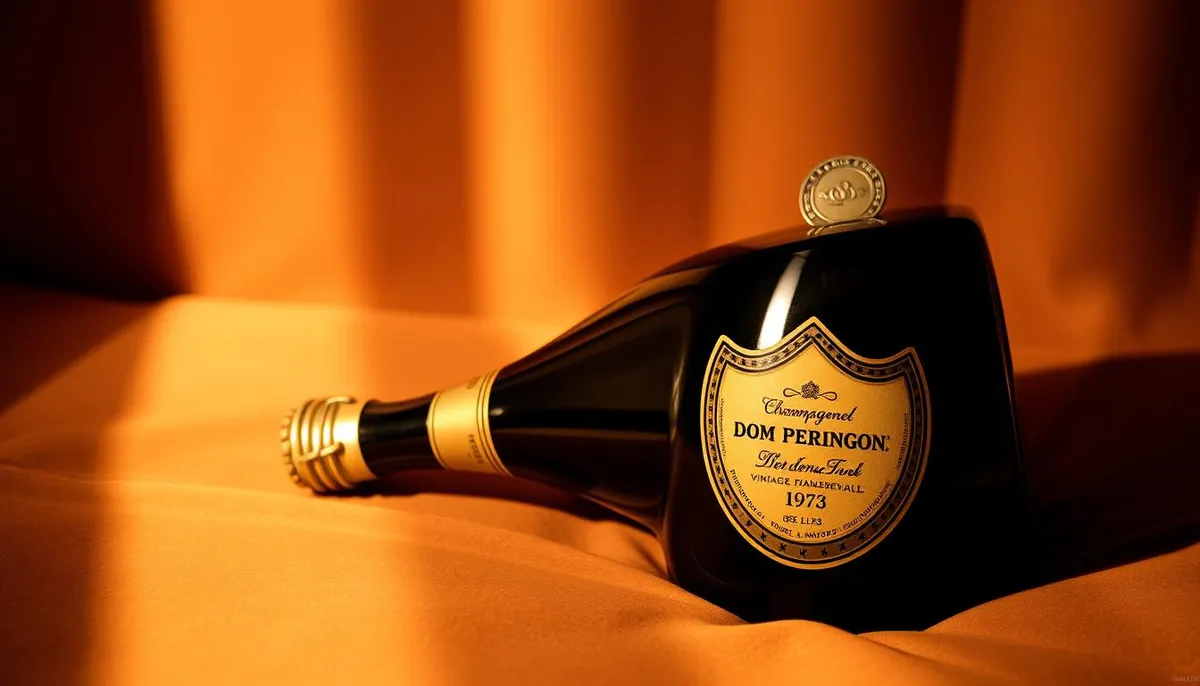
The 1973 vintage finds its classification within the P2 and P3 tiers, besides its inclusion in the Réserve de l’Abbaye selection. This variety underscores its lasting appeal across the United States. The narrative behind its aging process, emphasizing meticulous care, late disgorgement, and the pursuit of both tension and depth, enhances its cachet.
Its storied history contributes significantly to its charm. Introduced in 1921, Dom Pérignon pioneered the concept of a prestige cuvée. Its journey to America in 1936 aboard the Normandie positioned it at the heart of cultural iconography. Milestones from Marlene Dietrich’s Champagne traditions to high-profile endorsements have cemented its global stature, particularly for vintage releases like the 1973.
Auction records further affirm its prestigious standing. For instance, a 2008 Acker Merrall & Condit auction in Hong Kong featured Dom Pérignon Oenothèque 1973 among its record-breaking sales. This acclaim is pivotal for collectors in the United States, who value both the provenance and the genuine legacy encapsulated within this rare, illustrious sparkling wine.
Key Takeaways
- Dom Pérignon is Moët & Chandon’s flagship prestige cuvée, with dom perignon 1973 ranked as an iconic vintage.
- Tastingbook confirms 1973’s presence in P2, P3, and Réserve de l’Abbaye late releases.
- Auction records, including 2008 Acker Merrall & Condit results, highlight strong demand for late-disgorged magnums.
- The brand’s roots trace to the 1921 debut and 1936 shipment to America aboard the Normandie.
- Cultural milestones, from Marlene Dietrich to royal events, elevate interest among United States collectors.
- Dom perignon 1973 remains a rare wine and prestigious sparkling wine with enduring vintage luxury appeal.
Why This Iconic Vintage Still Captivates Collectors and Connoisseurs
Dom Pérignon, esteemed for its mastery over time, terroir, and meticulous craftsmanship, possesses a deep-seated allure. This enchantment is evident in the dom perignon 1973 variety, with a structure robust enough to entertain late releases like P2, P3, and Réserve de l’Abbaye. Such capability hints at its readiness for protracted maturation. This aspect, in turn, renders it a coveted treasure among collectors.
In 1921, the House introduced the world to its first prestige cuvée, marking a profound milestone. Its subsequent voyage to the United States aboard the ocean liner Normandie forged a permanent link. This legacy continues to inform the American perception, identifying a mature bottle as a symbol of opulent effervescence, rich in tradition and refinement.
Cultural significance further amplifies its desirability. Icons like Marlene Dietrich celebrated with it; the 1961 vintage marked memorable occasions for Charles de Gaulle and John F. Kennedy. It graced royal weddings and celebrity events, where celebratory desserts were often paired with the 1973 edition, positioning it as a sought-after vintage. Collectors are drawn to its narrative as much as its quality.
Auction results offer tangible proof of its esteemed status. In 2008, Acker Merrall & Condit in Hong Kong showcased 1973 Oenothèque magnums, culminating in a staggering $93,260 total. Such outcomes underscore the narrative of exclusivity and allure, compelling serious collectors to pursue its provenance and tier of release rigorously.
At its core, the saga of Dom Pérignon intertwines heritage, re-release endeavors, and cultural prominence to fuel ongoing enthusiasm for this exceptional vintage.
| Factor | Why It Matters | Impact on dom perignon 1973 appeal |
|---|---|---|
| Late Releases (P2, P3, Réserve) | Signals longevity and structural integrity | Boosts status as a collector’s item |
| Historic U.S. Debut | Early prestige cuvée presence built demand | Elevates interest among American buyers |
| Cultural Moments | Associations with leaders and stars | Reinforces luxury bubbly image |
| Auction Results | Verifiable market benchmarks | Supports iconic vintage valuation |
| Scarcity | Finite well-stored bottles | Underpins limited edition champagne demand |
The Legacy of Dom Pérignon and the Birth of Prestige Cuvée
Dom Pierre Pérignon had an unequivocal mission from the outset: to produce the finest wine conceivable. His endeavors at the Abbey of Hautvillers were pioneering, establishing the blueprint for prestige cuvée. This esteemed sparkling wine merges craftsmanship with the essence of its origins and era.
His methodology emphasized clarity and elegance. By merging grapes from a historic vineyard patchwork and employing soft, segmented pressing to extract white juice from black grapes, he laid the groundwork for the contemporary vintage champagne of Moët & Chandon’s renowned brand.
From Dom Pierre Pérignon’s vision to modern Champagne mastery
Diligence in the timing of harvest, meticulous sorting, and intentional élevage were hallmarks of the monk’s approach. This crafted a model for achieving balance and enduring taste. Today’s cellar teams perpetuate this legacy, perfecting the blend and maturation to encapsulate the unique qualities of each vintage. The culmination is a prestige cuvée that serves as both a historical reflection and a testament to its vigor and finesse.
The focus on tension and harmony has persisted across generations. This consistency has solidified its status among connoisseurs as a pinnacle of prestigious sparkling wine with considerable potential for maturation.
Early milestones: 1921’s debut and arrival in America aboard Normandie
The inaugural commercial vintage in 1921 heralded a fresh epoch for vintage champagne. By 1936, a shipment of one hundred cases journeyed on the Normandie to New York, perfectly timed for the festive season. This sell-out launch effectively introduced the brand to the discerning American market. As part of this introduction, the concept of celebratory table settings began to take form, elevating the experience of enjoying such exquisite champagne.
This pivotal moment entrenched the concept of a bespoke prestige cuvée, marrying European tradition with the burgeoning demand from a discerning U.S. market desirous of excellence rooted in venerable vineyard traditions.
Cultural moments: from Marlene Dietrich to royal and celebrity celebrations
Notable figures and moments have embraced this vintage. Marlene Dietrich featured it during her Christmas celebrations; Ian Fleming’s James Bond opted for the 1946 vintage. It complemented Christian Dior’s haute cuisine and accompanied Marilyn Monroe on her special evenings.
Its prestige was highlighted at a U.S. Embassy dinner, attended by Charles de Gaulle and John F. Kennedy, featuring the 1949 vintage. The marriage of Lady Diana Spencer and Prince Charles was celebrated with the 1961 vintage. Subsequent celebrity weddings have upheld its esteemed status, cementing its position as a hallmark of vintage champagne distinction.
dom perignon 1973
Among Champagne’s luminaries, dom perignon 1973 shines with unmatched depth and elegance. Its distinction lies in a meticulously curated blend, derived from premier vineyards within the Montagne de Reims and Côte des Blancs regions. Such a blend yields a wine celebrated for its intricate balance, coherence, and potential for graceful aging.
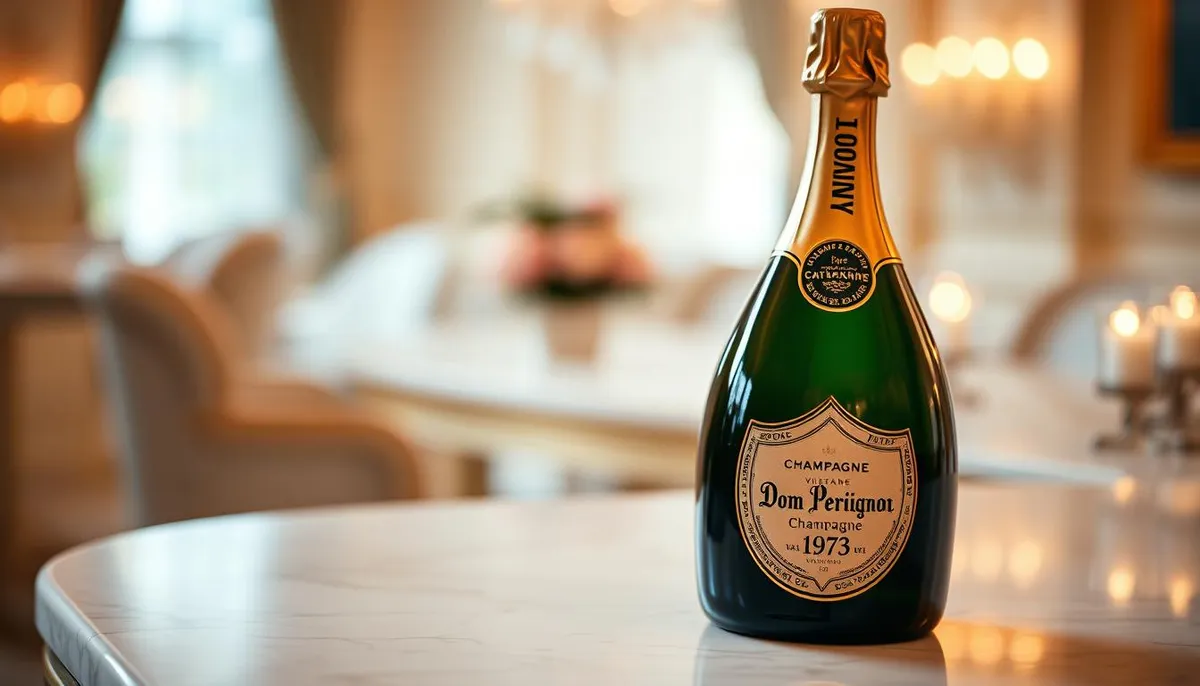
An iconic vintage from historic vineyards and an exclusive wine blend
The 1973 season fostered a perfect equilibrium, with the vitality of Chardonnay perfectly complementing Pinot Noir’s depth. This combination yielded a blend marked by exquisite acidity and a nuanced palette. By selecting grapes from each revered site, the wine’s profile is a testament to its terroir, presenting a refined continuity through its finish.
Position in the House lineup: Vintage, P2, P3, and Réserve de l’Abbaye listings
The prestigious Dom Pérignon catalogue features the 1973 vintage within its Vintage, P2, P3, and Réserve de l’Abbaye ranges. This extensive listing underscores the exceptional maturation and craftsmanship through late disgorgements and prolonged yeast contact. Such meticulous processes underscore the vintage’s vibrancy, depth, and texture—characteristics that mature over time, securing its esteemed position.
Why it’s a collector’s item: limited edition champagne and rare wine appeal
Its exclusivity is buttressed by limited releases and detailed aging protocols, defining 1973 as a collector’s champagne of proven longevity. The cache of Oenothèque magnums at auctions further cements its rarity. The producer’s commitment to optimal cellaring practices offers assurance. Collectors thus prize the vintage for its longevity, encapsulating the essence of its origin and the subtlety of its craft.
Tasting Profile and Aging Potential of This Vintage Champagne
Initially, this vintage champagne reveals layers of depth with a reserved intensity. As it breathes, the details become strikingly vivid. It embodies the sophistication expected from a wine with substantial history. Each sip finishes with a mineral sharpness, the hallmark of premium champagne.
Expected mature notes: toasted brioche, nutty tones, honeyed complexity
Renowned tastings, including those of early Dom Pérignon vintages, notably the famed 1921, offer paradigmatic insight. Experts like Richard Geoffroy and Richard Juhlin highlight the wine’s evolution. They note its evolution into complex profiles of dried fruit and biscuity warmth.
The 1973, when stored optimally, should present mature nuances. Expect the richness of toasted brioche, subtle nutty flavors, and a honeyed depth. Proper packaging for champagne is essential to maintain these qualities. Accents of red apple and toffee, alongside a crystalline saline note, accentuate its intricate composition.
Texture and mousse in well-cellared bottles
A mature Dom Pérignon features a delicately woven texture, complemented by a luxury champagne service that elevates the overall experience. Its mousse, refined yet distinct, becomes softer over the years. This interaction between creamy softness and structural integrity creates a weightless elevation in the mouthfeel of this esteemed champagne.
This sparkling wine progresses smoothly, later tightening into a chalky finish. Such a juxtaposition deepens its appeal, underscoring its value among connoisseurs.
Serving insights from historical tastings of earlier Dom Pérignon vintages
Opting for larger tulip-shaped glasses, akin to those used in the 1921 tastings, optimizes the sensory experience. Cooler temperatures allow the wine’s complexity and structure to unfold gracefully.
A contemplative pour and allowing the wine to breathe in the glass bring out nuanced flavors. Gentle swirling releases its honeyed notes, a testament to the wine’s meticulously aged character.
| Aspect | Guidance | Expected Expression | Why It Matters |
|---|---|---|---|
| Aroma | Gentle aeration in a tall tulip | Toasted brioche, nutty tones, dried fruit | Reveals layered mature notes and focus |
| Texture | Serve around 50–54°F (10–12°C) | Lacy feel, creamy center, refined mousse | Shows precision typical of prestigious sparkling wine |
| Finish | Unrushed pacing | Mineral persistence with honeyed complexity | Signals depth in a long-lived luxury bubbly |
| Glassware | Larger tulip (e.g., Lehmann Grande Champagne) | Concentrated bouquet, balanced mousse | Maximizes nuance in mature vintages |
Rarity, Provenance, and Auction Market Signals
Experienced bidders scrutinize the auction market’s meticulous records. The descriptions of an iconic vintage’s appearance, fill, and disgorgement timelines often speak volumes. These details unearth the provenance and accurately price a collector’s item, bypassing sensationalism.
In this precise framework, Dom Pérignon 1973 stands out distinctly. Catalogers highlight its scarcity using detailed condition descriptors, prompting buyers to weigh historical results against present risks and momentum.
Evidence from mixed lots featuring Dom Pérignon Vintage 1973
Auction records of mixed lots reveal meticulous valuation by specialists. A catalog pairing “Dom Pérignon—Vintage 1973—Excellent appearance (2)” with “Fonseca Vintage 1970—Level: bottom neck; label slightly torn (1)” underscores meticulous scrutiny. Additionally, “Warre Vintage 1963—Stained labels, seepage signs (3)” denoted “Above 6 bottles per lot” demonstrates a rigorous condition and provenance comparison.
Such meticulous record-keeping serves as a vital tool. It delineates dom perignon 1973 scarcity while aiding collectors in navigating auction room dynamics.
Benchmark sales highlighting prestige and scarcity
Notable sales benchmarks define the allure of a celebrated vintage. For instance, in 2008, Acker Merrall & Condit auctioned three magnums of Dom Pérignon Oenothèque—1966, 1973, 1976—for $93,260 in Hong Kong. Meanwhile, two bottles of Dom Pérignon Rosé from 1959 fetched $84,700 in New York. Additionally, a champagne birthday cake was featured at Christie’s 2004 auction of three 1921 bottles from the Doris Duke collection, which garnered $24,675.
These noteworthy transactions underscore the value ascribed to late releases, detailed storage annotations, and provenance. They are pivotal in discourse on dom perignon 1973 scarcity in contemporary auctions.
How label condition, level, and storage history affect value
The valuation of collectibles often hinges on three factors: label condition, fill level, and the narrative of storage. For instance, champagne auctions might disclose disgorgement specifics or fill descriptors, whereas listings for older still wines may refer to top shoulder or bottom neck positions. In the case of Dom Pérignon 1973, an “Excellent appearance” coupled with an appropriate fill level distinguishes this iconic vintage from counterparts.
Documented evidence of a secure custodial lineage enhances confidence. Such transparent provenance details can significantly enhance bids, especially for sought-after items marked by dom perignon 1973 scarcity.
Food Pairings for Luxury Bubbly
Great bottles invite restraint. This luxury afternoon tea shines when the plate is simple and the moment is calm. Let the wine lead, and the palate will follow.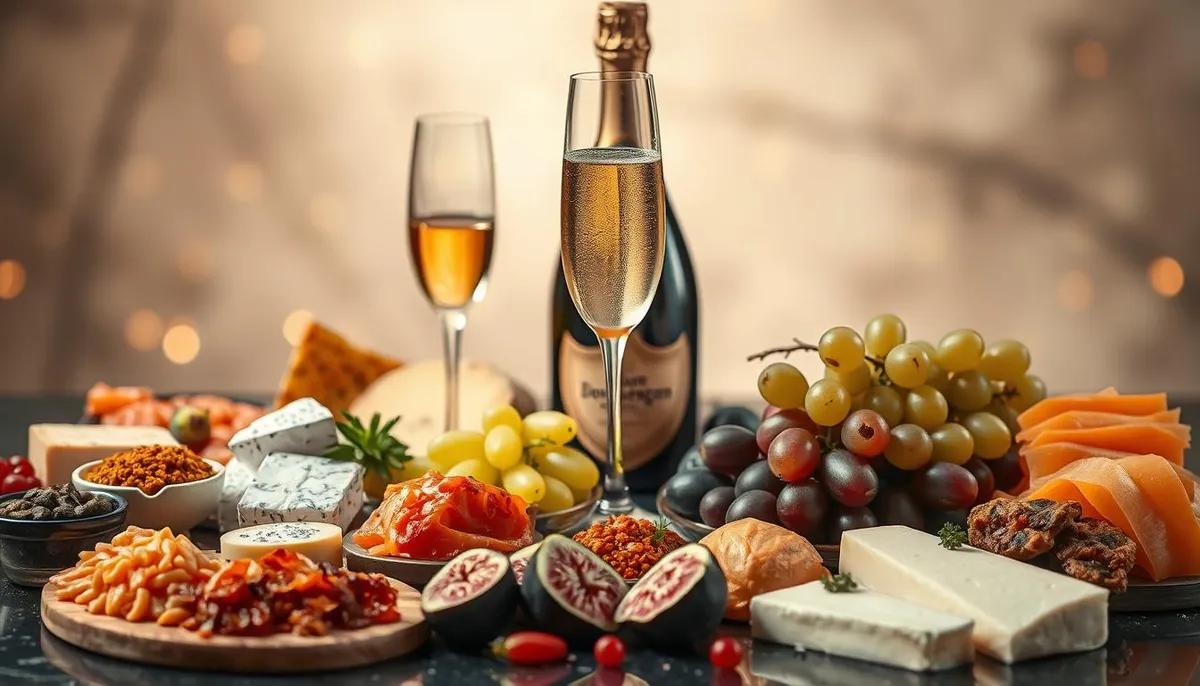
Minimalist pairings to spotlight a mature, prestigious sparkling wine
Historical tastings, notably Dom Pérignon 1921, have been celebrated for their lack of distraction. They recommend minimalist pairings that highlight its autolytic character. Suggested delicacies include raw oysters, Beluga or Ossetra caviar, butter-poached lobster, or a slice of aged Comté. These selections emphasize the wine’s toasted brioche, nut tones, and honeyed finish, elevating a truly prestigious experience.
With a restrained menu, texture becomes the forefront of the experience. The mousse seems finer, and the finish extends, showcasing the bubbly’s full spectrum.
Classic haute-cuisine inspirations from the House’s storied past
During the mid-century, fashion and dining intersected with Christian Dior’s tables featuring Dom Pérignon alongside salmon in aspic, partridge, sautéed woodcock, and the renowned “Chicken Dom Pérignon.” These luxurious pairings reflect the wine’s elegance and depth, illustrating how opulence can coexist with finesse without overwhelming the palate.
Currently, recommended dishes include Dover sole meunière, butter-basted scallops, or roasted Bresse chicken. These choices ensure the wine’s nuanced, savory-sweet essence remains the focal point of the culinary experience.
Glassware and service: optimizing aromatics and texture
Opt for tall tulip glasses or precision sparkling wine stems—such as Lehmann’s Grande Champagne, known for its performance with prestigious vintages—to enhance the aromatic profile and preserve effervescence. For serving vintage champagne, a cool 46–50°F pour and gentle handling are essential. These practices reveal the champagne’s brioche richness, nuanced nutty tones, and soft honeyed notes.
Avoid narrow flutes, as they can diminish the wine’s aroma. Allowing space in the glass, the prestigious wine generously rewards each deliberate sip.
Cellaring, Authentication, and Buying Tips for a Collector’s Item
Dom Pérignon 1973 mandates discerning stewardship. Envision it as a treasure, necessitating scrutiny akin to that of premier auction experts. An ideal way to serve this vintage is through a champagne dispensing machine, ensuring optimal enjoyment. Optimal storage paired with verified origins ensures both the maintenance of its inherent value and the integrity of its flavor profile.
Reading bottle condition: fill levels, labels, and capsules
Examine condition reports meticulously. Phrases like Excellent appearance, bottom neck, stained labels, signs of seepage, and torn labels indicate significant fluctuations in market value. Pristine capsules and optimal fill levels are synonymous with meticulous upkeep; conversely, diminished fills or evidence of cork leakage signal potential detriment.
Store the bottle within an environment that is both cool and devoid of light, ensuring stability. Such precautions guarantee the preservation of its effervescence and delicate complexity.
Understanding late releases: P2, P3, and Réserve designations
Verify if your bottle from 1973 is an initial release or if it hails from a subsequent disgorgement. According to Tastingbook, the year 1973 is notable for its P2 and P3 versions, along with Réserve de l’Abbaye. These variants are distinguished by extended lees contact and renewed corking, often resulting in a vitality that commands heightened market value.
Comparing the information on the back label and disgorgement code against official references is crucial for authentication. This comparison also aids in accurately situating the bottle’s price within the current market.
Trusted sources and documentation for rare wine purchases
Prefer auctions and retail operations offering comprehensive condition assessments and explicit provenance. Demand high-definition imagery showcasing fill levels, capsule integrity, bottle base, and label condition. Acquiring documents such as purchase invoices, shipping logs, and storage validations is advised.
Utilize sales data from established entities such as Acker Merrall & Condit and Christie’s for price reference. This method, coupled with detailed authentication efforts, minimizes the financial risks associated with acquiring scarce Champagnes.
| Buying Factor | What to Verify | Why It Matters | Practical Tip |
|---|---|---|---|
| Condition & Fill | Top shoulder or better; no signs of seepage; intact capsule | Higher fills and clean closures correlate with sound aging | Prioritize lots labeled “Excellent appearance” over stained or torn labels |
| Release Status | P2 and P3 or Réserve de l’Abbaye indicators and disgorgement info | Late releases often show greater freshness and command premiums | Confirm back-label codes and compare with producer references |
| Provenance | Ownership trail, storage history, and transport records | Strong provenance supports price and desirability | Request invoices and warehouse statements for authentication |
| Market Benchmarks | Past results at Acker Merrall & Condit and Christie’s | Data-driven pricing curbs overbidding | Align bids with recent comps for similar format and condition |
| Cellaring Plan | Consistent cool temperature, darkness, no vibration | Protects mousse, texture, and aromatic precision | Use a stable wine fridge and avoid frequent moves |
Historic Vineyard Heritage and House Craft
Dom Pérignon forges its distinctive style from the essence of each historic vineyard in Champagne, coupled with the meticulousness of prestigious sparkling wine craftsmanship. It aims for profundity, lucidity, and a harmonious flavor that matures elegantly. Additionally, it is recognized as one of the top american champagne options, showcasing the excellence of American sparkling wine.
Blending across crus to achieve balance and concentration
Following Dom Pierre Pérignon’s legacy, the team meticulously blends across crus to achieve a balance of tension and harmony. They integrate sites from the Montagne de Reims and Côte des Blancs, crafting an exclusive wine blend that exudes vibrancy, momentum, and judicious intensity.
This technique allows Pinot Noir and Chardonnay to enhance one another, fostering a composition of length and mineral sharpness. Their objective remains a symphony of balance and concentration, devoid of superfluous heaviness.
Pressing methods and the pursuit of elegance
The House upholds the tradition of soft, segmented pressing to procure clear, luminous juice. This method produces subtle phenolics and purity, embodying the monk’s foundational technique of prestigious sparkling wine craftsmanship.
Through meticulous separation of the press segments, the process accentuates delicate finesse and clarity. It safeguards the nuances of aroma while establishing a framework for texture and vitality.
What “vintage” means for Dom Pérignon’s identity
Dom Pérignon’s releases epitomize single harvests, creating a unique vintage identity over a blend of years. Selection is stringent, focusing only on outstanding seasons. The wine matures over extended lees aging and precisely-timed disgorgements.
P2 and P3 renditions reiterate these principles: rigid culling, prolonged refinement, and an exclusive wine blend emanating from a vast historic vineyard array. This approach aims to narrate temporal and locational subtleties with serene intensity.
Conclusion
Dom Pérignon 1990 epitomizes a marriage of heritage and meticulous craftsmanship. Its inclusion in the House’s late-release ensemble—P2, P3, and Réserve de l’Abbaye—highlights its aging prowess. Characteristics such as toast, nuts, honey, and a distinct mineral essence are identifiable, alongside a refined, enduring mousse in bottles preserved under optimal conditions.
The champagne’s market presence reflects its esteemed status. Notably, Acker Merrall & Condit’s 2008 auction, which showcased Oenothèque magnums from 1973, and Christie’s 2004 auction featuring the Doris Duke collection with the 1921 vintage, underline a consistent enthusiasm for vintages of exceptional origin and rarity. For collectors, aspects like label integrity, fill level, and storage particulars critically determine value.
In the United States and around the globe, Dom Pérignon 1973 is not merely a collector’s luxury but a testament to diligent stewardship. It is essential to ascertain the release variant, seek verifiable lineage, and patronize reputable sources. Those who adhere to these guidelines will find that this vintage delivers not only depth and elegance but also exemplifies the House’s innovative spirit and excellence.
Are you poised to add a distinguished piece to your collection? Explore handpicked selections of champagne gift ideas and secure worldwide delivery. For a tailored offer, visit champagne-export.com today.
FAQ
What makes Dom Pérignon 1973 an iconic vintage for collectors?
Dom Pérignon 1973 gains its iconic status through inclusion in the House’s late-release tiers—P2, P3, and Réserve de l’Abbaye. These tiers signal its uncommon structure and the potential for lengthy aging. It represents a limited edition champagne, emerging from historic vineyards. Additionally, the allure of custom champagne bottles enhances its status, as this unique offering attracts collectors. This status, alongside the fervent demand at auctions, marks it as a rare find.
How is Dom Pérignon 1973 positioned within the House lineup?
The 1973 vintage holds a core position within the Vintage release, along with its presence in the P2 and P3 late-disgorged programs, as well as in Réserve de l’Abbaye. This placement testifies to the wine’s remarkable ability to age and underscores its prestige. This confirms its esteemed spot within the exclusive blending philosophy of Dom Pérignon.
What are the expected mature tasting notes of Dom Pérignon 1973?
Well-preserved bottles typically exhibit toasted brioche, almond and hazelnut, alongside honeyed accents, dried fruit, and a distinct mineral quality. These characteristics mirror the complexity seen in earlier Dom Pérignon vintages. The experience is one of layered autolytic depth and enduring grace, showcasing excellence in wine.
How does texture and mousse present in well-preserved bottles?
One should expect a refined, creamy mousse complemented by a delicate lacy texture. Even as the effervescence mellows with time, the wine’s balance and length persist. These attributes contribute to a silky mouthfeel, showcasing the wine’s evolved complexity.
What service tips help this vintage champagne shine?
To optimize the wine’s aromatic profile and maintain its delicacy, utilize tall, tulip-shaped glasses for serving. Temperature should range between 46–50°F. Gentle handling is key, avoiding narrow flutes. These methods facilitate the full expression of the bouquet. They also ensure the mousse retains its delicate yet defined texture.
Why is 1973 frequently cited in Dom Pérignon’s P2, P3, and Réserve de l’Abbaye programs?
The inclusion of the 1973 vintage across these late-release tiers is indicative of its extended aging on lees. This confers a structure that withstands decades. It exemplifies how the wine’s distinct blend aligns with the House’s standards for re-release. This showcases the sparkling wine’s enhanced vitality and intricate complexity.
What auction records support the rarity and value of Dom Pérignon 1973?
The 2008 Acker Merrall & Condit Hong Kong sale is noteworthy. Oenothèque magnums from 1966, 1973, and 1976 garnered ,260. Benchmark lots at Christie’s affirm the wine’s premium, linked closely with its provenance and condition.
How do condition notes like “Excellent appearance” or fill levels affect price?
Auction summaries often mention appearance and label condition, including seepage signs and fill levels. These indicate both risk and value. Champagnes benefit from mentions of late disgorgement and capsule integrity. Generally, excellent presentation and optimal fill levels lead to higher auction prices.
What foods pair best with a mature, prestigious sparkling wine like Dom Pérignon 1973?
Pairing recommendations emphasize simplicity to highlight the wine’s subtleties: think oysters, caviar, or butter-poached lobster. Aged Comté cheese also matches well. Drawing from mid-20th century gourmet traditions, dishes like salmon in aspic or finely sauced poultry enhance the wine’s rich brioche and nutty nuances.
How can I authenticate whether a bottle is an original release or a late disgorgement?
Verification involves checking back labels for disgorgement codes, release notations, or mentions of P2, P3, or Réserve de l’Abbaye. Ensure the vendor provides complete documentation. Cross-reference with Dom Pérignon’s official late-release lists and trusted databases for accuracy.
What does “vintage” mean in the context of Dom Pérignon?
“Vintage” designates a singular harvest that fulfills the House’s stringent criteria. Not every year achieves vintage status. Selected years manifest their unique character through Dom Pérignon’s signature blending of crus after extensive lees aging.
How do historic vineyard sources influence the 1973’s profile?
Select grapes from premier cru and grand cru estates contribute to the wine’s concentrated flavor and structural tension. The blend harmonizes Chardonnay’s precision with Pinot Noir’s richness. This combination yields a distinguished, enduring wine profile, rooted in heritage.
What role does pressing play in Dom Pérignon’s elegance?
The strategy of gentle, fractional pressing aims to extract pure, fine juice. This method, inspired by Dom Pierre Pérignon’s principles, supports the wine’s delicate effervescence, clarity, and smooth texture seen in the 1973 vintage.
How did Dom Pérignon’s early milestones build its prestige?
Dom Pérignon’s debut in 1921 set the standard for prestige cuvées. Its introduction to the American market in 1936 via the Normandie played a crucial role. Iconic events featuring luminaries like Marlene Dietrich and royals further enhanced its luxury appeal. These moments increased attention to standout vintages like dom perignon 1990 and 1973.
What signals show the 1973 remains relevant to modern collectors?
The steady auction success and confirmed listings in P2, P3, and Réserve de l’Abbaye highlight its ongoing allure. Its inclusion across late-release platforms attests to its durability. Hence, it upholds its status as a historical vintage and a prized collectible.
Any tips for buying and storing Dom Pérignon 1973?
Purchase from reputable sources that offer detailed provenance and condition reports. Store the bottles horizontally in a cool, stable environment, shielded from light and vibrations. Request temperature-controlled shipping to preserve the wine’s integrity during transit.