Welcome to your quick guide on the champagne sweetness scale. This overview delineates the seven recognized styles and their taste profiles. It explains the classification of champagne, tying it to specific residual sugar content measured in grams per liter. These sugar levels significantly influence the flavor profile of champagne in your glass.
The exploration commences with Brut Nature and Extra Brut, proceeds through Brut and Extra Dry, and culminates with Dry/Sec, Demi-Sec, and Doux. Along this journey, we shed light on the typical caloric and carbohydrate content of a 5 oz serving at approximately 12% ABV. You will discover the reasons behind Brut’s dominance in global sales, the rarity of Doux, and the rising popularity of zero-dosage cuvées. The narrative includes insights from renowned houses such as Veuve Clicquot, Laurent-Perrier, Piper-Heidsieck, and Billecart-Salmon.
Sweetness in champagne does not emanate from fruit syrup. Rather, it is derived from the liqueur d’expédition, a concoction of reserve wine and pure cane sugar, added post-disgorgement to counterbalance the inherent acidity of Champagne’s cool climate. Additionally, this discussion contrasts the sugar content in champagne with that in commonplace beverages: a glass of Brut Nature might contain around 0.5 g of sugar, whereas a Gin & Tonic could have about 14 g, a latte approximately 17 g, and a Margarita around 20 g. It also touches upon common concerns over headaches, attributing them to factors such as carbonation, dehydration, and late-night festivities, rather than solely to the sweetness levels of champagne.
This guide is designed to be straightforward and utilitarian. It empowers you to swiftly decipher labels, align champagne styles with various dishes, and select a bottle that aligns with your taste preferences and lifestyle aspirations. With a profound understanding of champagne classification and its sugar content, you are equipped to relish bubbles with confidence and sophistication. As a premium champagne importer, we ensure that you have access to the finest selections available.
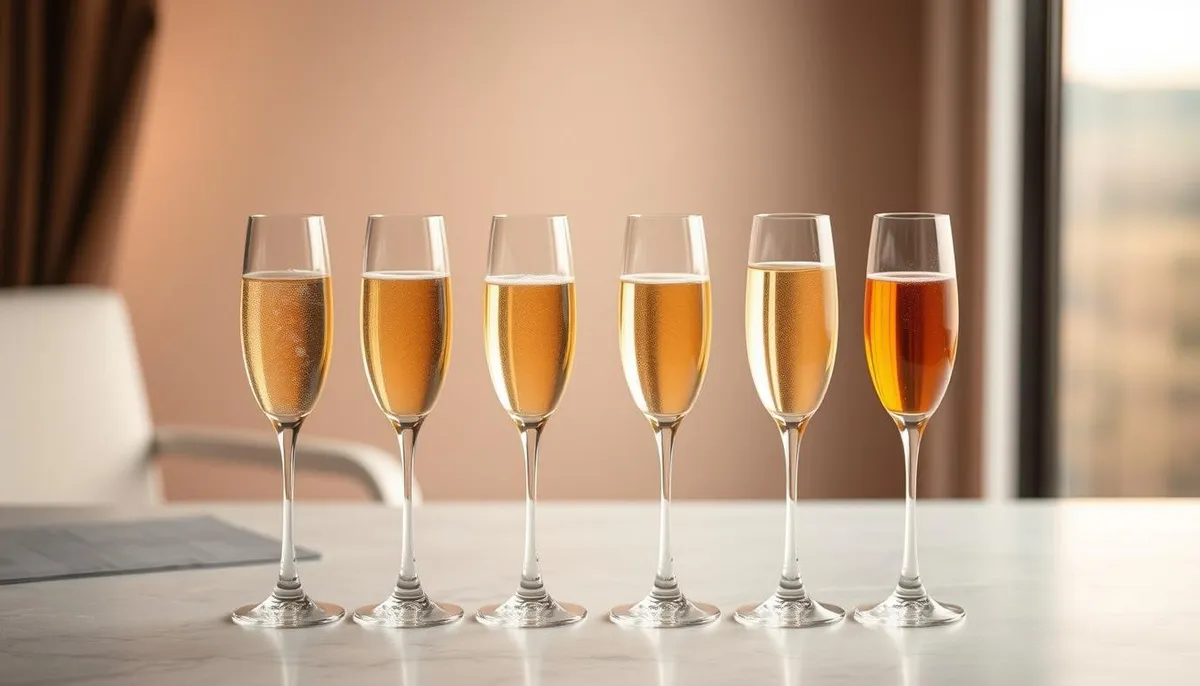
Key Takeaways
- Seven official styles define the champagne sweetness scale, from Brut Nature to Doux.
- Residual sugar (g/L) drives champagne classification and the champagne flavor profile.
- Dosage—reserve wine plus pure cane sugar—balances high acidity after disgorgement.
- Brut dominates global sales, while Doux is rare; zero-dosage wines are rising fast.
- Typical 5 oz servings at ~12% ABV have varying calories and carbs by sweetness level.
- Champagne sugar content is far lower than many cocktails and sweet coffee drinks.
- Choose styles by taste and occasion, using label terms to guide expectations.
What Champagne Sweetness Really Means
Sweetness in Champagne involves precise measurement. After the processes of riddling and disgorgement, a specific liqueur d’expédition is introduced. This crucial step determines the sugar content and solidifies the champagne’s style. It acts as a regulator, modulating the balance between freshness, fruitiness, and texture throughout the various levels of champagne sweetness.
How dosage shapes champagne classification
The practice of dosage combines reserve wine with pure cane sugar. This minor addition categorizes champagne from Brut Nature to Doux. This blend is not uniform; prestigious houses like Louis Roederer, Bollinger, and Moët & Chandon vary it by vintage to maintain equilibrium. For example, an extra brut batch might require less sugar in a fruitful year compared to a leaner one.
This procedure establishes the final sugar content in grams per liter. An increase in dosage yields a fuller, more fruit-forward palate. Conversely, a reduction in dosage enhances the structure, making it crisp and tightly wound. Consequently, this creates a dependable scale, aiding consumers in making informed choices.
Acidity balance and the role of liqueur d’expédition
The intrinsic acidity of Champagne, developed in its cool climate, is tempered by the liqueur d’expédition, akin to softening coffee with a touch of sugar. A lower dosage accentuates notes of citrus, chalk, and minerals; a higher dosage reveals flavors of ripe apples, pears, and pastries.
The interaction of sugar content with acidity in champagne is critical; even a single gram per liter can transform the wine’s character. Thus, winemakers conduct numerous tastings to find the perfect balance, aligning with both house style and the nuances of the vintage.
From bone-dry to sweet: overview of the seven styles
The classification system spans seven distinct categories, each associated with a specific sugar content measured in grams per liter:
- Brut Nature: 0–3 g/L (also referred to as Brut Zero, Non-Dosage, or Ultra Brut)
- Extra Brut: 0–6 g/L
- Brut: 0–12 g/L
- Extra Dry: 12–17 g/L
- Dry/Sec: 17–32 g/L
- Demi-Sec: 32–50 g/L
- Doux: 50+ g/L
The perception of dryness increases with lower sugar levels, making the champagne taste crisper and more vibrant. Conversely, higher sugar levels impart a richer, more velvety sensation. This differentiation ensures that extra brut champagne appears strikingly clean, whereas Demi-Sec is ideally paired with desserts. Grasping this continuum simplifies the complexity of champagne sweetness, offering a straightforward framework for selection across various settings. For a delightful twist, consider a champagne infused cake, which combines the elegance of champagne with a sweet, moist dessert experience.
Brut Nature and Extra Brut: The Driest Styles
These champagnes exemplify purity, tension, and an authentic expression of terroir. Notably, their sugar content is minimal, providing a crisp and refreshing experience. They are particularly suited for contemporary culinary pairings.
Brut Nature (0–3 g/L RS): zero-dosage, ultra-crisp profiles
Brut Nature, known alternatively as Brut Zero, Non-Dosage, or Ultra Brut, undergoes no sugar addition during dosage. This results in pronounced acidity and minerality. Its finish is exceptionally dry, emphasizing both chalk and citrus notes prominently.
For those who appreciate keen exactitude and subtlety, consider options like Laurent-Perrier Ultra Brut, Michel Gonet Brut Nature, and Brut Nature Blanc de Blancs. These selections are noted for their meticulous clarity and minimalistic elegance.
Extra Brut (0–6 g/L RS): minimal sugar, focused flavor
Extra Brut introduces a slight sugar presence, which meticulously outlines the existing acidity. This approach yields a tightly structured taste, yet introduces a modicum of suppleness, distinguishing it from Brut Nature.
Remarkable choices include Billecart-Salmon Vintage 2008 and Champagne Ullens -M- Extra Brut. These cuvées are celebrated for maintaining a balance of tension and purity, culminating in a clean, elongated finish.
Calories and carbs per 5 oz serving for ultra-dry styles
In these categories, calorie content is kept modest, presenting an appealing option for those preferring lighter alternatives without compromise in taste. For those in New York City, new york city champagne delivery offers a convenient way to enjoy these selections. The following table offers a comparison based on 12% ABV.
| Style | Residual Sugar (g/L) | Calories per 5 oz | Calories from Sugar | Estimated Carbs (g) | Taste Profile |
|---|---|---|---|---|---|
| Brut Nature | 0–3 | ~91–93 | 0–2 | ~0.15–0.2 | Bone-dry, ultra-crisp, high acidity |
| Extra Brut | 0–6 | ~91–96 | Up to ~4 | ~0.3–1.0 | Dry, taut, slightly rounder edges |
When to choose Extra Brut vs. Brut Nature
Select Brut Nature for peak dryness and a pronounced, sharp distinction. It shines as a brisk aperitif or alongside briny oysters.
Opt for Extra Brut to enjoy subtle softness while still embracing the driest champagne spectrum. It pairs exquisitely with sushi, crudo, and dishes that feature citrus.
Brut Champagne: The Versatile Crowd-Pleaser
Brut champagne, the style of preference for most, balances dryness with rich flavour. It sits perfectly on the sweetness scale, making it ideal for all occasions.
In 1874, Veuve Pommery codified Brut, shaping modern taste for dry, lively bubbles with depth.
Sugar range (0–12 g/L RS) and broad flavor profile
The sugar content in brut varies from 0–12 g/L, softening acidity without becoming sweet. The flavor profile includes crisp apple, lemon zest, and grapefruit. Toast, brioche, and almond notes complete the spectrum.
Producers adjust this range to fine-tune the champagne’s structure. Dosages at the lower end result in a more mineral texture, while higher dosages offer depth, yet stay dry.
Why brut champagne leads sales globally
Worldwide, brut champagne dominates with 80–90% of sales. Its versatility and balanced taste profile cater to various preferences. It suits both aperitif and dining occasions, making it a reliable choice for many. For those looking to explore further, fine champagne stores nyc offer a curated selection to enhance your champagne experience.Calories, carbs, and typical 12% ABV benchmarks
| Style Marker | Residual Sugar (g/L) | Calories per 5 oz | Calories from Sugar | Carbs (g) per 5 oz | Typical ABV |
|---|---|---|---|---|---|
| Brut (dry) | 0–12 | 91–98 | 0–7 | 0.0–1.8 | ~12% |
| Lower-Dosage Brut | 0–6 | 91–95 | 0–3 | 0.0–0.9 | ~12% |
| Fuller-Dosage Brut | 7–12 | 95–98 | 4–7 | 1.0–1.8 | ~12% |
Food pairing ideas for brut champagne
- Raw bar classics: oysters, shrimp cocktail, and sushi.
- Crunchy, salty bites: fried chicken and French fries.
- Creamy textures: Brie, Camembert, and triple-cream cheeses.
- Cocktail-hour staples: smoked salmon blinis and savory canapés.
These pairings complement the champagne’s freshness and flavor profile. The champagne deli menu ensures a dry, refreshing finale, making it highly compatible with a vast range of dishes.
Extra Dry and Dry (Sec) Champagne Explained
Mid-sweetness champagnes, nestled between brut and dessert cuvées, meticulously balance sugar and terroir. Ideal for those finding extra brut too austere, these varieties precisely hit a delightful sweet spot without overshadowing their origin’s essences.
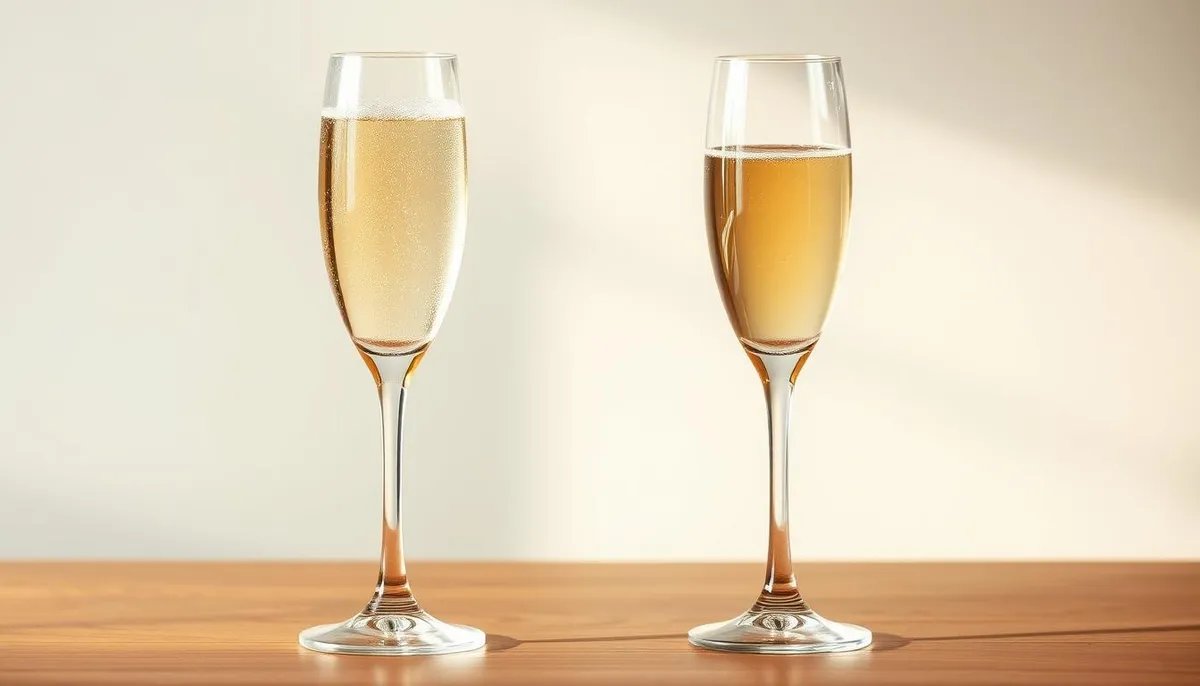
Extra Dry (12–17 g/L RS): confusingly not the driest
Contrary to its name, Extra Dry contains a higher sugar content than Brut. It features a mild sweetness and a pillowy mouthfeel, enhanced by vibrant effervescence. Flavor profiles include pear, ripe apple, and gentle citrus, concluding with a creamy finish that elegantly complements canapés and sushi.
Consuming a 5 oz serving at roughly 12% ABV introduces about 98–101 calories. Of these, 7–10 calories derive from sugar, alongside 1.8–2.6 grams of carbohydrates. This choice serves as an accessible introduction for those venturing beyond the austere bounds of bone-dry champagne styles.
Dry/Sec (17–32 g/L RS): ripe fruit and softer acidity
Sec champagne accentuates the warmth of orchard and stone fruits—apricot, baked apple, and white peach. A substantial dosage mellows its acidity, crafting a luxuriously soft mid-palate. While richer than Extra Dry, it maintains a crisp and invigorating profile.
A 5 oz serving carries approximately 101–111 calories. Sugar contributes 10–19 of these calories, with a carbohydrate content of 2.6–4.8 grams. Such a profile will appeal to those seeking a discernible sweetness without veering into demi-sec territory.
Calorie and carb guide for mid-sweetness styles
| Style | Residual Sugar (g/L) | Calories per 5 oz | Sugar Calories | Carbs (g) | Taste Snapshot |
|---|---|---|---|---|---|
| Extra Dry | 12–17 | 98–101 | ~7–10 | 1.8–2.6 | Pear, lemon curd, soft mousse |
| Dry/Sec | 17–32 | 101–111 | ~10–19 | 2.6–4.8 | Apricot, baked apple, mellow acidity |
Compared to extra brut champagne, these categories offer a wider flavor spectrum and a smoother experience on the palate.
Occasions and pairings for these categories
- Salty snacks and charcuterie: prosciutto, gougères, kettle chips.
- Pâté and terrines: they are elevated by the subtle sweetness.
- Lightly spicy Asian dishes: Thai larb, sesame noodles, maki with wasabi.
- Fruit-centric starters: melon with Parma ham, apple tartlets, brie with figs.
Opt for Extra Dry to commence with a lively aperitif. Select Sec champagne for moments requiring softer acidity and more pronounced fruit notes. This choice beautifully transitions from savory appetizers towards dessert, aligning with previously mentioned champagne sweetness levels. For a unique touch, consider incorporating champagne bottle decor to enhance the presentation of your gathering.
Demi-Sec and Doux: Sweet Champagne for Desserts
Opt for sweet champagne when your menu includes rich or spicy dishes. Higher sugar levels in champagne mitigate acidity and enhance fruity flavors, offering a lush yet vibrant drinking experience. Such champagnes, when served well-chilled, elegantly complement desserts and spicy meals.
Demi-Sec (32–50 g/L RS): dessert-ready balance
Demi-sec champagne blends pronounced sweetness with a zesty freshness. It brings to fore flavors of baked pear, honey, and pastry, culminating in a crisp finish. Examples of note are Laurent-Perrier Demi-Sec and Piper-Heidsieck Demi-Sec.
Each 5 oz serving, with approximately 12% ABV, contains about 111–121 calories. You’ll find 19–30 of these calories come from sugar, with 4.8–7.5 grams of carbohydrates. This composition suits it for fruit tarts, light custards, and it also mitigates the heat in Thai or Szechuan cuisine.
Doux (50+ g/L RS): rare, lusciously sweet profiles
Doux champagnes represent the apex of sweetness, albeit rare today, they leave an indelible mark. Envision flavors of ripe mango, candied citrus, and vanilla cream on a smooth texture. A distinguished example includes Veuve Clicquot Rich, popular in France and for its creative serving methods.
Anticipate over 121 calories per 5 oz, surpassing 30 sugar calories, and more than 7.5 grams of carbs. Its lavish character beautifully complements cheesecake, crème brûlée, and enhances a late-night dessert experience.
How sweetness levels influence serving temperature
Cooler temperatures are preferred as champagne’s sugar content increases. For demi-sec, aim for about 43–46°F, and for doux, cool slightly further to 41–43°F. This chill tempers the sweetness, accentuates the aroma, and avoids any sensation of heaviness.
Perfect dessert and spicy food pairings
Demi-sec champagne pairs exquisitely with strawberry tart, lemon bars, and ginger cookies. It soothes the bite of chili oil and peppercorn. Doux champagne, with its density, suits rich desserts like cheesecake and caramel flan. Alternatively, serve it over ice with a twist of citrus for a refreshing, cocktail-esque experience.
| Style | Residual Sugar (g/L) | Typical Flavor Markers | Calories (5 oz) | Carbs (5 oz) | Ideal Serving Temp | Spotlight Bottles | Best Pairings |
|---|---|---|---|---|---|---|---|
| Demi-Sec | 32–50 | Honeyed apple, pear tart, brioche | ~111–121 | ~4.8–7.5 | 43–46°F (6–8°C) | Laurent-Perrier Demi-Sec; Piper-Heidsieck Demi-Sec | Fruit tarts, crème brûlée, Thai or Szechuan dishes |
| Doux | 50+ | Candied citrus, mango, vanilla cream | >121 | >7.5 | 41–43°F (5–6°C) | Veuve Clicquot Rich | Cheesecake, caramel flan, creative on-ice service |
Choosing between demi-sec and doux champagne allows for strategic pairing based on dessert or dish sweetness. Adjusting serving temperatures ensures the champagne accentuates texture, aroma, and nuanced sweetness.
champagne sweetness scale
The champagne sweetness scale illustrates how slight variations in residual sugar can alter a champagne’s taste, texture, and overall sensation. It acts as a fundamental framework for champagne classification, empowering consumers to understand label terminology. With this knowledge, one can seamlessly align personal taste preferences, ranging from extremely dry to richly sweet, with the appropriate bottle.
The legal establishment of champagne sweetness levels relates directly to dosage, a blend of reserve wine and cane sugar known as liqueur d’expédition. Esteemed producers including Moët & Chandon, Veuve Clicquot, Louis Roederer, and Bollinger, adjust the balance through dosage annually. This practice ensures quality rather than adhering to a constant formula.
Brut champagne leads in international sales, whereas Doux is a rarity on the global stage. Spanning the spectrum between these extremes are varieties that progress from crisp, steely profiles to richer, creamier ones. This nuance is achieved through a delicate interplay of acidity and sugar, and the prestigious cordon awards highlight the exceptional quality of these champagnes. The scale provided offers insight into the characteristics of the champagne you are enjoying.
| Style | Residual Sugar (g/L) | Label Clues | Taste Snapshot | Market Note |
|---|---|---|---|---|
| Brut Nature | 0–3 | Sometimes “Pas Dosé” or “Zero Dosage” | Bone-dry, tight acidity, mineral finish | Niche but growing with sommeliers |
| Extra Brut | 0–6 | Very low dosage | Ultra-crisp, focused fruit, lean texture | Appeals to dry-wine lovers |
| Brut | 0–12 | Most non-vintage bottlings | Fresh apple and citrus, balanced acidity | Leads worldwide sales |
| Extra Dry | 12–17 | Counterintuitively sweeter than Brut | Softer edges, subtle sweetness | Useful for aperitif service |
| Dry / Sec | 17–32 | Often fruit-forward styles | Ripe stone fruit, gentler acidity | Good with salty snacks |
| Demi-Sec | 32–50 | Frequently labeled for desserts | Noticeable sweetness, creamy feel | Pairs well with fruit tarts |
| Doux | 50+ | Rare and rich | Lusciously sweet, honeyed notes | Limited production, rarely exported |
When evaluating champagnes across various brands, consider the sweetness scale. As sweetness levels increase, the fruit’s perceived ripeness intensifies, acidity becomes milder, and the mousse feels fuller. This knowledge facilitates the selection of a champagne style that perfectly complements any given occasion.
Understanding Champagne Sugar Content and Calories
Understanding the sugar content in your champagne can guide your choice to suit the moment. As the sweetness in champagne increases, the fruit notes appear riper and the mouthfeel becomes more voluptuous. In contrast, brut champagne presents a brisk lift and a clean finish, clearly influenced by its precise sugar content. Staying informed about cannabis trends can also enhance your overall experience and appreciation of different beverages.
Residual sugar ranges and their impact on taste
Champagnes with lower residual sugar offer a drier sensation and more pronounced acidity. The Brut Nature and Extra Brut variants are characterized by their mineral qualities and tension. Venturing into the Brut category introduces flavors of citrus and apple, softened slightly by the sweetness. As we move towards Sec and Doux, the increasing sugar content brings forth flavors of ripe stone fruits and a more substantial body.
Per-glass calorie and carb ranges by sweetness level
| Style | Residual Sugar (g/L) | Calories per 5 oz | Carbs per 5 oz | Taste Snapshot |
|---|---|---|---|---|
| Brut Nature | 0–3 | 91–93 | ~0.15–0.2 g | Ultra-dry, mineral, high tension |
| Extra Brut | 0–6 | 91–96 | ~0.9–1 g | Lean fruit, crisp finish |
| Brut | 0–12 | 91–98 | ~1.8 g | Balanced citrus, crowd-pleasing |
| Extra Dry | 12–17 | 98–101 | ~1.8–2.6 g | Softer acidity, subtle sweetness |
| Dry/Sec | 17–32 | 101–111 | ~2.6–4.8 g | Ripe fruit, broader palate |
| Demi-Sec | 32–50 | 111–121 | ~4.8–7.5 g | Sweet-leaning, dessert-friendly |
| Doux | 50+ | >121 | >7.5 g | Lusciously sweet, plush texture |
Comparing champagne sugar to cocktails and coffee drinks
A 5 oz serving of Brut Nature contains roughly 0.5 g of sugar, Brut around 2 g, and Demi-Sec approximately 8 g. This is in stark contrast to a Gin & Tonic, which has about 14 g, Honest Tea Green Tea with roughly 16 g, a Starbucks 2% Milk Grande Latte at nearly 17 g, a Margarita containing around 20 g, a Jack & Coke with about 33 g, and a Vodka Soda at 0 g.
Tips for lighter choices without sacrificing flavor
- Pick Extra Brut or Brut Nature for minimal sugar content and a vibrant snap.
- Opt for brut champagne for its balance of liveliness and reasonable caloric content.
- To moderate sweetness perception while preserving champagne’s character, serve sweeter varieties colder.
- Drinking water between glasses can mitigate dehydration hidden by effervescence.
Intelligent selection across the spectrum of champagne sweetness allows alignment of flavor, body, and atmosphere with any occasion, including delightful tea and champagne pairing experiences.
Where Sweetness Comes From: Dosage Demystified
In Champagne, the nuanced post-disgorgement addition is pivotal. It not only classifies the champagne but also finely adjusts its flavor narrative and sugar levels comprehensively.
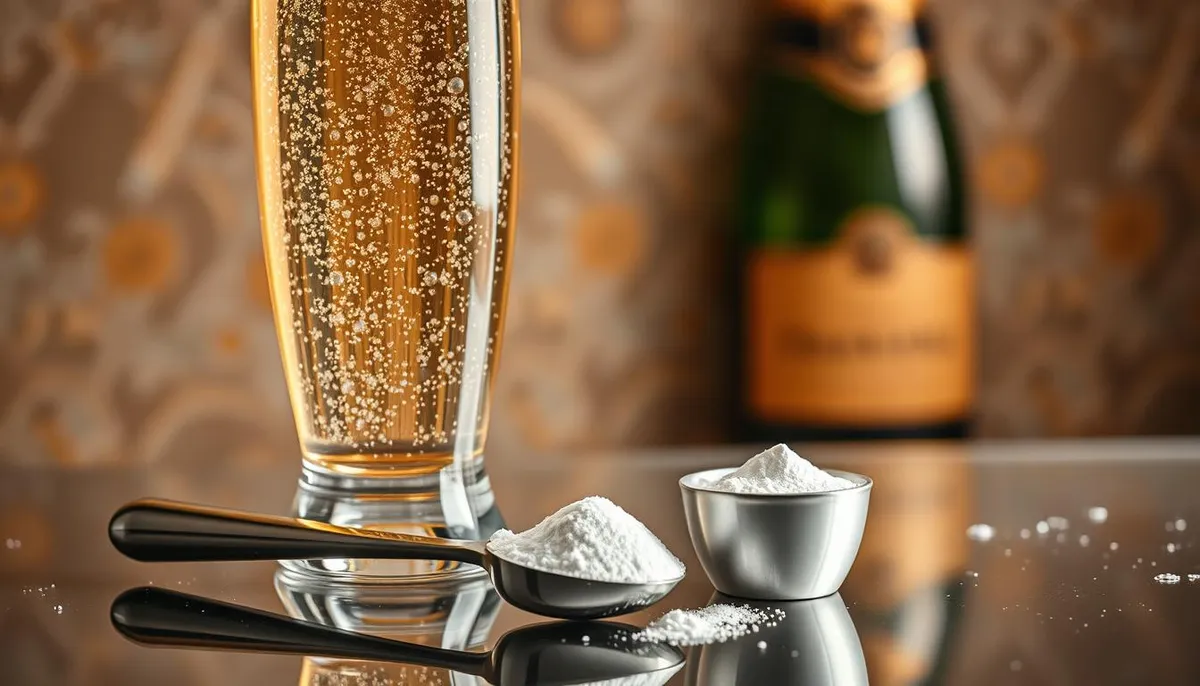
What’s in the dosage: reserve wine and pure cane sugar
The composition involves blending aged reserve wine with supremely pure cane sugar. This process, conducted with meticulous precision, ameliorates the naturally sharp acidity of Marne Valley and Montagne de Reims grapes. Consequently, this calibration ensures Brut Nature, Extra Brut, Brut, Extra Dry, Sec, Demi-Sec, and Doux classifications reflect their intended style accurately.
Even minor modifications can significantly impact the mousse quality, aroma, and persistence on the palate, maintaining alcohol levels between 11–12%. This strategic dosing thereby allows each champagne to manifest either a fuller or more streamlined sensorial profile while adhering to specified sugar content brackets.
House style decisions vs. fixed recipes
Champagne houses like Moët & Chandon, Louis Roederer, and Bollinger eschew rigid formulations in favor of house expressive latitude. Thus, a Brut might contain less than 8 g/L of sugar one season and slightly more another, depending upon the year’s acidity. This adaptiveness ensures that the champagne’s flavor signature remains consistent with the brand ethos.
Variations in annual grape harvest quality necessitate dosage as a versatile instrument. It ensures that each batch maintains equilibrium and uniformity, aligning with both the champagne’s designated classification and its publicly stated sugar content.
Why cooler climates require balance through dosage
The intrinsic high acidity of Champagne’s remote vineyards necessitates dosage intervention. It harmonizes sharp notes, integrating fruits and bready nuances into a singular, palatable experience. Absent this correction, the resultant wine might skew too tart, overshadowing its potential for refreshment.
Dosage’s precise sugar integration permits makers to refine the drink’s texture, body perception, and finish. Through this meticulous adjustment, the champagne retains its intended vibrancy, respecting its classification spectrum from exceedingly dry to notably sweet.
Champagne Flavor Profile by Sweetness Level
The relationship between sugar, acidity, and champagne’s taste and texture is plotted on a sweetness scale. Esteemed producers like Laurent-Perrier, Piper-Heidsieck, and Veuve Clicquot demonstrate the impact of dosage adjustments. They range from sharply defined to lushly fruit-forward champagnes. These indicators aid in identifying your preferred champagne style, whether it be starkly dry or sumptuously sweet.
Quick visual guide:
Bone-dry styles: mineral, zesty, high-acid
The Brut Nature and Extra Brut categories offer a piercing clarity. One should anticipate a palate of saline minerality and lemon zest within a rigorously taut structure. This sensation can almost seem electric. Laurent-Perrier’s Brut Nature stands as an outstanding exemplar of this sharply delineated style on the sweetness spectrum.
This style finishes with a prolonged, rocky impression, complemented by notes of citrus peel and chalk. Such wines foreground terroir over sweetness. They craft a minimalistic champagne profile that appeals to those who cherish exceptionally crisp textures.
Brut: crisp apple, citrus, toast complexity
The Brut style achieves a harmonious blend of precision and comfort. It unites flavors of green apple, lemon, and citrus peel with nuances of toast and brioche. A slight dosage mellows its profile yet maintains its dry character. This quality explains its widespread popularity.
Esteemed houses from Moët & Chandon to Louis Roederer prefer this style for its adaptability. The outcome is a complex champagne taste profile. It’s perfectly suited for the commencement of a meal and sustains its allure into the main course.
Sec to Doux: ripe stone fruit, honeyed notes
In the progression from Extra Dry through Demi-Sec to Doux, the sweetness increases. Flavors evolve towards pear, peach, apricot, and sugared citrus. Piper-Heidsieck’s Demi-Sec exemplifies opulent fruitiness, while Veuve Clicquot Rich offers a profile of rich, sweet dimensions.
This sweetness diminishes acidity and contributes to a heavier mid-palate. Consequently, the texture becomes smoother and silkier. Additionally, preserving nutrients in vegetables is essential to enhance the overall health benefits of meals. Fruit flavors appear more intense, endorsing a lavish style that superbly complements desserts and spicy dishes.
How sweetness influences perceived acidity and body
Added sugar tempers the sharpness of acidity and enriches the champagne’s body, imparting a creamier sensation to the bubbles. Dry variations present an energetic and upright taste; sweeter ones offer a more expansive and voluminous experience.
Depending upon the dosage, sweetness across the scale can either extend the fruit presence in the finale or retain a firm, mineral-like integrity. The selection between a vibrant and lofty versus a profound and sumptuous champagne flavor profile rests on your preference. This includes the subtle allure of champagne bottle art and sec champagne.
| Style | Typical Notes | Acidity Feel | Mouthfeel | Example Houses |
|---|---|---|---|---|
| Brut Nature / Extra Brut | Lemon zest, chalk, saline, green apple | Very high, piercing | Lean, taut, ultra-crisp | Laurent-Perrier, Louis Roederer |
| Brut | Crisp apple, citrus, toast, brioche | High, polished | Dry, balanced, layered | Moët & Chandon, Pol Roger |
| Extra Dry | Ripe pear, citrus cream, light florals | Moderate-high, softer | Sleek with gentle roundness | G.H. Mumm, Taittinger |
| Sec (Dry) | Peach, baked apple, almond, light honey | Moderate, cushioned | Plush, smooth mid-palate | Pommery, Perrier-Jouët |
| Demi-Sec | Apricot, candied citrus, honeyed brioche | Medium-low, mellow | Rich, velvety | Piper-Heidsieck, Billecart-Salmon |
| Doux | Tropical fruit, marmalade, pastry cream | Low, rounded | Luscious, opulent | Veuve Clicquot |
How to Choose the Right Champagne for Your Palate
Begin your selection by assessing your taste preferences. Opt for Brut Nature or Extra Brut if a bone-dry, high-acid champagne appeals to you. Those desiring a classic, balanced taste should choose brut champagne. For a hint of sweetness and milder acidity, Extra Dry or Dry/Sec is ideal. Select demi-sec champagne or the sweeter Doux when craving dessert-like richness.
Consider the occasion. Brut Nature and Extra Brut are perfect as aperitifs and excel with oysters and other briny seafood. Brut is a versatile choice, complementing meals and festivities alike, be it roast chicken or sushi. Extra Dry and Sec are suited to dishes with a slight kick, such as Thai or Korean barbecue. Demi-sec and Doux enhance the flavors of fruit tarts, crème brûlée, or dishes with a sweet-spicy profile.
Consider champagne’s availability. Brut is widely available, making up the bulk of global sales. In contrast, Doux is a rarity, predominantly found in France. Those mindful of sugar intake will find Brut Nature and Extra Brut ideal for minimizing sugar while maximizing flavor intensity and detail.
When estimating calorie intake, use the following as a guide per 5 oz pour. Ultra-dry styles have approximately 91–96 calories. Brut’s calorie count is slightly higher, ranging from 91–98. Champagnes of medium sweetness are around 98–111 calories. Dessert champagnes usually have over 111 calories. This information allows you to choose based on sweetness level without compromising taste or suitability for the occasion.
| Style | Typical RS (g/L) | Per 5 oz Calories | Profile & When to Choose | Suggested Pairings |
|---|---|---|---|---|
| Brut Nature / Extra Brut | 0–6 | ~91–96 | Bone-dry, precise, high-acid; great for those minimizing sugar | Oysters, sashimi, sea urchin, salted almonds |
| Brut | 0–12 | ~91–98 | Versatile and balanced; the most available, ideal for crowds | Roast chicken, tempura, mushroom risotto |
| Extra Dry / Sec | 12–32 | ~98–111 | A touch of sweetness with softer acidity; smooth and friendly | Lightly spicy noodles, charcuterie, aged Gouda |
| Demi-Sec / Doux | 32+ | ~111+ | Dessert-level sweetness; celebratory and indulgent | Fruit tart, crème brûlée, spicy-sweet wings |
For recommendations, consider true artisans of the craft. Louis Roederer and Bollinger are known for their precise, sharp Extra Brut selections. Moët & Chandon and Veuve Clicquot are synonymous with dependable brut champagnes ideal for any festivity. If you are looking for a trusted prosecco supplier, Piper-Heidsieck and Taittinger offer accessible Extra Dry and Sec options. For those seeking something to accompany dessert, Laurent-Perrier and Pol Roger present exquisite demi-sec choices.
Quick tip: Chill drier varieties slightly more to enhance crispness; serve sweeter champagnes at a slightly warmer temperature to better release their aromas. Pursue personal taste, but let the occasion fine-tune your selection.
Looking for Champagne? Global Export, Personalized Quotes
Our team curates a selection to align with your palate, dining choices, and financial plan. The champagne sweetness scale assists in refining choices by sugar content, nuanced by the grape mix, year, and winemaker’s craft.
Think bright aperitif sips or rich, after-dinner sparkle. If brut’s crispness or demi-sec’s velvety sweetness appeals, we direct you toward suitable labels. These selections are perfect for various occasions: weddings, business tokens, or serene evenings.
Discover curated brut, extra brut, demi-sec, and more
Embark on a journey through vintner treasures and established names like Moët & Chandon and Bollinger. We juxtapose brut’s widespread allure against demi-sec’s affinity for confections. This comparison leverages the champagne sweetness scale for precise selection.
Ready to ship worldwide—request your custom quote
Convey your taste preferences, culinary pairings, and budget constraints. We’ll compile an exclusive selection, confirm its availability, and organize prompt, safe delivery directly to you.
Visit https://champagne-export.com to get started
Detail your event and the champagne character you seek—whether it’s bone-dry, well-rounded, or distinctly sugary. Expect a customized compilation in one business day. Your quintessential champagne is merely a click away.
Conclusion
The champagne sweetness scale categorizes seven specific styles, influenced significantly by dosage adjustments to achieve a balance between pronounced acidity and desired sweetness. This spectrum includes Brut Nature (0–3 g/L) and Extra Brut (0–6 g/L), which are on the drier end, progressing to the notably sweet Doux (50+ g/L), which is almost syrupy in nature. These Residual Sugar (RS) levels help one navigate champagnes, ensuring a match for both palate and occasion. Additionally, mastering champagne photography techniques can enhance the presentation of your selections, making each bottle as visually appealing as it is enjoyable.
Brut (0–12 g/L) commands the market, appealing through its vast spectrum of flavors, from crisp apple and lemon to rich toasted undertones. These elements make Brut particularly versatile, pairing admirably with a variety of dishes including seafood, roasted poultry, and even salty finger foods. Following this, Extra Dry (12–17 g/L) and Dry/Sec (17–32 g/L) introduce a subtle sweetness, smoothing out the champagne’s profile, whereas Demi-Sec (32–50 g/L) complements sweeter desserts, robust cheeses, and even spicy cuisines with its moderate sugar level. Doux tops the sweetness scale, offering a sumptuous experience for those seeking maximal indulgence.
Despite escalating calorie and carbohydrate content in proportion to sugar levels, champagne maintains a lighter footprint than many cocktails or sugary coffee beverages. For those prioritizing a leaner choice, Brut Nature and Extra Brut stand out. They provide a remarkably crisp and minimalist experience, thanks to their minimal residual sugar content.
Allow the champagne sweetness scale to inform your selection process: examine the label carefully, consider the specific event, and envisage the flavor profile that most appeals to you. Whether your preference lies towards the starkly dry or the decadently sweet, locating the perfect champagne is feasible. For those in pursuit of premium, export-grade champagne, including insights on champagne trade deals, a personalized quote can be requested at https://champagne-export.com.
FAQ
What is the champagne sweetness scale and how is it classified?
The champagne sweetness scale classifies champagnes into seven styles based on residual sugar (RS) content. These range from Brut Nature (0–3 g/L) to Doux (50+ g/L). The classification, from bone-dry to sweet, is determined post-disgorgement. The dosage process tailors each champagne’s sugar content and flavor profile.
How does dosage shape champagne classification and sweetness?
Dosage, the addition of liqueur d’expédition, refines the champagne’s residual sugar to counterbalance its innate high acidity. It delineates the champagne’s style on the sweetness scale. This practice, tailored annually, ensures consistency with the house style and accounts for vintage variation.
Why does Champagne need dosage in the first place?
Champagne’s distinct profile evolves from its cool climate, which imparts pronounced acidity. Dosage mitigates this sharpness, similar to sugar in coffee, aiming for balance. At lower RS, a vibrant mineral presence persists; higher levels enrich the fruit flavors, softening the acidity.
Can you outline the seven sweetness levels from bone-dry to sweet?
Certainly. Starting with Brut Nature and moving through to Doux, the range covers dry to very sweet preferences. Brut, the middle of the scale, commands 80–90% of worldwide sales. Doux remains largely a French niche.
What defines Brut Nature (0–3 g/L RS), also called Brut Zero or Non-Dosage?
Brut Nature stands out for its absence of added sugar, delivering an ultra-crisp, mineral-rich taste. Esteemed by those favoring keto or low-carb diets, it features vibrant acidity, citrus notes, and a chalky minerality.
How is Extra Brut (0–6 g/L RS) different from Brut Nature?
Extra Brut, slightly less austere than Brut Nature, incorporates a subtle hint of sugar. This slight adjustment brings a milder palate experience while maintaining the style’s characteristic dryness and precision.
What are the calories and carbs in ultra-dry styles per 5 oz (150 ml) at ~12% ABV?
For a 5 oz serving, Brut Nature contains 91–93 calories with nearly 0.15–0.2 carbs. Extra Brut offers 91–96 calories and up to 1 carb. These represent the most calorie and carb-conscious options within the champagne sweetness spectrum.
When should I choose Extra Brut vs. Brut Nature?
Opt for Brut Nature to savor peak dryness and intense acidity. Extra Brut suits those desiring comparable dryness with added roundness. Each excels as an aperitif or paired with seafood.
What does Brut (0–12 g/L RS) taste like and why is it so popular?
Brut captivates with flavors of crisp apple and citrus, complemented by notes of toast and brioche. Its balanced acidity, courtesy of a moderate dosage, ensures versatility with various dishes, underscoring its massive global popularity. Additionally, exploring black owned champagne brands can introduce unique flavors and stories that enhance the champagne experience.
How many calories and carbs are in a 5 oz pour of Brut at ~12% ABV?
A serving of Brut approximates 91–98 calories and harbors up to 1.8 carbs, reflecting the influence of its dosage level. Its alcohol content typically stands at 12% ABV.
What foods pair well with Brut champagne?
Brut pairs splendidly with oysters, sushi, and fried delights, cutting through fats and salts while harmonizing with umami flavors. Its toasty undertones complement savory dishes exceptionally well.
Isn’t Extra Dry the driest? Why is it sweeter than Brut?
Contrary to its nomenclature, Extra Dry, with 12–17 g/L RS, actually surpasses Brut in sweetness. This profile offers a gentle sugary caress coupled with a vivacious, rounded texture.
What characterizes Dry/Sec (17–32 g/L RS)?
Dry/Sec, veering towards medium sweetness, conjures flavors of succulent orchard and stone fruits, its softened acidity providing a lush palate experience. This style adeptly straddles the realms of aperitif and dessert champagne.
What are the calories and carbs for Extra Dry and Dry/Sec per 5 oz?
Extra Dry presents with approximately 98–101 calories and 1.8–2.6 carbs, while Dry/Sec offers 101–111 calories and 2.6–4.8 carbs. The rise in sweetness directly correlates with increased caloric and carb content.
When should I serve Extra Dry or Dry/Sec?
These lightly sweetened styles harmonize beautifully with salty snacks and spicy fare, including festive occasions adorned with celebration balloons, mitigating heat with their subtler sweetness. They provide a delightful contrast to ultra-dry champagnes.
What defines Demi-Sec (32–50 g/L RS) and how is it used?
Demi-Sec, markedly sweet yet balanced by intrinsic acidity, shines as a dessert champagne. It also complements the sweet and spicy nuances of Thai and Szechuan cuisines.
What about Doux (50+ g/L RS)? Is it common?
Doux, the pinnacle of sweetness, is now a rarity, predominantly within French confines. It is indulged in with desserts or as a sweet aperitif.
How should serving temperature change with sweeter styles?
Increase chill for sweeter varieties to enhance freshness and mitigate sweetness. For drier champagnes, a slightly warmer temperature benefits aromatic development.
What desserts and dishes pair best with Demi-Sec and Doux?
Demi-Sec pairs with fruit tarts and spices, while Doux elevates rich desserts. Each style caters distinctively to the sweetness in dishes, enriching the dining experience.
Which famous producers make good examples across sweetness levels?
Renowned houses like Laurent-Perrier and Billecart-Salmon offer excellent brut to demi-sec options. Veuve Clicquot and Piper-Heidsieck are notable for their sweeter styles, illustrating the range’s diversity.
How do residual sugar ranges affect taste and acidity?
Lower RS levels emphasize acidity and minerality, yielding a drier palate experience. Conversely, higher RS intensifies fruit sweetness, reduces acidity sharpness, and enriches the body.
What are the per-glass calorie and carb ranges by style at ~12% ABV?
Respective champagne styles exhibit a spectrum of caloric and carb content, with Brut Nature being the most diet-friendly and Doux the richest in both metrics.
How does champagne sugar content compare to other drinks?
Champagne, particularly Brut Nature, maintains lower sugar levels compared to common beverages like Gin & Tonic or soft drinks, offering a healthier choice for mindful drinkers.
What are smart lighter-choice tips without losing flavor?
Opt for Brut Nature or Extra Brut for minimal sugar impact. For those looking for champagne storage tips, hydration is crucial alongside champagne consumption, especially for higher sweetness levels that necessitate colder serving temperatures.
Is dosage the same for every Brut?
Each house adapts its dosage to align with the vintage’s character and its unique style. Thus, the sugar content in Brut varies, rather than adhering to a strict standard.
What exactly is in the dosage?
The dosage combines reserve wine and pure cane sugar, meticulously integrated post-disgorgement to finalize the champagne’s sweetness category and overall balance.
Why do cooler climates like Champagne’s rely on dosage?
High acidity and modest ripeness characterize grapes from cooler regions. Dosage adjusts these traits, ensuring a harmonious balance while maintaining the wine’s vibrant personality.
How does sweetness change Champagne’s flavor profile?
Champagne’s sweetness spectrum ranges from mineral-driven dry styles to rich, honeyed expressions, each modifying the perception of acidity and body.
How does sweetness influence perceived acidity and body?
Sugar diminishes acidity’s bite and augments the wine’s body, offering a broad array of palate experiences from lean and crisp to rounded and lush.
How do I choose the right champagne for my palate?
Align the champagne’s residual sugar with your taste preference. From the stark Brut Nature to the luscious Doux, consider dietary considerations, pairing needs, and the occasion.
What if I’m sensitive to sugar but want Champagne flavor?
Favor Brut Nature or Extra Brut to experience champagne’s depth with negligible sugar and lower carbohydrates compared to sweeter variants.
Do bubbles cause headaches, or is it the sugar?
Headaches may result from carbonation accelerating alcohol absorption and dehydration. Sugar content varies; meaningful hydration, food, and consumption pace significantly impact wellness.
Can I get personalized recommendations and global shipping?
Yes. Select from curated brut, extra brut, and demi-sec options available for global delivery, including champagne vineyard tours. Obtain a bespoke quote matching your preferences and budget.
Where can I start an order for export-ready Champagne?
Visit https://champagne-export.com to request your personalized quote and arrange fast, global export of bottles aligned to your preferred champagne sweetness levels.