Looking for premium bubbly and clear guidance? This short guide lays out the essentials for companies that want to import goods to Taiwan and place alcoholic beverages on the market. It covers registration with the Bureau of Foreign Trade (BOFT), license steps, and the core documents you will need.
We make complex rules easier to follow. Learn which certificates and forms the competent authority expects, how health and labeling standards affect your product, and what inspections may occur at customs. You will also see how to prepare an import permit and the declaration form so shipments clear without delay.

Need a tailored quote? If you want premium selections ready for export, request a personalized quote at https://champagne-export.com and get expert help with registration, customs, and inspection procedures for your company.
Key Takeaways
- Register with BOFT and confirm your company meets market registration requirements.
- Prepare key documents: certificate of origin, declaration forms, and license applications.
- Follow labeling, health, and alcohol content rules set by the competent authority.
- Plan for customs inspections and coordinate with importers and local authorities.
- Request expert guidance or a custom quote at https://champagne-export.com to streamline the process.
Understanding the Regulatory Framework for Importing Champagne into Taiwan
Knowing which government steps apply is the first win for any company bringing alcohol products to market.
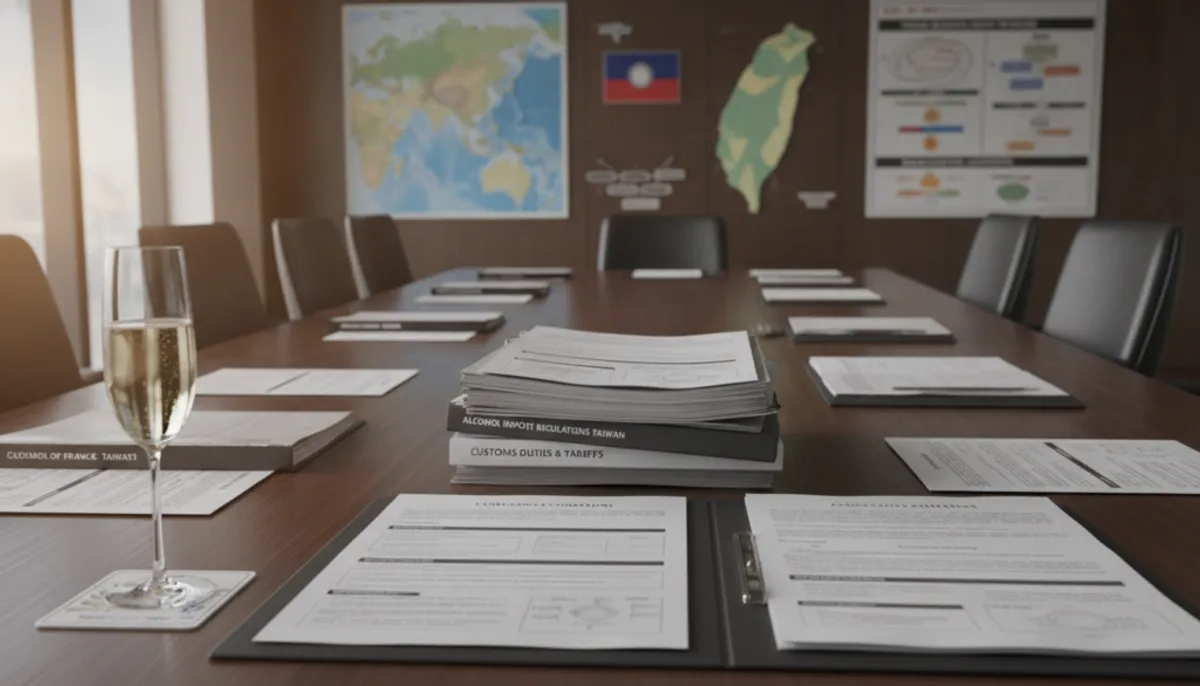
Pursuant to Item 1, Article 9 of the Trade Law, all entities must complete registration with the Bureau of Foreign Trade (BOFT) before they can import or export. This registration starts the legal process for an importer to act as a market entrant.
Licensing Procedures
The Ministry of Finance sets standards and issues guidance for alcohol products, including champagne taxation israel. Companies must apply for a license and an import permit while submitting proof of origin and labeling details.
Key steps:
- Register with BOFT under the Trade Law.
- Prepare application documents: license, permit, and origin certificates.
- Follow ministry standards for alcohol content, labeling, and declaration.
Understanding Import Restrictions
Certain items appear on a negative list and require special clearance. Tobacco alcohol and other controlled goods face stricter inspections and customs scrutiny.
| Requirement | Responsible Authority | Typical Documents | Inspection Level |
|---|---|---|---|
| Company Registration | BOFT | Registration form, business license | Administrative check |
| Import License & Permit | Ministry of Finance | Application, product specs, origin | Document review |
| Customs Declaration | Customs Authority | Declaration, bill of lading | Physical/targeted inspection |
| Labeling & Health Standards | Competent Authority | Labels, alcohol content proof | Sample testing possible |
Looking for champagne? We’ve got you covered. Discover the finest selections and request a personalized quote at https://champagne-export.com to speed your application and clear inspections.
Essential Documentation and Labeling Requirements
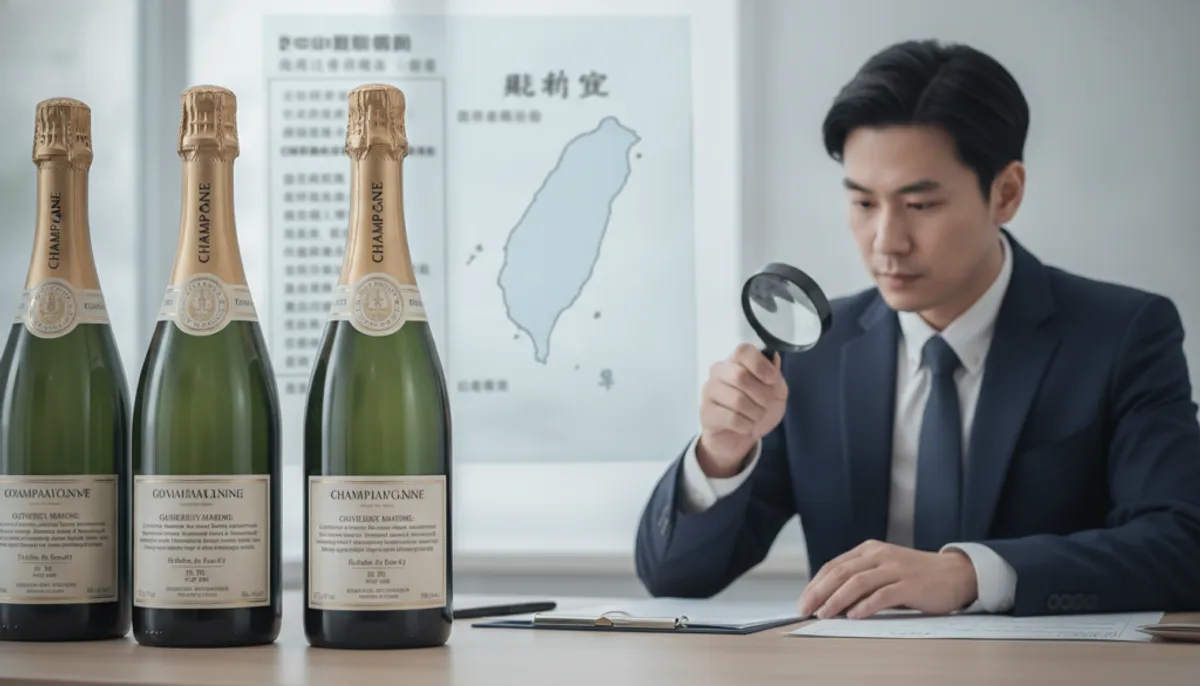
Clear paperwork and correct labels cut delays. Compliance starts with labels that meet Taiwan’s Regulations Governing the Labeling of Alcohol Products (2008-05-08). All required information must appear in Traditional Chinese and be easy to read.
Mandatory Labeling Standards
Brand name and alcohol content must be shown in Traditional Chinese. Volume and expiration date should be visible, and the label must match the product information on your application.
Proper labeling is a mandatory requirement for any business bringing alcoholic beverages imports to market. The competent authority may request samples for inspection.
Required Shipping Documents
Prepare these core documents to speed customs clearance:
- Commercial invoice and certificate of origin.
- Import permit or license application and declaration form.
- Packing list and bill of lading for the importer and customs.
Health Certificate Waivers
New rules let wine exporters apply for a health waiver using self-certification statements. This can simplify the inspection process but must be backed by accurate documents.
Looking for Champagne? We’ve got you covered. Discover the finest selections ready to export and request your personalized quote today at https://champagne-export.com.
Navigating Customs Procedures and Inspections
A clear customs plan helps importers move alcoholic beverages through inspections with confidence.
The Taipei Customs Office (TPCO) runs 24-hour services for cargo inspection and customs clearance. This fast response helps your import process and reduces hold times for alcohol products.
Prepare documents early. Submit the license, permit, declaration, and invoice within the 15-day arrival window. Accurate forms speed review and cut the risk of secondary inspection.
Some products valued under $1,000 USD for research or exhibition may skip pre-import inspection. Ask your agent to apply for this exemption if it fits your business needs.
- The TPCO is the primary authority for 24-hour inspection and release of imported alcohol products.
- We guide your business through the customs declaration process and help prepare required documents.
- Our team works with the competent authority to manage tobacco alcohol and other alcoholic beverages regulations and inspections.
| Step | Who | Typical Documents | Notes |
|---|---|---|---|
| Arrival & Declaration | Importer / Customs | Declaration form, bill of lading | Submit within 15 days |
| Inspection & Release | Taipei Customs Office | License, permit, invoice | 24-hour service for cargo |
| Exemption Review | Customs / Competent Authority | Application, value proof | Under $1,000 USD may be exempt |
Looking for Champagne? We’ve got you covered. Discover the finest selections, ready to be exported anywhere in the world. Request your personalized quote today on https://champagne-export.com.
Conclusion: Streamlining Your Global Champagne Exports
A clear end-to-end plan helps exporters move alcoholic beverages through customs and market checks with fewer delays.
Prepare the right documents, follow Ministry of Finance regulations, and secure your permit and license early. This reduces the chance of inspection and speeds the application and declaration process.
Work with a partner that guides your business on labeling, certificate of origin, health checks, and alcohol content standards. This support helps the importer and competent authority complete customs clearance smoothly, including insights into the lebanese wine industry.
Looking for Champagne? We’ve got you covered. Discover the finest selections, ready for global export. Request your personalized quote today at https://champagne-export.com.