Travelers and shippers need clear, practical guidance when planning shipments or carrying alcohol through Doha.
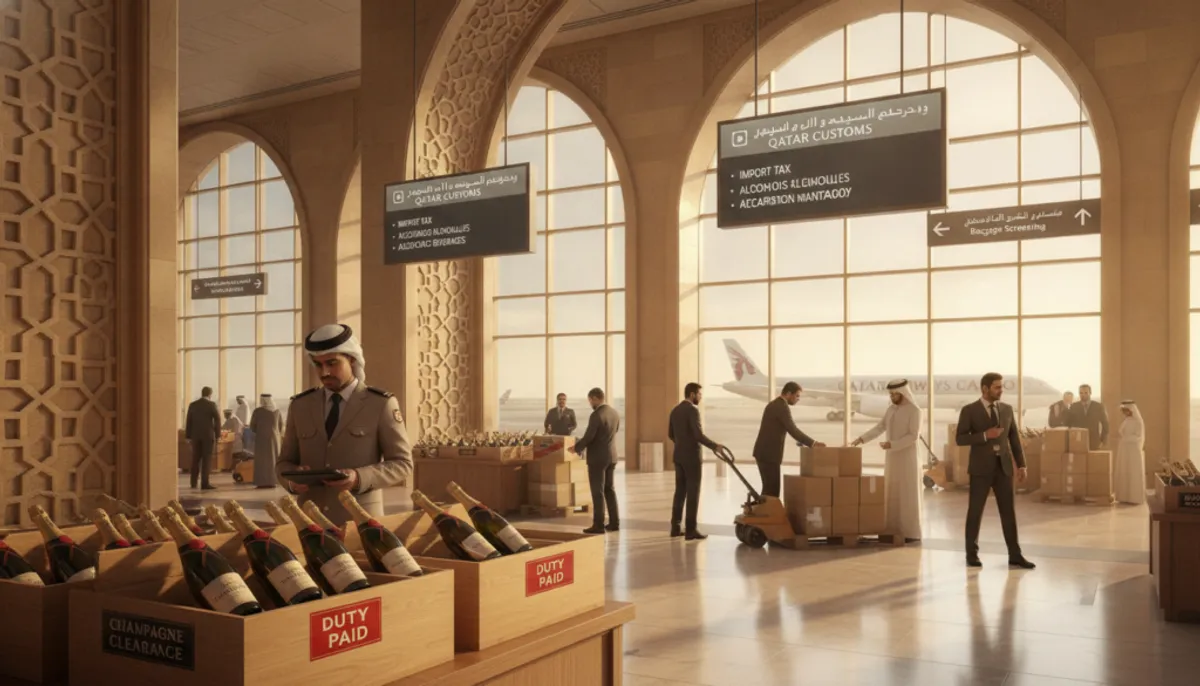
Doha Hamad International Airport serves as the main international airport for most arrivals. Rules are strict and enforced at the airport checkpoint.
Transit rules mean that even if your final destination lies elsewhere, you cannot rely on past exceptions. The Qatar Airways Stopover Program used to allow storage, but that practice is no longer permitted.
We offer concise information on duty, customs, and the required labelling you must consider. Knowing the content of your parcel avoids confiscation and delays at the destination.
Key Takeaways
- Hamad International Airport enforces strict controls at arrival and transit.
- Bringing alcohol through this airport is tightly regulated and often prohibited.
- Qatar Airways Stopover storage for alcohol is no longer allowed.
- Understand duty and customs rules before you ship or travel.
- Declare the exact content to avoid confiscation and fines.
Understanding the Legal Landscape for Importing Champagne into Qatar
Travelers and shippers must know the rules before they pack or send goods. Security at Hamad is strict, and the same checks apply whether you stop there briefly or stay longer.
Alcohol Import Restrictions
Qatar enforces tight controls on alcohol. Any alcoholic containers found in your bags will be confiscated by security officers immediately.
Passengers must follow the 100ml rule for liquids at checkpoints. If a liquid exceeds that limit and is not in a re-sealable bag, it will be removed.
- Confiscation occurs for any alcohol in carry-on or checked luggage.
- Provide accurate details to customs to avoid fines or delays.
- Pack items properly and review rules before travel to prevent seizures.
Transit Rules at Hamad International Airport
When you are in transit, the international airport enforces the same prohibitions as for arrivals. This applies even if your final destination is elsewhere.
Both hand-baggage and checked luggage undergo rigorous screening to detect prohibited content. Choose the correct customs channel and prepare your bag to meet requirements.
| Check | Limit/Rule | Applies To | Consequence |
|---|---|---|---|
| Liquid containers | 100ml max in carry-on | Hand-baggage | Excess confiscated |
| Alcohol | Prohibited | All bags | Immediate seizure |
| Customs declaration | Accurate info required | All passengers | Fines or delays |
Navigating Customs Regulations and Documentation Requirements
Clear paperwork is the fastest way to prevent delays at customs checkpoints. When you plan to send or carry goods through the international airport, follow the rules carefully.
Mandatory Import Licenses
All importers must obtain a mandatory import license from the Ministry of Commerce and Industry. This license is essential for legal entry of goods and helps speed up processing at the airport and customs counters.
Essential Shipping Documentation
Since April 1, 2011, Qatar Customs requires an official invoice, a certificate of origin, and a packing list for all shipments. Include the HS Code on every invoice to help customs classify items faster.
If the value of gifts or personal items exceeds QAR 3,000 (about USD 825), declare them when passing through customs channels to avoid fines or holds.
Labeling and Origin Requirements
Labels must match the physical content. Any discrepancy in country of origin on cartons or bags can lead to the return of the shipment.
When clearing alcohol or other restricted items, ensure all documentation aligns with the cargo content exactly. Mismatched paperwork often triggers additional security checks and duty disputes.
- Contact the General Authority of Customs at +974 4441-1149 for specific inquiries.
- Double-check invoices, certificates, and packing lists before transit.
- Proper documents reduce the risk of luggage or cargo being held at the destination.
| Requirement | Applies To | Key Detail | Consequence |
|---|---|---|---|
| Import License | All importers | Issued by Ministry of Commerce and Industry | Shipment denied without license |
| Documentation | All shipments | Invoice, certificate of origin, packing list, HS Code | Delays or fines if incomplete |
| Value Declaration | Personal gifts/items | Declare if > QAR 3,000 | Customs hold or duty assessment |
| Label Accuracy | Cartons and bags | Country of origin must match | Return of shipment or seizure |
Sourcing Premium Selections for Global Export
Sourcing high-end bottles that travel well starts with labels, packing, and traceable content details.
Looking for champagne? We’ve got you covered. Our catalog lists premium alcohol brands chosen for taste and export resilience.

- Premium selections ready for shipment to any global destination today.
- High-quality alcohol options matched to international label and content standards.
- Request a personalized quote at https://champagne-export.com to begin your export journey.
- Secure logistics preserve brand integrity from warehouse to final stop.
Whether you are a retailer or a collector, our team handles every shipment with care and provides precise paperwork to help clear customs smoothly.
Conclusion
Follow customs and the swedish customs regulations, and you cut risks at the airport and move faster through checks. Keep statements clear, honest, and paired with matching documents to satisfy security and border staff.
Know your duty obligations and list all items accurately. If you handle alcohol, label contents and origin plainly to avoid seizure or fines.
Good preparation prevents delays. We hope this information helps you plan shipments and travel with confidence.
If you need extra support, consider professional guidance to navigate paperwork and complex rules before you travel or ship.