Looking for Champagne? We’ve got you covered. This brief guide gives clear, practical information for any importer handling commercial wine shipments to Denmark. You’ll learn about duties, labeling terms, and how to state the country of origin to meet strict food safety rules.
Denmark ranks first in the world for foreign trade turnover per capita and runs a service-heavy economy. That makes it a key market for sparkling wines and other alcohol goods.

Our friendly guide explains the purpose of customs documentation, value declarations, and winemaking standards you must respect. Visit our website for tailored service and to request a personalized quote. We list requirements that help an importer manage shipments and ensure correct use of paperwork.
Key Takeaways
- Denmark’s strong trade profile makes compliance vital for success.
- Labeling must show the country of origin and meet food safety terms.
- Know duties, value rules, and customs documents before export.
- Our guide offers practical information for wine and alcohol traders.
- Request a personalized quote and selections on our website for worldwide export.
Understanding the Danish Wine Market Landscape
Copenhagen leads as a major hub for natural wines, ranking third worldwide behind Paris and Tokyo. This concentration shapes trends across the broader danish wine market and influences which wines reach retailers and bars.
Consumer Preferences and Trends
With a population of 5.96 million (Jan 2024), Denmark shows high per capita interest in wine. Supermarkets still account for about 72% of purchases, but that share is falling.
Consumers are shifting toward natural wines, boutique selections, and online ordering. This creates opportunities for exporters and retailers who can offer variety and strong storytelling.
The Role of Local Importers
Local importers act as vital partners. They curate selections, manage compliance, and connect foreign producers with Danish buyers.
- Importers help introduce niche and sparkling wine lines to the market.
- They provide logistics, market insights, and access to restaurants and supermarkets.
- Minimal government interference allows a steady increase in wine imports from varied countries.
| Metric | Value | Impact for Exporters |
|---|---|---|
| Population (Jan 2024) | 5.96 million | High per capita consumption; focused target market |
| Supermarket share | 72% | Wide retail reach, but declining for specialty wines |
| Copenhagen natural wines rank | 3rd worldwide | Strong demand for natural and boutique wines |
| Government role | Minimal | Greater diversity in imports and faster market entry |
For exporters and brands seeking market entry, partnering with experienced importers and offering curated selections matters. Looking for Champagne? We’ve got you covered. Discover fine selections and request a personalized quote at https://champagne-export.com.
Regulatory Requirements for Importing Champagne into Denmark
Clear labeling and up-to-date paperwork are the cornerstones of any successful wine import to the Danish market.
The EU Directive 2000/13/EC sets mandatory label rules for alcoholic beverages. Labels must state the country of origin, lot identification, and declared alcohol content. Importers must also list any allergens and basic winemaking terms so consumers get accurate information. Additionally, understanding champagne labelling rules is crucial for ensuring compliance and meeting consumer expectations.
The danish wine market values safety and traceability. With consumption over 35 liters per capita, authorities enforce food and allergen rules strictly. Meeting these terms reduces inspections and speeds customs clearance.
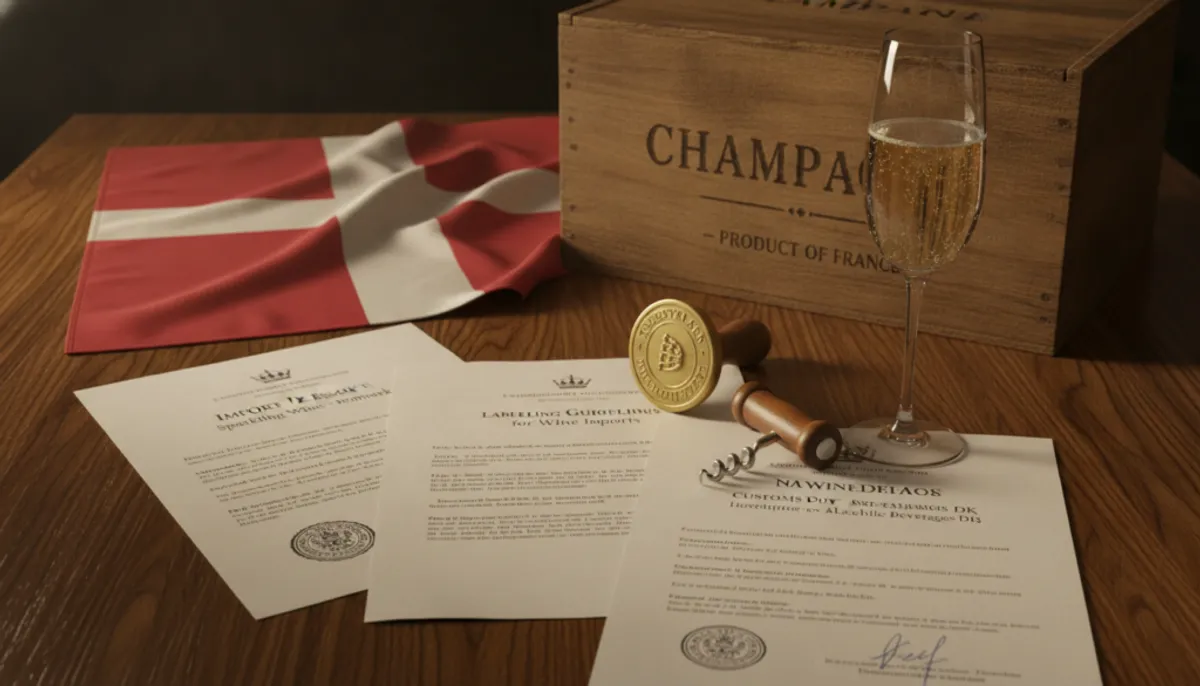
- Ensure labels comply with EU Directive 2000/13/EC and show origin and lot ID.
- Declare alcohol content and allergens clearly on every bottle.
- Check our website for the latest regulatory list and government updates to keep your imports compliant.
Looking for Champagne? We’ve got you covered. Discover the finest selections, ready to be exported anywhere in the world. Request your personalized quote today on https://champagne-export.com.
Logistics and Customs Procedures for Alcohol Imports
Efficient transit and fast clearance hinge on precise documentation and clear value declarations.
For wine shipments, the Single Administrative Document (SAD) is the official import declaration used by the Danish Tax and Customs Administration. Use the SAD for every commercial consignment to avoid delays.
Essential Documentation for Customs
Keep a clear list of required papers: SAD, commercial invoice, packing list, and certificate of origin.
Our team maintains a full list to help exporters comply with EU rules and food safety terms.

Navigating Taxes and Tariffs
Importers must calculate VAT, known as merværdiafgift, on the total value of alcohol imports, along with israeli customs duties. Declare value accurately to prevent extra duties and inspections.
In 2022, Denmark recorded 181.6 million liters of wine imports, showing steady market demand and the need for clear tax planning.
Standards of Fill and Winemaking Practices
Fill levels and winemaking terms must follow EU regulation so bottles meet Danish retail standards.
Aligning with these rules reduces holds and supports faster market entry for wines across countries.
- Service: Our website provides information and procedural support for importers and exporters.
- Compliance: Certificate of origin and correct use of customs forms are essential.
- Strategy: Navigating government regulation is a vital part of market success in this logistics hub.
Looking for Champagne? We’ve got you covered. Discover the finest selections, ready to be exported anywhere in the world. Request your personalized quote today on https://champagne-export.com.
Conclusion: Streamlining Your Champagne Export Strategy
A concise export strategy blends consumer insights with strict label and tax compliance to speed market entry.
Successfully entering the danish wine market requires knowing consumer preferences and adapting to trends like natural wines. Partners such as experienced importers help you reach shoppers in supermarkets and specialist bars.
Use this guide for practical information and strategic insights. Looking for Champagne? We’ve got you covered. Discover the finest selections, ready to be exported anywhere in the world. Request your personalized quote today on https://champagne-export.com.