A chilled bottle of Champagne epitomizes celebration like nothing else. It’s central to weddings, grand openings, and more. Champagne photography aims to capture the essence of celebration: sparkle, ambiance, and flavor in a glance.
Begin with selecting the right surface. Marble, rustic wood, or stylish countertops bring out the luxurious feel of champagne. Integrate playful angles and a bit of tilt for a unique touch. Ensure your frame is full to highlight the golden textures of sparkling wine.
Ensuring the flutes are pre-chilled is vital. Condensation on the glass reads as refreshing, whereas dry flutes may appear insincere. Close-ups on bubbles can enhance vibrancy. Use a tripod for sharpness. High shutter speeds are crucial for capturing sprays, while maintaining ISO below 800 avoids graininess in the images.
Lighting is paramount in setting the mood. The golden hour offers a flattering, warm glow. Using a direct flash can offer a contemporary, celebratory feel to your photos when a modern edge is desired. Adjustments in Lightroom or VSCO will refine your images’ brightness, contrast, and saturation, ensuring the highlights in the glass and bubbles remain true to life.
To capture the essence of an event, open and then shake the champagne bottle with your thumb over the top for a controlled spray. This technique results in authentic droplets on the bottle and bucket, embodying luxury. If seeking Champagne, explore premium options available for global shipping and request quotes at https://champagne-export.com.
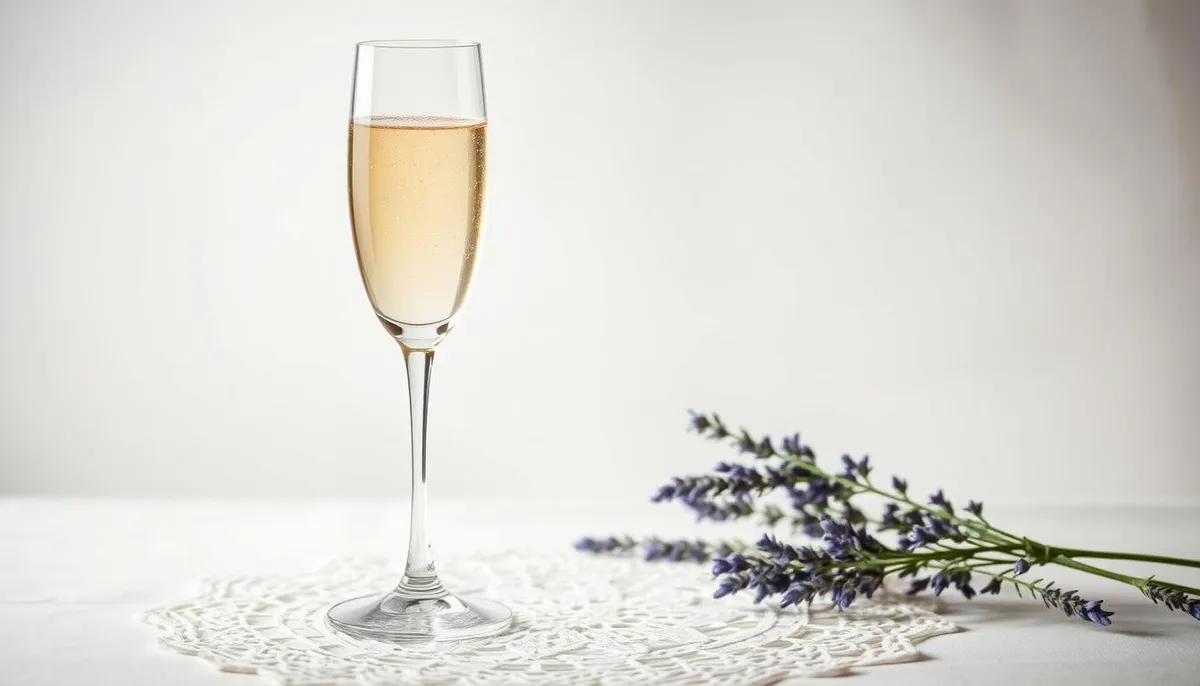
Key Takeaways
- Use marble, rustic wood, or chic countertops to ground luxury champagne images.
- Chill flutes to create real condensation and a refreshing look.
- Fill the frame and try slight slants to add editorial energy to champagne pictures.
- Shoot sprays with high shutter speeds and keep ISO under ~800 for clean detail.
- Favor golden hour light; add direct flash when you want a bold, celebratory vibe.
- Edit in Lightroom or VSCO, preserving bubble highlights in sparkling wine photos.
- Apply safe spray techniques to capture authentic, energetic champagne branding shots.
Setting the Scene for Luxury Champagne Images
Before framing your opening shot, envisage a realm embodying luxury. Seek clean lines and tactile textures. Aim to conjure a congruent ambiance conducive to high-end beverage photography. When estimating champagne needs, ensure the champagne remains chilled, glasses pristine, transforming your images from ordinary to extraordinary.
Backdrop brilliance: marble, rustic wood, and chic countertops
Marble enchants with its cool reflections, enhancing golden hues. Rustic wood introduces warmth, offering a striking contrast. Chic countertops, such as quartz or polished stone, present a modern gloss. Together, they harmonize for opulent champagne visual narratives.
Experiment with diverse angles. A tilted perspective adds dynamism, a direct approach ensures clarity. Such a juxtaposition yields a polished yet tangible allure in your compositions.
Luxury context cues: tubs, bridal suites, garden parties, and hotel arrivals
Envision a frost-laden bucket juxtaposed with a brimming bathtub, crafting a scene of indulgence. In bridal suites, associate a chilled bottle with a solitary rose comme au Cashel Palace Hotel in Tipperary, crafting an ambiance of romantic elegance. Outdoor settings benefit from strawberries and lush foliage, perfectly accenting your sparkling wine imagery.
- Room service cues: chilled, ready-to-pour trays as seen at XV Beacon Hotel in Boston.
- Global icons: polished arrivals at The Peninsula Bangkok and Mandarin Oriental Bangkok to signal welcome and ease.
“Take me there” styling for authentic, indulgent ambiance
Ensure bottles and buckets exhibit matching condensation. Linens must be crisply pressed, and metal finishes should mirror the venue’s aesthetic. As a beverage wholesale supplier, perfectly positioned glass droplets, meticulous napkin folds, and a subtle luminance craft an atmosphere that beckons, rooted in authenticity rather than artifice.
Avoid inconsistencies that distract. A tepid bottle beside a frosty bucket detracts from the scene’s credibility. Harmonize temperature, texture, and illumination to underpin a narrative that invites, celebrating the art of elegant drink photography.
champagne photography
Light and timing decisively influence the essence of champagne photography. The objective is to maintain a pristine scene where labels, bubbles, and the glass’s edges are impeccably defined. Incorporating a fusion of natural light and modern flash techniques creates imagery that is simultaneously romantic and editorial. This blend is ideal for capturing both the spirit of celebration and the sophistication of elegant drink photography.
Golden hour natural light vs. direct flash for celebratory photos
The golden hour cloaks glass and liquid in a soft, warm embrace. During this time, highlights adopt a gentle softness and skin tones are rendered more flattering, particularly during toast moments. This lighting condition is preferred for champagne photography that aspires to evoke a dreamy and luxurious ambiance.
Conversely, direct flash imparts a clear, dynamic atmosphere indicative of party scenes. It is suited for capturing spontaneities such as quick candids, glass clinks, and dance floor vibrations. Utilizing on-camera flash achieves a timeless snapshot aura in celebratory imagery. Subsequently, applying bounce or diffusing techniques refines the appearance, enhancing elegant drink photography.
Rule of thirds, leading lines, and clean layouts for elegant drink photography
Positioning the champagne flute or bottle at an intersection of the rule of thirds effectively anchors the image’s framework. Utilize elements such as counter edges, tray rims, or neatly folded linens to direct the viewer’s gaze towards the focal point of the pour. It is essential to maintain an uncluttered layout, ensuring the immediate recognition of bubbles, labels, and glassware in champagne photography.
Incorporate understated props like florals, confetti, or a gleaming silver tray to add dimensional depth to the composition. It is crucial to manage the space surrounding the stem and rim meticulously, promoting a clean, negative space that typifies refined, bubbly photography.
Burst mode and high shutter speed to freeze sprays and splashes
Engaging burst mode is strategic for capturing fleeting moments: the inaugural pop, the graceful arc of a pour, and the precise moment of a spray. Employing a high shutter speed ensures that droplets are frozen in time, maintaining distinct trails.
Starting with a fast shutter, then modifying aperture and ISO settings for optimal exposure is advisable. Maintaining the ISO below approximately 800 is beneficial to reduce grain, preserving the crisp and lustrous appeal integral to celebratory and elegant drink photographs.
Mastering Bubbles, Condensation, and the Frosty Look
Cold glass and lively effervescence create a sensory scene in champagne photography, making viewers feel the temperature first. A frosty sheen, when achieved, elevates the luxury inherent in champagne imagery, avoiding a staged appearance. The key is in the authentic depiction of cold. For those seeking the best options, exploring luxury champagne deals can enhance your experience.
Prep is non‑negotiable: Chill the bottles to a precise range of 41–45°F. Also, refrigerate flutes for a minimum of 30 minutes beforehand. A gently fogged glass epitomizes refreshment in any champagne visual, ensuring the bubbles retain their integrity. This step is crucial to achieving the desired frosty aesthetic in bubbly photography.
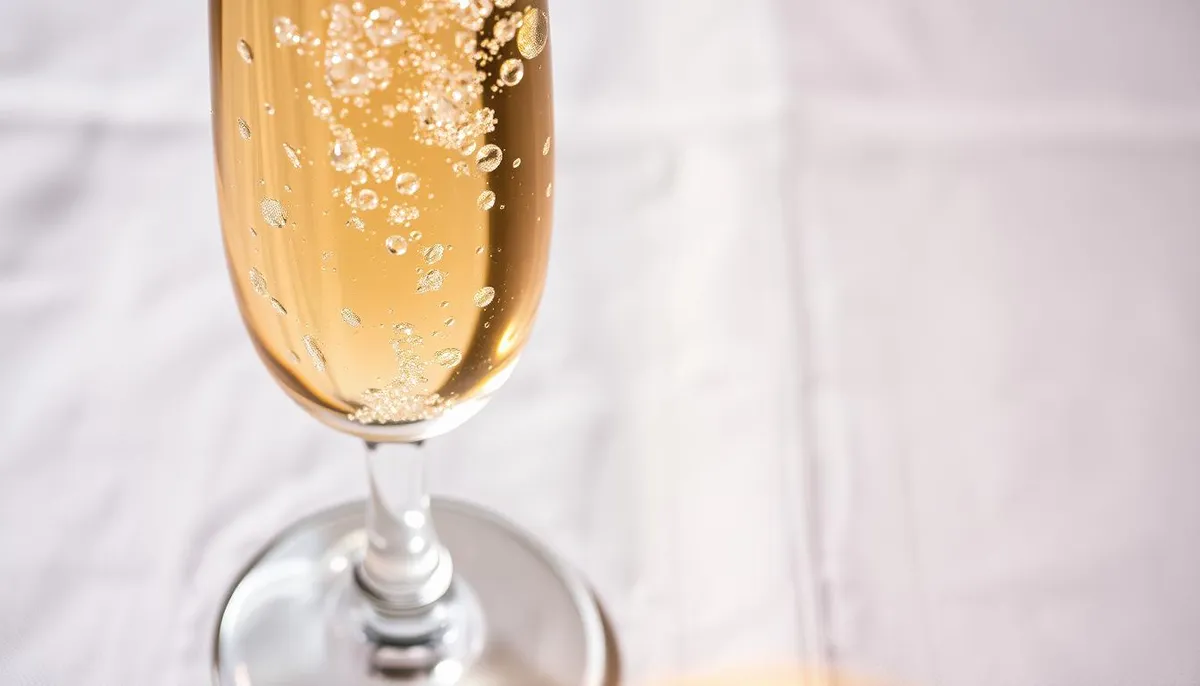
Chilling strategy: frosty flutes and properly cooled bottles
A methodical approach to chilling involves storing the bottle on its side before positioning it upright to settle the foam for five minutes. It’s imperative to keep flutes in the refrigerator, not the freezer, to induce a subtle frost while preventing rim damage. Coupling a chilled bottle with an ice bucket, comprising an equal mix of ice and water, ensures an even temperature conducive to luxury champagne imagery.
Capturing bubbles in action with macro and tight close-ups
Employing a macro lens, focus near the base of the flute where bubbles originate from nucleation points. Such tight framing highlights the intricate beauty of bubbles and the crisp definition of edges, vital for sparkling wine photography. Proper backlighting, whether from a window or a small LED, accentuates the effervescence, ensuring the highlights in your champagne visuals are pristine.
Climate factor: add humidity for authentic droplets in dry locations
The presence or absence of humidity is a determining factor in achieving authentic condensation. For instance, in Bangkok, condensation quickly forms due to high humidity. Conversely, in dry climates like the Swiss Alps or desert locales, simulating humidity via a preheated, steam-filled room can furnish that crucial moisture needed for natural droplet formation on cold surfaces, essential for convincing bubbly photography.
Avoiding the “fake photo”: why visible condensation sells the dream
Even and visible condensation suggests a correctly served temperature in champagne visuals, enhancing the perception of luxury. An inconsistency, such as a dry label next to a moist bucket, detracts from the image’s authenticity, potentially compromising the luxurious appeal. Hence, art directors often scrutinize the realism of condensation in “ice bucket shots,” as genuine droplets fulfill the expected promise in sparkling wine imagery.
| Goal | Technique | Why It Works | Tip for Pros |
|---|---|---|---|
| Frosty Glass | Refrigerate flutes 30–45 minutes | Encourages light fog and micro-beads | Handle by the stem to preserve the chill in champagne pictures |
| Active Bubbles | Macro focus on nucleation points | Sharp bead trails boost texture | Backlight the rim for sparkle in sparkling wine photos |
| Honest Condensation | Half ice, half water in bucket | Even cooling yields natural droplets | Match droplet density on bottle and bucket for luxury champagne images |
| Dry Climate Fix | Steam room setup for added humidity | Provides vapor for real droplet formation | Stage within minutes for best results in bubbly photography |
Science check: Condensation results from warm, moist air coming into contact with a colder surface, causing water vapors to condense into droplets. Without vapor, droplets can’t form—ensuring your set harnesses basic physics principles is vital.
Camera Settings for Popping, Sprays, and Motion
Prepare your camera for action before you twist the cork. To create a vibrant champagne photoshoot and to find the best champagne deals 2025, set the exposure, frame the glass, and consider the reflections on the label. These quick decisions elevate celebratory photos, ensuring they sparkle in champagne photography and polished images.
Tip: In lower light, incorporate a diminutive LED light or a controlled on-camera flash. Direct it away from the glass to maintain clear highlights while enhancing the bottle’s texture and the foil’s intricacy.
High shutter speed to capture clean trails and dynamic sprays
Initiate with a shutter speed of 1/1000s or above to freeze the droplets and their trajectories. Elevate it to 1/2000s for capturing the sprays at their zenith or when the backlight dances on the bubbles. This approach in a champagne photoshoot maintains the clarity of streams and eliminates unwanted blur in celebratory images.
ISO and aperture balance: keep ISO under ~800 to minimize grain
Manage your settings around ISO 400–800, and adjust the aperture between f/2.8 and f/4 to invite more light. For brighter situations, adjust the aperture to f/5.6–f/8 to enhance the sharpness of labels and glass contours. This method maintains the luxurious details in champagne photography while suppressing noise in the images.
Tripods, steady hands, and surface support to prevent motion blur
Employ a robust tripod or secure your camera on a solid surface to stabilize your shot. If handholding, utilize IBIS or lens IS, and press the viewfinder firmly against your face. These techniques minimize camera shake in close-ups and ensure the primary pour remains absolutely sharp in your champagne photoshoot.
Burst mode timing for clinks, pours, and splash action
Engage the high-speed burst mode and pre-focus on the anticipated arc of the liquid. Trigger the sequence just before the cork pops, through the clink, and as the champagne flows into the glass. This tactic captures the pinnacle moments in celebratory photography, enhancing the quality of both champagne photography and the resulting images.
Creative Composition for Champagne Pictures
Design each frame to exude sophistication and dynamism. Incorporating event styling services can elevate your layout, effortlessly drawing attention from the champagne bottle to the glass, and finally, to the ascending bubbles. Marry the allure of exquisite drink photography with the narrative quality of editorial work. Achieve imagery that resonates with elegance yet pulsates with life.
Start wide, then move in. Begin with an establishing shot, progress to include props for context, and culminate with close-up details. Employing this strategy ensures coherence in champagne photography while incorporating elements of whimsy and crystal-clear highlights.
Fill the frame to showcase golden sparkle and texture
Advance until the glass’s allure and the bubbles’ vibrancy dominate the composition. Allow the glass’s rim, stem, and effervescence to predominate. Such meticulous framing transforms sophisticated drink photography into an immersive sensory experience. It’s ideal for crafting champagne images that epitomize luxury.
Angles and slanted shots for playful, editorial variety
Experiment with a gentle tilt to infuse the setting with vitality, ensuring the backdrop maintains its equilibrium. Combine elevated angles to highlight the label with lower ones that elongate the champagne flute. This technique imbues champagne photography with a contemporary flair and ensures clarity in every detail.
Leading props: florals, strawberries, confetti, and luxe textiles
Incorporate elements from real-life scenarios: roses, ripe strawberries at an outdoor celebration, and luxurious textiles that complement the champagne’s color scheme. Introduce restrained accents like confetti or glittering stones, making sure the labels of prestigious brands like Moët & Chandon or Veuve Clicquot remain in plain sight, except when seeking anonymity. Such thoughtful selection enhances the visual appeal of bubbly photography without overwhelming the scene.
- Use rule-of-thirds to place the bottle, flute, and pour line.
- Build leading lines with napkin folds or tray edges.
- Leave negative space so elegant drink photography breathes.
Curate with purpose: start with a broad context, proceed to a detailed mid-shot, and end with a macro focus on the ascending bubbles. This narrative sequence transforms champagne photographs into a compelling visual tale that is both polished and intimate.
Styling Champagne Bottle Photos and Ice Buckets
Before the champagne is poured, set an authentic scene. Position the bucket where it naturally fits: beside a soaking tub, in a bridal suite, or as a welcoming gesture in room-service at check-in. Such context transforms mere photos of champagne bottles into luxurious images that resonate with sophistication and indulgence. Consider incorporating creative champagne bottle designs to further enhance the visual appeal.
Keep the frame simple, letting the materials speak for themselves. Aim for minimalist elegance with clean lines and negative space. This approach enhances the essence of sophisticated drink photography and refined champagne brand imagery.
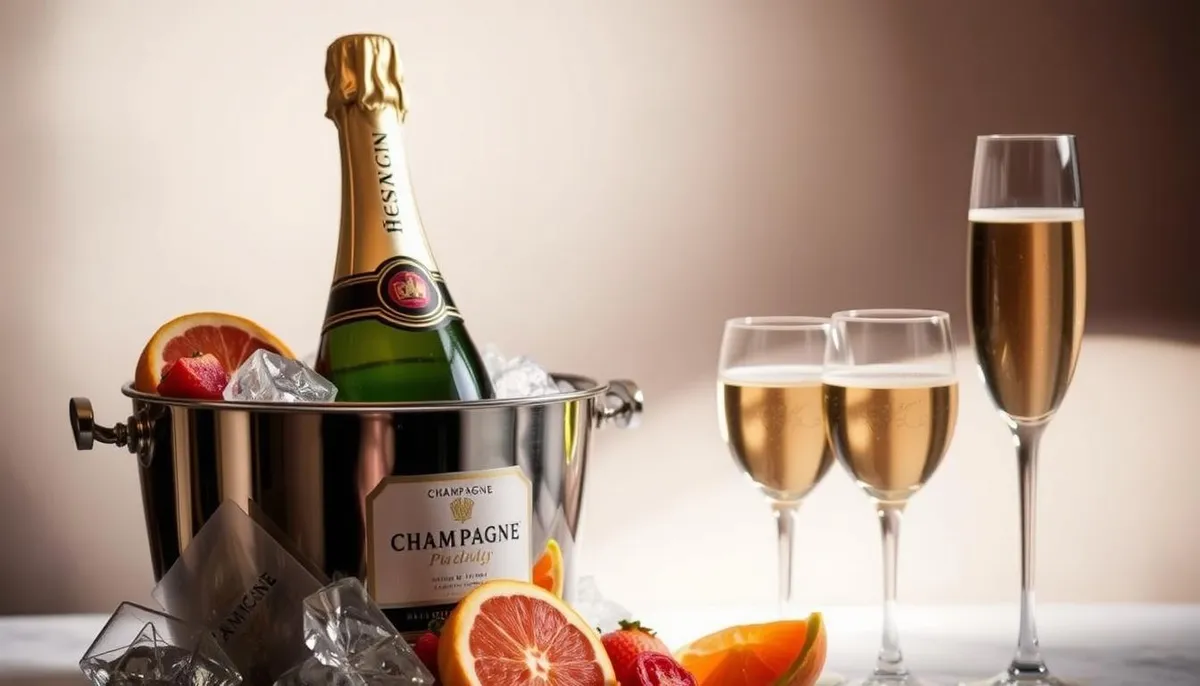
Bucket aesthetics: shape, finish, and coordination with brand style
Select the bucket that complements both the brand and the venue’s ambience. For example, a brushed stainless straight-wall bucket is ideal for locales like The Ritz-Carlton or Four Seasons. Meanwhile, a curved, high-polish chrome bucket aligns with the luxury of Moët & Chandon, and a matte black or hammered nickel variant reflects Dom Pérignon’s contemporary flair.
Emphasize simplicity in branding. Opt for a design where the bucket’s silhouette and finish are the focal points. This strategy ensures that champagne bottle photos remain clutter-free, supporting the allure of luxurious champagne images.
Ice quality: crushed or perfectly formed—never half-melted
Choose either crushed ice for rapid cooling or clear, complete cubes for a more sophisticated appearance. Replace the ice promptly as it begins to melt. Off-camera, prepare a secondary bucket to ensure a seamless transition between shots and uphold the standards of high-end drink photography.
This meticulous attention to ice not only secures the bottle in place but also enhances its presentation, elevating the overall profile in branding efforts.
Label strategy: branded, exclusive, or discreetly generic
Align the label choice with brand positioning. Opt for Moët & Chandon to appeal to wide audiences, Dom Pérignon for an air of exclusivity, or Laurent-Perrier for minimalist elegance. Consider the venue’s preferences: some choose exclusive labels; others opt for a more understated presentation that hints at quality without overt branding.
Geographical considerations are paramount. For instance, venues in Catalonia might select Cava, while those in Germany could prefer Sekt. French establishments typically insist on authentic Champagne, each selection subtly altering the perception of your luxury champagne imagery and the overall champagne market.
Temperature tells: matching condensation on bottle and bucket
Authenticity is reflected in the condensation. Achieve harmony with even moisture on both the bottle and bucket, indicating accurate temperature control. If discrepancies arise—such as a dry bucket or a bottle without condensation—adjust by either cooling the bottle further or refreshing the ice.
This balance is essential. It ensures that drink photography and champagne branding visuals present an image that’s vibrant and genuine, rather than contrived.
| Element | Best Practice | Why It Works | Brand/Context Example |
|---|---|---|---|
| Bucket Shape & Finish | Sleek straight walls in brushed steel or curved high-polish chrome | Clean reflections and strong lines elevate champagne bottle photos | Four Seasons (brushed steel), Moët & Chandon (polished chrome) |
| Ice Selection | Crushed for fast chill, clear cubes for premium look; swap when soft | Prevents watery sheen and keeps luxury champagne images crisp | Editorial sets with clear cubes; event speed with crushed ice |
| Label Strategy | Showcase premium houses or use discreet fronts for a neutral read | Supports targeted champagne branding shots across markets | Dom Pérignon for couture, unlabeled bottle for hotel house style |
| Regional Fit | Match local preference: Champagne, Cava, or Sekt depending on venue | Authenticity improves editorial trust and audience relevance | Paris hotel: Champagne; Barcelona event: Cava; Berlin bar: Sekt |
| Condensation Parity | Fine droplets on bottle and bucket; refresh ice to sync textures | Signals true chill for elegant drink photography that sells the moment | Room-service welcome tray with balanced sweat and clean linens |
Directing the Champagne Photoshoot for Events
A polished champagne photoshoot necessitates clear direction and meticulous safe handling. It’s crucial to carefully plan the lighting, angles, and the path for cleanup ahead of initiating the first bottle pop. Employing burst mode is essential to capturing the transition from the poised cork to the sparkling arc, creating a collection of vibrant celebratory images that resonate with vitality.
Prep the set: Opt for a backdrop that withstands spray, thoroughly brief your subjects, and strategically place towels just outside the camera frame. Utilizing a bar setting with direct flash indoors creates a striking effect; meanwhile, conducting the shoot outdoors during the golden hour can produce champagne images that are infused with warmth and romance.
Safe, controlled “thumb-over-the-opening” spray technique
To open the champagne bottle, avoid shaking it. Carefully remove the foil and wire cage, then gently ease out the cork. By sealing the bottle’s mouth with your thumb, shaking, and then slightly retracting your thumb, you can effectively manage the pressure. This technique allows you to direct the champagne spray precisely, ensuring both safety for participants and equipment, and achieving an aesthetically pleasing arc in the photograph.
Don’t shake before opening; set up, then spray for pressure
Before initiating the spray, ensure the scene composition is set. It’s important to lock the focus, set a rapid shutter speed, and verify the backdrop. Once the cork is removed, use the thumb seal method to generate a controlled pressure. This approach yields uniform streams and allows for multiple consistent shots during a champagne photoshoot, resulting in clear, celebratory images.
Engagements, graduations, and weddings: energy and celebration cues
Engagements and weddings are accentuated by toasts, the shimmer of rings near champagne flutes, and the spectacle of a champagne tower. Personalized celebrations like graduations benefit from expansive sprays and expressions of joy. By blending detailed close-ups with broad reaction shots, your champagne photography can effectively convey both narrative and dimension within a single series.
Locations that sing: outdoor gardens, sophisticated bars, festive halls
Sunset garden paths provide a delicate glow and facilitate easy cleanup. Sophisticated hotel bars offer clean lines and reflective surfaces for multifaceted champagne images. Festive halls accommodate large groups and confetti, adding dynamic to the photos. Selecting the appropriate light and setting plays a significant role in conveying the intended atmosphere to your audience.
| Scenario | Light Choice | Directing Cue | Safety & Prep | Resulting Look |
|---|---|---|---|---|
| Outdoor Garden | Golden hour backlight | Count down, arc spray away from faces | Towels off-frame, lens hood | Warm glow, fine droplets, cinematic celebratory photos |
| Sophisticated Bar | Direct flash + bounce | Short burst pops near glassware | Non-slip mat, spare bottle | High-contrast sparkle, crisp champagne pictures |
| Festive Hall | Mixed ambient + fill | Group cheer, synchronized pop | Clear floors, towels, assistant | Dynamic frames and layered champagne photography |
| Wedding Lawn | Open shade with reflector | Toast, ring close-up, gentle pour | Microfiber cloths, protected labels | Elegant detail set for a luxury champagne photoshoot |
- Keep a second bottle ready for insurance and consistent arcs.
- Use burst mode to capture anticipation, release, and reaction.
- Brief subjects to look toward the light and away from the spray.
Editing and Branding for Luxury Champagne Images
Each frame should be refined to exude a tangible, high-end quality. A cohesive appearance that transitions smoothly from studio shoots to event environments is crucial. This ensures consistency across champagne branding, luxury images, sparkling wine showcases, and festive shots, including a 250 cuvées selection.
Lightroom/VSCO workflow: brightness, contrast, and saturation polish
Begin in Adobe Lightroom by cautiously enhancing exposure. Then, infuse contrast to accentuate the clarity of glass boundaries. It’s imperative to moderate saturation, preserving the authenticity of golden hues. In VSCO, selecting a subtle preset and diminishing its intensity helps maintain natural colors, avoiding any distortion to the bottle’s appearance or label.
Amplify clarity and texture to emphasize bubbles and moisture effectively, avoiding exaggerated effects. Through precise adjustments targeting the flute and label, direct audience focus in champagne branding imagery and sparkling wine representations.
Preserving highlights in bubbles and glass reflections
Utilize the highlights and whites sliders to protect specular highlights. Adjust them to restore rim light and detailed bead textures. Implementing a gentle tone curve maintains reflective gloss while averting overexposure that detracts from the sophistication of luxury champagne visuals.
Prior to sharpening, examine the histogram for detail restoration opportunities. This approach ensures glass and liquid portrayals remain gracefully elegant in various lighting conditions, including harsh flash or ambient mixtures.
Social reach: strategic hashtags and cohesive brand aesthetics
Adopt a uniform visual theme for campaigns to echo the warmth of golden hour or the coolness of bar settings. Replicating this style in social media grid planning enhances brand recognition. Though tools like Tezza can introduce a whimsical quality, retaining genuine textural elements is key for authenticity.
- Employ targeted hashtags, like #ChampagnePhotos, #PhotographyTips, and relevant event tags.
- Consistently apply brand colors and fonts to visual overlays and text captions in champagne marketing imagery.
- Time your social media posts to coincide with product launches and festive seasons, spotlighting sparkling wine and luxury champagne visuals.
Editing should emphasize label clarity, glass contours, and luminosity. Thoughtful modifications can make celebratory images immersive, accurately reflecting the captured moment.
Conclusion
Luxury champagne images resonate deeply when the minute details align perfectly. The act of chilling the bottle and frosting the flutes sets the stage. Allowing natural condensation to form imbues authenticity. Capture stunning champagne popping photos with a high shutter speed and burst mode to seize the climactic sprays and clinks with precision.
Elegance in champagne photography is maintained through thoughtful composition. Meanwhile, impeccable timing transforms simple pours into monumentally celebratory snapshots. This approach turns ordinary moments into extraordinary memories.
Creating scenes that carry a narrative enhances the allure. Settings such as bridal suites or hotel welcomes provide a backdrop that draws viewers into the experience. The selection of golden hour for soft lighting or a direct flash for vivacity adjusts the atmosphere. Managing highlights is crucial to ensure the champagne’s bubbles dazzinate without overwhelming the glass’s integrity.
To evade the impression of artificiality, styling must be intentional. Ensuring consistency, like matching condensation between bottle and bucket, and selecting an appropriate bucket finish, is key. Make subtle adjustments to the imagery’s brightness, contrast, and saturation using tools like Lightroom or VSCO. This careful cultivation yields a collection of champagne images that are both intimate and exuberant, authentically capturing the essence of celebration.
Are you prepared to select the centerpiece for your project? Explore an array of premium bottles available for global export and request a personalized quotation at champagne-export.com. When every element—scene, lighting, styling, timing—converges harmoniously, exclusive champagne procurement and champagne photography eternalizes transient jubilations into timeless masterpieces.
FAQ
What makes champagne a standout subject for celebratory photos?
Champagne epitomizes celebration: think weddings, premieres, and grand openings. Its visual appeal is unmatched, with its golden color, effervescence, and reflective surfaces creating dynamism. It’s pivotal in elegant drink photography and branding imagery for champagne.
Which backdrops work best for luxury champagne images?
Textured backdrops like marble and rustic wood enhance the sophistication of champagne shots. Experimenting with angles, including tilts, introduces an editorial quality. It’s crucial to maintain uncluttered layouts to ensure that elements such as labels and bubbles are discernible.
How do I capture authentic condensation and the frosty look?
For genuine condensation, chill your champagne and glasses ahead of time. This pre-chilling yields delicate droplets, embodying refreshment and luxury. It’s vital for condensation to appear on both the bottle and ice bucket for a trustworthy image.
Golden hour or direct flash—what’s better for champagne photography?
Golden hour lighting suits romantic scenes with its soft tones. Conversely, direct flash creates a lively, contemporary feel. Select lighting according to the occasion’s mood and the brand’s personality.
What camera settings help freeze sprays and pours?
A high shutter speed is key for capturing sharp sprays and droplet trails. Manage exposure with aperture settings and maintain a low ISO to minimize grain. A tripod can be crucial in avoiding motion blur, maintaining the integrity of luxury champagne imagery. For those looking for convenience, champagne delivery dubai offers a seamless way to enjoy premium selections without the hassle.
How do I capture bubbles up close for maximum sparkle?
Utilize macro photography or tight close-ups to highlight bubbles and condensation, bringing out the champagne’s effervescence and allure. This approach is optimally suited for capturing the vibrant essence of champagne and sparkling wine.
What’s the safest way to photograph a champagne spray?
Initially, open the bottle. Then, lightly cover the opening with your thumb. Gently shake to build pressure, and carefully adjust your thumb to control the spray. Employ burst mode photography to capture the pinnacle of action without compromise.
How can I avoid the “fake photo” look?
Ensuring consistency in condensation on both the bottle and bucket is critical. An absence or inconsistency implies neglect, detracting from the perceived luxury. Also, maintain the freshness of the ice, replacing it as needed.
What composition rules work best for elegant drink photography?
Implementing the rule of thirds alongside leading lines offers a refined composition. It’s essential to maintain an uncluttered frame, ensuring the visibility of important features like labels and bubbles. A slight slant can introduce character while keeping the image’s readability intact.
Which props elevate champagne branding shots?
The addition of elements such as florals and strawberries can evoke specific moods or themes. It’s important to choose props that complement the shot without obstructing crucial branding elements like labels, except when anonymity is desired.
Any climate tips for getting real droplets in dry locations?
In arid conditions, artificially introduce humidity. A simple method is to steam a closed space, like a bathroom. This technique enables the formation of droplets on cool surfaces, essential for achieving realism in your shots.
How should I style ice buckets for premium champagne pictures?
Ice bucket selection should reflect the champagne brand’s aesthetics, be it classic or modern. Opt for either crushed ice or uniform cubes. Utilizing champagne shipping services can enhance the overall experience. Always have an extra bucket on hand for efficiency during photo sessions.
What labels should I feature for brand recognition?
Choose labels that resonate with your client’s target market. Options include renowned brands like Moët & Chandon or unique boutique labels. Even without direct identification, brand essence can be communicated through silhouette.
How do I direct event moments like engagements and weddings?
Strategize for diverse shots like clinks and champagne towers. Employ burst mode to capture fleeting moments vividly. Prep your scene with optimal lighting and instruct subjects for smoothly flowing sequences.
Which locations best complement champagne photos?
Opt for settings that naturally align with champagne’s elegance, such as outdoor gardens or sophisticated halls. Use the golden hour for softer lighting outdoors, or direct flash for an indoor festive ambiance. Maintain readiness with towels and additional bottles for any required adjustments.
How should I edit to keep champagne looking premium?
When editing, prioritize the adjustment of brightness, contrast, and saturation to enhance the photo while preserving natural highlights. Focus on maintaining detail and authenticity in the image’s texture and highlights to ensure the champagne retains its luxurious appeal.
How do I keep a cohesive look across a campaign?
Consistent color grading tailored to the brand and mindful composition help maintain coherence. Adapt to lighting changes while preserving the campaign’s stylistic continuity for seamless brand storytelling.
Can I use a smartphone for professional bubbly photography?
Absolutely. Leverage your smartphone’s capabilities like macro mode and burst to capture detailed and dynamic shots. Subtle editing can preserve the authenticity of your photos’ highlights and textures.
What hospitality cues instantly signal luxury?
Luxurious details such as a chilled champagne setup, fresh roses in bridal suites, and thoughtfully presented welcomes embody high-end hospitality. Achieving a victory in racing towards excellence in service, exemplary venues like XV Beacon Hotel and The Peninsula Bangkok epitomize such luxury.
Where can I source Champagne for a global shoot or event?
Explore champagne-export.com for a selection available for global delivery. This facilitates seamless acquisition of premium champagne for branding and high-end photographic projects.