Looking for clarity on cross-border wine trade? This introduction gives plain information on rules, duties, and customs procedures you need to move luxury wines from one country to another within the EU common regime. You will learn what declarations, tax assessments, and value checks ensure smooth market entry.
Portugal is part of the EU Common External Tariff. That affects how goods clear customs and which charges apply. Understand the requirements for product content, labeling, storage, and the payment of duty and tax so your supply chain meets legal purpose and consumer expectations.
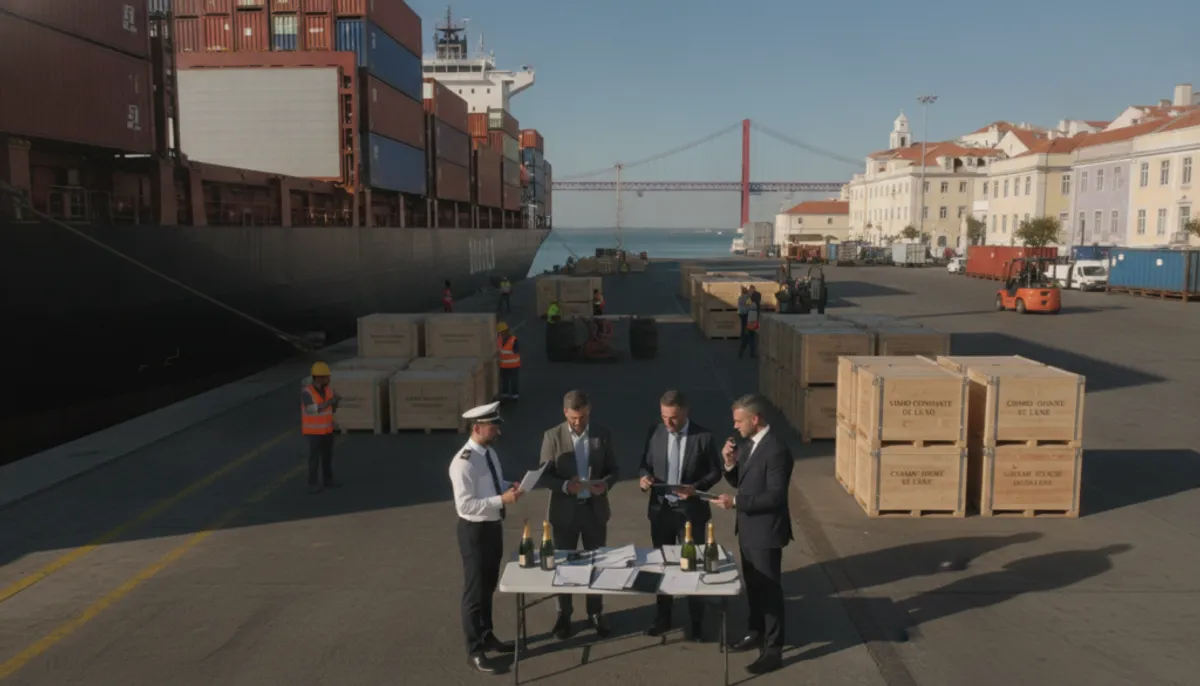
Our service provides clear contact points and tailored information to manage procedures, declaration steps, and responsibility across the chain. Request a personalized quote to streamline your shipments and keep your products in top condition at https://champagne-export.com.
Key Takeaways
- Know customs procedures and duty rules before you ship.
- Labeling, storage, and content checks protect quality and compliance.
- Accurate declaration and value assessment speed clearance.
- Contact specialists for payment, tax, and import requirements.
- Use trusted services to manage charges, supply chain, and consumer delivery.
Understanding the Regulatory Landscape for Importing Champagne into Portugal
Accurate labels and strict volume controls are essential to meet EU and Portuguese market rules.
Labeling Requirements
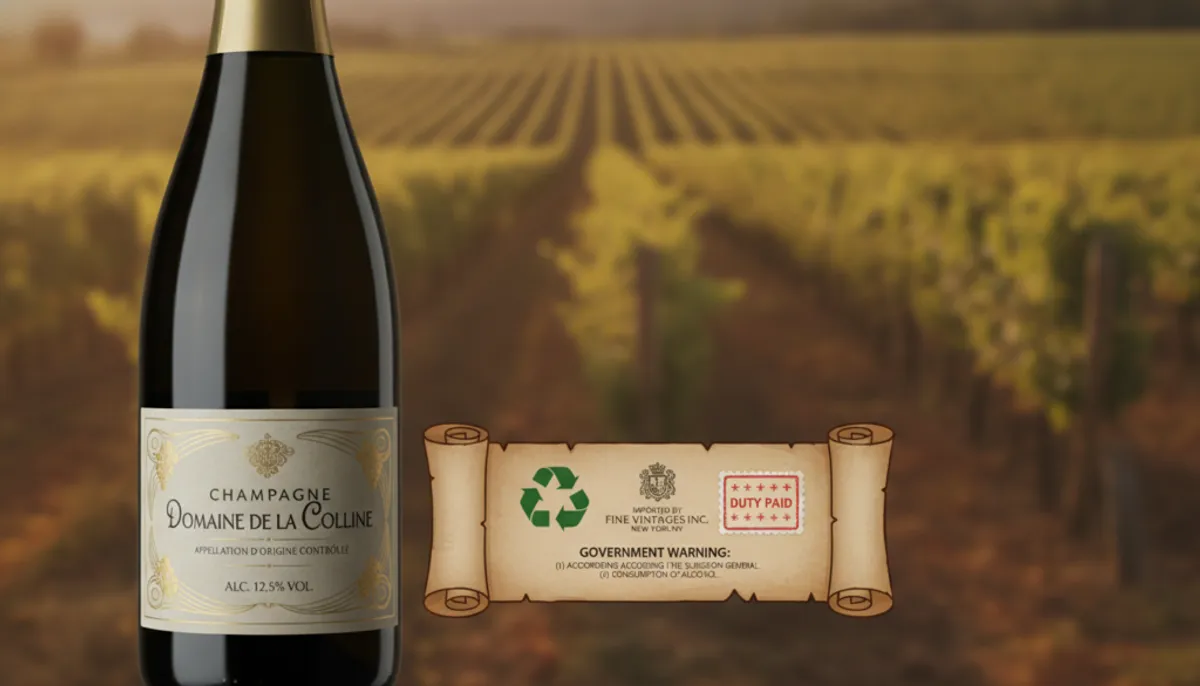
Directive 2000/13/EC sets the baseline for food and beverage labels. Every product must list alcohol content, ingredients, and allergen information like sulphites.
For sparkling wine, the label must also state sugar content for the local market. Labels need the importer’s address and a lot mark preceded by the letter “L.”
Standards of Fill
Directive 2007/45/EC defines the standard of fill and required volumes for wine bottles. This rule protects consumers and ensures fair trade.
Meeting these standards helps you avoid customs delays, extra duties, and tax issues. Our service provides clear information on how excise duty and payment responsibilities apply to your goods, including insights into canada customs regulations.
- Comply with label and fill directives.
- Declare alcohol and value accurately in your documentation.
- Verify storage and content to prevent damage and extra charges.
| Requirement | Directive | Key Detail |
|---|---|---|
| General labeling | 2000/13/EC | Alcohol %, ingredients, allergen notes |
| Sugar content (sparkling) | 2000/13/EC | Clear sugar declaration on label |
| Standard of fill | 2007/45/EC | Mandatory bottle volume and fill accuracy |
| Traceability | Combined rules | Importer address and lot mark “L” |
Need help? For tailored support on labels, excise, and customs procedures, contact our team and request a personalized quote at https://champagne-export.com.
Essential Documentation and Customs Procedures
Proper paperwork is the backbone of every successful wine shipment. Accurate forms speed customs checks, reduce costs, and protect your goods from hold-ups.
Required Import Declarations
Every importer must file a Single Administrative Document (SAD) with Portuguese customs to allow legal entry of wine products.
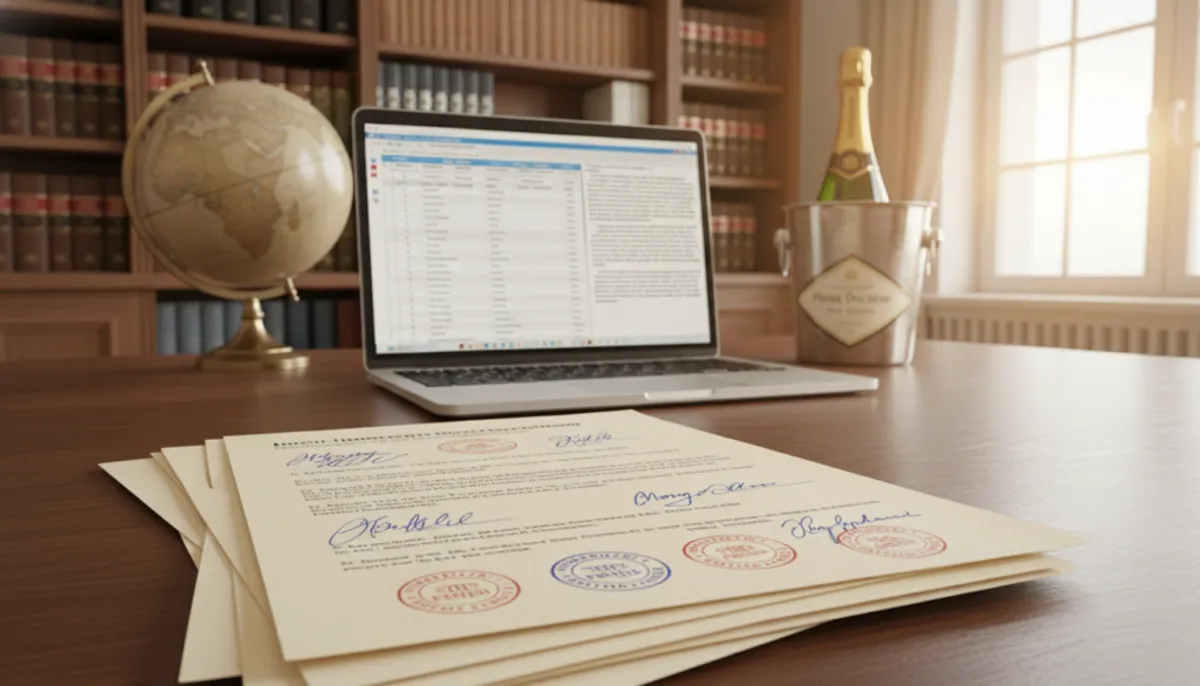
For third-country consignments, a VI-1 Form or simplified export certificate is mandatory. This verifies origin and quality for EU entry.
- Include a commercial invoice and freight insurance to speed release of goods.
- Declare value, alcohol content, and lot marks to meet traceability needs.
- We manage documentation, excise duty and tax obligations so you can focus on sales.
| Form | Use | Key data |
|---|---|---|
| SAD | Customs declaration | Value, tariff, consignee |
| VI-1 | Wine origin certificate | Quality, origin, supplier |
| Invoice | Commercial proof | Price, goods, insurance |
Need help? Looking for Champagne? We’ve got you covered. Request a personalized quote at https://champagne-export.com and contact our team to simplify declarations and duty payment.
Navigating Excise Duties and Tax Obligations
Managing excise and tax rules is a practical step that protects your margins and avoids delays at customs. This section explains suspension schemes, who pays, and how VAT, import tariffs in russia, and tariffs affect your wine shipments.
Excise Duty Suspension Arrangements
Suspension arrangements let businesses store or process products without immediate excise duty payment. This is useful when wine is held in a tax warehouse or processed prior to release for consumption.
Approval for a tax warehouse comes from customs and usually lands within 30 days. Once approved, you must keep precise inventory and coverage for excise products to stay compliant.
Payment Responsibilities
The ultimate responsibility for paying excise lies with the party that places the product on the market. That can be the importer or the operator who releases goods from suspension.
Excise duty payments are due by the 15th of the month after notification of release for consumption. Our service helps you schedule each payment and prepare the required declaration and value records.
VAT and Tariff Considerations
VAT and tariffs apply at release and affect total landed cost. Accurate value declaration speeds customs checks and reduces disputes over duty and tax.
- Understand suspension to delay excise until release.
- Ensure payments meet the 15th deadline to avoid penalties.
- Use a tax warehouse to improve cash flow; get customs approval in ~30 days.
Looking for Champagne? We’ve got you covered. Discover the finest selections and request a personalized quote today at https://champagne-export.com.
Streamlining Your Global Champagne Export Strategy
A certified consignee streamlines excise handling so your wine shipments meet EU rules without extra work. Eurotax acts as a Certified Consignee to ensure compliance with Council Directive (EU) 2020/262.
Centralizing excise and duty management reduces delays and lowers risk. We handle declarations, excise duty accounting, and tax records so your team can focus on sales.
Our service gives clear information on requirements for alcohol products and helps you keep accurate value records. This reduces customs questions and speeds clearance.
- Manage excise, duty, and tax with one trusted service.
- Meet Council Directive (EU) 2020/262 requirements via a Certified Consignee.
- Protect your product shipments from compliance errors and customs delays.
Looking for Champagne? We’ve got you covered. Discover the finest selections, ready to be exported anywhere in the world. Request your personalized quote today at https://champagne-export.com.
Conclusion
A final compliance review ties labeling, documentation, and excise duty steps into a single, reliable workflow. Paying attention to each requirement, including champagne labeling regulations, reduces hold-ups and protects your margins when importing champagne into Portugal.
Plan ahead and use professional services to manage declarations, tax schedules, and customs checks. This approach helps you meet EU directives and get products to consumers fast.
Request a personalized quote at https://champagne-export.com to streamline your export strategy and ensure smooth market entry.