Champagne is an exceptional wine that rewards careful attention. To keep the bubbles lively and the flavor bright for years, you must learn how to store champagne with intention.
A standard 750ml glass bottle is built to age when it is kept in a cool, dark place. At home, proper storage protects the delicate structure and preserves the crisp taste that defines fine champagnes.
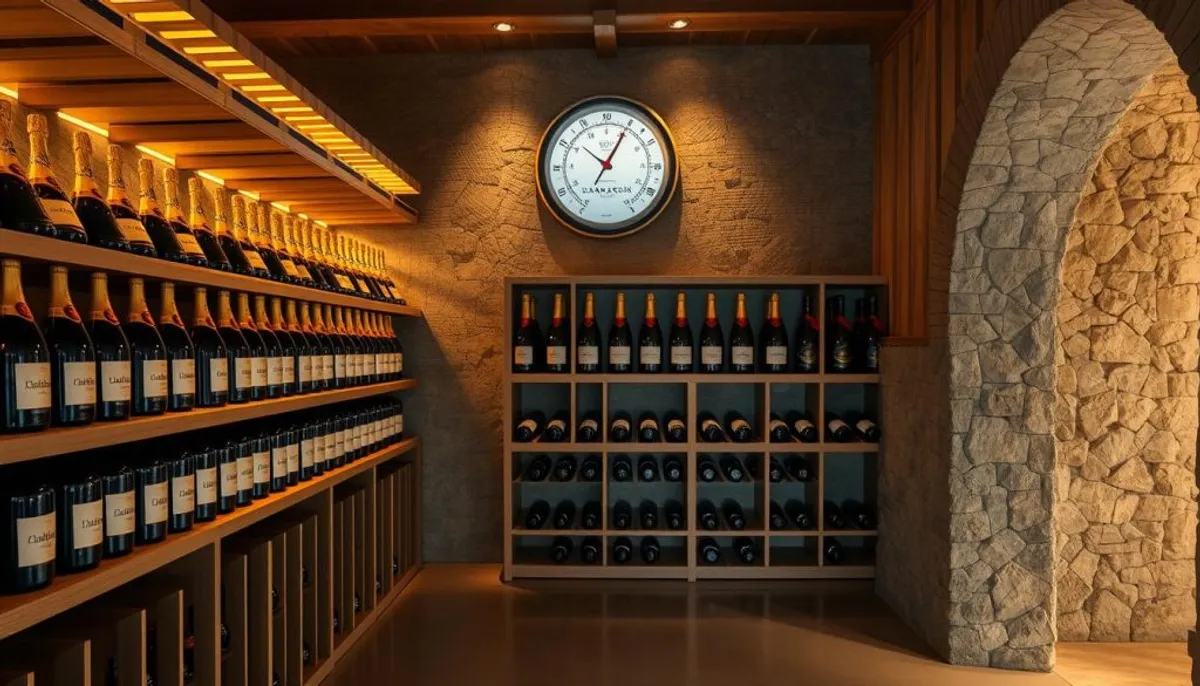
Whether you collect sparkling wine or save a bottle for a celebration, understanding the basics of storing champagne helps you protect your investment. Proper care means each glass poured keeps the lively bubbles and the bright taste you expect, including the delightful demi-sec champagne varieties that offer a unique sweetness.
Key Takeaways
- Learn how to store champagne to keep bubbles and flavor intact.
- A 750ml bottle ages best in a cool, dark, steady environment.
- Proper storage preserves the crisp taste for years.
- Keep bottles horizontal to protect the cork and seal.
- Store at consistent temperature to enjoy optimal taste at home.
Understanding the Ideal Champagne Storage Temperature
Keeping bottles at a steady, cool range is the single most effective way to protect their flavor over time. For long-term preservation, aim for about 10°C to 12°C so the wine keeps its structure and vivacity. Sudden swings in climate are the bigger threat, not a single brief chill.
The Impact of Fluctuations
When conditions move up and down, the cork will expand and contract. That motion can let air creep in and harm the bottle’s quality. If the range rises above 15°C, aging speeds up and the fizz can fade.
At the other extreme, regular dips below 8°C tend to stall aroma development. A steady environment in a cool cupboard or a dedicated cellar is the safest way to keep bubbles lively and flavors balanced.
Avoiding Thermal Shock
A standard kitchen fridge seems handy but often lacks humidity. Over time that dry air can shrink the cork and break the airtight seal, which may spoil wine kept inside. A refrigerated wine cabinet offers a better option when an underground cellar isn’t available.
- Ideal range: 10–12°C for long-term care.
- Avoid frequent temperature fluctuations to protect corks and aromas.
- Limit light exposure—tinted glass helps guard what’s inside.
Essential Environmental Factors for Preservation
Protecting light and humidity is the fastest way to keep your bottles in peak condition.
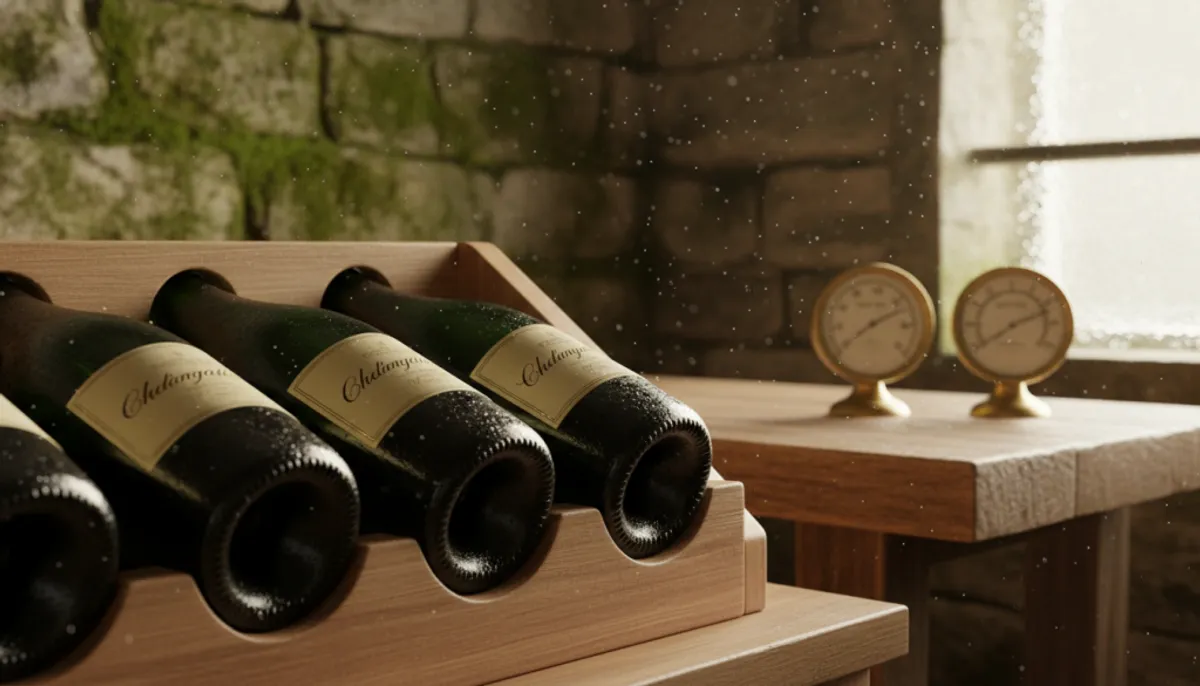
Light exposure breaks down delicate aromatics over time. Keep bottles in a dark place such as a cupboard or basement to prevent fading of aroma and loss of quality.
The Role of Light and Humidity
Aim for a well-ventilated cellar with humidity between 70% and 85%. This range helps the cork stay supple and prevents air from creeping into the bottle.
Avoid placing your collection near heat sources or in a standard fridge. Frequent temperature fluctuations are a common reason wines spoil, so a steady environment is the safer choice.
- Keep bottles horizontal to protect the cork seal.
- Store in dark, cool rooms to limit light exposure.
- Monitor humidity to stop corks from drying and wine from oxidizing.
Best Practices for Short-Term Storage
Short-term care focuses on steady conditions so bubbles and aroma stay vibrant for days. For up to one month, keep the bottle upright at room level and out of direct light. This helps the cork remain moist and the wine stay lively.
If you plan to open the bottle within three to four days, it is fine to chill it in the fridge. The pressure inside keeps the cork moist during brief fridge keeping, and the cool air preserves the fizz.
Aim for an ideal range of about 8°C to 10°C for short-term care to keep freshness. Avoid leaving bottles in the fridge for longer than a month; low humidity there can dry the cork and let air in.
- Up to 1 month: upright, dark spot.
- 3–4 days: chilled in the fridge is acceptable.
- Check consistency: steady conditions beat sudden swings.
Quick care makes it easy to have a ready bottle for a surprise celebration or a special dinner.
Mastering Long-Term Cellaring Techniques
Good cellaring turns a bottle into a story—careful conditions let complex aromas unfold over years. For those interested in luxury wine tourism, a dedicated cellar or climate cabinet is the best option to keep a collection in top condition.
Choosing Vintage vs Non-Vintage
Vintage bottlings come from a single harvest and reward patience. Under ideal cellar conditions, vintage champagne will age well for 5 to 10 years and develop rich aromas.
Non-vintage examples are ready to drink on purchase and typically keep for 3–4 years in a cool, dark place.
The Importance of Bottle Orientation
Store bottles on their side so the wine stays in contact with the cork. This contact prevents the cork from shrinking and stops air from entering the glass vessel.
Selecting the Right Bottle Size
A Magnum (1.5L) is a great choice for long-term aging because it has less air relative to liquid. That slower maturation often yields better balance and improved quality over time.
- Humidity: aim for 70–85% to protect the cork.
- Cellar investment: a cabinet helps maintain steady conditions for years.
Handling Opened Bottles and Serving Tips
An open bottle needs careful care to protect its bubbles and delicate aromas. Use a hermetic stopper to keep pressure and extend freshness. With a proper stopper, an open bottle will stay good for about 3 to 5 days.
Always place an open bottle in the fridge at 4°C to 7°C to slow gas loss and preserve taste. If you must serve outdoors, keep the bottle in a basin of ice and water to hold a steady chill.
Specialized stoppers are the most effective tool to stop the wine from going flat. Avoid big swings in temperature that can shock the liquid and harm the cork and aromas.
| Method | Ideal fridge temp | Expected freshness (days) |
|---|---|---|
| Hermetic stopper + fridge | 4–7°C | 3–5 days |
| Refrigerator only | 4–7°C | 2–3 days |
| Ice basin at event | ~4–7°C | Same day use |
| No seal, room temp | Varies | Few hours |
Conclusion
Caring for your collection starts with a clear plan and steady conditions.
Proper care helps every bottle keep its intended character and sparkle for years. To store champagne well, focus on steady light, humidity, and gentle handling.
Whether you collect champagnes or enjoy quality wine now, consistency protects aroma and fizz. For a unique experience, consider champagne tasting in new york. A good cellar or climate cabinet makes this simple and reliable.
Looking for Champagne? We’ve got you covered. Discover our selections ready for export worldwide and request a personalized quote at https://champagne-export.com.