Looking for Champagne? We’ve got you covered. If you stocked for past events or grew a retail selection over the years, sourcing global labels was once complex. Today, export logistics were simplified to make ordering smooth and reliable.
Our service connects U.S. buyers with top champagne houses and boutique producers. You can browse a curated list of wines and sparkling wine that match restaurant menus and shop shelves. Each bottle is checked for authenticity and shipping readiness.
Request your personalized quote today by visiting our portal at https://champagne-export.com. Our team handled customs, packing, and tracking so shipments arrived safely. We focused on quality, consistency, and clear pricing to help you grow your international inventory.
Key Takeaways
- Streamlined export services simplify sourcing quality wines for U.S. buyers.
- Selections include verified sparkling wine and classic cellar labels.
- Every bottle is inspected for authenticity and export readiness.
- Personalized quotes are available at https://champagne-export.com.
- Support covers customs, packing, and secure shipment tracking.
Understanding the World of Champagne
What makes Champagne unique starts with the hills, chalk, and cool weather of the region in France. This geography gives the wines their bright acidity and fine bubbles.
In 1935 the French government granted the area AOC status to protect traditional methods. Since then, production rules limited grapes and techniques to preserve quality.
Many of the oldest houses trace roots back centuries and helped shape how sparkling wines are made today. Their long history shows careful craft passed through generations.
Region France designation means only bottles made inside those borders can use the name legally. That protection keeps the label meaningful for consumers and traders.
- Unique terroir defines flavor and longevity.
- Strict AOC rules preserve method and grape choice.
- Centuries-old houses maintain standards that consumers trust.
The Best Champagne Brands for Export
Export buyers look for labels that travel well, show consistent house style, and appeal across markets. These qualities guide purchasing decisions when building a portfolio for restaurants and retailers, including exclusive champagne exports that enhance their offerings.
Veuve Clicquot
Veuve Clicquot has led the market for years with steady quality and wide recognition. Its bottles deliver bright citrus, brioche notes, and balanced acidity that suit many menus.
Bollinger
Bollinger—founded in 1829—is prized for Special Cuvée, which leans on a high proportion of pinot noir for depth and complexity. Expect structure, richness, and fine bubbles in each bottle.
Billecart-Salmon
Billecart-Salmon, established in 1818, stands out for elegance and finesse. The house favors light-bodied styles with delicate pear and brioche notes and a clean, mineral finish.
- Balance of acidity, fruit, and minerality defines house character.
- Grape blends often include pinot meunier for freshness and charm.
- Options range from classic brut réserve to single-vintage selections.
| House | Founded | Signature Style | Export Appeal |
|---|---|---|---|
| Veuve Clicquot | Late 1700s | Citrus, brioche, balanced acidity | High recognition; consistent supply |
| Bollinger | 1829 | Pinot Noir-driven depth; complex texture | Structured wines that age well |
| Billecart-Salmon | 1818 | Elegant, light-bodied, pear and brioche notes | Finesse-focused; strong trade reputation |
Why Quality Matters in Sparkling Wine
Quality in sparkling wine and especially in italian sparkling wine started long before bottling, with choices in the vineyard and careful cellar work. Producers managed fermentation, aging, and dosage to protect structure, balance, and fizz.
Maintaining high standards was essential because making these wines was labor-intensive and costly. Sommelier Victoria James warned consumers to be wary of any bottle priced under $45, noting the production costs required for real craft.
Exporters and merchants handled fragile bottles with strict controls so bubbles and acidity remained intact on arrival. Good handling protected the house reputation and ensured the product matched expectations.
- Premium wines required precise cellar timing and careful transport.
- Consistent house standards supported long-term trust in the market.
- Sourcing superior champagne was an investment in authenticity and heritage.
The Role of Terroir and Grape Varieties
Terroir and grape choice shape how a bottle expresses its place and vintage. Understanding both helps buyers and sommeliers evaluate style and aging potential.
Chardonnay and Pinot Noir
Chardonnay lends finesse and citrus lift, especially in blanc blancs styles where it drives elegance.
Pinot Noir is a black-skinned grape that brings structure and red-fruit depth. Pinot noir works well in fuller styles and supports long aging.
Pinot Meunier adds early appeal with round fruit and softness, helping balance blends for immediate market interest.
The Importance of Soil
The terroir of the region is defined by its unique soil composition. Chalk and limestone provide minerality that top grapes rely on.
Vineyard classification such as grand cru signals sites that consistently produce superior raw materials. These locations shape the precise character found in the final bottle.
- Right grape selection yields diverse profiles for different markets.
- Blanc noirs and blanc blancs styles reflect how grape mix and place interact.
- Studying soil and grape interplay reveals the complexity behind each wine.
| Grape | Primary Role | Terroir Influence | Market Appeal |
|---|---|---|---|
| Chardonnay | Finesse, acidity | Shows minerality on chalk soils | Elegant blanc blancs; food friendly |
| Pinot Noir | Structure, depth | Gives body on warmer slopes | Aging potential; fuller styles |
| Pinot Meunier | Fruit, roundness | Performs in varied soils | Approachable young wines |
Distinguishing Between Vintage and Non-Vintage
Vintage releases capture a single harvest and show how one season shaped the grapes and the house style.
Vintage bottles use only that year’s grape selection, so each release is a snapshot of climate, soil, and vine health. Producers age these bottles longer to develop richer, more complex flavors.
Non-vintage wines are blends from multiple years. Houses blend to keep a consistent profile that customers recognize and rely on across menus and markets.
- Vintage: single-year grapes, limited runs, longer aging for depth.
- Non-vintage: blended across years to maintain house style and approachability.
- Choice depends on occasion—both styles offer fine sparkling wines for trade.
Understanding this difference helps when selecting stock for export. Pick vintage when you want a unique bottle for collectors. Choose non-vintage to ensure steady quality and predictable supply for restaurants and shops.
Sensory Characteristics of Premium Bottles
Premium bottles reveal themselves slowly, with layers of aroma that unfold from the first pour. Start by noting the initial lift on the nose, then move to texture and finish.
Aroma and Taste Profiles
Aromas typically include citrus peel, green fruit, and soft brioche notes from time on the lees.
The bubbles should be fine and persistent, creating a creamy mousse that carries the flavors.
Aged bottles often show bread or yeasty characters, while freshness and minerality bring balance.
- Look for a balance of acidity and fruit for a clean, refreshing sip.
- Detect white fruit and citrus notes up front, with subtle brioche on the midpalate.
- Minerality and lees-derived flavors linger on the finish, adding finesse.
| Element | What to Expect | Why It Matters |
|---|---|---|
| Aromas | Citrus, green fruit, brioche | Signals quality and aging influence |
| Texture | Fine bubbles, creamy mousse | Enhances mouthfeel and balance |
| Finish | Minerality, bread, lingering acidity | Shows structure and food pairing potential |
The Art of Champagne Production Techniques
Secondary fermentation in the bottle is the engine behind every fine sparkling wine. This stage creates the bubbles and sets the base for texture and flavors.
Producers age vintage releases a minimum of 3 years, while non-vintage bottles sit on the lees for at least 15 months. That contact adds creamy texture and depth.
The addition of dosage—a mix of wine and sugar—adjusts sweetness and refines final balance. Over the years, techniques evolved so each bottle reflects the high standards of the region.
The journey starts in the vineyard with careful selection of grapes. Each year the cellar master checks development to ensure consistent complexity before release.
- Secondary fermentation → effervescence and mouthfeel.
- Lees aging (months or years) → texture and richness.
- Dosage and time → final sweetness and aromatic balance.
| Stage | Purpose | Typical Length |
|---|---|---|
| Secondary Fermentation | Create CO2 and bubbles in the bottle | Weeks |
| Lees Aging | Build texture, bread and nutty notes | 15 months (non-vintage), 3+ years (vintage) |
| Dosage | Adjust sweetness and round out flavors | Final step before corking |
Historical Significance of Iconic Houses
Many of the great houses trace origins back centuries, and their stories shape how the world views fine champagnes today.
Veuve Clicquot, founded in 1772, is a prime example. Madame Clicquot pioneered the riddling table and transformed production techniques that still influence the house style and trade practices.
These institutions operated across hundreds of years, preserving traditions through wars, changing markets, and new technology. Each house carries a unique narrative tied to historical events and notable figures.
The legacy of these producers is visible in every bottle. As a global champagne exporter, winemakers and cellar masters honor founders’ methods while adapting to modern export demands.
- The history illustrates visionaries who advanced fermentation and aging methods.
- Long-running houses maintain standards that define consistent quality year after year.
- Studying their stories deepens appreciation for craftsmanship and cultural heritage.
Exploring these houses helps U.S. buyers recognize why certain labels command respect in the world market. Their longevity and care make each release more than a drink—it is a piece of living history.
Proper Storage and Serving Temperatures
A steady cellar environment is the single most important factor in how a bottle will age and taste. Store every bottle on its side at about 55 degrees Fahrenheit. This keeps the cork moist and prevents air from spoiling the wine.
Keep bottles in a cool, dark place with small temperature swings. Over the years, this approach helps the liquid develop evenly and protects delicate aromas.
When it’s time to serve, chill champagne between 45 and 50 degrees. That range preserves the fine bubbles and keeps the flavor profile lively without muting texture.
- Store bottles horizontally to keep the cork in contact with the wine.
- Avoid heat, strong light, and vibrations that can harm aging.
- Open by twisting the base, not the cork, to release pressure safely.
| Action | Recommended | Why it matters |
|---|---|---|
| Storage position | On side | Maintains cork moisture and seal |
| Storage temp | ~55°F | Prevents oxidation and uneven aging |
| Serving temp | 45–50°F | Preserves bubbles and flavor balance |
| Opening method | Twist base, hold cork | Safe, controlled release of pressure |
Navigating Champagne Classifications
Classifications help buyers decode labels and match inventory to market demand. Learn the terms, including champagne label design, and you can choose stock with confidence.
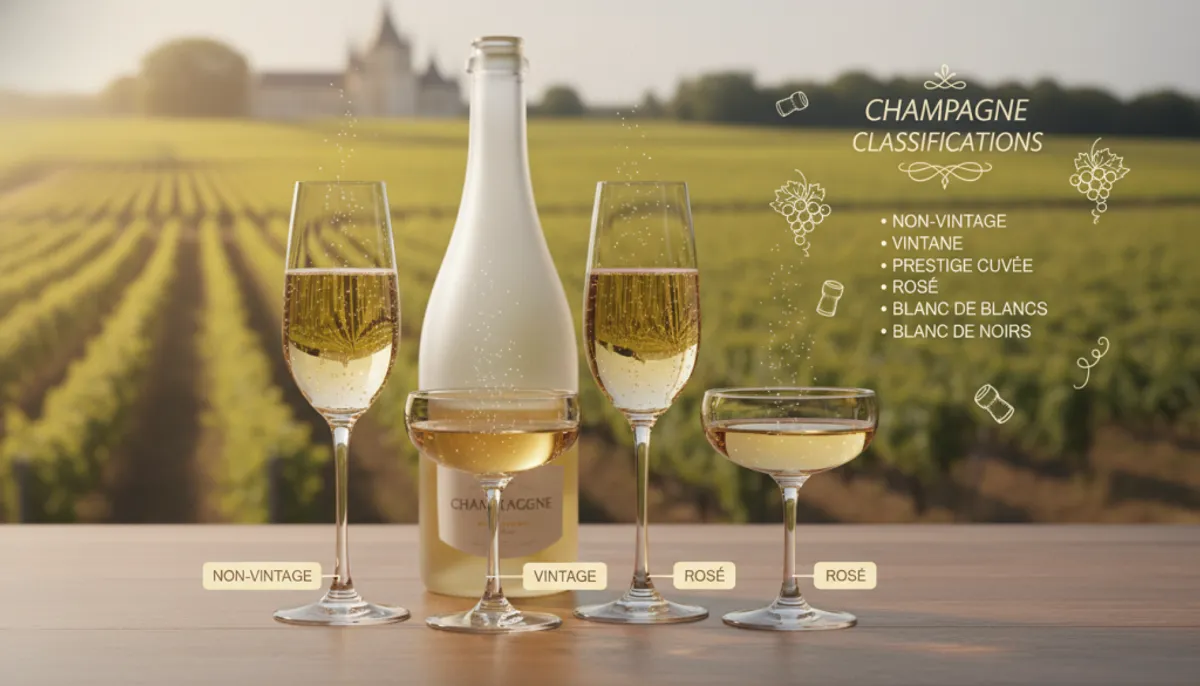
Start with the divide between vintage and non‑vintage. A vintage release captures a single year and often shows more depth and complexity. Non‑vintage blends are crafted for consistency and finesse.
Next, check grape choices. A blanc blancs selection uses only white grapes for a crisp profile. Blanc noirs blends use black grape varieties for greater body and color.
- Grand cru denotes top vineyard sites and higher aging potential.
- Dosage levels affect sweetness — know what your market prefers.
- Study each house style to predict texture, ageability, and appeal.
| Classification | What it signals | Trade tip |
|---|---|---|
| Vintage | Single year, higher complexity | Use for special menus and collectors |
| Blanc blancs / Blanc noirs | White-grape finesse / Black-grape depth | Match to food pairings and customer taste |
| Grand cru | Top terroir, stronger aging | Target premium listings and exports |
Understanding these labels helps you curate the right wines and choose the right house or brands for your U.S. market needs.
Exploring the Champagne Region of France
Across 34,000 hectares, vines map a varied terrain that feeds flavors into each bottle. The region france blends old methods with modern cellar work to produce world-class sparkling wine, including exquisite glass flower vases that enhance the presentation of these fine products.
The vineyards split into notable zones such as the Côte des Blancs, famed for its Chardonnay grapes. These sites, plus the grand cru parcels, supply the top-tier fruit that defines many celebrated champagnes.
Many historic houses center in Epernay and Reims, where cellars and archives show centuries of technique. Visiting offers a clear view of how each year’s weather and care shape the final product.
Every house and village plays a role in the region’s reputation. Walking the slopes makes it obvious how terroir, vintage variation, and grape selection combine to create distinct expressions.
- Terroir matters: chalk and soil give minerality and lift.
- Location matters: Epernay and Reims concentrate cellars and expertise.
- Quality matters: grand cru sites yield grapes for premium cuvées.
| Area | Noted For | Trade Tip |
|---|---|---|
| Côte des Blancs | Chardonnay-driven finesse | Seek for blanc blancs and elegant sparklers |
| Montagne de Reims | Pinot Noir structure | Good for ageworthy cuvées |
| Vallée de la Marne | Pinot Meunier freshness | Ideal for approachable, youthful styles |
How to Identify Authentic Quality
Start by inspecting the front label for official appellation and the house name. An authorized designation proves origin and helps weed out counterfeit offers.
Check for a clear vintage year when you expect a single-harvest release. A visible year signals a specific harvest and points to aging potential in that bottle.
Verify production details. Authentic bottles list vineyard or blend info and the grapes used. Traditional methods and real cellar notes are signs of true craft.
- Look for official stamps, import codes, and embossed seals.
- Assess pour clarity and bubble consistency — both reflect true quality.
- Source from reputable exporters to ensure proper handling of multiple bottles.
| Check | What to Look For | Why It Matters |
|---|---|---|
| Label & Appellation | Protected name, producer details | Confirms legal origin and producer integrity |
| Vintage Marking | Clear harvest year on front or back | Indicates single-year character and aging |
| Physical Signs | Clear liquid, steady fine bubbles | Shows proper cellar work and freshness |
| Exporter Records | Provenance, handling logs | Ensures authenticity and safe transport |
Always inspect markings and documents before you finalize a purchase. That simple habit protects your stock and preserves trust with customers.
Comparing Major Houses and Smaller Producers
Comparing large houses with artisan producers shows the region’s range of styles and intent. Major houses like Veuve Clicquot often aim for steady quality and global supply. Smaller houses focus on terroir and limited runs that highlight unique fruit and site character, including their exquisite elevated toasts.
Both types rely on blends of pinot noir, pinot meunier, and Chardonnay to reach the desired complexity and balance. Years of cellar work, precise dosage, and use of grand cru grapes tie them together.
Smaller producers may leave wine on the lees for extra months, producing deeper brioche and toasted bread notes. Major houses often keep a consistent house profile like a classic brut réserve to match trade expectations.
- Trade benefit: Offering both large and small labels gives clients variety in price, style, and provenance.
- Tasting cues: Look for freshness, bright acidity, fine bubbles, and layered aromas when comparing bottles.
- Stock strategy: Mix vintage and non‑vintage picks to serve collectors and everyday menus alike.
| Producer Type | Focus | Typical Traits |
|---|---|---|
| Major houses | Consistency & global reach | Predictable character, polished finish, steady supply |
| Smaller producers | Terroir & limited runs | Unique fruit expression, longer lees time, artisanal detail |
| Shared elements | Grape blends & technique | Pinot noir, pinot meunier, Chardonnay; careful dosage; attention to cork and time |
Choosing a mix of houses ensures your selection covers finesse and freshness, complexity and approachability. From harvest to final corking, every step matters to the character of the bottle.
Global Export Opportunities for Fine Wines
Trade opportunities expand when importers learn how to protect bubbles, aromas, and house character during transit. New markets across the world now value curated wine lists that highlight fruit, freshness, and layered notes.
Our export services manage temperature control, timing, and careful packing so sparkling wine and champagnes arrive with their complexity intact. We connect you to grand cru selections and classic brut réserve offerings while handling customs and schedules. The sparkling wine industry benefits from our expertise in ensuring that quality is preserved throughout the shipping process. For those seeking the best capsule champagne gb, our curated selections offer exceptional choices.
- Logistics tailored to preserve bubbles and acidity during months on the move.
- Verified provenance to protect house reputation and tasting character.
- Networked supply that supports tasting events and retail shelf rotation.
| Service | Benefit | Why it matters |
|---|---|---|
| Temperature control | Preserves freshness | Keeps aromas and dosage true |
| Customs handling | Faster clearance | Reduces delays that harm quality |
| Provenance checks | Authenticity assured | Builds buyer trust and repeat sales |
Request Your Personalized Export Quote
Take the next step toward sourcing curated cellar selections by asking for a personalized export estimate. Our team makes the process simple and clear so you can plan purchases with confidence.
Request your personalized quote today on https://champagne-export.com. Visit the portal to submit order details, preferred volumes, and delivery windows.
What we offer:
- Assistance selecting the right house labels to enhance your inventory and satisfy clients.
- Transparent pricing and reliable shipping options to ensure safe, timely arrival.
- Access to curated lists and expert guidance drawn from years of export experience.
Contact us through the site to discuss specific needs. We will tailor a quote to your business and help you move from inquiry to delivery with ease.
Conclusion
In closing, this region offers a living link between craft, history, and consistent quality.
Whether you sell or collect, understanding each house and its production reveals the subtle notes that set bottles apart. The world of these wines combines tradition with careful cellar work to protect flavor and texture.
Focus on provenance, storage, and supplier transparency to secure true quality for your customers. Curating selections from varied villages keeps offerings fresh and appealing across menus and retail shelves.
Explore our listings and request a tailored quote to build a collection that reflects the region’s heritage and the layered character of fine champagnes. Thank you for reading and for caring about thoughtful sourcing.